
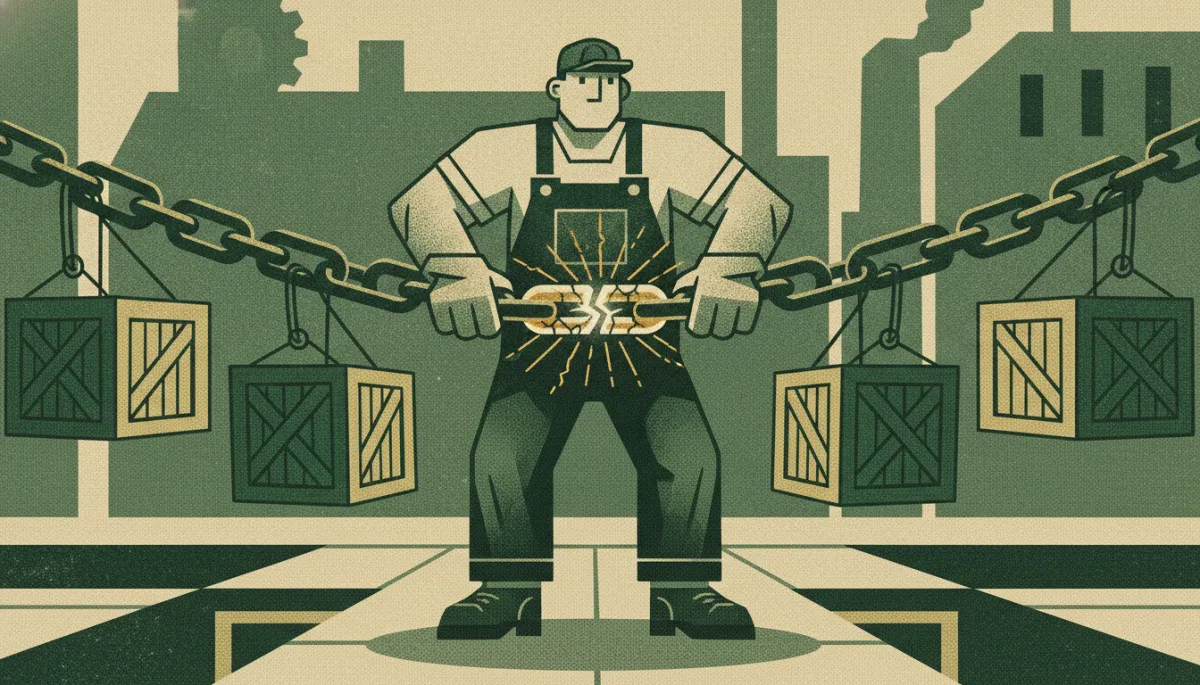
Vendor and Supplier Risk: Stress-Testing Your Supply Chain Financially
- Supplier concentration is a cash-flow risk wearing an operations costume: when one vendor supplies most of a critical input, their bad week becomes your liquidity crisis.
- The exposure is bigger than most owners think. 51% of global businesses say they could not keep operating for more than three weeks in a major supply-chain shock, and 56% of CEOs put 11% to 20% of revenue at risk if their top three suppliers went dark for just two weeks.
- Map concentration by spend, by criticality, and by substitutability, then run a plain-language financial stress test: if this supplier fails, how many dollars and how many days do I lose?
- Redundancy costs money, so buy only the redundancy that is cheaper than the disruption it prevents. That is a modeling decision, not a gut call, and it is the work my team runs inside the Operating Cadence stage of the Greenwood Engagement Model.
I have watched a profitable company nearly fail because of a supplier it barely thought about. Not a customer, not a bank, a mid-tier vendor that made one specialized component and quietly went into receivership over a weekend. The founder found out on a Monday. By the following Monday, the shipping dock was idle and the revenue that depended on that component was frozen. The business was solvent on paper and paralyzed in practice, which is the exact gap that stress-testing exists to close.
This is the part of financial risk management that owners systematically underweight. You know your customer concentration because your sales team lives in it. Your supplier concentration hides in accounts payable, in a purchasing decision made three years ago for good reasons that nobody has revisited since. Here is how to find it, price it, and decide what to do about it before a vendor's problem shows up on your cash-flow statement.

When a Supplier Becomes a Risk
A supplier becomes a risk the moment you cannot replace them fast enough to protect your revenue or your margin. That is the whole test, and it has nothing to do with how much you spend with them. A tiny vendor that makes the one part your flagship product cannot ship without is a bigger risk than the large distributor you could swap in a week.
The scale of the blind spot is documented. According to the 2026 State of Supply Chain Security report, only 15% of businesses formally review the risks posed by their immediate suppliers, and a striking 82.4% experienced at least one supply-chain incident in the prior twelve months. So the incidents are nearly universal and the review discipline is nearly absent. That mismatch is the opportunity.
Reframe the supplier as a line of credit you did not underwrite. When a vendor gives you net-45 terms, holds your safety stock, or is the sole source of an input, they are extending you operational credit. You would never take a large loan from a lender without checking whether they can fund it. Yet companies routinely bet a quarter of their throughput on a single supplier whose balance sheet they have never seen. The named risk here is not "supply chain." It is single-source dependency on a counterparty whose financial health you do not monitor.
Mapping Concentration
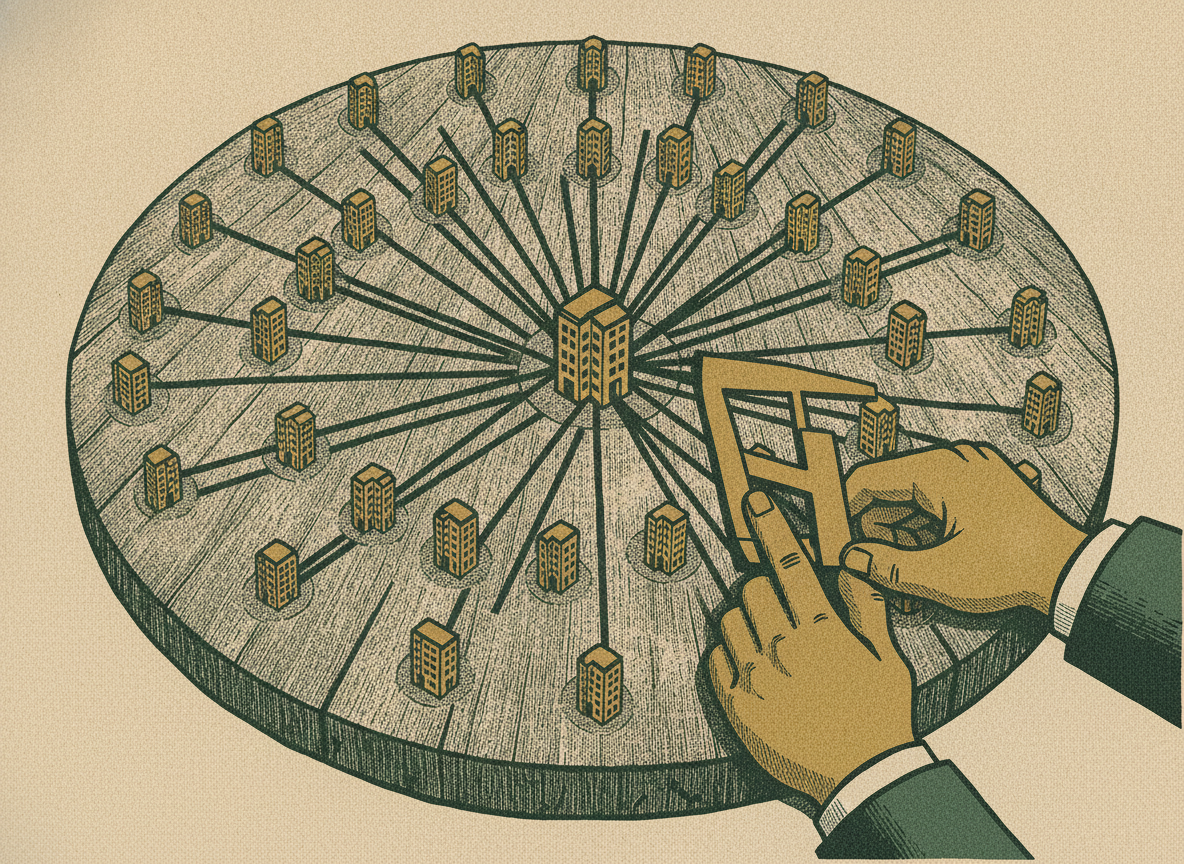
Start by building a simple map: every critical supplier, the annual spend, the input they provide, and the honest answer to one question, "how long would it take to replace them at acceptable quality and price?" Rank by that replacement time, not by spend. Concentration risk lives where replacement is slow, regardless of dollar size.
Concentration is easy to quantify once you look. In one public company disclosure, purchases from the top ten suppliers made up 85% of all purchases. Most owner-operated firms are more concentrated than that, not less, because they lack procurement staff to diversify. A useful benchmark from the risk community, per Risk Ledger, is to keep any single critical supplier below 30% of the spend in its category and to maintain at least one qualified alternative per critical function. You do not have to hit those numbers overnight. You have to know where you stand against them.
This is the same discipline I apply to customer concentration, and the two belong on one page. If you have already mapped the revenue side, my write-up on customer concentration risk uses the identical logic from the other direction. Together they tell you how many single points of failure sit between you and your cash flow. For a broader view across both suppliers and channels, see concentration risk across suppliers and channels.

Financial Stress Tests
A financial stress test converts "that would be bad" into a number of dollars and a number of days. Pick your top three critical suppliers and model a specific failure for each: they stop delivering for two weeks, then for six. For each scenario, estimate the revenue you cannot recognize, the margin you lose to a pricier backup, the expedite and switching costs, and the point at which the shortfall hits your cash balance rather than just your P&L.
That last distinction is where owners get surprised. A disruption can leave your annual profit nearly intact while creating an acute cash gap in the specific weeks the crisis lands, because payroll and rent do not pause while your revenue does. The financial damage is real and widely felt. Veridion reports that 73% of organizations logged financial or operational losses from supply-chain disruptions in the past year. The companies that come through are the ones that had already priced the scenario and knew which lever to pull.
Stress-testing a supplier is the same muscle as stress-testing any assumption in your plan. If you want the general method, I lay it out in sensitivity analysis and stress testing. Apply it here with the vendor as the variable, and connect the output to your contingency plan so the test produces an action, not just an anxiety. My guide to a financial risk management contingency plan covers where that action lives.
Building Redundancy Worth Paying For
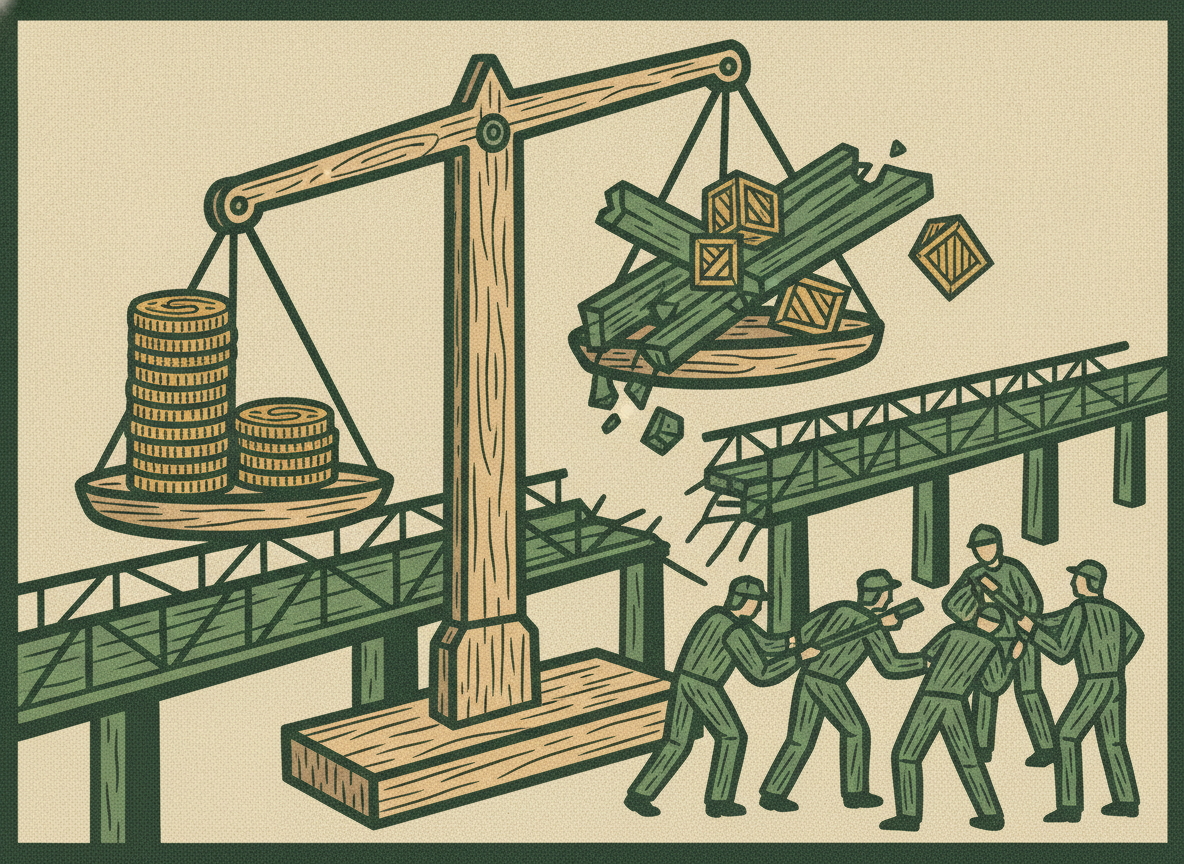
Redundancy is insurance, and like all insurance it is worth buying only when the premium is smaller than the expected loss it prevents. A second qualified supplier, a strategic safety-stock buffer, or a dual-sourcing arrangement all cost real money in higher unit prices and carrying costs. The stress test tells you whether that premium is justified for each input. Where the disruption cost is trivial, accept the concentration and move on. Where it is existential, pay for the backup.
Be wary of the reflex that more suppliers automatically means safer. Spreading spend thinly across many vendors can create its own drag through weaker terms, more oversight, and diluted relationships. The middle-market view from Glacier Lake Partners is practical here: qualify alternatives first, then deliberately shift roughly 15% to 25% of concentrated spend over 12 to 18 months so you reduce dependency without blowing up the primary relationship or your pricing. Redundancy is a portfolio decision, sized to the risk, not a moral stance about having backups.
There is also leverage in the terms themselves. Sometimes the cheapest redundancy is a better contract with the supplier you already have, one that gives you priority allocation or notice before a change. My notes on negotiating supplier terms and on the contract clauses that carry vendor risk show where those protections are won or lost.

Monitoring Supplier Health
The map and the stress test are not a one-time project. Suppliers deteriorate, and the warning signs show up months before the failure if you are watching. Slipping delivery dates, sudden requests to renegotiate terms, longer lead times, key people leaving, or a quiet change in ownership are all signals worth logging. Put your critical suppliers on a short watchlist and review it on the same cadence you review your own numbers.
This is exactly where the Greenwood Engagement Model puts it. In the Operating Cadence stage, supplier health sits on the monthly financial review beside cash and margin, so a wobble gets caught in a management meeting rather than on a loading dock. The concentration map and the stress-test scenarios belong on your risk register, reviewed quarterly and updated whenever a supplier relationship materially changes. When a company reaches the point of a sale, this same diligence becomes a value driver, which is why the Transaction Desk stage revisits it before a buyer's advisors ever do.
You do not need a procurement department to do this well. You need one page that lists your critical suppliers, one honest number for how fast you could replace each, and one meeting a month where that page gets looked at. That is the difference between a supplier's bad weekend being a phone call and it being a crisis.

Frequently Asked Questions
How Do I Assess Supplier Risk?
Identify your critical suppliers first, then evaluate each on four dimensions: financial health, operational reliability, compliance, and concentration. The decisive question is replacement time, that is, how quickly you could switch to an acceptable alternative on quality and price. Rank suppliers by that answer, because the slowest-to-replace vendors carry the most risk even when they are not your largest by spend.
What Is Supplier Concentration Risk?
Supplier concentration risk is the danger that too much of your supply or production depends on one vendor or a small handful of them, creating a single point of failure. If that supplier fails, you face lost revenue, margin compression from scrambling to a costlier backup, and often an acute cash gap. A common guardrail is keeping any single critical supplier below about 30% of category spend with at least one qualified alternative available.
How Do I Stress-Test My Supply Chain Financially?
Choose your top critical suppliers and model a specific failure for each, such as a two-week and a six-week outage. For every scenario, estimate the lost revenue, the higher cost of a backup source, expedite and switching costs, and the week your cash balance, not just your profit, takes the hit. Compare those outcomes against the cost of redundancy to decide which backups are worth buying.
What Financial Warning Signs Should I Watch In A Supplier?
Watch for slipping delivery dates, lengthening lead times, sudden requests to renegotiate pricing or terms, departures of key people, and changes in ownership. Any of these can precede a supplier's financial trouble by months. Keep critical suppliers on a watchlist reviewed monthly so deterioration is caught early, while you still have time to qualify an alternative.
How Much Should I Spend On Supplier Redundancy?
Spend on redundancy only where the cost of the backup is less than the expected cost of the disruption it prevents. Your stress test gives you both numbers. For inputs whose failure is trivial, accept the concentration. For inputs whose failure is existential, pay for a second source or a safety-stock buffer, and consider shifting 15% to 25% of concentrated spend to an alternative over 12 to 18 months rather than all at once.
References
- Every Link Matters: The State of Supply Chain Security 2026
- Half of Businesses Would Not Survive a 3-Week Supply Chain Shock (Proxima research)
- SEC filing, supplier concentration disclosure
- Veridion, How to Assess Vendor Concentration Risk
- Risk Ledger, Concentration Risk 101
- Glacier Lake Partners, Vendor Concentration Risk in the Middle Market
