
Building a Contingency Plan Before You Need One
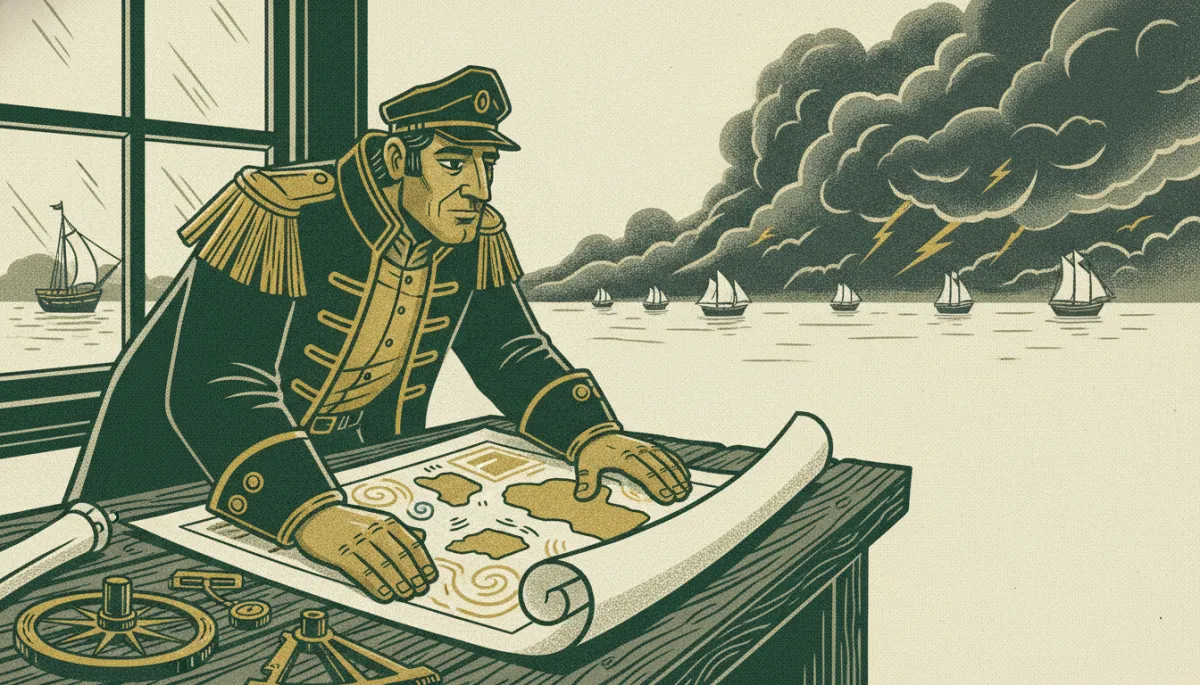
- Financial Risk Management works best when the plan is built in calm water, not during the storm: 75% of enterprises hit at least one critical risk event last year, yet only 35% run a thorough risk program.
- Pick three or four trigger metrics tied to cash, revenue, and margin so the decision to act is made by a number, not a mood.
- Pre-stage your cost levers in tiers now, so a downturn becomes a set of pre-approved decisions rather than a panic.
- Write the board and team communications before you need them; a contingency plan is a communication protocol as much as a spreadsheet.
- Refresh the playbook on a calendar, because only 21% of finance teams reforecast monthly and stale assumptions are what get companies caught.

Why Financial Risk Management Starts Before the Storm
You plan before the storm because the storm removes your ability to think clearly, and the data proves how common storms have become. According to a 2026 risk survey compiled by Secureframe, roughly 75% of enterprises experienced at least one critical risk event in the prior year, with cyberattacks, business interruption, and economic slowdown topping the list. Despite that frequency, NC State's ERM Initiative finds that only about a third of organizations describe their risk management as complete or robust. The gap between how often trouble arrives and how few companies are ready for it is the entire opportunity.
The instinct in a crisis is to freeze, and the numbers show leaders doing exactly that. BDO's 2025 Global Risk Landscape Report reported that 84% of international business leaders now see the risk landscape as defined by crisis, and more than two-thirds have shifted to a defensive posture. Defensiveness under pressure is not strategy, it is reflex. A contingency plan converts that reflex into a script written by a calmer version of you. It is the same logic behind a 13-week cash flow forecast: the work is boring until the week it is the only thing keeping you solvent.
Choosing Your Trigger Metrics
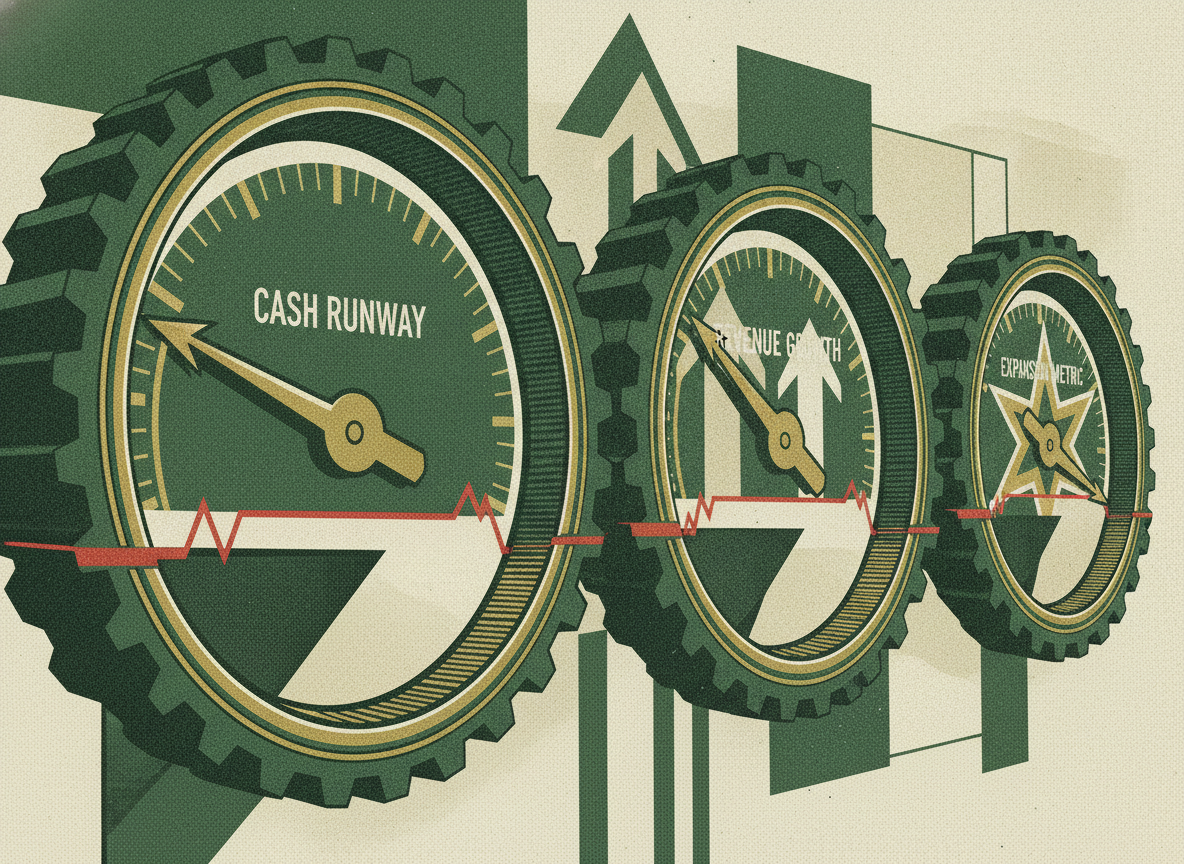
Trigger metrics are the two to four numbers that, when they cross a line you set in advance, automatically move you from watching to acting. The purpose is to take the decision out of the moment. You are not deciding whether things feel bad; you are checking whether a number you already agreed on has been breached. Good triggers connect an early signal to a business outcome like cash, revenue, or margin. I usually anchor on cash runway in months, a rolling revenue or bookings figure versus plan, gross margin drift, and one concentration measure such as top-customer share of revenue.
Set the threshold and the action together, because a trigger without a pre-agreed response is just anxiety with a dashboard. For example: if cash runway drops below nine months, we freeze net-new hiring; below six months, we execute cost tier two. This matters because speed is where most teams lose. Empyrean Solutions reports that 59% of institutions are actively adjusting balance-sheet strategy, yet only 21% reforecast monthly, which means a majority are steering with numbers that are weeks out of date. If your triggers depend on a stale forecast, they will fire late. Pair this section with your runway math and your view of customer concentration risk so the same signals feed both.

Pre-Staging Cost Levers
Pre-staging cost levers means deciding today, in writing, exactly what you would cut and in what order if each trigger fires. The value is not the list, it is that the decisions are made before the emotion arrives. When a lever is pre-approved, executing it takes an afternoon instead of three anguished weeks of meetings. I structure levers in three tiers. Tier one is reversible and low-pain: discretionary spend freezes, deferred software renewals, paused travel, slowed net-new hiring. Tier two is structural but survivable: renegotiated vendor terms, trimmed marketing experiments, delayed capital projects. Tier three is the hard set: role reductions and program shutdowns.
Name the dollar figure and the owner for each lever so it is a decision, not a wish. The stakes are real: the 2025 C-Suite Stress Index found supply-chain challenges (45%) and economic uncertainty (39%) to be the threats executives cite most, both of which hit costs quickly. The point of tiering is sequencing. Most founders treat cost-cutting as one violent event; the leverage comes from staging it so you spend the least amount of pain required to clear each trigger, and no more.

A Communications Plan for the Board and Team
A communications plan is the part of Financial Risk Management most founders skip, and it is the part that decides whether your response holds together. A contingency plan is a communication protocol, not just a document: if your board and your team do not know what happens when a trigger fires, the plan does not exist. Draft three messages now, while you are calm. One for the board that states the trigger, the action taken, and the expected effect on runway. One for the whole team that is honest, brief, and free of false comfort. One for any directly affected group.
Decide the sequence and the timing before the moment, because in a real event you will not have the composure to design it. My rule is simple: the board hears first and hears the math, the team hears next and hears the truth, and no one hears a rumor before they hear from you. Boards increasingly expect this discipline as a standing capability rather than a reaction, which is part of the broader shift I described in reframing the CFO from scorekeeper to strategist. A clear protocol is what keeps a hard quarter from becoming a trust problem on top of a cash problem.

Reviewing and Refreshing Your Financial Risk Management Playbook
You refresh the playbook on a fixed cadence so it never drifts into fiction, ideally once a quarter and after any major change to the business. A contingency plan built once and filed away is worse than no plan, because it gives false confidence built on last year's cost base and last year's customer mix. Put the review on the calendar the same way you put the board meeting on the calendar. Each cycle, re-check the trigger thresholds against current runway, confirm the cost levers still add up to real money, and update the communications drafts for any change in leadership or headcount.
Keep the ritual light so it actually happens. Fifteen minutes each quarter to confirm the numbers still hold beats a heroic annual overhaul that never gets scheduled. This is the same reason only 11% of senior financial executives, per the AICPA and NC State study, view their risk management as a genuine strategic asset: most treat it as a one-time artifact rather than a living practice. The founders who treat the playbook as a standing habit are the ones who, when the storm finally comes, get to be boring about it.

Frequently Asked Questions
What Is a Financial Contingency Plan?
A financial contingency plan is a prepared, written framework that defines the warning signals you will watch, the specific cost actions you will take when those signals cross a threshold, and how you will communicate each move to your board and team. It exists so that a downturn triggers a set of pre-made decisions instead of improvisation. The strongest versions fit on a few pages and are refreshed every quarter.
What Metrics Should Trigger Cost Cuts?
The most useful triggers tie an early signal to cash, revenue, or margin: cash runway in months, rolling revenue or bookings versus plan, gross margin drift, and a concentration measure such as top-customer revenue share. Set an explicit threshold and a matching action for each, for example freezing net-new hiring when runway falls below nine months. Because only about 21% of finance teams reforecast monthly, make sure your triggers run off current numbers, not a stale forecast.
How Do You Build a Contingency Plan?
Start by choosing three or four trigger metrics with thresholds, then pre-stage cost levers in tiers from reversible freezes to structural reductions, assigning a dollar value and an owner to each. Next, draft the board, team, and affected-group communications in advance. Finally, put a quarterly review on the calendar to keep every assumption current. The whole first draft can be built in about a day.
What Are Early Warning Financial Indicators?
Early warning indicators are metrics that move before a crisis becomes obvious: declining cash runway, bookings or revenue slipping under plan, lengthening customer payment cycles, gross margin compression, and rising customer concentration. Watched on a monthly or faster cadence, they give you the lead time to act while your levers are still cheap. The goal is to see the change while it is still a signal and not yet an emergency.
How Do You Prepare for a Downturn?
Prepare by building the contingency framework before you need it: define trigger metrics, pre-approve tiered cost levers, and write your communications in advance, then rehearse the sequence with your leadership team. Keep a healthy cash buffer and shorten your forecasting cycle so decisions run on fresh data. Preparation done in calm conditions is what lets you respond in hours rather than weeks when conditions turn.
References
- Secureframe: 50+ Risk Management Statistics to Know in 2026
- NC State ERM Initiative: Survey Data on ERM Trends
- BDO: Global Risk Landscape Report 2025
- Empyrean Solutions: Balance Sheet Risk Management Statistics for 2025
- 2025 C-Suite Stress Index: Large Businesses
- AICPA and NC State: Finance Leaders' Risk Management Views
