

Vendor and Contract Risk: The Clauses That Quietly Cost You in 2026
- Vendor contracts are a Financial Risk Management blind spot. The money leaks slowly, through auto-renewals, compounding price hikes, and fees nobody reviewed, so it rarely triggers alarm.
- The waste is large: contract mismanagement is estimated to cost companies 9 to 30 percent of their software spend.
- Auto-renewal clauses are designed to catch you. Miss a cancellation window, often 30 to 90 days before term end, and you are locked in for another year at the vendor's current rate.
- Renewal uplifts are increasingly compounding rather than one-time, which quietly inflates cost every term unless you negotiate it out.
- A simple renewal calendar, 90-day review, 60-day notice, 30-day sign-off, turns this risk into a managed process.
Most founders hunt for savings in the big, visible line items and walk right past the place money actually leaks: their vendor contracts. Auto-renewals, compounding price increases, and buried fees are a slow, quiet drain that never sets off an alarm because no single charge is dramatic. Treating vendor and contract terms as a Financial Risk Management discipline, rather than paperwork your team signs and forgets, recovers more money than most cost-cutting exercises. Here are the clauses that cost you and the simple system that stops them.

The Quiet Leak in Your Operating Budget
Vendor spend leaks quietly because it is fragmented, recurring, and rarely reviewed once signed. A company accumulates dozens of software and service contracts, each renewing automatically, each creeping up a little, and no one owns the full picture. The individual charges are small enough to ignore, which is exactly why they add up. The leak is invisible precisely because it is spread across many line items rather than concentrated in one.
The aggregate cost is not small. Contract management failures are estimated to cost companies 9 to 30 percent of their software spend through waste, redundant tools, and missed optimization, according to Pactly. For a company spending meaningfully on software and services, that is real money disappearing into renewals nobody examined. Good Financial Risk Management treats this category the way it treats any recurring exposure: with a system that surfaces it, reviews it, and forces a decision, rather than letting it run on autopilot where the leak lives.

Auto-Renewal: The Clause Designed to Catch You
The auto-renewal clause is engineered to renew you by default, and missing its window is how companies get locked into spend they no longer need. Most auto-renewals require you to cancel within a set notice period, often 30 to 90 days before the contract ends, per Zylo. Miss that window by a day and the contract rolls over for another full term at the vendor's current rate, whether or not the tool still fits your needs.
The mechanism works because it relies on your inattention. Vendors know that busy teams forget renewal dates, so the default outcome, renewal, is the one that favors them. The financial risk is twofold: you keep paying for licenses or services that may no longer match your actual usage, and you lose the leverage to renegotiate that you only have in the window before renewal. As UpperEdge documents, even major vendors structure these clauses to look standard while quietly removing your protections. The defense is not vigilance on your part, which fails, but a system that surfaces every renewal window before it closes.

Compounding Uplifts and Hidden Fees
Beyond the renewal itself, two features inflate vendor cost over time: compounding price uplifts and fees you never actively reviewed. The dangerous shift is from one-time price increases to compounding annual uplifts. A renewal protection should be a one-time uplift, not a compounding per-year rate, and you have to demand that clarity in the contract language, as UpperEdge stresses. A compounding uplift quietly raises your cost every single term, and over a few years the difference is substantial.
The hidden fees are the other half. Usage thresholds that trigger overage charges, premium support fees, and billing mechanics that were buried in the agreement can all add cost that no one signed up for consciously. The fix is to read the fee structure before signing and to monitor usage against thresholds during the term, so an overage does not arrive as a surprise. From a Financial Risk Management standpoint, both compounding uplifts and hidden fees share a trait: they are cheap to prevent at signing and expensive to discover after the fact, which is why the leverage is all in the negotiation before the ink dries.

The Renewal Calendar That Protects You
The single most effective defense against vendor-cost leakage is a renewal calendar that forces a decision before each window closes. The best-practice cadence is a three-step alert: a 90-day strategic review to decide whether you still need the tool and at what level, a 60-day mark to send a termination or renegotiation notice if required, and a 30-day mark for final budget sign-off, as BetterCloud recommends. Each renewal gets a deliberate decision instead of a default rollover.
The calendar works because it replaces memory with process. Instead of hoping someone remembers a cancellation deadline, you have a system that surfaces every contract well before its window and assigns an owner to act. The 90-day review is the highest-leverage step, because it is when you still have time to evaluate alternatives, consolidate redundant tools, and approach the vendor for a better rate from a position of choice rather than urgency. A company that runs this calendar turns its vendor spend from an autopilot leak into a managed line item, which is the whole point of treating contracts as Financial Risk Management.
Negotiating Contracts Before You Sign
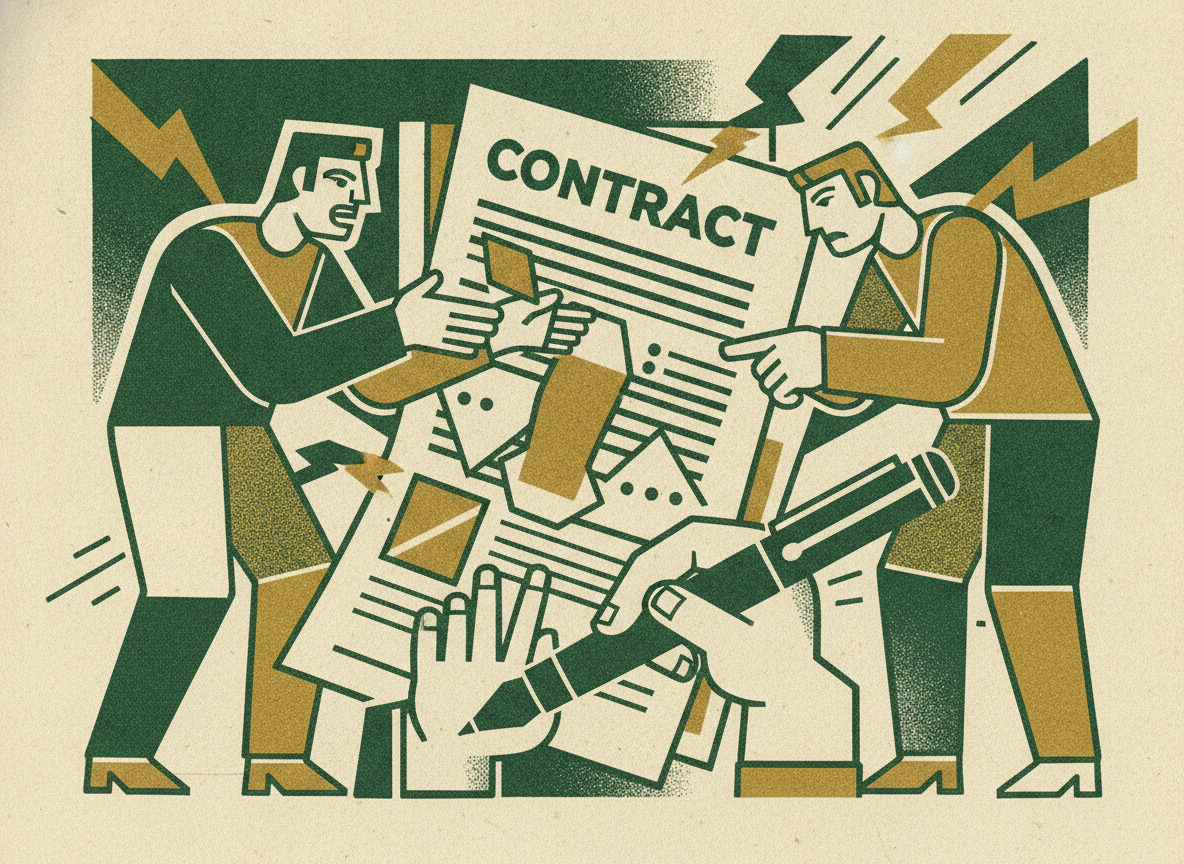
The cheapest time to manage vendor risk is before you sign, when you have maximum leverage and zero switching cost. At signing you can negotiate the terms that matter most: cap or remove the auto-renewal, convert a compounding uplift to a one-time or limited increase, clarify the fee structure, and align the contract length and license count with your realistic usage rather than the vendor's preferred maximum. You can even negotiate to remove the auto-renewal clause entirely, which puts the renewal decision firmly back in your hands.
This is where a fractional CFO or a disciplined finance process earns its keep, because vendors negotiate these contracts constantly and most founders sign them rarely. The asymmetry favors the vendor unless someone on your side reads the terms with a skeptical eye and knows which clauses to push on. The goal is not to nickel-and-dime every supplier, it is to avoid the specific terms, auto-renewal traps, compounding uplifts, and buried fees, that turn a reasonable deal into a quiet, growing liability. Sound Financial Risk Management on vendor contracts is mostly about getting the terms right once, at signing, so the contract works for you for its whole life rather than against you.

Frequently Asked Questions
How Much Do Vendor Contracts Actually Cost in Waste?
Contract mismanagement is estimated to cost companies 9 to 30 percent of their software spend through waste, redundant tools, missed optimization, and uncontrolled renewals. The cost is large because it is fragmented across many recurring contracts that individually seem small, so it rarely triggers scrutiny. For a company with meaningful software and service spend, recovering even part of that is significant money.
How Do Auto-Renewal Clauses Work?
Auto-renewal clauses renew your contract automatically unless you cancel within a set notice window, often 30 to 90 days before the term ends. Miss the window and the contract rolls over for another full term at the vendor's current rate. The clause relies on you forgetting the deadline, which is why a renewal calendar that surfaces every window in advance is the only reliable defense.
What Is a Compounding Renewal Uplift?
It is a price increase that applies every term and builds on the prior increase, rather than a one-time adjustment. Vendors increasingly structure renewals this way to show predictable revenue growth, but it quietly inflates your cost each year. You should demand contract language specifying a one-time or capped uplift rather than a compounding annual rate, and negotiate it before signing.
How Should You Manage SaaS and Vendor Renewals?
Run a renewal calendar with a three-step cadence: a 90-day strategic review to decide whether you still need the tool, a 60-day termination or renegotiation notice if required, and a 30-day budget sign-off. Assign an owner to each renewal so decisions are deliberate rather than default. The 90-day review is the key step, since it preserves time to evaluate alternatives and negotiate from choice.
References
