

Tariffs Are Now a CFO Problem: Modeling Trade Policy Into Your 2026 Plan
- Tariffs have moved from a procurement line item to a board-level planning variable. In a March 2026 PwC survey, 86% of US executives said they now treat tariffs as a permanent planning assumption rather than a temporary shock.
- The cost is real and already in your numbers. Duke and the Richmond Fed found that CFOs expect 2026 price growth at their own companies to run about 25% higher than it would without tariffs, and tariffs have been the single top concern in that survey for five straight quarters.
- You cannot price your way out of it. Through 2025 businesses absorbed roughly 80% of the tariff bill themselves, and even as that shifts, only about a third of firms are passing more than half their tariff costs to customers. Margin, not the price list, is where this lands.
- The fix is a forecast that carries trade policy as an explicit driver: a three-scenario model (base, escalation, partial relief) that shows what each duty level does to gross margin, cash, and inventory before you have to react.
- Treat supplier concentration as the hidden multiplier. A single-source supplier in a high-tariff country is not a sourcing footnote, it is an unhedged position on your income statement that belongs on the risk register and in front of your board.
I have sat in two 2026 planning meetings that started the same way and ended in completely different places. Both companies imported a meaningful share of their cost of goods. Both knew tariffs were "a thing." The difference was that one CFO had built trade policy into the forecast as a number you could turn a dial on, and the other was still treating it as a surprise that finance would clean up after the fact. The second company spent the first quarter reacting, eroding margin while it debated price increases nobody had modeled. The first company had already decided, in October, what it would do at each tariff level. Tariffs are no longer a question of whether they affect you. They are a question of whether the effect is in your plan or a shock to it.
Why Tariffs Became a Board-Level Number
Tariffs crossed from operational nuisance to board-level risk the moment they stopped being temporary. For most of the last two decades, a CFO could treat import duties as a small, stable input cost, somewhere between rounding error and a procurement detail. That is over. The average effective tariff rate on imported core consumer goods reached 13.1% in early 2026, up from a 2022 to 2024 average closer to 2.7%, according to Yale's Budget Lab. A roughly fivefold jump in a major cost driver is not noise. It is a structural change to the shape of your P&L.
What makes it a board issue rather than a purchasing issue is permanence. When PwC surveyed US executives in March 2026, 86% said they now build tariffs in as a standing planning assumption, not a passing event to wait out. Once a cost is permanent and large, it belongs in strategy, capital allocation, and pricing, which are board-level decisions. The CFOs who still frame tariffs as "something the supply chain team is handling" are quietly conceding margin they will have to explain later.
The pressure shows up directly in the numbers finance owns. In the Duke and Richmond Fed CFO Survey, CFOs estimated that price growth at their own organizations would be about 25% lower in 2026 without tariffs, and trade policy has ranked as their top concern for five consecutive quarters. When a quarter of your expected price movement traces to one policy variable, that variable is no longer an external footnote. It is a driver of your operating plan, and your board will ask you to model it the same way you model revenue and headcount.
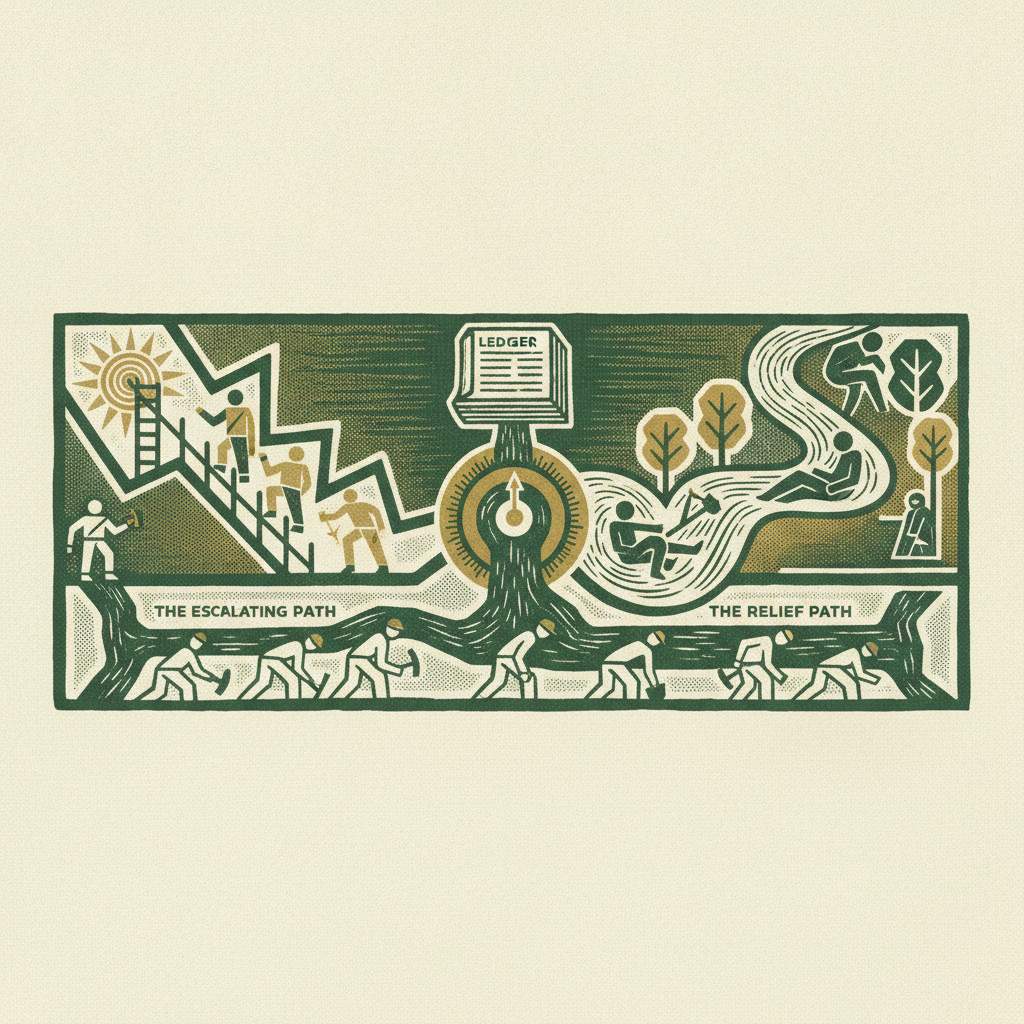
Building Tariff Scenarios Into the Forecast
The way to make tariffs governable is to stop forecasting a single number and start forecasting a range you have already priced. Point estimates fail here because the policy itself is a moving target. What works is scenario modeling, the same discipline you would apply to a rolling twelve-month forecast, pointed specifically at trade exposure. The goal is not to predict the rate. It is to know, in advance, what you will do at each rate.
Three scenarios is the right number for most companies, and more becomes theater. Build a base case at current duty rates, an escalation case that models a meaningful step up on your most exposed import categories, and a relief case that assumes partial rollback or a successful sourcing shift. For each, run the full chain: landed cost, gross margin, cash conversion, and the inventory you would need to carry if you pre-bought ahead of a hike. The output you actually want is a small table that says, at this tariff level, margin does this, cash does that, and here is the lever we pull.
The discipline that makes this real is driver ownership and pre-committed triggers. Assign one person to own the tariff assumption the way someone owns the sales forecast, so the number is maintained, not guessed. Then define the trigger in advance: if the effective rate on a category crosses a set threshold, a specific pricing or sourcing action fires without a fresh round of debate. The CFOs who navigated the first half of 2026 well were not better forecasters. They had simply decided their responses in October, so March was execution rather than panic. Scenario planning's payoff is not the spreadsheet. It is that you have already made the hard decisions while you were calm.
Protecting Margin: Pricing and Sourcing Levers
The central truth of tariff pricing is that you cannot pass it all through, so margin discipline is the real lever. The instinct is to raise prices by the tariff amount and move on. The market does not cooperate. Through 2025, businesses absorbed roughly 80% of the tariff bill themselves rather than passing it to customers, according to JPMorgan research, and while that share is shifting toward customers in 2026, the move is partial and slow. Even in KPMG's 2026 Tariff Survey, only about 34% of firms reported passing more than half their tariff costs through, up from 13% a year earlier. Pass-through is rising, but it is nowhere near full, which means internal discipline decides your margin outcome.
That reframes the work from "set a new price" to "defend contribution margin product by product." Some SKUs can carry a full increase because demand is inelastic or you hold a strong position. Others cannot, and raising them just trades volume for nothing. This is exactly the kind of line-level analysis behind a margin-first pricing review: rank products by their ability to absorb or pass cost, then move surgically rather than across the board. In KPMG's data, 55% of executives plan price increases of up to 15% in the next six months, which tells you the across-the-board reflex is common and, for many of them, will quietly cost share.
Sourcing is the other half of the lever, and it works on a slower clock. Qualifying an alternate supplier in a lower-tariff country, reshoring a component, or redesigning a product to cut import content are all real margin moves, but they take quarters, not weeks. That is precisely why they belong in the forecast now. If your escalation scenario shows margin breaching a floor you can accept, the sourcing project needs to start before the trigger, not after. The pricing lever buys you a quarter. The sourcing lever fixes the structure, and only if you began early enough.
Stress-Testing Supplier Concentration
Supplier concentration is where tariff risk hides, because a single-source dependency turns a policy change into a direct hit you cannot route around. A diversified supply base lets you shift volume when one country's duties spike. A concentrated one means a tariff on that origin flows straight to your cost of goods with no detour available. The exposure is not the tariff rate in the abstract. It is the tariff rate multiplied by how trapped you are.
The way to surface this is to run a concentration stress test alongside the tariff scenarios. For each major input, ask three questions. What share of this category comes from a single country or supplier? What does my landed cost do if that origin's rate jumps in the escalation case? And how many quarters would it take to qualify an alternative? The inputs that are both high-concentration and high-tariff-sensitivity are your real risks, and they usually number fewer than you fear, which makes them manageable once you name them. This is the same logic as a company risk register, applied to the supply base: identify the concentrated exposures, size them, and assign an owner and a mitigation.
The mitigation work is part contractual and part structural. On the contract side, the protections you want are tariff pass-through clauses, the right to requalify suppliers, and pricing that is not locked for years while duties move, which is squarely the domain of vendor contract risk review. On the structural side, even qualifying a second source you rarely use converts a single point of failure into an option you can exercise under pressure. You are not trying to eliminate concentration everywhere. You are trying to make sure that nowhere on your input list is a tariff hike able to compress margin with no response available.
Communicating the Risk to Your Board
The board does not want your tariff anxiety, it wants the number, the range, and the plan. The CFOs who handle this badly bring a narrative about uncertainty and global trade tension, which tells the board nothing it cannot read in the news. The ones who handle it well bring the scenario table: here is base, here is escalation, here is relief, here is what each does to margin and cash, and here are the triggers and actions already decided. That moves the conversation from worry to governance.
Frame tariffs explicitly as a financial risk management problem with an owner, not as a market-conditions aside. State the exposure in dollars and in margin points, name the concentrated suppliers that drive most of it, and show the mitigation timeline so the board sees that sourcing work is already underway where the escalation case demands it. Boards reward CFOs who have converted an external threat into a managed position with defined responses. They lose confidence in CFOs who appear to be discovering the risk in real time alongside them.
The deeper point is that handling tariffs well is a demonstration of financial leadership, not just a compliance exercise. Anyone can report that costs went up. The CFO earns trust by showing the board that the risk was modeled before it arrived, that the response was pre-decided, and that the company is choosing its margin outcome rather than having the outcome chosen for it. In a year when trade policy is the variable everyone is watching, being the person in the room who already has the answer is worth more than any single point of margin you might defend.
Frequently Asked Questions
How Do Tariffs Affect a Company's Financial Plan?
Tariffs raise the landed cost of imported goods and components, which compresses gross margin unless you can offset it through pricing or sourcing. In 2026 the effect is large enough that CFOs attribute roughly a quarter of their expected price growth to tariffs, so it now belongs in the operating plan as an explicit driver, alongside revenue and headcount, rather than as a procurement detail.
How Do You Model Tariff Scenarios Into a Forecast?
Build three cases: a base case at current duty rates, an escalation case with a meaningful step up on your most exposed categories, and a relief case assuming partial rollback or a sourcing shift. For each, model landed cost, gross margin, cash conversion, and inventory needs, then assign an owner to the tariff assumption and pre-define the trigger that fires a pricing or sourcing action at a set rate.
Can You Pass Tariff Costs Through to Customers?
Only partially. Businesses absorbed about 80% of tariff costs themselves through 2025, and even in 2026 only about a third of firms pass more than half their tariff costs to customers. Full pass-through is rare, so the practical approach is product-by-product: raise prices where demand can absorb it and protect contribution margin everywhere else.
How Much Do Tariffs Affect Prices in 2026?
CFOs in the Duke and Richmond Fed survey estimate that price growth at their own companies is running roughly 25% higher than it would be without tariffs. Separately, 55% of executives in KPMG's 2026 survey plan price increases of up to 15% within six months, though much of that increase defends margin rather than expanding it.
How Do Businesses Plan for Tariff Uncertainty?
They stop forecasting a single rate and start forecasting a range they have already priced. That means a small set of scenarios with pre-committed triggers, a named owner for the tariff assumption, a concentration stress test on the supply base, and contract terms that allow pass-through and resourcing. The aim is to decide responses while calm, so a rate change becomes execution rather than a scramble.
References
- Tariffs become a 'permanent planning assumption' for US execs (PwC), CFO.com
- CFO Outlook for 2026: Tariffs, Hiring, Prices, and AI Impact, Duke's Fuqua School of Business
- KPMG 2026 Tariff Survey, KPMG
- Tracking the Economic Effects of Tariffs, The Budget Lab at Yale
- US Tariffs: What's the Impact?, J.P. Morgan Global Research
