
The Rolling 12-Month Forecast That Replaces the Annual Budget
- The annual budget is the backbone of most Strategic Financial Planning, and it is also the reason so many plans are wrong by spring. A number set once in December cannot keep up with a year that moves.
- A rolling forecast fixes this by refreshing on a regular cadence, monthly or quarterly, and always projecting a fixed horizon forward, usually 12 or 18 months.
- The payoff is agility: continuous comparison of actuals against an updated forecast surfaces variances early, so you correct course before problems compound.
- You do not have to choose. The best setup is hybrid, keep the annual budget for board alignment and authorization, and run a rolling forecast for operating decisions.
- Highly effective finance teams have already made this shift, treating planning as a continuous process rather than a once-a-year event.
The annual budget feels like financial discipline, but for most growing companies it is a snapshot that goes stale almost immediately. You set it in December on a fixed set of assumptions, and by the second quarter the assumptions have moved while the budget has not. Modern Strategic Financial Planning has largely moved past the once-a-year ritual toward something that keeps up: the rolling forecast. It is not more work for its own sake, it is a planning process that actually reflects the business as it is. Here is how it works and how to adopt it without throwing out the budget entirely.
Why the Annual Budget Stops Being Useful by Q2
The annual budget loses its usefulness because it freezes a set of assumptions that the world refuses to hold still for. It is built once a year on fixed goals and projections that stretch across twelve months, which means it is most accurate the day you approve it and steadily less accurate every week after. By the second quarter, the market, your pipeline, and your costs have all moved, and the budget is describing a company that no longer exists.
The deeper problem is what this does to behavior. As 8020 Consulting frames it, static budgets leave finance teams reacting to outdated plans while the business moves on. People either follow a plan they know is wrong or quietly ignore it, and either way the budget stops guiding decisions. Strategic Financial Planning is supposed to inform what you do next, and a plan that is wrong by Q2 cannot do that. The annual budget is not useless, but as a sole planning tool it has a short shelf life that founders consistently overestimate.
What a Rolling Forecast Actually Is
A rolling forecast is a forward projection that you refresh on a regular cadence and always extend a fixed distance into the future. Instead of one annual plan that ages all year, you update monthly or quarterly and always look the same horizon ahead, typically the next 12 or 18 months, as IBM describes. As one period closes, you drop it and add a new period at the far end, so you are perpetually looking a full year forward rather than watching your visibility shrink as the calendar year runs out.
This continuous quality is the whole point. A rolling forecast is never more than a few weeks out of date, because it incorporates the latest actuals every cycle. That gives finance real-time visibility and lets the team compare actual performance against a current projection rather than a stale one. The shift, as the Controllers Council puts it, is from planning as an annual event to planning as a continuous cycle. The forecast becomes a living document that always reflects where the business actually is and where it is actually heading.

Building the Rolling Forecast: Cadence and Horizon
Building a rolling forecast comes down to two decisions: how often you refresh it and how far it looks ahead. For cadence, most companies land on monthly or quarterly updates; monthly gives more responsiveness, quarterly less overhead, and the right choice depends on how fast your business changes. For horizon, 12 to 18 months forward is standard, long enough to support real planning and short enough to stay credible. The mechanics are simple: each cycle, replace the closed period's estimates with actuals and add a fresh period at the end.
The discipline that makes it work is driver-based, not line-by-line. Rather than re-forecasting hundreds of accounts, you forecast the handful of drivers that move your business, pipeline, conversion, headcount, key costs, and let the model flow them through. As Ascent CFO notes, this is what keeps a rolling forecast sustainable rather than a monthly burden. Done well, the refresh takes a fraction of the effort of building an annual budget from scratch, because you are updating drivers, not rebuilding the whole model. That efficiency is what lets the process actually become continuous instead of collapsing back into an annual scramble.
The Hybrid: Keep the Budget for the Board, Roll for Operations
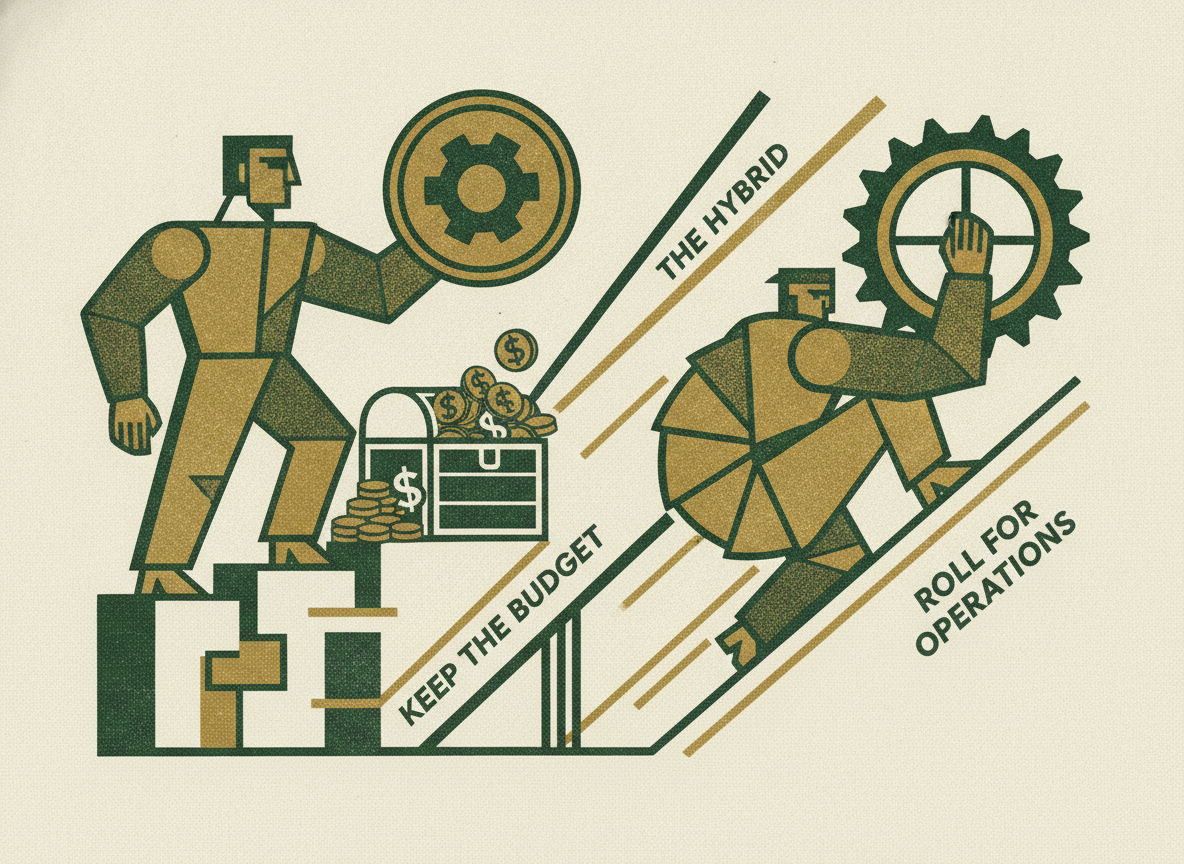
You do not have to abandon the annual budget to adopt a rolling forecast; the strongest approach runs both. The static budget still serves real purposes, board alignment, authorization of spend, and a fixed benchmark to measure against, while the rolling forecast drives day-to-day operating decisions. As Sage describes, many businesses run the two in parallel: the budget for governance, the forecast for operational planning.
This hybrid resolves the tension founders feel about giving up the budget. The board and your lenders often want the stability and accountability of an annual number, and that is legitimate. But the team running the business day to day needs a current view, which the budget cannot provide past the first quarter. Keeping both means each tool does what it is good at: the budget anchors expectations and authorization, the rolling forecast guides resource allocation as conditions change. For most companies between roughly $5M and $50M, this combination, governance from the budget and agility from the forecast, is the most practical evolution of their Strategic Financial Planning.
Making the Forecast Drive Decisions
A rolling forecast only earns its keep if it actually changes decisions, which means building a habit of acting on what it shows. Each cycle, the most valuable step is variance analysis: comparing actuals to the prior forecast, asking why the gaps occurred, and adjusting the forward projection and your plans accordingly. This is where the early-warning value lives. A revenue line tracking light, caught in the monthly refresh, is a problem you can still solve; the same gap discovered at year-end against a static budget is just a miss.
The teams that get the most from rolling forecasts treat each refresh as a decision-making moment, not a reporting chore. As Deloitte research cited across the field shows, the approach helps organizations spot changes quickly and reallocate resources before problems compound. That is the real return: not a tidier spreadsheet, but faster, better-informed decisions because the plan is always current. Strategic Financial Planning done as a continuous process gives a founder something a static budget never can, a forward view that keeps pace with the business, so the company is steering by the road ahead rather than the one it already drove.
Frequently Asked Questions
What Is a Rolling Forecast?
A rolling forecast is a forward financial projection refreshed on a regular cadence, monthly or quarterly, that always extends a fixed horizon ahead, usually 12 or 18 months. As each period closes, you drop it and add a new one at the far end, so you continuously look a full year forward. Unlike an annual budget, it incorporates the latest actuals every cycle and never goes badly stale.
Why Are Rolling Forecasts Better Than Annual Budgets?
They stay current. An annual budget is most accurate the day it is approved and decays all year as assumptions change, while a rolling forecast updates continuously and surfaces variances early enough to act on them. This agility lets a company correct course before problems compound, which is why highly effective finance teams are significantly more likely to use rolling forecasts and driver-based planning.
Do You Still Need an Annual Budget?
Often yes, in a hybrid setup. The annual budget still serves board alignment, spend authorization, and a fixed benchmark, while the rolling forecast drives operational decisions. Running both in parallel gives you the governance and accountability of a static budget plus the agility of a continuously updated forecast, which is the most practical approach for most growing companies.
How Do You Build a Rolling Forecast Without It Becoming a Burden?
Make it driver-based rather than line-by-line. Forecast the handful of drivers that actually move your business, pipeline, conversion, headcount, key costs, and let the model flow them through, instead of re-forecasting every account. Each cycle you replace closed-period estimates with actuals and add a new period. Updating drivers takes a fraction of the effort of rebuilding an annual budget, which keeps the process sustainable.
References
