

How Buyers Value an Owner-Operated Company vs a Venture-Backed One
- The same revenue can be worth wildly different money. A business valuation is not a fact about your company, it is a translation of your numbers into a buyer's risk appetite, and owner-operated firms and venture-backed firms get read through opposite lenses.
- Owner-operated companies are valued on transferable cash flow. The average small business sold at roughly 2.6x to 2.7x SDE in 2026, and lower-middle-market firms with real management depth reach 5.0x to 7.0x EBITDA.
- Venture-backed companies get higher headline multiples because buyers price in growth, market size, and recurring revenue rather than current profit. Private lower-middle-market SaaS traded at 8x to 15x EBITDA in 2026.
- The discount on an owner-operated business is mostly a risk transfer. Owner dependency alone can cut the multiple by 20% to 40%, and heavy customer concentration knocks off another 10% to 25%.
- You can move your own number several turns before a sale by normalizing earnings, reducing how much the business depends on you, and diversifying customers. That work takes 12 to 24 months, not 12 to 24 days.
A founder asked me last spring what his company was worth. I gave him the honest answer, which is that it depends entirely on who is asking and why. That is not a dodge. A business valuation behaves less like a weight, which is fixed, and more like a translation, which depends on the language you are translating into. Put the same profit-and-loss statement in front of a private equity buyer and a strategic acquirer and a search-fund operator and you will get three different numbers, sometimes with a spread of several million dollars. The interesting question is not "what is the number." It is "why does the number change," because once you understand the mechanism you can quietly work on it for a year or two and change the answer in your favor.

Two Different Valuation Lenses
Owner-operated companies and venture-backed companies are valued on almost opposite principles, and confusing the two is the single most expensive mistake I see founders make. An owner-operated business is valued on its demonstrated, transferable earnings: what reliable cash flow can a new owner expect after you hand over the keys. A venture-backed business is valued on projected growth and exit potential, which is why a startup losing money can raise at a valuation that would make a profitable machine shop weep.
Joe Orlando of Exit Strategies Group frames the split cleanly. Closely-held companies, he notes, are valued on demonstrated, transferable earnings and risk, while venture-backed companies are valued on scalable growth potential and projected exit value, even when current profits are minimal. The distinction matters because it tells you which levers actually move your price. If you run a $12M-revenue services firm and you spend two years chasing a "venture story," you are optimizing for the wrong buyer. Your buyer wants clean, boring, repeatable cash flow. I made a version of this argument when I walked through what a 2026 valuation really hinges on, and the pattern holds: the winning owner-operated exits are the ones that stopped performing for the wrong audience.

How Buyers Read Owner-Operated Numbers
Buyers of owner-operated companies start with your reported profit and then rebuild it into a number they can trust, because they assume your tax return was engineered to minimize what you owe, not to flatter what you earn. For smaller firms, that number is usually Seller's Discretionary Earnings, or SDE, which adds your compensation back to profit on the theory that a new owner might run the business themselves. As companies get larger and hire real managers, buyers shift to EBITDA, which does not add back a market-rate management salary because the business genuinely needs those people.
This is where size quietly compounds in your favor. Data from FISART's 2026 study of closed deals shows businesses at $500K to $1M of EBITDA typically fetching 3.0x to 4.5x, while businesses at $2M to $5M of EBITDA fetch 5.0x to 7.0x. That is roughly 60% higher multiples for the same fundamental economy, just at larger scale. Cross into the lower-middle market where private equity competes, and GF Data reported average multiples of 7.2x to 7.5x EBITDA on 2025 sponsored deals. Nothing about the underlying business changed. The buyer pool did, and a bigger, hungrier buyer pool bids the number up. The specific earnings figure buyers anchor on deserves its own treatment, which is why I devoted a whole piece to the owner earnings number buyers really care about.

Add-Backs and Normalization
Normalization is the process of adjusting your reported earnings up to reflect what the business really produces, and it is both the most legitimate value you can capture and the most abused. A defensible add-back is a real expense a new owner would not carry: your above-market owner salary, the truck you lease that is really the family car, a one-time legal settlement, the consulting fee you pay your brother-in-law. Add those back and your normalized earnings, and therefore your business valuation, climb before you have changed a single thing about operations.
The abuse comes when founders treat the add-back schedule as a wish list. I have watched sellers try to add back "the marketing we should have spent but didn't," which is not a thing. Buyers run quality-of-earnings analysis precisely to shred aggressive add-backs, and every add-back a buyer disallows in diligence costs you the full multiple, not just the dollar. If normalized SDE runs the typical 10% to 25% above a tax-return profit, that gap is worth defending with clean records, not inflating with fantasy. The discipline here is simple: document every add-back as if a skeptical accountant will challenge it, because one will.
The Drivers That Move the Multiple
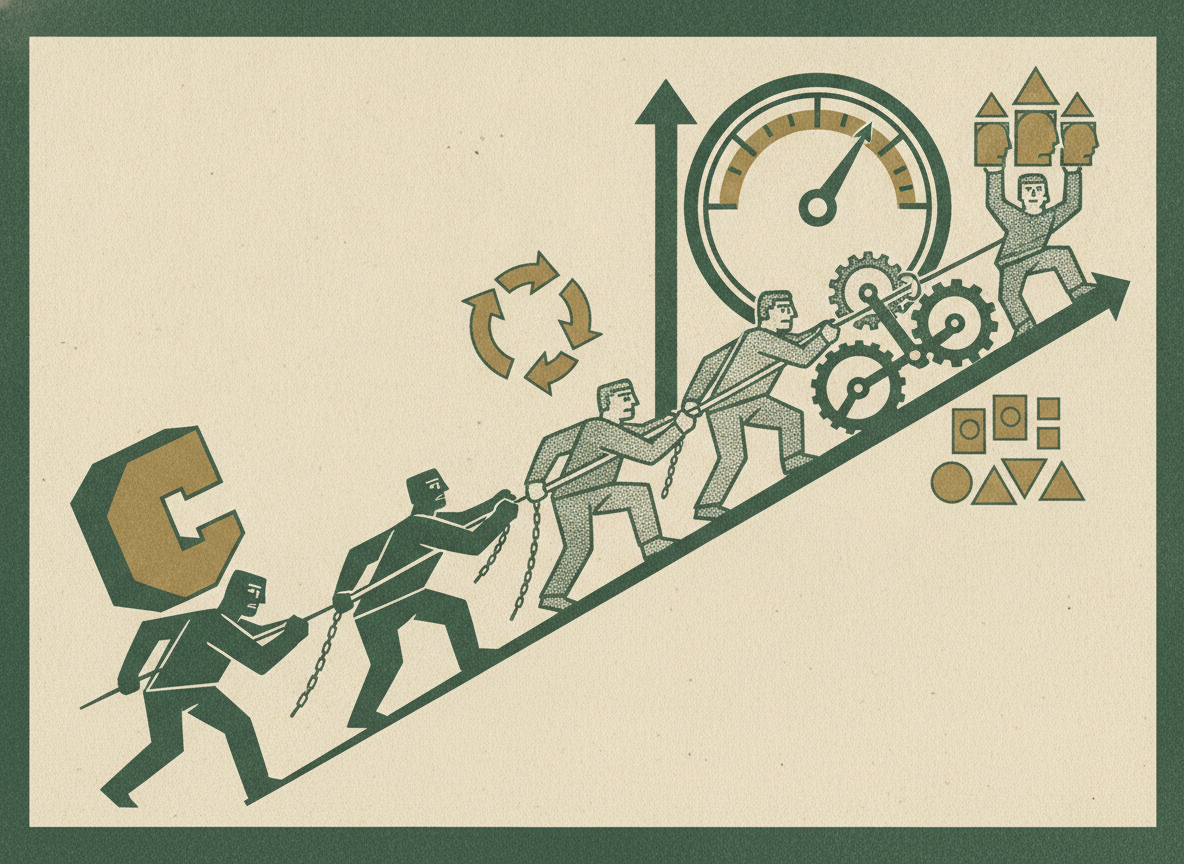
The multiple is not a mood, it is the sum of a short list of measurable risk factors, and each one is something you can work on. Buyers do not pay a premium for a good story. They pay it for recurring revenue, management depth, customer diversification, durable growth, and clean financials, in roughly that order of impact. Remove risk and the multiple expands. Add risk and it contracts, often brutally.
Two drivers do the most damage when ignored. The first is owner dependency: Viking Mergers estimates that heavy owner dependency can cut the multiple by 20% to 40% versus a comparable business run by a real management team, because the buyer is inheriting a company whose economics depend on replacing you. As Sofer Advisors puts it, buyers pay a premium for normalized EBITDA, and the real reason owner-operated firms clear lower multiples is that the acquirer must rebuild the business around the founder's absence. The second is customer concentration: when one client exceeds roughly 20% of revenue, that same analysis ties a 10% to 25% valuation reduction to the risk that the client leaves with you. Owner dependency is a solvable problem, and I laid out the playbook in key-person risk: de-risking the founder. It is the highest-return valuation work most founders never do.
There is a contrarian read worth holding in mind. Greenwich Group's research on PE buyers suggests founder-owned businesses are sometimes offered slightly cheaper multiples as a deliberate risk-transfer and financing offset, not purely as a penalty for weakness. The discount, in other words, is partly the price of certainty the buyer is buying. That should make you feel better and work harder: the more certainty you can manufacture before the sale, the less discount you have to accept.

Preparing the Number Before a Sale
The way to lift an owner-operated valuation is to spend the 12 to 24 months before a sale systematically removing the risks that compress your multiple, and that work is exactly what the Transaction Desk stage of the Greenwood Engagement Model is built to run. The sequence is not glamorous. Normalize the financials so the add-back schedule is bulletproof. Build a layer of management so the business survives your vacation. Diversify the customer base so no single logo can tank the deal. Each of those moves converts directly into multiple, and they compound, because a business with recurring revenue, real managers, and diversified customers does not just earn a higher multiple on each risk factor, it moves into a different buyer pool entirely.
Timing is the part founders underestimate. You cannot manufacture two years of management continuity in the quarter before you list, and buyers know the difference between a durable improvement and a pre-sale cosmetic. The average business sold at about 2.6x to 2.7x SDE in 2026 precisely because most sellers arrive unprepared and negotiate from the risks still baked into their numbers. The ones who start early, who treat the runway to a sale as an operating project rather than a listing event, routinely capture the gap between that average and the 5.0x to 7.0x that scaled, de-risked lower-middle-market firms command. I mapped the concrete pre-sale checklist in five things to fix 24 months before you sell. The theme underneath all of it is the same: your valuation is not something a buyer decides at the closing table. It is something you build, quietly, in the two years before anyone makes an offer.

Frequently Asked Questions
How Are Owner-Operated Businesses Valued Compared to Venture-Backed Startups?
Owner-operated businesses are valued on normalized SDE or EBITDA tied to transferable cash flow and risk, while venture-backed startups are valued on future growth, market size, and negotiated exit potential. The first lens rewards predictable profit you can hand over; the second rewards scale you have not reached yet.
Why Do Venture-Backed Companies Get Higher Multiples Than Similar Owner-Operated Firms?
Venture-backed companies command higher multiples because buyers price in aggressive growth, large addressable markets, recurring revenue, and preferred-stock economics rather than current cash flow alone. A profitable owner-operated firm is valued for what it reliably produces today, which is a lower-variance and therefore lower-multiple bet.
Do Buyers Use SDE or EBITDA to Value a Small Business?
Smaller owner-operated companies are usually valued on Seller's Discretionary Earnings, which adds the owner's compensation back to profit, while buyers shift to EBITDA as a business grows and hires real managers. The crossover happens when the company genuinely needs a management team a new owner could not simply replace with themselves.
How Does Owner Dependency Affect What a Buyer Will Pay?
The more a business depends on the owner for sales and operations, the higher the perceived transfer risk and the lower the multiple, with estimates of a 20% to 40% reduction for heavy dependency. Buyers also protect themselves with earnouts and holdbacks, so owner dependency costs you both on price and on how much cash you take at closing.
What Increases My Company's Valuation Before a Sale?
Recurring revenue, management depth that reduces key-person risk, diversified customers, durable growth, and clean normalized financials all push the multiple up. The highest-return work is usually reducing owner dependency and customer concentration, and it takes 12 to 24 months to do credibly, so the biggest gains go to founders who start early.
References
- Closely-Held vs. Venture-Backed Companies (Joe Orlando, ASA) - Exit Strategies Group
- EBITDA Multiples by Industry 2026: Complete Data Table - FISART
- Average EBITDA Multiples by Industry (2026 Data) - Praxis Rock
- What Buyers Really Think When a Business Depends on Its Owner - Viking Mergers
- EBITDA Multiple for Business Valuation by Industry - Sofer Advisors
- Private Equity Buyers Seeking Founder-Owned Companies - Greenwich Group
- What a 2026 Valuation Really Hinges On - Greenwood Business Consultants
- The Owner Earnings Number Buyers Really Care About - Greenwood Business Consultants
- Key-Person Risk: De-Risking the Founder - Greenwood Business Consultants
- 5 Things to Fix 24 Months Before You Sell - Greenwood Business Consultants
