

Runway Math: How Many Months You Really Have When Revenue Wobbles
- Runway is not cash divided by last month's burn. In a choppy market, that formula flatters you, and the gap between the comfortable number and the real one is where companies get surprised.
- Real Cash Flow Management means modeling runway across multiple revenue scenarios, base, downside, and upside, so you know how many months you have if the quarter goes wrong, not just if it goes right.
- Your true decision deadline is the date on the downside case, minus the months it takes to raise, minus a buffer for missing plan. That date, not the optimistic one, governs your choices.
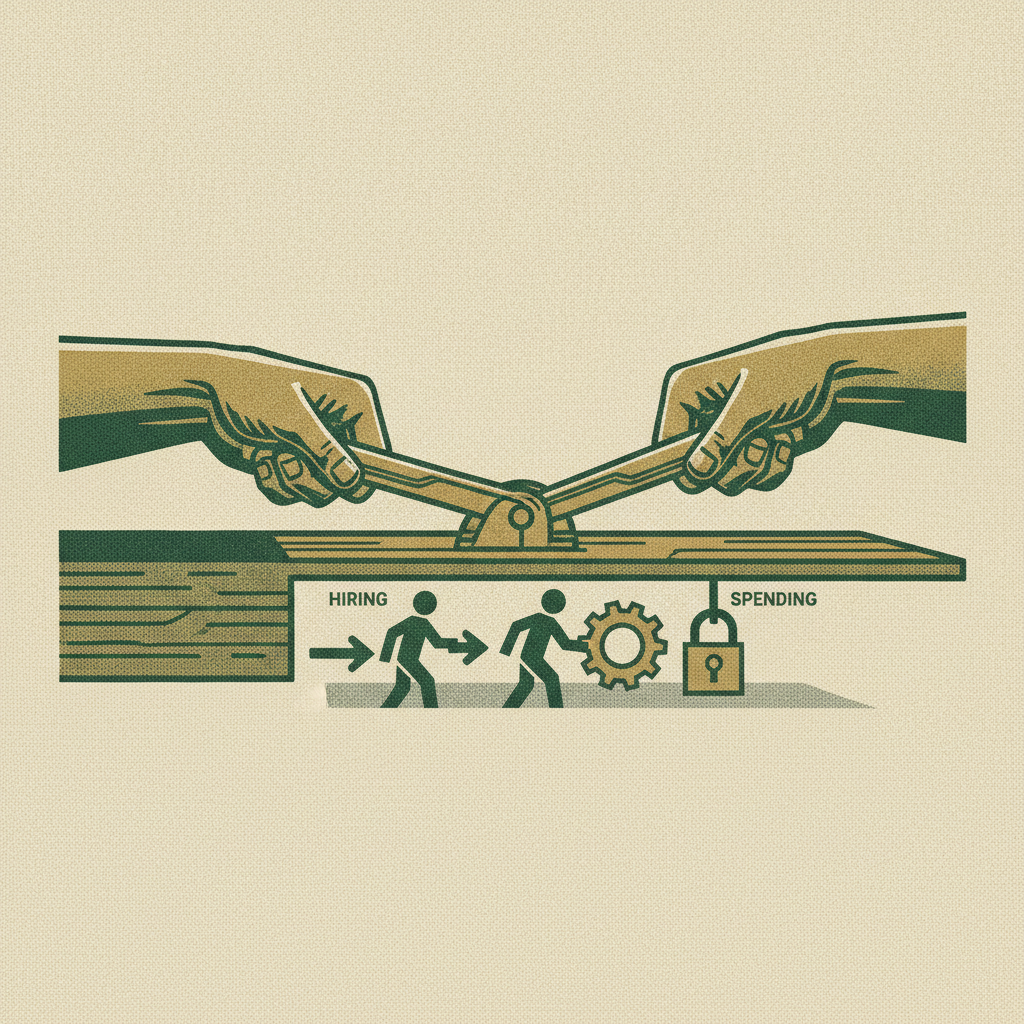
- The fastest levers to extend runway are the ones you control directly: pacing hiring, trimming committed spend, and tightening collections, not hoping revenue closes the gap.
- Cash is still the number one killer of otherwise good companies. Getting runway math right is the difference between raising from strength and raising because you have to.

Why the Simple Runway Formula Misleads
Ask most founders how much runway they have and they will do a quick calculation in their head: cash in the bank divided by last month's net burn. If they have $2.4M and burned $200K last month, they will tell you twelve months, and they will believe it. That number is not a lie exactly. It is just the most optimistic thing you can truthfully say, dressed up as a fact.
The formula misleads in two directions. First, it uses a single month's burn as if burn were constant, when in reality burn lumps: an annual software renewal, a tax payment, a new hire's first full month, a marketing push all land unevenly, and the "average" month you divided by may not exist. Second, and more dangerously, it assumes revenue holds. The twelve-month figure quietly bakes in the assumption that next month's revenue equals last month's, and the month after that, all the way out. In a market where revenue wobbles, that assumption is doing enormous unacknowledged work. Kruze Consulting, after reviewing more than 750 funded startups, found that founders frequently overestimate runway precisely because they ignore committed-but-not-yet-invoiced expenses and lean on optimistic revenue forecasts, and it recommends cutting forecast revenue by 25% to 50% in a downside case for planning.
This is not a rounding error. It is the difference between raising on your schedule and raising on someone else's. Cash-related failure remains the dominant way startups die: CB Insights' 2024 analysis found that 38% of startups fail because they run out of cash or cannot raise more, the single most-cited reason. Good Cash Flow Management does not start with cutting costs. It starts with refusing to believe the comfortable version of your own runway.
Modeling Runway Across Revenue Scenarios
The fix is to stop producing one runway number and start producing three. You model the same cash balance and cost base against a base case, a downside case, and an upside case for revenue, and you read the runway off each. The point is not precision. The point is to see the range you are actually operating inside.
Start with the mechanics, because they trip people up. Gross burn is your total monthly cash outflow. Net burn is gross burn minus the cash revenue actually collected. Runway is your cash balance divided by net burn, but net burn is exactly the number that swings when revenue moves, which is why you have to run it under different revenue assumptions rather than one. In the base case, revenue tracks your honest plan. In the downside case, you do what Kruze recommends and haircut revenue by something like 25% to 50%, hold your committed costs, and watch net burn rise and runway shrink. In the upside case, revenue beats plan and runway extends. The three numbers together are your real situation.
A useful discipline layered on top is the burn multiple, popularized by David Sacks: net burn divided by net new ARR. Under 2 is considered good for a venture-stage software company and over 4 is a warning sign, with 2025 benchmarks showing a median around 1.6 for Series A and B SaaS companies and best-in-class businesses under 1 (Capchase, CFO Advisors). The burn multiple tells you whether the cash you are spending is actually buying growth, which is the question a runway number alone cannot answer. Run this properly and you are doing real scenario planning, not wishful arithmetic. The 13-week cash flow forecast is the short-horizon version of the same idea.

Finding Your True Decision Deadline
Once you have runway under each scenario, you can find the number that actually matters, which is not "when do we run out of money" but "when do we have to decide." Those are different dates, and the gap between them is measured in months you cannot get back if you miss them.
Work backward from the downside case, because prudence lives on the downside. Say your downside runway ends in nine months. You do not have nine months to act. Raising takes time: Carta reports that in 2024, seed and Series A rounds often took four to six months from first meeting to cash in the bank, with later stages frequently running longer, and SVB's market updates cite a similar three-to-six-month cycle that stretches in tougher markets. So subtract, say, five months to raise. Now you are at four months. Then subtract a buffer for missing plan, because you will miss it somewhere, and you are at perhaps two to three months from today. That is your true decision deadline: the point by which you must either have a raise underway, a path to profitability locked, or a cost plan ready to execute.
This is why the experts push founders to start raising with far more cushion than instinct suggests. Carta's guidance is to begin a raise with 9 to 12 months of runway, and Kruze advises at least 6 to 9 months, not the 3 to 6 that many founders assume is fine. The reason is exactly this backward math. If you wait until the comfortable base-case number gets uncomfortable, the downside case has already eaten your negotiating position, and you end up raising from weakness. Knowing your true decision deadline is what lets you raise from strength instead.
Levers That Extend Runway Fast
When the decision deadline is closer than you want, the instinct is to hope revenue closes the gap. Hope is not a lever. The levers that actually move runway are the ones on the cost and cash side, because you control them directly and they take effect immediately, while revenue is a thing you influence and wait for.
The fastest is hiring pace. Headcount is usually the largest and most controllable line in a growth-stage budget, and pausing or slowing planned hires reduces future burn more than almost anything else without touching the existing team. Next is committed spend: software you are underusing, marketing programs that are not paying back, contractors and projects that can wait a quarter. This is where a clean stack pays off, and where the cash flow leaks hiding in a profitable business usually live. Then comes the cash-timing lever, which does not cut costs at all but changes when cash moves: tightening collections and DSO, invoicing faster, and negotiating longer terms with your own vendors. None of that reduces what you spend, but all of it extends how long your cash lasts.
The right sequence matters. Pull the cash-timing and discretionary-spend levers first, because they buy time without damaging the business. Touch headcount deliberately and early rather than reflexively and late, because a small adjustment made three months out is far less painful than an emergency cut made three weeks out. Every one of these is more reliable than betting on a revenue month that may not come, which is the whole reason you modeled the downside case to begin with.
Tying Runway to Fundraise Timing
The reason all of this runway math exists is to answer one strategic question: when do you raise? Get the timing right and you negotiate from a position of strength, with real alternatives and a clock that favors you. Get it wrong and you are raising because you must, which every investor across the table can smell.
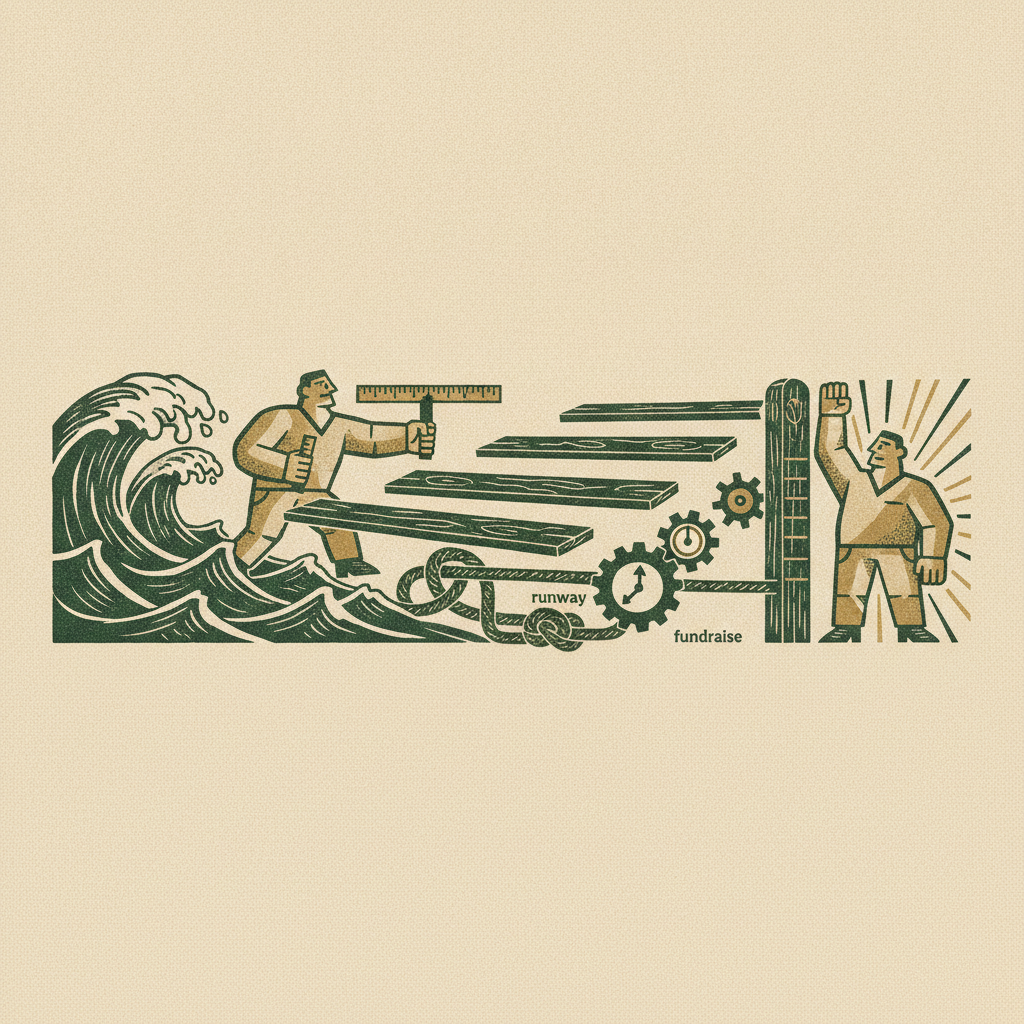
Tie the two together explicitly. Your fundraise should begin when your downside-case runway still leaves room for the full raise cycle plus a buffer, which in practice means starting with roughly 9 to 12 months of runway on the honest plan, more if your revenue is volatile or the market is cold. The trap is anchoring to the base case: if you start raising when the optimistic number says twelve months, the downside number may already say seven, and seven minus a five-month raise minus a buffer means you are closing a round with almost no margin for a slip. That is how good companies end up taking bad terms.
So the sequence is: model runway across scenarios, find your true decision deadline off the downside case, use the fast levers to extend that deadline where you can, and time the raise to begin well before it. Runway is not a vanity metric you check quarterly. It is the master clock that governs hiring, spending, and fundraising all at once. In a market where revenue wobbles, the founders who know their real number, not the comfortable one, are the ones who still have choices when everyone else has run out of them.
Frequently Asked Questions
How do you calculate runway?
Runway is your cash balance divided by net burn, where net burn is total monthly cash outflow minus the cash revenue you actually collect. The mistake is using a single month's burn and assuming revenue holds. Instead, calculate it under multiple revenue scenarios so you know your runway if the quarter goes wrong, not just if it goes to plan.
How does revenue volatility change runway math?
Revenue volatility shortens runway in the scenarios that matter most. The simple formula assumes revenue stays flat, so it overstates how long your cash lasts. Modeling a downside case, cutting forecast revenue by 25% to 50% as Kruze Consulting recommends, raises net burn and reveals a shorter, more realistic runway that should drive your decisions.
When should you raise based on runway?
Start raising while your downside-case runway still covers the full raise cycle plus a buffer, which usually means beginning with 9 to 12 months of runway on your honest plan. Rounds often take four to six months to close, so waiting until the comfortable number looks tight means raising from weakness instead of strength.
References
- CB Insights, Top Reasons Startups Fail (2024): https://www.cbinsights.com/research/startup-failure-reasons
- Kruze Consulting, How to Calculate Startup Runway: https://kruzeconsulting.com/blog/how-to-calculate-startup-runway
- Carta, Fundraising Timeline 2024: https://carta.com/blog/fundraising-timeline-2024
- David Sacks, The Burn Multiple: https://sacks.substack.com/p/the-burn-multiple
- Capchase, SaaS Company Benchmarks: Understanding Burn Multiple: https://www.capchase.com/blog/saas-company-benchmarks-burn-multiple
- CFO Advisors, 2025 Burn Multiple Benchmarks: https://cfoadvisors.com/blog/2025-burn-multiple-benchmarks
