

The 13-Week Cash Flow Forecast That Survives a Volatile 2026
- A 13-week cash flow forecast is a rolling, weekly projection of every dollar in and out, built on the direct method off your actual bank balance, not the accrual numbers in your general ledger. It is the single best Cash Flow Management tool for a volatile year.
- Annual budgets assume a straight line. 2026 is not a straight line: oil is up nearly 80% year to date, the Fed is holding its benchmark rate in the 3.50% to 3.75% range, and tariff policy keeps moving. A static budget is stale the week you approve it.
- The model needs only five honest inputs: opening bank cash, collections, payroll and taxes, vendor payments, and known financing or one-off items. Everything else is noise.
- Run it on a weekly cadence with a variance check against last week's forecast. The discipline, not the spreadsheet, is what catches a shortfall while you still have time to act.
- For founder-led companies past $5M, this is the forecast that tells you about a cash crunch in week three, when you can still fix it, rather than in week thirteen, when you cannot.
I have never seen a healthy company die of a bad quarter. I have seen plenty die of a bad Tuesday: payroll clears, a big receivable slips, a tariff invoice lands early, and suddenly the bank balance that looked fine on the annual budget is short by Thursday. Good Cash Flow Management is not about predicting the year. It is about never being surprised by the next thirteen weeks. That is what the rolling 13-week forecast does, and in a year moving as fast as 2026, it has gone from a nice-to-have to the most important number on my desk.
Why Annual Budgets Break When Cash Flow Management Matters Most
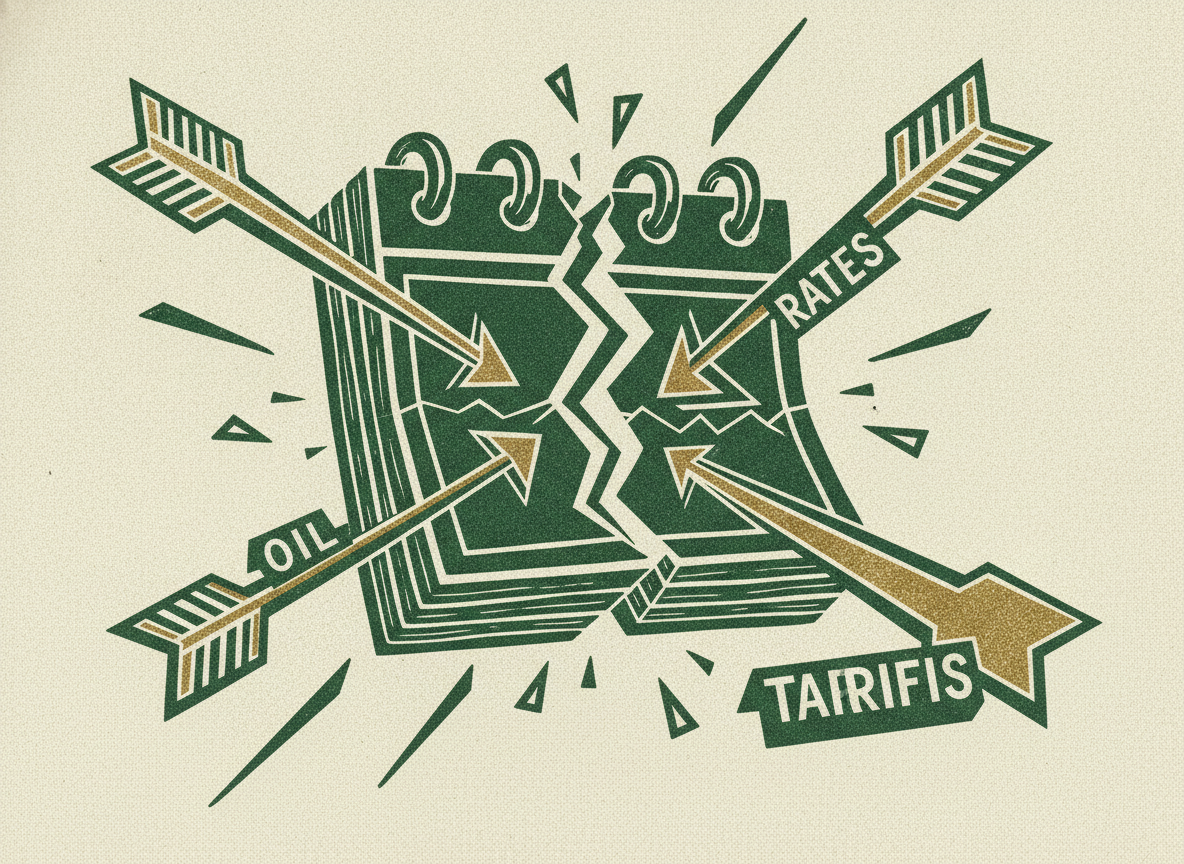
Annual budgets break because they assume the operating environment holds still, and in 2026 it refuses to. The budget you approved in December encoded a set of assumptions about rates, input costs, and customer payment behavior. Most of those assumptions are already wrong. Liquidity in the U.S. Treasury market worsened sharply after the April 2025 tariff announcements and has stayed choppy since, according to the Federal Reserve Bank of New York. Commodity prices followed: oil is up nearly 80% since the start of the year. And the rate relief many founders penciled in never arrived, with the Federal Reserve holding its target range at 3.50% to 3.75% rather than cutting. A budget cannot absorb that. It was built to be right on average over twelve months, which means it is rarely right in any given week.
The stakes are not abstract. A frequently cited U.S. Bank study found that roughly 82% of small business failures involve cash flow problems as a contributing factor, per SCORE. And the cushion is thinner than most founders think: research from the JPMorgan Chase Institute, summarized by The Kaplan Group, found the median small business holds just 27 cash buffer days, about four weeks of zero inflows before the lights flicker. An annual budget does not see a four-week problem coming. A 13-week forecast is built for exactly that horizon.
Anatomy of the Rolling 13-Week Model
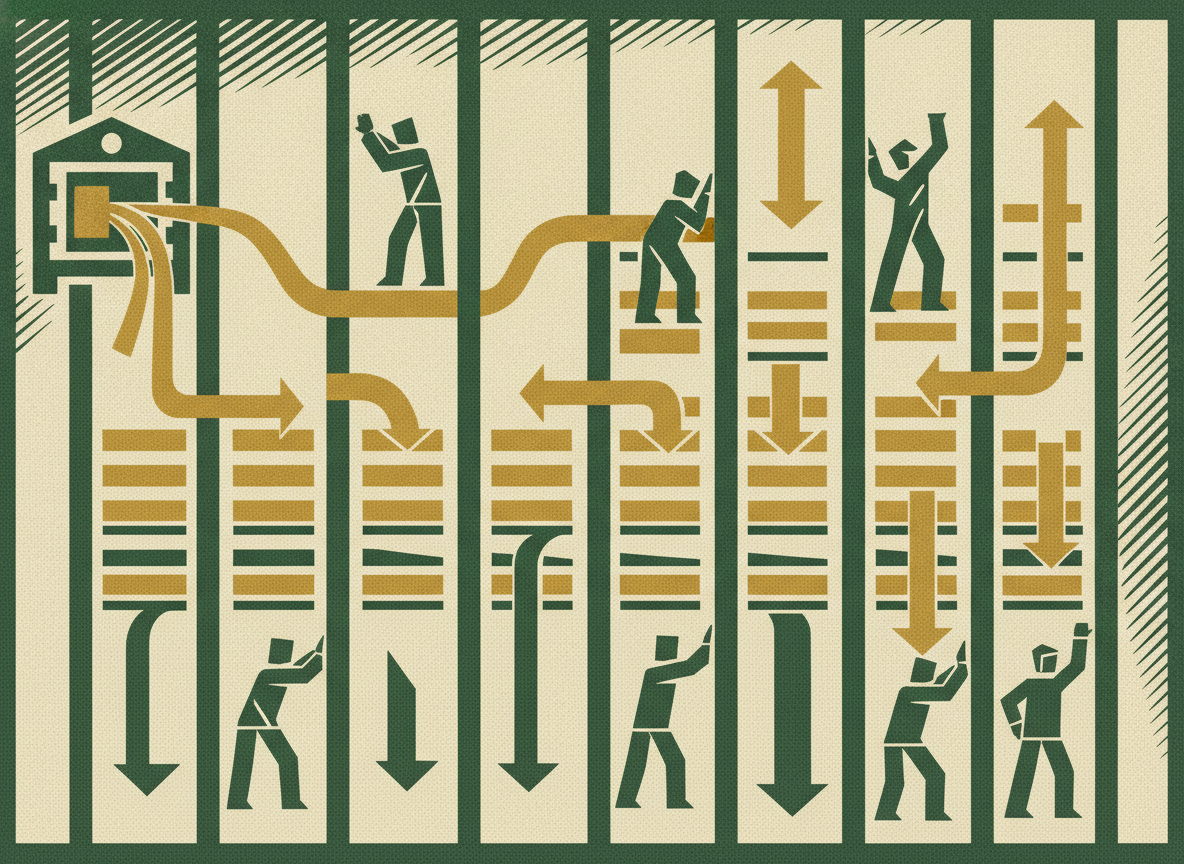
The model is a grid: thirteen weekly columns across the top, your cash categories down the side, built on the direct method. Direct method means you track real receipts and disbursements, the literal money hitting and leaving the bank, not revenue and expense as your accountant books them. The distinction matters because accrual accounting tells you whether you are profitable, and the 13-week forecast tells you whether you can make payroll, which is a different and more urgent question. As Intuit frames it, the forecast is a receipts-and-disbursements view that starts from collected funds.
Three sections do all the work. Cash inflows: customer collections, plus any financing draws or other deposits. Cash outflows: payroll and payroll taxes, vendor payments, rent, debt service, and one-off items. The weekly summary: opening balance, net change, closing balance, carried forward to seed the next week. The one rule I never let a client break is the opening balance. It must be the bank balance, the collected and available cash, not the book balance from the general ledger. Book cash includes checks you have written that have not cleared and deposits that have not settled. Forecasting off book cash is how a company that looks solvent on paper bounces a payment in practice.
"Rolling" is the other half of the name and the part most people skip. Each week you drop the week that just closed and add a new week 13 at the far end, so you are always looking a full quarter forward. The format was popularized by restructuring advisors, firms like Alvarez & Marsal, FTI Consulting, and AlixPartners, who standardized it for distressed companies because it tracks the one metric that matters when conditions tighten: liquidity. PKF O'Connor Davies calls it a CFO's lifeline, and that is not marketing. You do not have to be in distress to want the tool distressed companies reach for first.
The Five Cash Flow Management Inputs You Actually Need
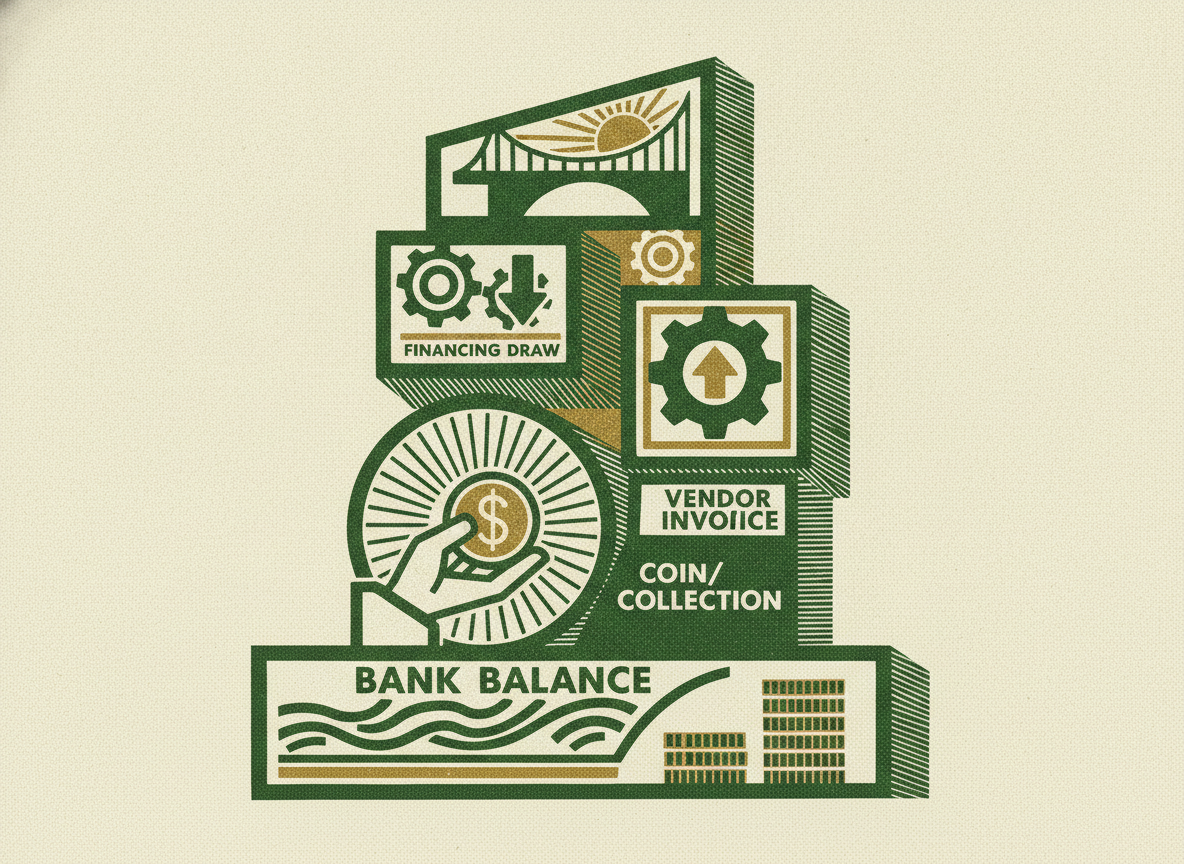
You need five inputs, and resisting the urge to add a sixth is most of the skill. Founders new to Cash Flow Management tend to build a beautiful 40-row model that nobody updates by week three. The honest five are these. First, opening bank cash, pulled directly from the bank, not the ledger. Second, collections: when customers will actually pay, which is a behavioral estimate, not your invoice due dates. Third, payroll and payroll taxes, the most predictable and most unforgiving outflow you have. Fourth, vendor and operating payments, including the recurring obligations people forget, like quarterly tax estimates, loan repayments, and supplier prepayments. Fifth, known financing and one-off events: a loan draw, a tax refund, an equipment purchase, a legal settlement.
The discipline on inputs is conservatism on the way in and honesty on the way out. The fastest way to make this forecast lie to you is to overestimate collections, so I tell clients to age every expected receipt against how that customer has actually paid, not how they promised to. The cost of getting this wrong is measurable. Kyriba's analysis pegs the average cost of unreliable cash forecasts at roughly $465,000 a year for US mid-sized companies, with 43% of mid-market firms admitting they rely on forecasts they do not trust, per Kyriba. Five inputs you maintain religiously beat fifty inputs you abandon.
Running It Weekly: The Cadence That Keeps It Honest
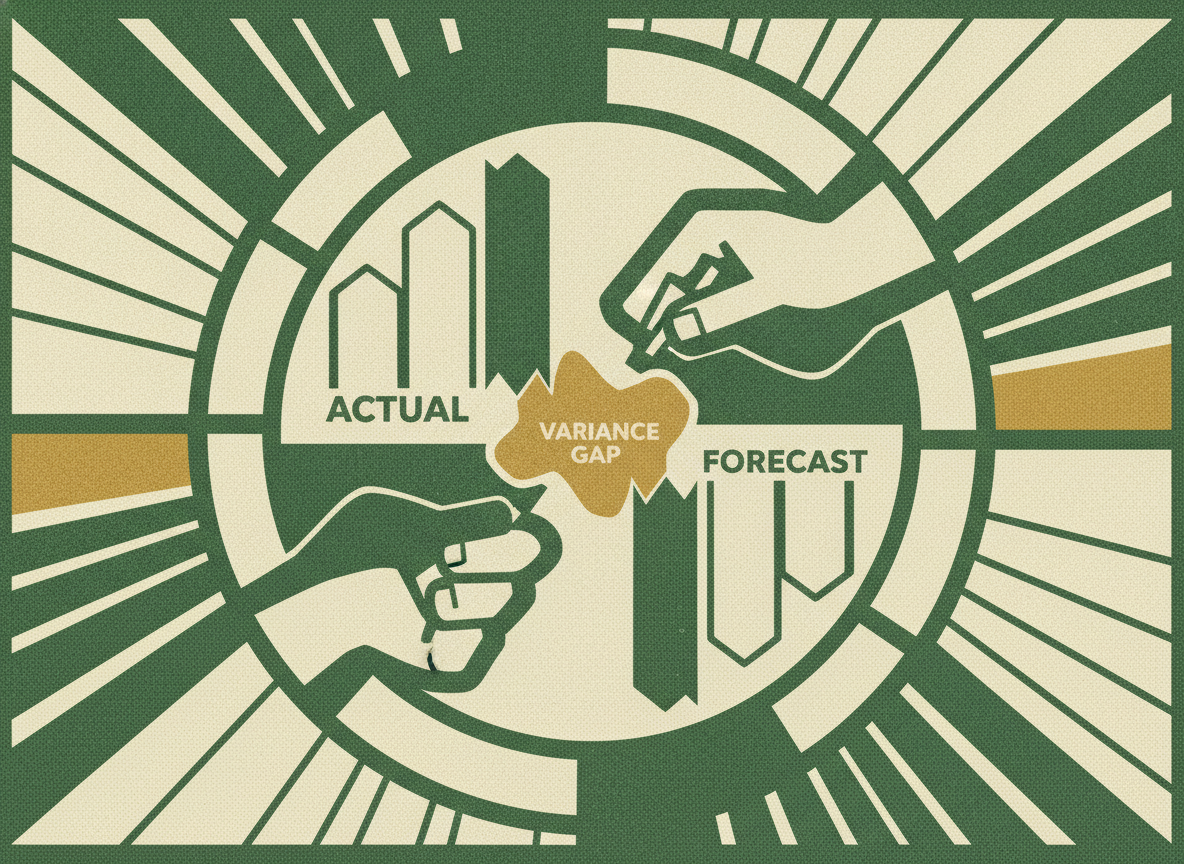
The forecast is only as good as the weekly ritual around it, and the ritual is short: thirty minutes, same day each week, every week. You do three things. You update actuals, replacing last week's estimate with what truly cleared the bank. You run variance, comparing forecast to actual line by line and asking why any gap above a few percent happened. And you roll forward, adding the new week 13 and refreshing assumptions on the weeks ahead. The variance step is the engine. A forecast you never check against reality is just a hopeful spreadsheet, and most are: CFOTech reporting notes around 70% of organizations still run cash forecasting on spreadsheets, and 73% of CFOs now say traditional methods are insufficient for managing uncertainty.
Weekly cadence is also what makes scenario planning useful instead of theoretical. Once the base case is live, I keep two lightweight variants beside it: a downside where a top customer pays 30 days late and a key input cost jumps, and an upside where a big collection lands early. In a volatile year you are not forecasting a number, you are forecasting a range, and the range is the point. This is where the function is heading anyway. Gartner projects that by 2026 about 75% of organizations will use AI in at least one treasury function, with cash forecasting the leading use case. The tooling will get better, but the cadence is what creates the value, with or without AI.
Reading the Forecast Before Your Bank Balance Does
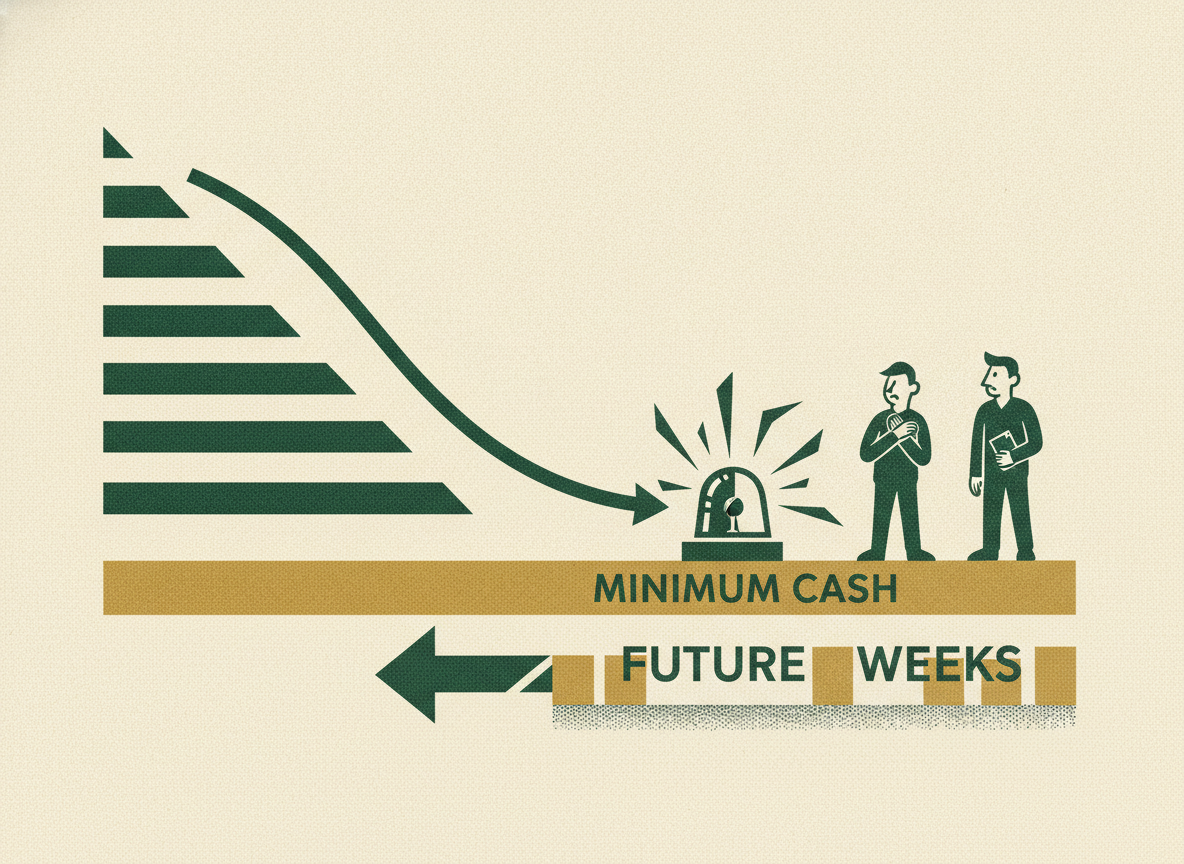
The whole purpose of the 13-week forecast is to learn bad news early enough to do something about it. Your bank balance reports the past. The forecast reports the future, and the gap between the two is your decision-making window. When week six dips below your minimum cash threshold, you have five weeks to act: accelerate a collection, delay a discretionary payment, draw on a line, or have the financing conversation from a position of calm rather than panic. Lenders know this, which is why a clean 13-week forecast is the first document a bank or investor asks for when liquidity is in question. Showing up with one signals you are managing the business, not reacting to it.
I tell every founder I work with the same thing: set a minimum cash floor, the number below which you will not let the closing balance fall, and treat any forecasted breach of it as an action trigger, not a worry. That floor turns a passive spreadsheet into an early-warning system. In a stable year you might get away without it. In a year where 88% of small businesses reported a cash flow disruption, per The Kaplan Group, the founders who sleep are the ones who can see thirteen weeks down the road. The forecast does not make the volatility go away. It just makes sure the volatility never gets to surprise you.

Frequently Asked Questions
What Is a 13-Week Cash Flow Forecast?
It is a rolling, weekly projection of all cash coming in and going out over the next thirteen weeks, built on the direct method. Direct method means it tracks actual receipts and disbursements against your bank balance, not accrual revenue and expense. Thirteen weeks equals one quarter, long enough to spot a developing shortfall and short enough that the numbers stay accurate and actionable.
Why 13 Weeks Instead of an Annual Budget?
Because an annual budget assumes a stable environment and a volatile year does not provide one. The budget is built to be right on average across twelve months, which makes it unreliable in any single week, exactly when payroll has to clear. The 13-week forecast works on the horizon where cash crises actually happen, and the median small business has only about 27 cash buffer days of cushion. The two tools complement each other: the budget sets the annual plan, the 13-week forecast manages survival.
How Often Should You Update a Cash Flow Forecast?
Weekly, without exception. Each week you replace the prior week's estimates with what actually cleared the bank, run a variance check on the gaps, and roll a new thirteenth week onto the end. The cadence is what keeps the forecast honest, because a model that is never reconciled against reality drifts into wishful thinking. Thirty minutes on the same day each week is the entire commitment.
Who Owns the Cash Forecast in a Growing Company?
Finance owns it, but the inputs come from across the business. In a company past $5M, this typically sits with the CFO or, for firms not yet ready for a full-time hire, a fractional CFO who builds the model and runs the weekly review. Sales informs collection timing, operations informs vendor payments, and finance assembles and validates the whole picture. The owner's real job is the variance discipline, holding the forecast accountable to what actually happened.
What Inputs Does the Model Need?
Five: opening bank cash from the bank statement, customer collections timed to real payment behavior, payroll and payroll taxes, vendor and operating payments including recurring obligations, and known financing or one-off items. That is it. The temptation is to add detail, but a lean model you maintain every week beats an elaborate one you abandon by week three.
References
- Federal Reserve Bank of New York: Treasury Market Liquidity Since April 2025
- Federal Reserve: FOMC Minutes
- SCORE: The #1 Reason Small Businesses Fail and How to Avoid It
- The Kaplan Group: 51 Small Business Cash Flow Statistics and Financing Pain Points
- Intuit: What Is the 13-Week Cash Flow Forecast?
- PKF O'Connor Davies: A CFO's Lifeline, Mastering the 13-Week Cash Flow Forecast
- Kyriba: Data, the CFO's Secret Weapon for Cash Forecasting
- MSDynamicsWorld: Why Forecast Accuracy for CFOs Is the Biggest Lever in 2026
- Gartner: Cash Flow Forecasting for CFOs
