

Working Capital Is Free Money: Unlocking Cash You Already Have
- Working capital is the most overlooked lever in Cash Flow Management: PwC's 2025/26 study identifies about 1.84 trillion euros of excess working capital that companies could free up for investment.
- The cash is trapped in three places on your balance sheet: receivables, payables, and inventory. Releasing it is non-dilutive and does not touch your cap table.
- Days Sales Outstanding is the usual culprit; PwC finds DSO rose 5.7% over the past decade, from 47.3 days in 2015 to 50.0 days in 2024.
- Tighten collections, extend payables without punishing suppliers, and right-size inventory to compress your cash conversion cycle.
- Quantify the prize before you start: every day you cut from the cash conversion cycle converts directly into cash you already earned.
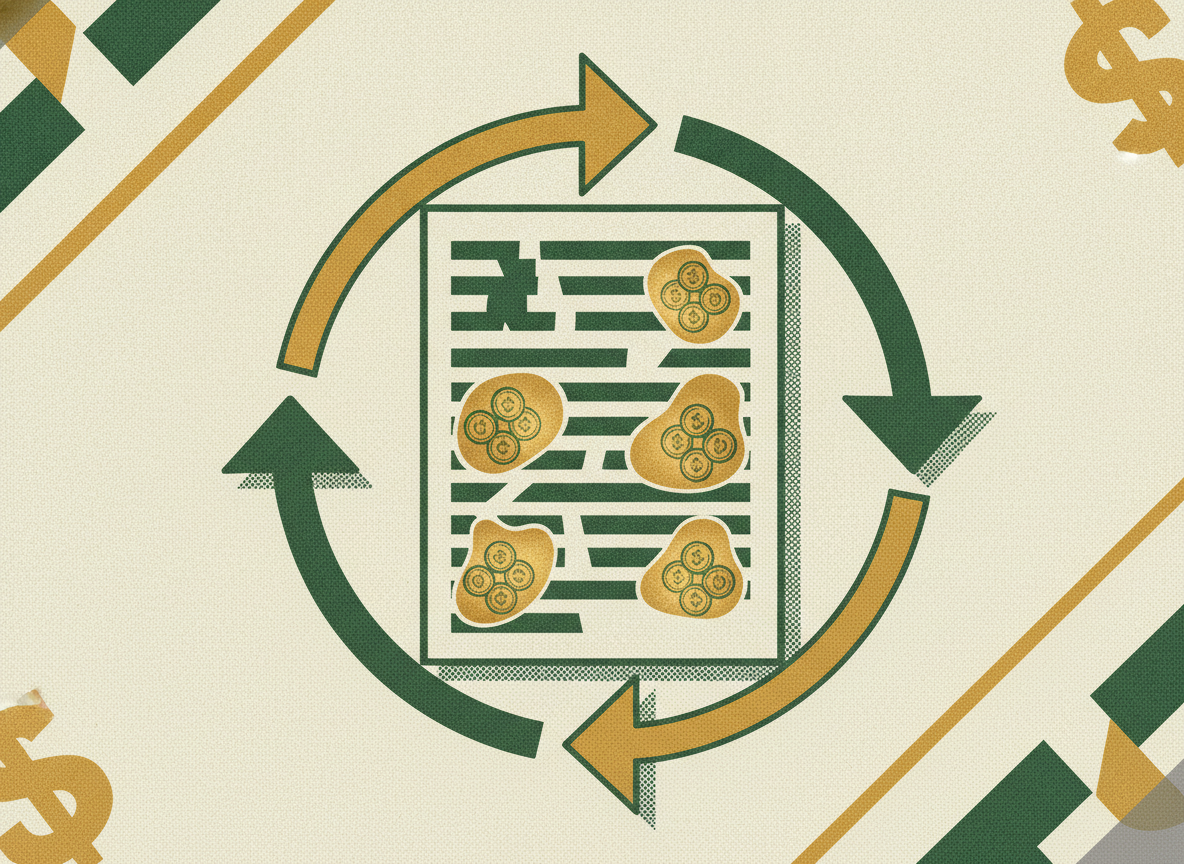
The Cash Flow Management Opportunity in Your Balance Sheet
The cash hiding in your balance sheet is your working capital, the money tied up in the gap between paying for things and getting paid for them. That gap is measured by the cash conversion cycle: days inventory outstanding plus days sales outstanding, minus days payable outstanding. The wider the cycle, the more of your own cash is frozen in operations instead of funding growth. According to KPMG's US working capital analysis, the average cash conversion cycle stretched from 83 to 90 days between 2020 and 2023 before improving slightly to 89 days in 2024. Every one of those days is cash you funded.
The scale of the opportunity is enormous. PwC's 2025/26 Working Capital Study puts roughly 1.84 trillion euros of excess working capital on the table globally, money that could be released for investment rather than borrowed. For a growth-stage company, the same logic scales down to a very real number on your own balance sheet. Finding it is the first step, and it costs nothing but attention. This is the discipline that sits underneath a 13-week cash flow forecast: you cannot release cash you have not first located.

Tightening Receivables and Collections
You tighten receivables by shortening the time between sending an invoice and banking the payment, which directly lowers your Days Sales Outstanding. Rising DSO is the single biggest driver of trapped cash. PwC reports that DSO climbed 5.7% over the past decade, from 47.3 days in 2015 to 50.0 days in 2024, across companies of every size. Most of that drift comes from loose process, not deadbeat customers: unclear terms, late invoicing, and no systematic follow-up.
Fix the process and the cash follows. Invoice the day the work is delivered, not at month-end. Put clear terms on every contract and enforce them. Build a simple collections cadence, a reminder before the due date, one on the day, and a personal call after. Consider small early-payment discounts where the math works, and tighten credit checks on new accounts. These are the same leaks I hunt for in where cash quietly disappears from a profitable business. None of it requires new financing, only a decision to treat receivables as cash rather than paperwork.

Extending Payables Without Burning Suppliers
You extend payables by lengthening your Days Payable Outstanding through negotiated terms, not by simply paying late and damaging the relationships you depend on. Every extra day you hold cash before paying a supplier is a day that cash works for you instead of them. Deloitte's Germany Working Capital Report found that companies pre-financed their working capital for an average of 65 days in 2024, two days more than the prior year, which shows how much room sits on the payables side of the equation.
The key is to extend terms as a negotiation, not a surprise. Ask your largest suppliers for net-45 or net-60 in exchange for volume commitments or reliability. Align your payment runs to a disciplined schedule so you use the full term you agreed to, no earlier. Where a supplier needs the cash sooner, supply chain finance can let them get paid early while you keep the longer term. Burning a critical supplier to save a few days of cash is a bad trade; negotiating the same days openly is simply good Cash Flow Management.
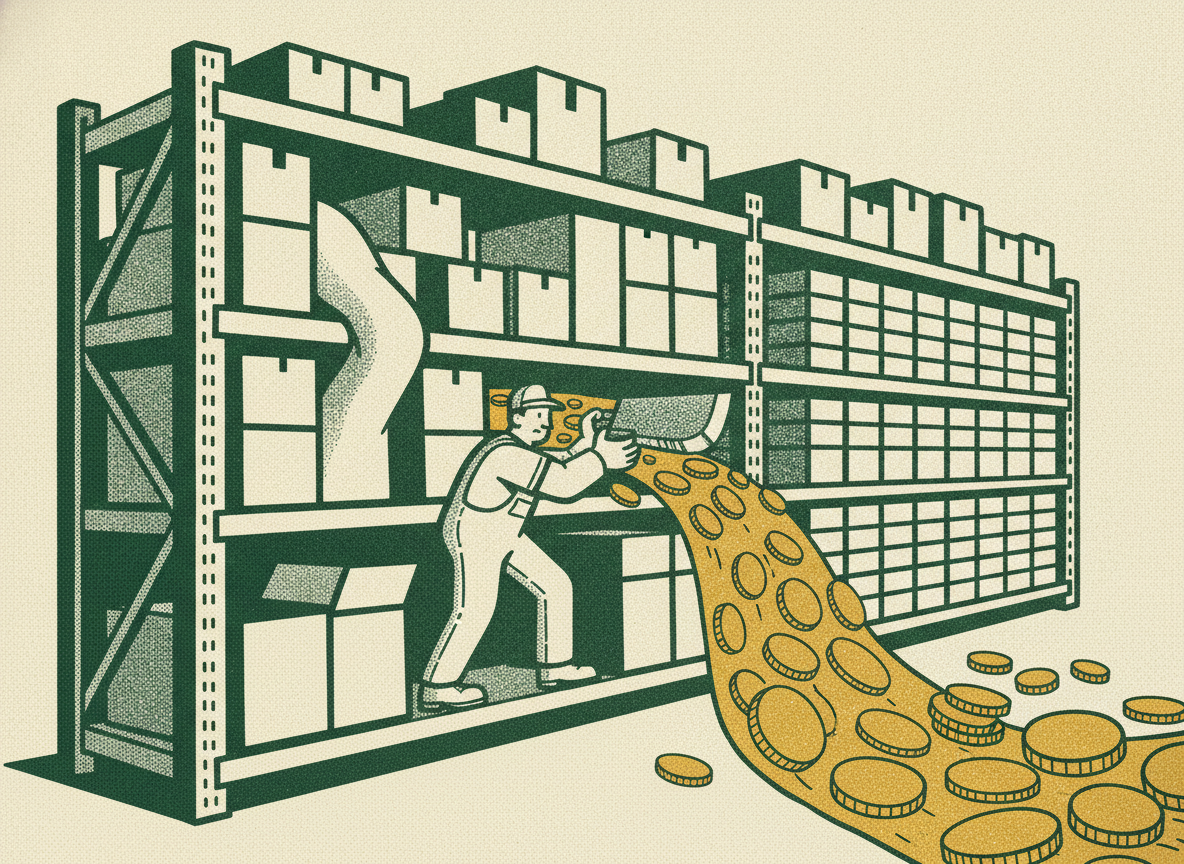
Right-Sizing Inventory
You right-size inventory by holding just enough stock to serve demand reliably, releasing the cash that excess inventory silently absorbs. Inventory is the least visible place cash hides because it looks like an asset on the balance sheet, but idle stock is cash you cannot spend. PwC's 2024/25 study noted a 9.1 day rise in net working capital since 2019 for the most cash-intensive sectors, much of it sitting in inventory that never needed to be that large.
Attack it with better forecasting and tighter reorder discipline. Segment your inventory so your fastest movers get attention and your slow, capital-heavy items get scrutinized. Reduce safety stock where lead times are reliable, and clear dead stock even at a discount, because trapped cash earns nothing while a markdown at least frees it. The Fortlane Working Capital Barometer estimated more than 100 billion euros of unused cash potential tied up in companies, a large share of it in inventory. Right-sizing is not about running lean for its own sake; it is about not funding shelves when you could be funding growth.
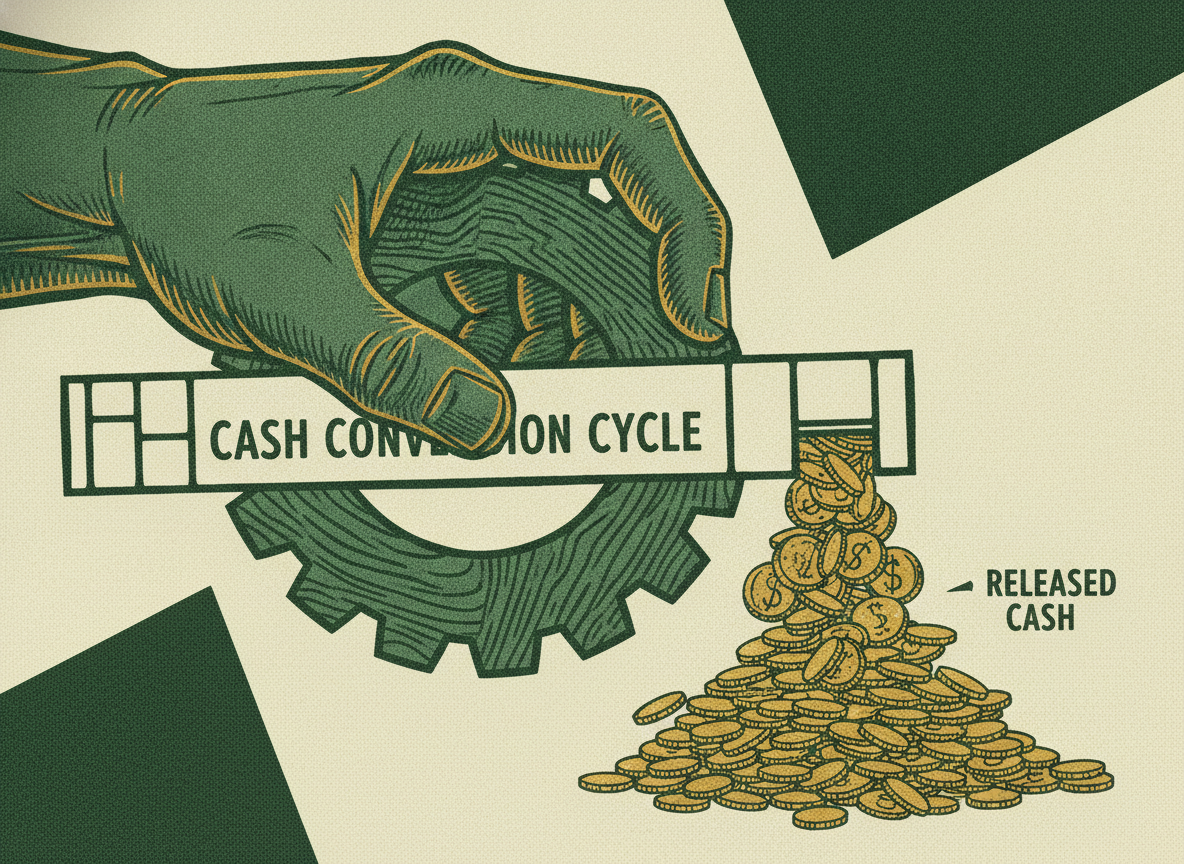
Quantifying the Cash Flow Management Prize
You quantify the prize by calculating your cash conversion cycle today, setting a realistic target for each component, and multiplying the days you save by your daily cash operating flow. The formula is simple: cash conversion cycle equals days inventory outstanding plus days sales outstanding minus days payable outstanding. Cut ten days from a company turning over meaningful daily volume and the released cash is often larger than a modest funding round, and it costs no interest and no equity.
Make it concrete and track it. Baseline each of DSO, DPO, and days inventory, set a target for the next two quarters, and report the released cash the same way you would report revenue. Visa's 2024 Growth Corporates Working Capital Index recorded a 7% improvement in working capital efficiency scores in 2024, proof that disciplined companies are actively pulling this lever. Before you dilute yourself or add debt, run this exercise. Often the round you were about to raise is already sitting inside your own operations, which is the whole point I make about choosing the right funding path before you borrow.

Frequently Asked Questions
What Is Working Capital Optimization?
Working capital optimization is the practice of freeing cash trapped in receivables, payables, and inventory by shortening the cash conversion cycle. It releases money you have already earned without raising equity or taking on debt. Done well, it is one of the cheapest and fastest sources of capital available to a growing company.
How Do You Free Up Cash From Working Capital?
You free up cash by collecting receivables faster to lower Days Sales Outstanding, negotiating longer payment terms to raise Days Payable Outstanding, and reducing excess inventory. Each of these compresses the cash conversion cycle and converts frozen balance-sheet value into spendable cash. The levers are process changes, not financing, so they cost almost nothing to pull.
How Does the Cash Conversion Cycle Work?
The cash conversion cycle measures how many days cash is tied up in operations: days inventory outstanding plus days sales outstanding, minus days payable outstanding. A shorter cycle means cash returns to you faster after you spend it. Lowering the cycle by even a few days can release a large amount of cash for a company with meaningful daily volume.
How Do You Improve Working Capital?
Improve working capital by invoicing promptly and enforcing collections, extending supplier terms through negotiation rather than late payment, and right-sizing inventory with better forecasting. Measure DSO, DPO, and days inventory, set targets, and track the cash released each quarter. Consistent process discipline beats one-time cleanups.
What Is a Good Cash Conversion Cycle?
A good cash conversion cycle is one that is shorter than your industry peers and trending down over time, and in the strongest cases it is negative, meaning you collect from customers before you pay suppliers. Benchmarks vary widely by sector, so compare against similar businesses rather than a universal number. The goal is steady improvement in your own cycle quarter over quarter.
References
