

Working Capital Optimization: Finding Hidden Cash
Published: 2026-03-12 • Estimated reading time: 8 min
I’ve sat in hundreds of boardrooms, and the story is almost always the same. The P&L looks fantastic—revenue is climbing, margins are healthy—but the CEO is staring at a bank balance that tells a very different, and much more stressful, story. The problem isn’t profitability; it’s cash. More specifically, it’s the cash trapped inside the business, hidden in plain sight on the balance sheet. This is where mastering cash flow management becomes less of a finance function and more of a strategic weapon. For companies north of $5M in revenue, optimizing your working capital isn’t just good housekeeping; it’s the key to unlocking self-funded growth.
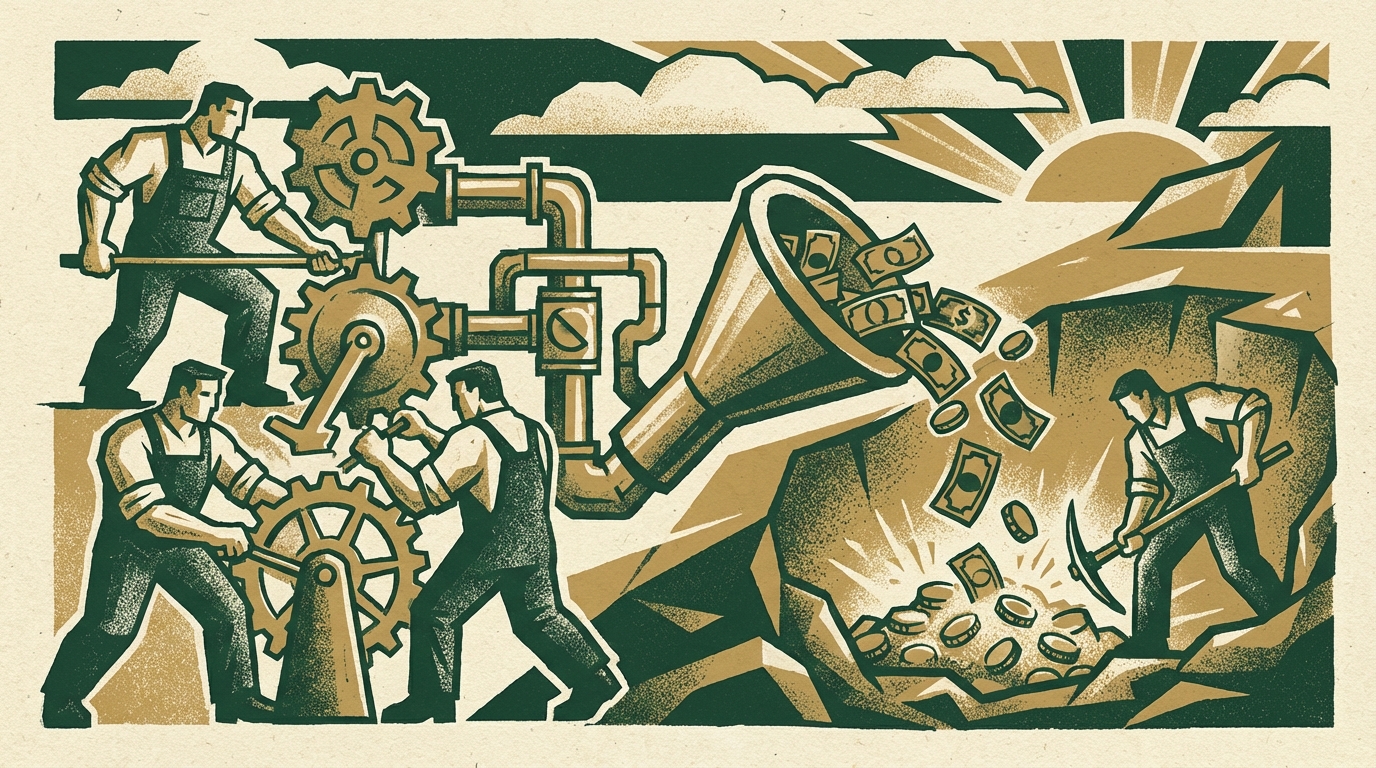
There's an ocean of cash locked inside your operations. My team and I don't just find it; we build the pumps to get it flowing. Let's walk through the three simple, powerful levers you can pull to release it.
The Cash Conversion Cycle Equation
The Cash Conversion Cycle (CCC) is the time, measured in days, it takes for a dollar you spend on inventory or inputs to find its way back into your bank account as cash from a customer sale. Think of it as your company’s financial metabolism; a lower number means you’re converting investments into cash faster and more efficiently. A recent survey from The Hackett Group reveals that top-quartile companies convert cash more than three times faster than their peers, a massive competitive advantage.

The formula itself is brutally simple:
CCC = DIO + DSO – DPO
DIO (Days Inventory Outstanding): How long your stuff sits on a shelf.
DSO (Days Sales Outstanding): How long it takes your customers to pay you.
DPO (Days Payable Outstanding): How long you take to pay your suppliers.
Your goal is to shrink DIO and DSO while strategically extending DPO. Each day you shave off your CCC is another day’s worth of cash you can use to fund operations, invest in growth, or simply sleep better at night. As one CFO aptly put it, “Profit is a matter of opinion. Cash is a matter of fact.”
Receivables: The Art of Getting Paid Faster
Days Sales Outstanding (DSO) measures the average number of days it takes you to collect payment after a sale has been made. Every day your cash is sitting in someone else’s bank account is a day you can’t use it. Lowering your DSO is the fastest way to inject liquidity into your business.
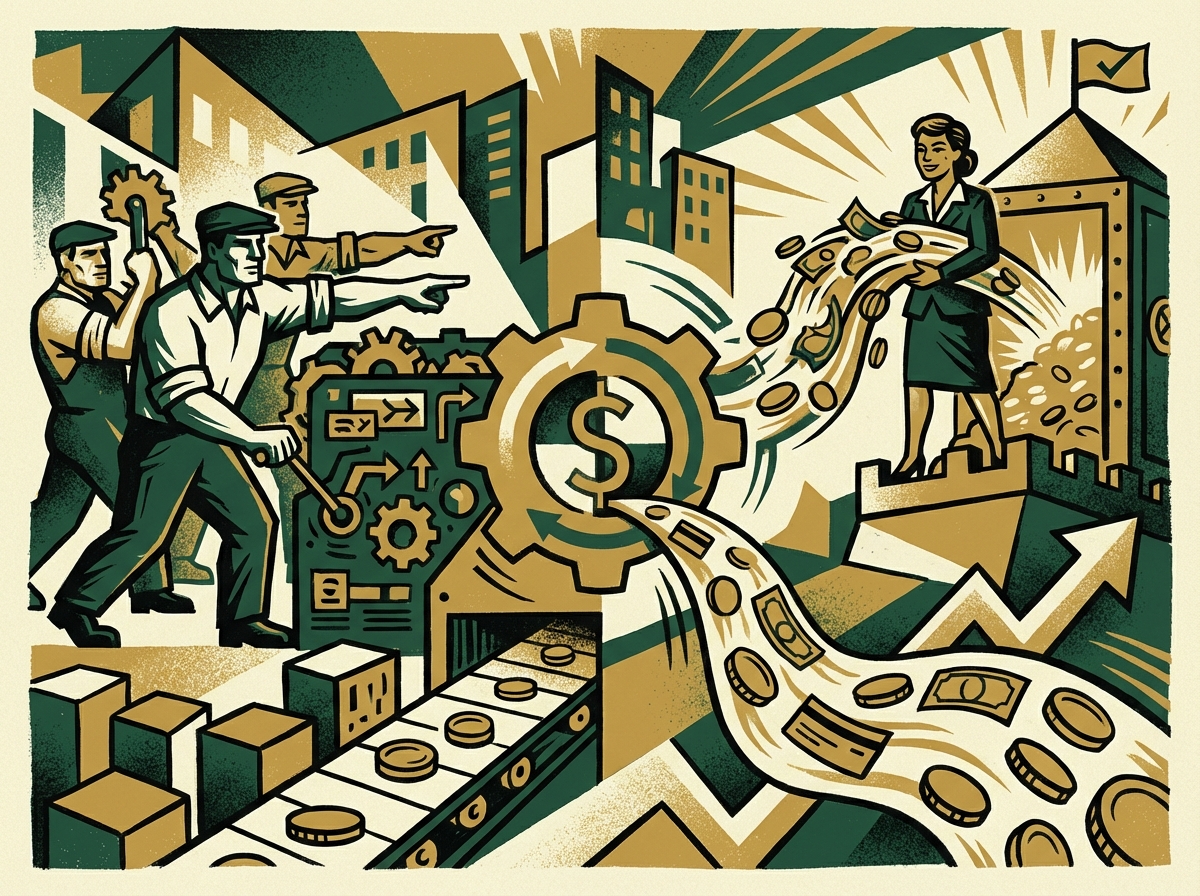
Here’s a practical checklist my team uses to start tightening up the collections process and improve this crucial component of cash flow management.
The DSO Reduction Checklist
Invoice Immediately and Accurately: This sounds obvious, but you’d be shocked how many companies batch invoices at the end of the week or month. An invoice can’t be paid until it’s sent. According to Forrester, AI-powered AR automation is projected to handle over 40% of invoice processing by 2026, eliminating human error and delays.
Offer Early Payment Discounts: A “2/10, net 30” policy—offering a 2% discount if paid in 10 days—can be a powerful incentive. You’re essentially paying a small fee for early access to your own money. Model the cost versus the benefit; it’s often cheaper than a line of credit.
Shorten Your Standard Terms: Who decided “net 30” was the default? If your industry standard is net 45, as seen in some sectors in the 2025 North American Payment Practices Barometer, but you can operate on net 15, you’ve just created a massive cash advantage.
Automate Reminders: Don’t rely on a human to remember to chase an overdue invoice. Automated systems can send polite, persistent reminders at 30, 45, and 60 days without emotion or oversight.
Make It Easy to Pay You: Accept ACH, credit cards, and wire transfers. The fewer clicks it takes for a customer to send you money, the faster you’ll get it.
Payables: Using Your Vendors as a Bank
Days Payable Outstanding (DPO) is the average number of days it takes you to pay your own bills. Extending your DPO effectively means you are using your suppliers’ capital to fund your operations—a form of free, short-term financing. But this lever requires finesse; squeeze too hard, and you risk damaging critical supplier relationships.

How to Extend DPO Without Alienating Suppliers
Your goal isn't to be a late payer; it's to be a strategic one. Here’s how to approach it:
Negotiate, Don't Dictate: When you sign a new vendor, payment terms should be part of the negotiation, right alongside price and delivery. Don’t just accept their standard net 30. Ask for net 60 or net 90, explaining it aligns with your own cash conversion cycle. A large enterprise like Cargill has formal programs for this, but the principle applies to any business.
Segment Your Vendors: Your most critical, hard-to-replace suppliers are not the ones to strong-arm. Pay them on time, every time. For smaller, non-critical, or commodity suppliers, you have more leverage to standardize longer payment terms.
Use Technology: Implement supply chain finance (SCF) or dynamic discounting programs. SCF allows suppliers to get paid early by a third-party financier (at a small discount), while you maintain your longer payment terms. A 2026 forecast from Liquiditas notes that 75% of large enterprises will be using some form of SCF to optimize DPO.
Here’s a simple comparison of approaches:
Inventory: The Cash Trap
Days Inventory Outstanding (DIO) represents the cash you’ve spent on raw materials and finished goods that are just sitting there, waiting to be sold. Inventory is a necessary evil, but too much of it is a boat anchor on your cash flow. Every dollar tied up in excess stock is a dollar you can’t deploy elsewhere.
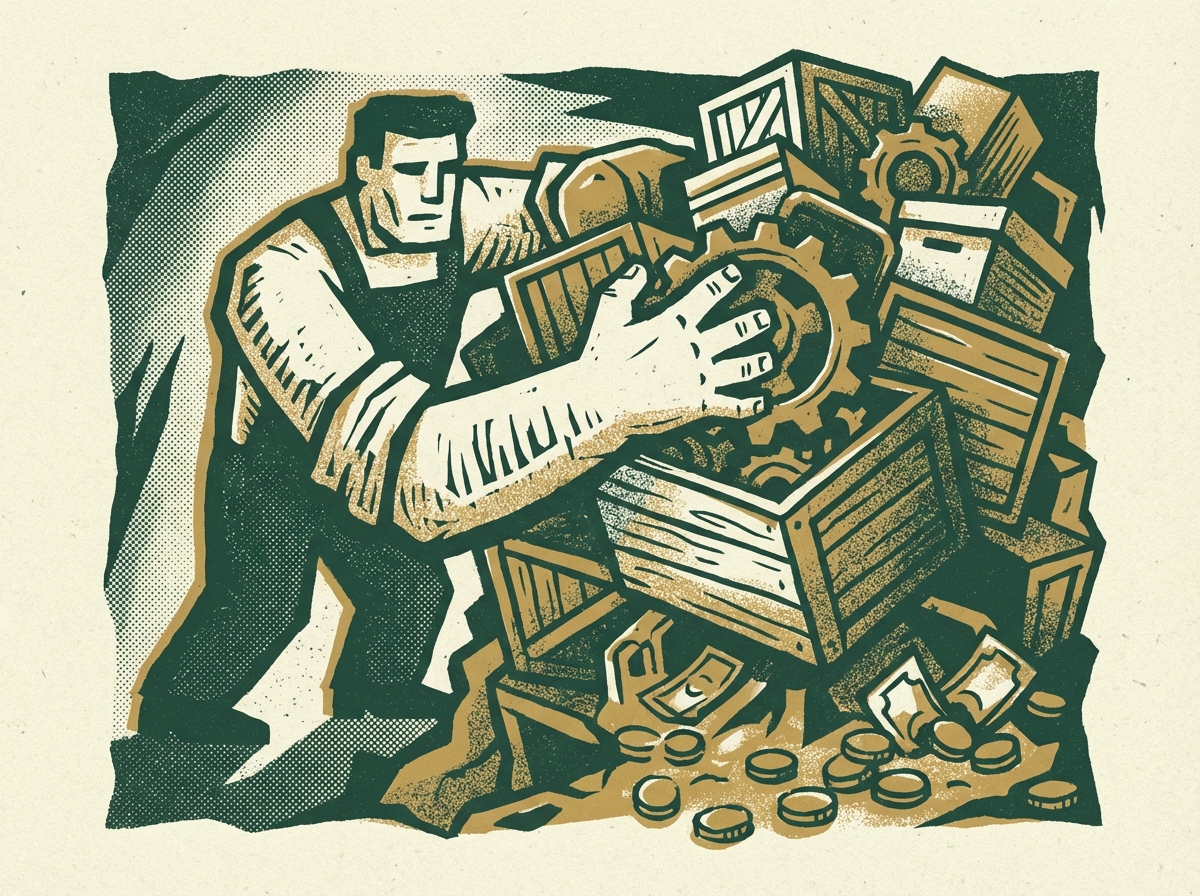
Optimizing inventory isn't about having the least amount possible; it’s about having the right amount. The average inventory turnover ratio varies wildly by industry, from over 10 for grocery stores to under 4 for furniture retailers, according to data from Netstock. Knowing your benchmark is the first step to improving.
Checklist for Unlocking Cash from Inventory
Improve Demand Forecasting: Use historical data and predictive analytics to better anticipate customer demand. The more accurate your forecast, the less safety stock you need to carry.
SKU Rationalization: Analyze your product list. Are 20% of your SKUs driving 80% of your profit? Consider discontinuing slow-moving, low-margin items that just chew up capital and warehouse space.
Negotiate with Suppliers: Can you get faster lead times? Can they hold inventory for you? A more responsive supply chain directly reduces the amount of stock you need to hold on-site.
Liquidate Obsolete Stock: That product that hasn't sold in a year isn't wine; it's not getting better with age. Sell it at a discount, bundle it with a popular item, or write it off. The goal is to convert it back to cash—any cash—and stop paying to store it.
Optimizing working capital isn't a one-time project; it's a discipline. By systematically improving how you manage receivables, payables, and inventory, you can uncover a sustainable source of internal funding that insulates you from market shocks and fuels your next stage of growth. The cash is there. You just have to go find it.
Frequently Asked Questions
How do I calculate my Cash Conversion Cycle?
The Cash Conversion Cycle is calculated with the formula: CCC = Days Inventory Outstanding (DIO) + Days Sales Outstanding (DSO) - Days Payable Outstanding (DPO). It tells you how many days it takes for your investment in inventory to become cash in hand from sales.
What are strategies to reduce DSO?
To reduce Days Sales Outstanding (DSO), you can invoice customers immediately, offer discounts for early payments (e.g., 2/10, net 30), tighten your credit policies for new customers, automate your payment reminder process, and make it easier for customers to pay you through multiple online channels.
How can I extend DPO without hurting supplier relationships?
You can extend Days Payable Outstanding (DPO) safely by negotiating longer payment terms upfront as part of your overall contract, segmenting your vendors to prioritize faster payments for critical suppliers, and implementing tools like supply chain finance that allow suppliers to get paid early by a third party.
References
https://www.thehackettgroup.com/2025-europe-working-capital-survey-cash-cycle-deterioration/
https://www.forrester.com/blogs/top-ai-use-cases-for-accounts-receivable-automation-in-2025/
https://www.cargill.com/doc/1432148614012/sc-supplier-faqs-payment-term-optimization-pdf.pdf
https://www.netstock.com/blog/benchmark-inventory-turnover-by-industry/
