


Unit Economics: The 'Magic Number' is Dead
Published: 2026-03-09 • Estimated reading time: 8 min
For the better part of a decade, I watched founders and VCs worship at the altar of the “Magic Number.” They’d pitch me their glorious LTV:CAC ratios—5:1, 8:1, sometimes even a mythical 10:1—as if they’d discovered a perpetual motion machine for revenue. It was a beautiful story, a tidy narrative of long-term value that worked wonders when capital was cheap and the future was a hockey stick graph. That era is over. The beautiful story has become a dangerous fairytale, and the obsession with LTV:CAC is now a liability. The core of your unit economics has to be about something far more tangible: cash in the door, now.
My team and I have spent the last two years re-architecting the financial models for dozens of high-growth companies. We’ve ripped out the vanity metrics and replaced them with a ruthless focus on capital efficiency. The single, unifying truth we’ve found is that the businesses thriving in this new landscape aren’t the ones with the best LTV forecasts; they’re the ones that get their money back the fastest. Period.
The Fallacy of Long-Term Value (LTV)
The LTV:CAC ratio is becoming less relevant because its core component, Lifetime Value, is a highly speculative forecast based on assumptions that are increasingly fragile in today’s volatile market. It measures a theoretical future profit stream against a concrete, present-day cost. In an environment where customer churn is unpredictable and capital has a real cost, a dollar promised in three years is worth a lot less than a dollar in your bank account today. This is why a recent survey from Chief Executive found that 64% of CEOs are now prioritizing immediate profitability over speculative growth.
I sat in a boardroom last quarter with a CEO who was still clinging to his 7:1 LTV:CAC. His company was burning cash at an alarming rate, but his spreadsheet promised a golden future. The problem? His LTV model was built on a churn assumption of 1.5% from two years ago. Today, his actual churn is closer to 3%. That small change didn’t just trim his LTV; it decimated it. As analysis from The SaaS CFO shows, even a seemingly small 5% monthly churn can erase over 45% of a company's ARR over a year, making long-term projections a house of cards.

LTV is a guess. A good guess, perhaps, an educated one, but a guess nonetheless. It relies on multi-year forecasts about retention, expansion revenue, and market stability. In a world of macroeconomic shifts and disruptive AI, who among us can confidently predict customer behavior three years from now? The LTV:CAC ratio became the Magic Number because it told investors a simple, compelling story about long-term dominance. But we’re not in the storytelling business anymore; we’re in the cash-generating business.
Cash on Cash: Why Payback Period Wins
The most important unit economic metric in 2026 is the Customer Acquisition Cost (CAC) Payback Period. This metric answers the most critical question for any business: “How many months does it take to earn back the money we spent to acquire a new customer?” Unlike LTV:CAC, the payback period isn't about a hypothetical future; it’s a direct measure of your business model's efficiency and your company’s self-sufficiency. It tells you how quickly you can turn today's investment into tomorrow's growth capital.
In the old world, you could raise another round to fund your long payback periods. Today, that's a death sentence. A shorter payback period means your growth engine is funded by your customers, not by venture capitalists. This is the definition of a durable, scalable business. While the median CAC payback period for private SaaS companies is around 16 months, my team at Greenwood advises clients to aim for under 12. According to The SaaS CFO, the top-quartile companies consistently achieve this, giving them a significant capital advantage.
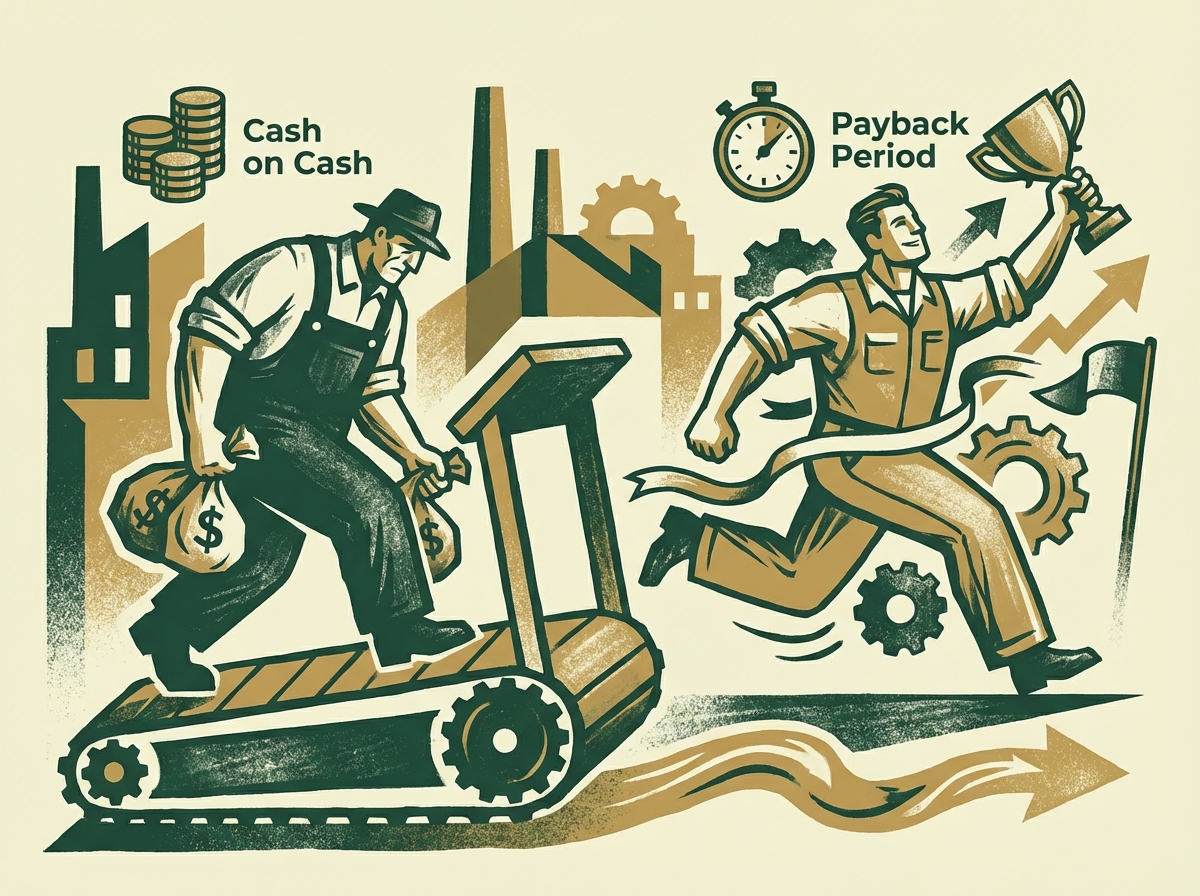
Let’s put this in starkly practical terms with a simple comparison:
Looking at this, which metric would you rather use to navigate an uncertain economy? The one that tells a story about the future, or the one that measures your ability to survive and thrive right now? The answer is obvious.
Contribution Margin: The True Measure of Scale
A company's true contribution margin is the revenue left over from a single customer after all associated variable costs have been subtracted. This is the real fuel for your growth because it represents the actual cash generated by each customer that can be used to cover your fixed costs (like R&D and G&A) and, eventually, turn a profit. It’s a far more honest measure than gross margin, which often hides customer-related operational expenses.
Too many founders I meet conflate gross margin with contribution margin, and it's a critical error. Your gross margin might be a healthy 85% after accounting for hosting and raw software costs (COGS). But what about the other variable costs? The onboarding specialists, the customer support team, the success managers, the transaction fees? These are not fixed costs. They scale directly with your customer base. Ignoring them gives you a dangerously inflated sense of your customer profitability.
Calculating Your True Contribution Margin
To calculate your true contribution margin per customer, you must meticulously identify every cost that varies with the addition of one more customer. The formula is (Revenue per Customer - All Variable Costs per Customer) / Revenue per Customer. The magic is in defining “All Variable Costs.”
Here’s a more honest list of what to include:
Standard COGS: Server hosting, third-party API costs, software licenses.
Customer Support: Salaries and tools for the support team, allocated on a per-customer or per-ticket basis.
Onboarding & Implementation: Costs associated with getting a new customer set up and successful.
Customer Success: A portion of your CSM team’s cost dedicated to retention and account management.
Transaction Fees: Payment processing fees that scale with revenue.
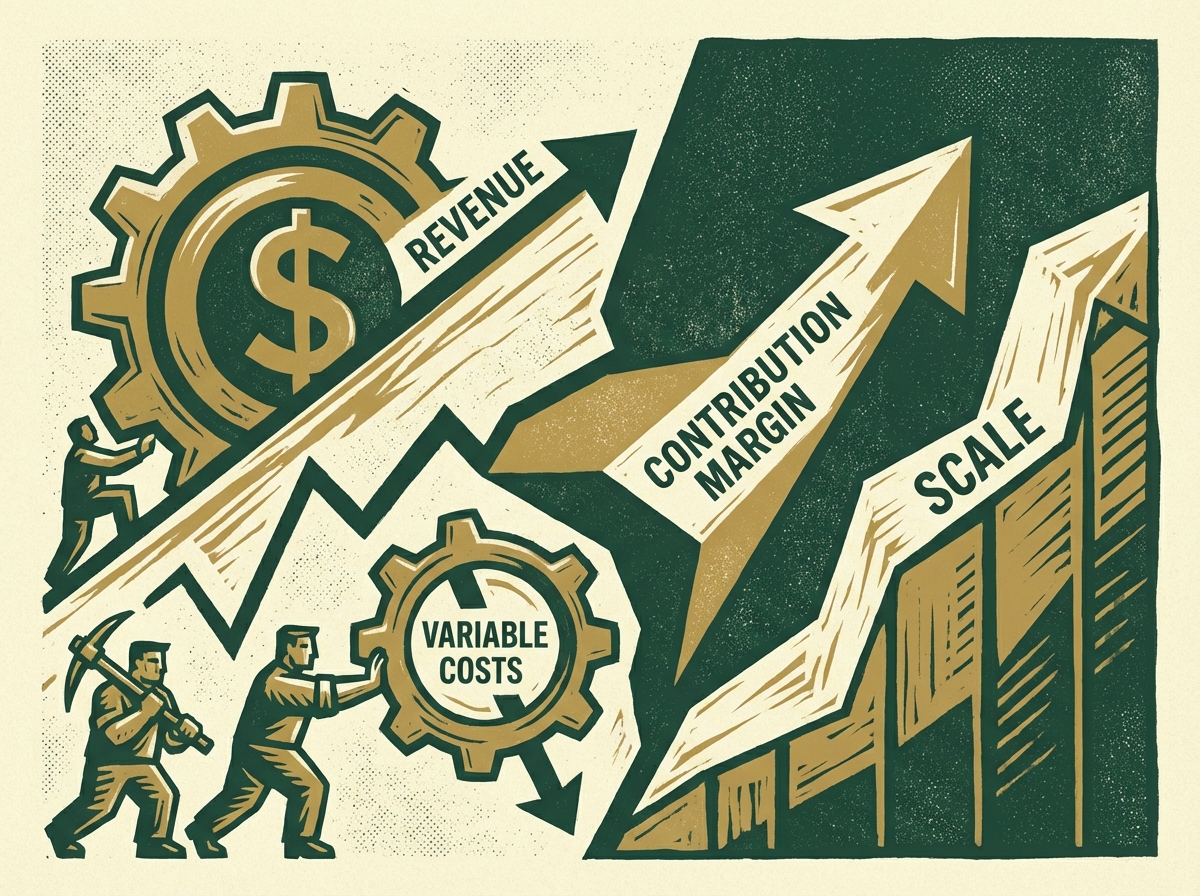
When you get this right, you reveal the true economic model of your business. As a benchmark, elite SaaS companies maintain a true contribution margin of over 70%, according to research by Phoenix Strategy Group. If your number is significantly lower, you don’t have a sales problem or a marketing problem—you have a fundamental unit economics problem.
Segmenting Your Unit Economics: Not All Customers are Equal
Segmenting your unit economics means breaking down your metrics by distinct customer groups to understand which segments are truly profitable and which are draining resources. A blended CAC or a company-wide payback period is a dangerous average that masks the truth. Your enterprise customers, your SMBs, customers from your paid search channel, and customers from your partner channel all have vastly different economic profiles.
I was working with a B2B SaaS company that was celebrating a blended 14-month payback period. On the surface, things looked great. But when we dug in, the reality was terrifying. Their large enterprise customers, acquired through a high-touch sales process, had a fantastic 8-month payback period and high net revenue retention. However, their SMB customers, acquired through expensive digital ads, had a disastrous 26-month payback period and churned at three times the rate. The profitable enterprise segment was subsidizing a failing SMB strategy. The blended average was a lie that was slowly killing the company.

Your job as a leader is to find your pockets of profitability and double down. You can segment by:
Customer Size: Enterprise vs. Mid-Market vs. SMB
Industry Vertical: FinTech vs. Healthcare vs. Retail
Acquisition Channel: Paid Search vs. Organic vs. Sales-led
Product Line: Which of your offerings has the best economic engine?
As data from SBI Growth highlights, the cost to acquire an enterprise customer can be 5-10x higher than an SMB, but the economics often work out better due to higher contract values and retention. You won't know this for your own business until you run the numbers. As I often tell my clients, “Blended averages are the enemy of precision. The CEO who understands their unit economics by cohort is the one who wins in a downturn.”
The age of cheap money and simple stories is behind us. Building a truly resilient company in 2026 requires moving beyond vanity metrics like the LTV:CAC Magic Number. It demands a rigorous, almost obsessive focus on the metrics that reflect the true health and efficiency of your business: how quickly you get your cash back, how much real profit each customer generates, and where your most profitable segments truly lie. This is the new formula for durable growth.
Frequently Asked Questions
What is a good unit economic model?
A good unit economic model is one where the customer's contribution margin pays back the customer acquisition cost (CAC) in a reasonable timeframe, typically under 12-18 months for SaaS businesses. The core components are a low CAC, a short payback period, and a high contribution margin, indicating that each new customer is both profitable and capital-efficient.
How do unit economics differ for SaaS vs. e-commerce?
In SaaS, unit economics focus on recurring revenue, customer lifetime value (LTV), churn, and CAC, with the key goal being a payback period shorter than the customer's lifetime. In e-commerce, the focus is more transactional, centered on contribution margin per order, repeat purchase rate, and the cost of acquiring a customer for a single or series of purchases.
Why is the 'Magic Number' no longer relevant for SaaS?
The 'Magic Number,' often referring to the LTV:CAC ratio, is becoming less relevant because LTV is a long-term, speculative forecast. In today's volatile economic climate, with higher capital costs and unpredictable churn, businesses are prioritizing tangible, short-term cash flow and capital efficiency, which are better measured by the CAC Payback Period.
What's the difference between contribution margin and gross margin?
Gross margin typically only subtracts the direct Cost of Goods Sold (COGS) from revenue (e.g., server costs). Contribution margin is a more precise metric that subtracts all variable costs associated with a customer, including COGS as well as expenses like customer support, onboarding, and transaction fees. It provides a truer picture of per-customer profitability.
