

The Vendor Concentration Trap: It's Not Just About Revenue
Published: 2026-04-16 • Estimated reading time: 8 min
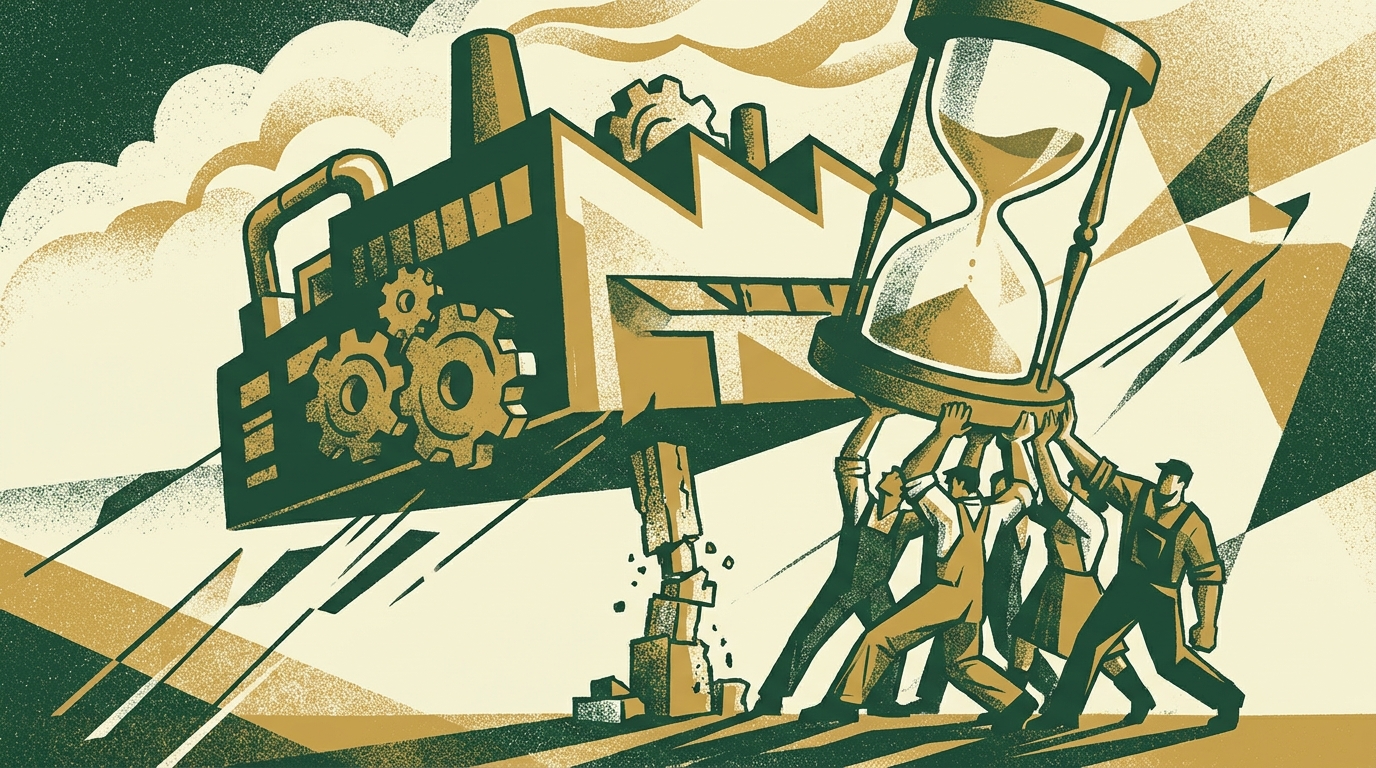
I once sat across from the CEO of a fast-growing consumer goods company, a real nine-figure rocket ship. He was proud, and rightly so, of the deal he’d struck with his primary manufacturer. It was a masterclass in negotiation—exclusive terms, incredible volume discounts, the works. He’d squeezed every last basis point out of the contract. The problem? He’d also squeezed every ounce of resilience out of his supply chain. Six months later, a fire at that single factory didn’t just halt production; it nearly torched his entire company. This is the essence of modern financial risk management, and it’s a lesson too many leaders learn the hard way.
My team has seen this story play out time and again. The allure of a great deal often blinds executives to the fragile, single-threaded dependency they’re creating. Here’s the key takeaway I share with every founder and CFO: you can systematically reduce material enterprise risk and preserve strategic flexibility by identifying hidden vendor dependencies, quantifying concentration exposure, and deliberately diversifying supplier relationships. It’s an investment that typically costs 3-5% of supply chain spending but prevents disruption costs 20-50 times larger while simultaneously improving negotiating leverage and operational agility, as shown by resilience ROI studies from Everstream Analytics.
When Your Supplier Sneezes, You Catch a Cold
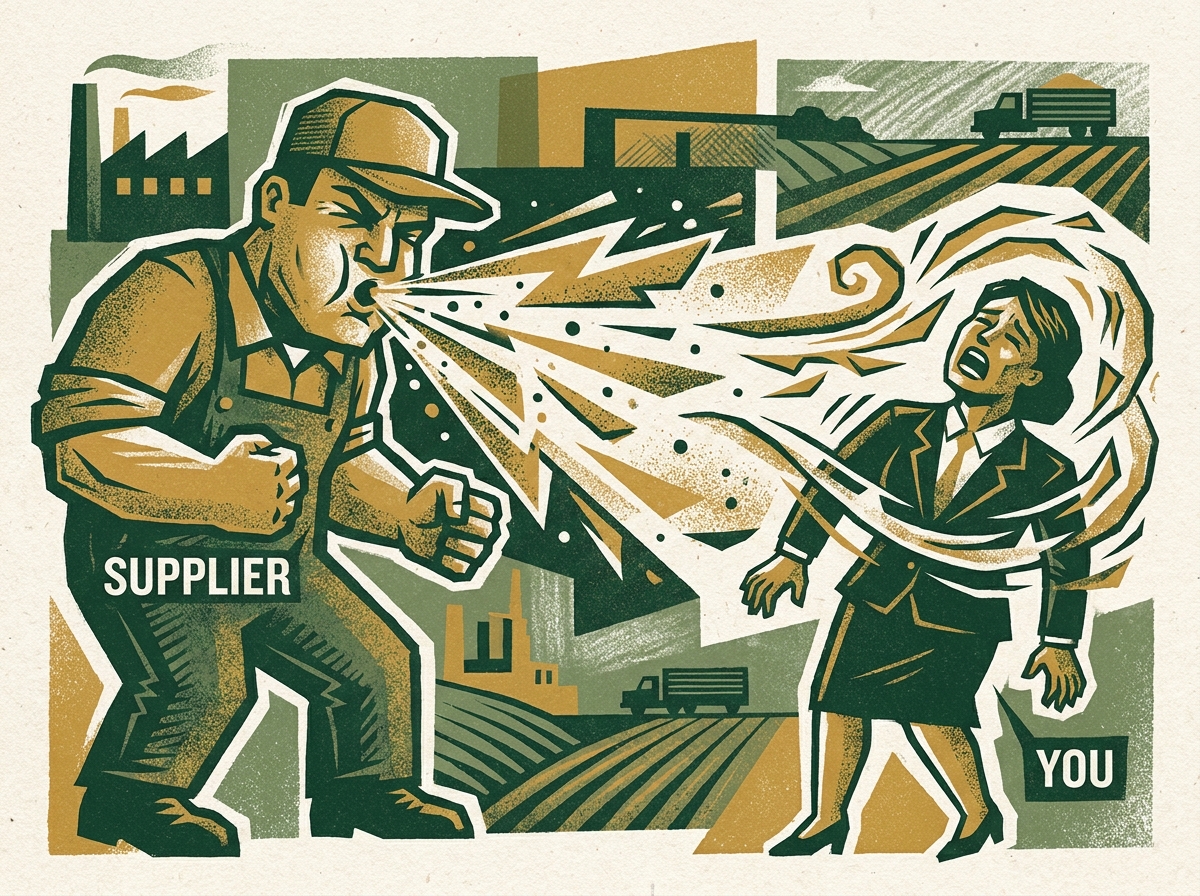
Vendor concentration risk is the exposure a business faces when it relies too heavily on a single or limited number of suppliers for critical goods, services, or software. It’s a classic single point of failure. If that vendor goes out of business, gets acquired by a competitor, suffers a data breach, or simply raises their prices exorbitantly, your operations can grind to a halt. In today’s turbulent world, where 76% of European shippers face costly disruptions, ignoring this is not just negligent; it’s a strategic blunder.
We tend to think of this as a manufacturing problem—the proverbial widget-maker in a single town. But the modern version of this risk is far more insidious. It could be your entire cloud infrastructure on AWS, your customer data flowing through a single CRM, or your marketing stack dependent on one niche analytics tool. The principle is the same: over-dependence creates fragility. True supply chain resilience isn’t about having the cheapest supplier; it’s about having a robust network that can withstand a shock.
Identifying Single Points of Failure (SPOFs)
A single point of failure (SPOF) is any component of a system that, if it fails, will stop the entire system from working. In business, this is your Achilles’ heel, and the first step in any effective risk assessment is finding out where you’re vulnerable.
Beyond the Obvious: Mapping Your Nth-Tier Dependencies
Identifying your primary supplier is easy; the real work is in understanding their dependencies. Your Tier 1 supplier has its own set of suppliers (Tier 2), who have their own (Tier 3), and so on. A disruption at a Tier 3 raw material provider—a company you’ve never even heard of—can cascade up and shut you down. Research from SecurityScorecard highlights this, noting that a staggering 50% of all cyber breaches originate from third-party vendors. You have to ask the uncomfortable questions: Who supplies your suppliers? Are they geographically concentrated? Do they rely on a single software platform?
Quantifying the Exposure
Once you’ve mapped the dependencies, you have to attach a dollar amount to them. This is how you get the board’s attention. My team uses a simple but powerful framework:
Revenue at Risk: What percentage of your annual revenue is directly tied to this vendor? If they went dark for a month, what would the top-line impact be?
Cost to Switch (CTS): What would it realistically cost—in time, money, and operational disruption—to onboard a new vendor? Include data migration, retraining, and legal fees.
Blast Radius: Which other business units or processes would be affected by a failure? An outage of your payment processor, for instance, doesn’t just stop sales; it impacts finance, customer service, and marketing.
Running these numbers transforms a vague concern into a concrete financial liability, a critical component of any serious procurement strategy.
The Software Trap: Dependency on Niche Tools
Operational risk today is increasingly digital, and one of the most common traps I see is dependency on highly specialized SaaS tools. These platforms are often fantastic—they solve a specific problem better than anyone else. But this specialization is a double-edged sword. Vendor lock-in is a very real, and very expensive, problem. According to a 2026 KPMG survey, managing third-party technology risk is now a top-three concern for C-suites globally.

Switching costs aren’t just about the new subscription fee. The real barrier is your data. Getting your historical data out of one proprietary system and into another can be a technical and financial nightmare. Years of workflows, integrations, and employee muscle memory are tied to that one tool. When that niche SaaS provider gets acquired by a competitor who sunsets the product, or triples the price, your leverage is zero. This is a critical aspect of modern third-party risk management that many founders overlook until it’s too late.
Diversification vs. Volume Discounts: The Trade-off
The central tension in this discussion is between the efficiency of single-sourcing and the resilience of diversification. Your procurement team is often incentivized to chase volume discounts, consolidating spend with one vendor to maximize leverage and minimize unit cost. Your risk team, meanwhile, is arguing for redundancy, which almost always comes at a higher price—at least on paper.
There is no single right answer, only a strategic choice based on a clear-eyed view of the risks and rewards. As procurement expert Omri Kovacs of Inkonit says:
"The bitterness of poor quality remains long after the sweetness of low price is forgotten."
The same is true for the bitterness of a supply chain collapse.
Here’s a breakdown of the calculus my team uses to help clients think through this:
Creating a Vendor Continuity Plan
A vendor continuity plan is a documented strategy for how your business will maintain essential functions in the event of a significant disruption with a critical third-party vendor. It’s not a binder that sits on a shelf; it’s a living document and a set of pre-planned actions. The shocking truth is that most business continuity planning fails not from a bad plan, but from a complete lack of one. A 2025 study found that nearly 60% of small-to-mid-sized businesses lack a formal continuity plan, leaving them critically exposed.
Building Your ‘Shadow’ Roster
You should always have a pre-vetted list of alternative suppliers. This isn’t just a list of names from a Google search. It means identifying viable alternatives, running them through your initial qualification process, and perhaps even giving them a small, non-critical project to establish a baseline relationship. When your primary vendor stumbles, you’re not starting from scratch; you’re activating a known and trusted partner.
Contractual Safeguards
Your defense starts with contract negotiation. Your legal team should be pushing for clauses that protect you from concentration risk. Key provisions include:
Right to Audit: The ability to inspect your vendor’s own business continuity and disaster recovery plans.
Data Escrow: For critical software vendors, this ensures a copy of your data and the application’s source code is held by a neutral third party, accessible if the vendor goes bankrupt.
Termination for Convenience: A clause that allows you to exit the contract with reasonable notice, without having to prove a breach. This is your primary leverage against sudden price hikes.
Transition Support: A commitment from the vendor to assist in migrating your data and services to a new provider upon contract termination.
War-Gaming Scenarios
Finally, you have to test the plan. Once a year, my team facilitates a tabletop exercise for clients. We present a scenario: “Your primary logistics partner has just been hit by a nationwide ransomware attack. Their systems are down indefinitely. Go.” Watching senior leaders work through the problem in a simulation is invaluable. It reveals the gaps in the plan, the faulty assumptions, and the communication breakdowns before a real crisis forces their hand. The aftermath of the COVID-19 pandemic showed that companies that had pressure-tested their supply chains were able to adapt far more quickly than their peers, with some analyses suggesting they recovered market share 2-3 times faster.
Ultimately, managing vendor concentration isn’t a cost center; it’s a competitive advantage. It’s about building an organization that isn’t just efficient in the best of times, but resilient in the worst of times. The trap is thinking you’re saving money, when in reality, you’re just deferring the cost of an inevitable shock to the system.
Frequently Asked Questions
What is vendor concentration risk?
Vendor concentration risk is the business and financial threat posed by over-relying on a single supplier or a very small group of suppliers for a critical product or service. This dependency creates a single point of failure that can lead to significant operational disruptions, revenue loss, and strategic vulnerability if that vendor fails, underperforms, or terminates the relationship.
How do you identify critical dependencies in your supply chain?
Identifying critical dependencies involves a multi-step process that goes beyond your direct suppliers. You must first map your entire supply chain, including Tier 2 and Tier 3 suppliers, to uncover hidden risks. Then, quantify the financial impact of each vendor by calculating the revenue at risk, the cost to switch, and the operational “blast radius” of a potential disruption. This analysis will clearly highlight your most critical dependencies.
What steps can you take to diversify vendor risk?
To diversify vendor risk, you should develop a multi-sourcing strategy by identifying and pre-vetting alternative suppliers for critical components, even if it means sacrificing some volume discounts for resilience. Strengthen your contracts with clauses for data escrow, termination for convenience, and transition support. Finally, create and regularly test a formal vendor continuity plan to ensure your organization can react swiftly and effectively to a supplier disruption.
