
The Strategic Execution Framework: Bridging the Gap Between Vision and P&L
Published: 2026-04-01 • Estimated reading time: 8 min
I was sitting in a boardroom that felt more like a museum—gleaming mahogany, oil portraits of founders, the hushed reverence of old money. The CEO, a brilliant product visionary, was walking us through a slide deck that could have made a venture capitalist weep with joy. We’re talking five-year projections, total addressable markets the size of small nations, and a mission statement that was both poetic and audacious.
Then the CFO, a man who looked like he’d been stress-testing spreadsheets since birth, cleared his throat. He slid a single, unadorned P&L statement across that gleaming table. The contrast was brutal. The numbers didn’t just fail to sing; they were croaking a mournful dirge.
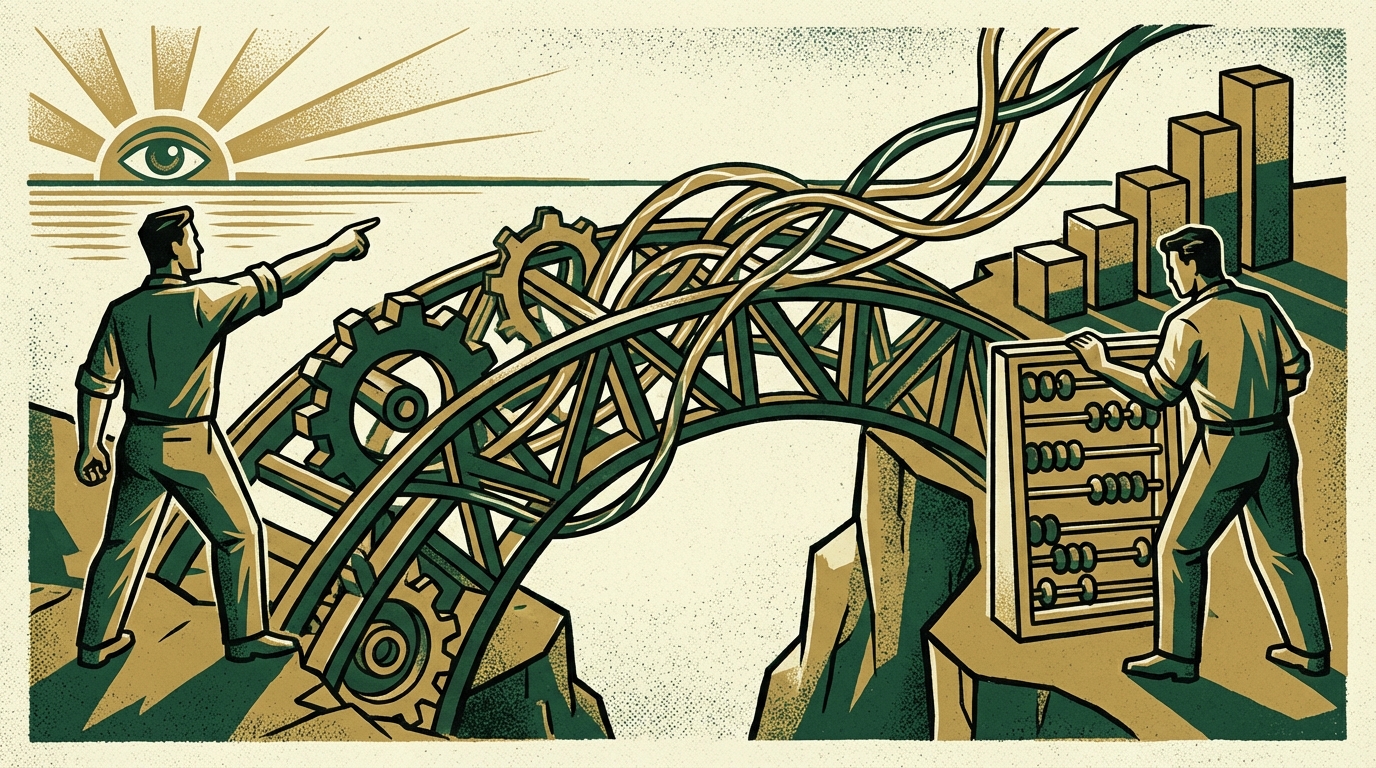
This is the great disconnect. It’s the chasm between the beautiful, theoretical world of strategy and the cold, hard reality of execution. And it’s where most companies die a slow, quiet death. They don't fail for lack of vision; they fail because that vision never makes the treacherous journey to the bottom line. This failure of Executive Financial Leadership is so common that some studies suggest a staggering 67% of strategic plans crumble before they deliver results, according to analysis by Entrepreneur.
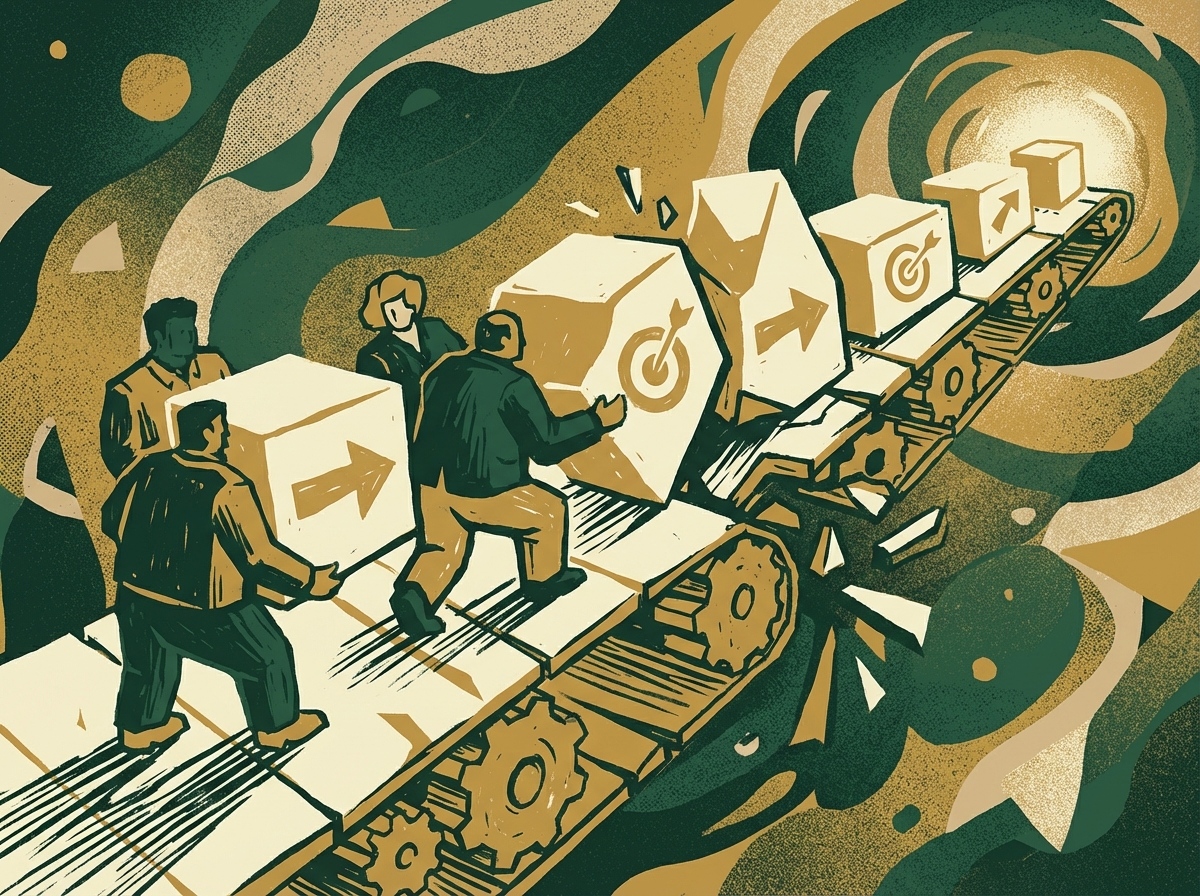
For years, my team and I have been the emergency call for companies facing this very problem. We’ve seen the pattern so many times we can practically map it in our sleep. The solution isn’t another, prettier slide deck. It’s a rigorous, disciplined system for turning ambition into action.
Introducing the Strategic Execution Framework
The Strategic Execution Framework is a disciplined, three-pillar methodology my team at Greenwood Business Consultants developed to systematically connect a company's long-term vision directly to its day-to-day operations and financial results. It's not magic; it’s a blueprint for operational excellence that turns your strategic plan from a static document into the living, breathing heart of your company. It’s designed to stop the bleeding between what you say you want to do and what your P&L shows you are doing.
The framework stands on three core pillars:
- Organizational Health & Trust: The human foundation. You can’t execute a plan with a dysfunctional team.
- Radical Clarity & The ‘One Page’ Plan: The intellectual engine. Everyone knows what the goal is, why it matters, and how they contribute.
- The Pulse of Execution: The operational heartbeat. A non-negotiable rhythm of accountability that drives momentum.
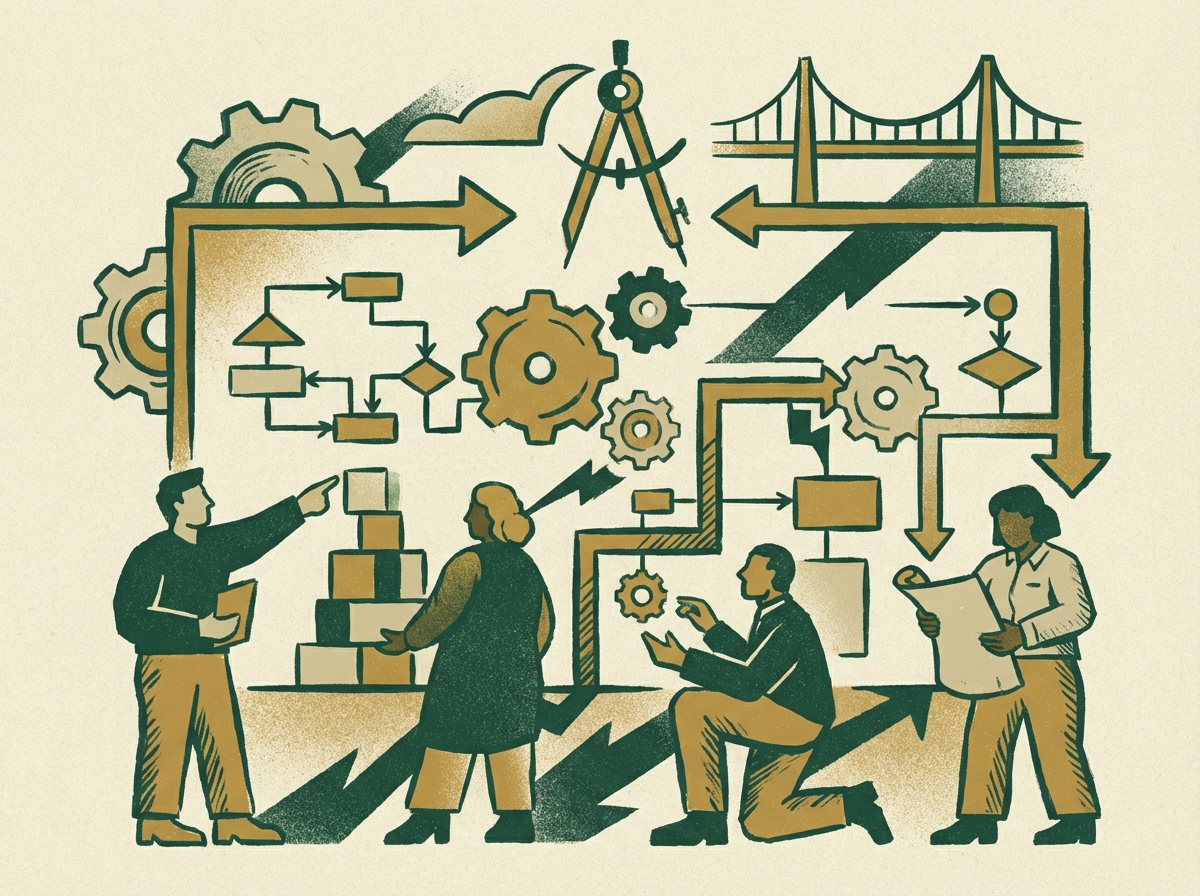
Let’s break down how these pillars work together to build a bridge from your vision to your bank account.
Pillar 1: Organizational Health & Trust
Organizational health is the bedrock of execution, creating a high-trust environment where teams can debate, commit, and hold each other accountable without succumbing to politics or fear. I’ve seen companies with A-plus strategies and C-minus teams go up in flames, while companies with B-minus strategies and A-plus teams conquer their markets. The difference is always, without fail, the health of the leadership team.
A healthy team isn't one that agrees on everything. It's one where trust is so high that people can engage in passionate, unfiltered debate around ideas and then, once a decision is made, commit to it 100%, even if they initially disagreed. This is where the real work of leadership accountability begins. According to research from Great Place to Work, high-trust companies consistently see stock market returns 2-3% higher than their peers. Trust, it turns out, has a very real ROI.
Without this foundation, the other pillars are just scaffolding on quicksand. You can have the clearest plan in the world, but if your team is mired in passive-aggression and back-channeling, execution is dead on arrival.

Pillar 2: Radical Clarity & The ‘One Page’ Plan
Radical clarity involves distilling your entire strategic plan—vision, mission, values, quarterly priorities, and key metrics—onto a single, accessible document that every employee can understand and use. I once worked with a CEO who proudly showed me his 78-page strategic plan. I asked him if his head of sales had read it. He just laughed. The truth is, if your strategy doesn't fit on one page, it’s not a plan; it’s a novel. And no one has time to read it.
This is where we solve the KPI alignment puzzle. The 'One Page' Strategic Plan forces a company to translate its lofty vision into concrete, measurable outcomes. Research shows that only about 7% of employees fully understand their company’s strategy and what’s expected of them, as noted by Mooncamp. The One Page Plan fixes this. It creates a direct line of sight from the top of the mountain to the trail marker right in front of you.

Here’s how it works:
- Vision (10-25 Years): Where are we going?
- Mission (Purpose): Why do we exist?
- Annual Goals (Financial & Thematic): What defines success this year?
- Quarterly Priorities (Rocks): What are the 3-5 most important things we must accomplish in the next 90 days to achieve our annual goals?
- Key Performance Indicators (KPIs): The numbers that tell us if we’re on track.
This cascading logic is crucial for financial strategy alignment. A vague vision to “Be the best” becomes a tangible financial goal.
| Vague Goal | One-Page Plan Metric |
|---|---|
| “Be the market leader” | “Achieve 25% market share in the Northeast by Q4 2026” |
| “Improve customer service” | “Increase Net Promoter Score (NPS) from 45 to 60 by EOY” |
| “Grow the business” | “Achieve $15M in ARR with a 20% net profit margin” |
Every single employee, from the C-suite to the front lines, should be able to look at this document and see exactly how their work connects to the company’s success.
Pillar 3: The Pulse of Execution (Meeting Rhythms)
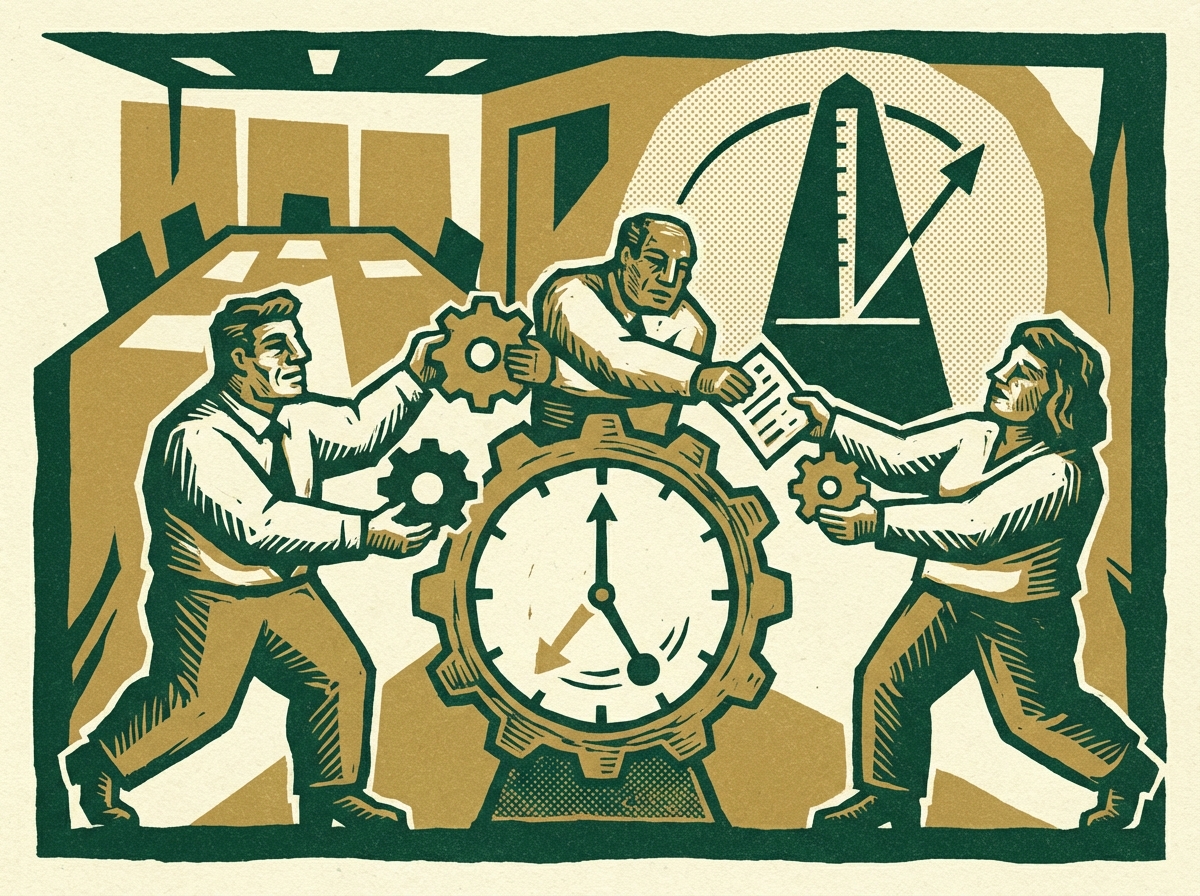
The pulse of execution is a non-negotiable cadence of meetings—daily, weekly, monthly, and quarterly—that creates a rhythm of accountability and keeps the strategic plan alive. This is where the plan meets reality.
“Execution is the great unaddressed issue in the business world today. Its absence is the single biggest obstacle to success.”
— Larry Bossidy, Legendary CEO
The meeting pulse is the antidote. This isn't about adding more meetings to your already-packed calendar. It's about having the right meetings, with the right agenda, attended by the right people.
- The Daily Huddle (15 min): A quick, standing check-in. What are your priorities? Where are you stuck? This isn't for problem-solving; it's for surfacing issues fast.
- The Weekly Tactical (90 min): The leadership team reviews the KPI dashboard and progress on the quarterly priorities. Problems are identified, discussed, and solved.
- The Monthly Financial Review (60 min): A deep dive with the leadership team on the full financials. Are we hitting our targets? Why or why not? What adjustments do we need to make?
- The Quarterly Strategic Offsite (1-2 days): The team gets out of the office to review the previous quarter’s performance and set the priorities for the next 90 days.
This rhythm forces constant alignment. It makes it impossible for problems to fester or for priorities to drift. It’s the relentless operating system that powers the entire Strategic Execution Framework.
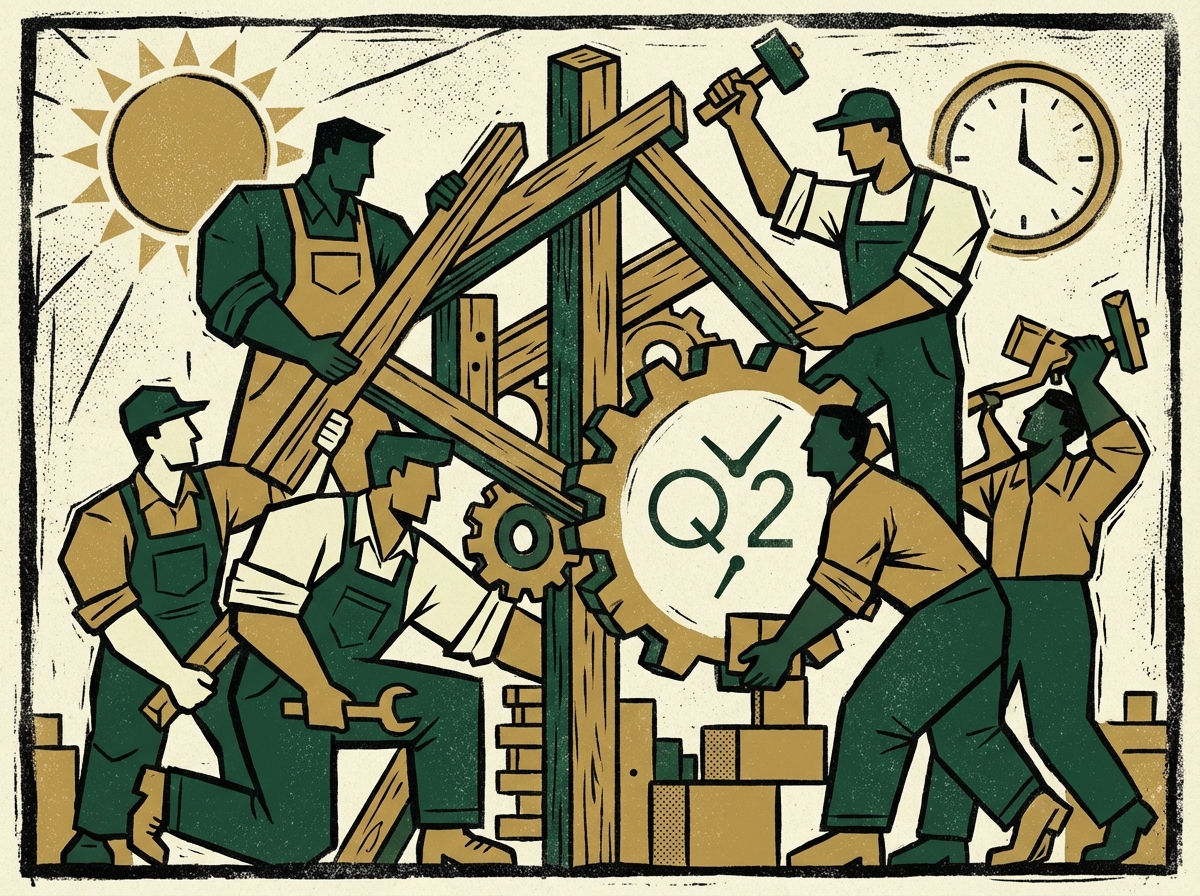
Implementing the Framework in Q2
To implement the Strategic Execution Framework this quarter, start by assessing your organizational health, then dedicate a two-day offsite to create your 'One Page Plan,' and immediately schedule your non-negotiable meeting pulse. You don’t need to wait for the next fiscal year. The gap between your vision and your P&L is costing you money today. A study featured in the Harvard Business Review found that companies, on average, deliver only 63% of the financial performance their strategies promise. That's a 37% tax paid for poor execution.
Here’s a simple, 90-day launch plan:
- Month 1: The Health Check. Before you can build, you must assess the foundation. Conduct an honest, perhaps facilitated, assessment of the leadership team’s health. Is there trust? Is conflict healthy? Are you a team, or just a group of executives who share a letterhead?
- Month 2: The ‘One Page’ Offsite. Get the leadership team in a room for two full days. No phones, no distractions. Hammer out every component of the One Page Strategic Plan. Force the debates, make the hard choices, and leave with a crystal-clear, unified plan.
- Month 3: Launch the Pulse. Put the entire meeting pulse on the calendar for the rest of the year. Treat these meetings as sacred. They are the engine of your new execution-oriented culture.
Implementing this framework isn’t easy. It requires discipline, courage, and a relentless focus on what truly matters. But for leaders serious about bridging the gap between a compelling vision and a profitable reality, it's the only way to fly.
Frequently Asked Questions
What is the Strategic Execution Framework?
The Strategic Execution Framework is a comprehensive methodology designed to close the gap between a company's strategic planning and its actual operational results. It is built on three pillars: fostering organizational health and trust, achieving radical clarity with a 'One Page' strategic plan, and establishing a disciplined meeting rhythm to drive accountability.
How do you align financial KPIs with company vision?
Financial KPIs are aligned with a company vision by cascading goals downward in a clear, logical sequence. The long-term vision (e.g., “become the market leader”) is translated into a multi-year financial target (e.g., “$50M in revenue”), which is then broken down into annual goals (e.g., “$15M in ARR”), quarterly priorities, and finally, specific, measurable KPIs for each department and individual that directly contribute to those goals.
Why do strategic plans often fail at the execution stage?
Strategic plans often fail at the execution stage for three primary reasons: a lack of team health and trust which leads to poor communication and politics; a lack of clarity where the strategy is too complex or poorly communicated for employees to understand their role; and a lack of accountability due to the absence of a consistent rhythm or pulse for reviewing progress and solving problems.
References
- https://www.entrepreneur.com/growing-a-business/why-67-of-strategic-plans-fail-to-deliver-results/501874
- https://www.greatplacetowork.ca/images/reports/Business_Case_for_High_Trust_Culture.pdf
- https://mooncamp.com/blog/goal-setting-statistics
- https://hbr.org/insight-center/the-gap-between-strategy-and-execution
