

The Pivot: Financial Leadership in Times of Change
Published: 2026-02-19 • Estimated reading time: 9 min
I’ve sat in conference rooms that felt like submarines taking on water. The dashboard on the screen wasn’t just red; it was bleeding. The original grand vision, the one that wooed investors and rallied the team, was hitting the brutal reality of the market—and the market was hitting back, hard. This is the moment of truth for a founder. It’s not about whether your original idea was good. It’s about whether your leadership is good enough to find the next idea. This is the pivot.
Most people think of a pivot as a moment of failure. I see it as a moment of clarity. It’s an act of extreme corporate athleticism, a maneuver that separates the companies that make it from those that become cautionary tales. And at the heart of that maneuver isn’t a visionary CEO alone; it’s a CEO paired with a strategic financial partner who can translate that new vision into a viable, fundable reality. This is the critical role a seasoned Fractional CFO for Startups plays—they’re not just counting the beans; they’re charting the new course to a different, more fertile shore.
Recognizing the Need to Pivot
A strategic pivot is a fundamental change in a company's direction, often involving a shift in product, market, or business model to better accommodate market feedback. The decision to pivot isn’t made when the bank account is empty. By then, it’s too late. The real signals are more subtle, appearing months earlier in the metrics that a disciplined finance function should be screaming about. While lagging indicators like revenue are important, the canaries in the coal mine are the leading ones: Customer Acquisition Cost (CAC) is spiraling, the sales cycle is elongating, or early-adopter churn is ticking up past acceptable levels. In fact, a lack of market need is the reason 23% of startups ultimately fail, according to a recent analysis by Exploding Topics.
My team and I look for a pattern of “effort-to-impact decay.” Are you spending more on marketing for fewer leads? Are your engineers shipping features that move the needle on vanity metrics but not on user retention? This isn’t a sales problem or a product problem; it’s a strategy problem, and the financial data is the evidence. The CFO’s role is to validate this new direction, pressure-testing the hypothesis with data, not just gut instinct. We have to move from “we think” to “we know.”
The Cost of Change: Modeling the Transition
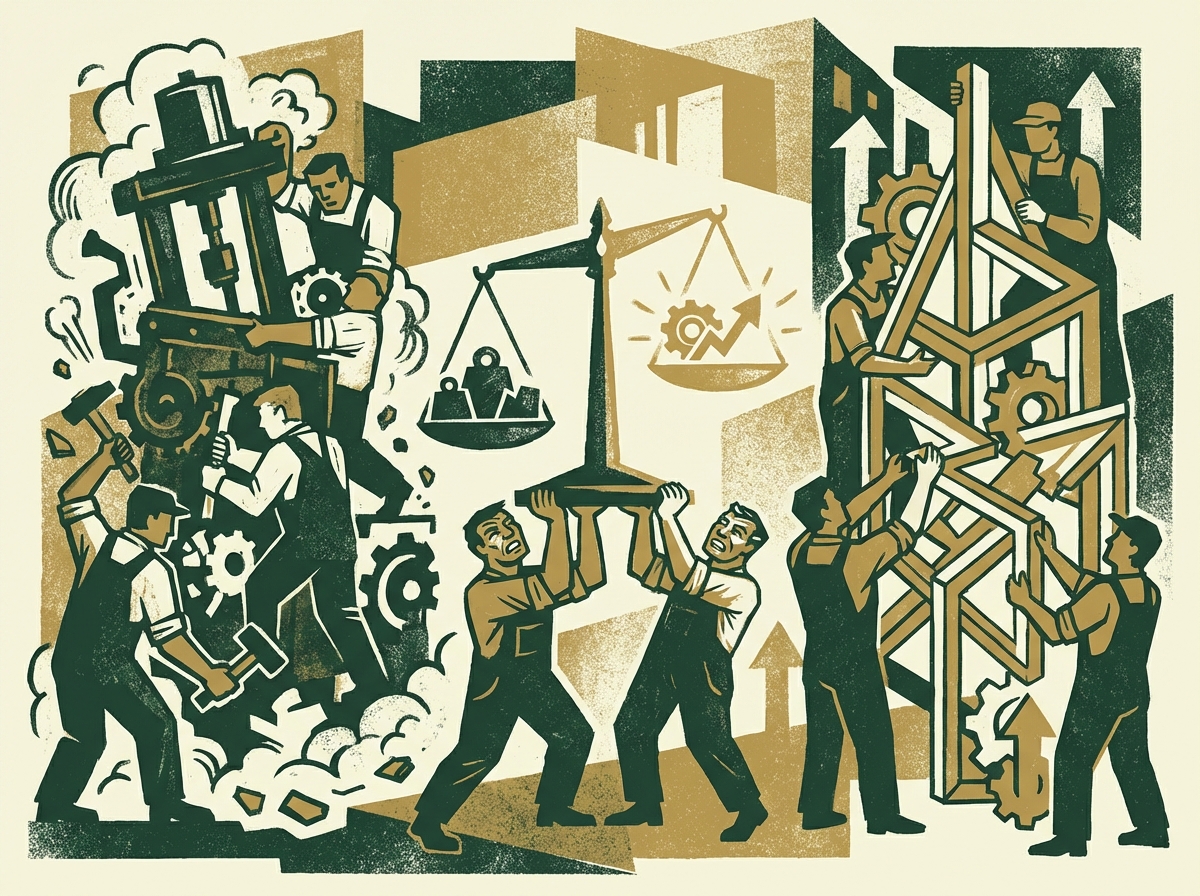
Financial re-forecasting for a pivot involves creating an entirely new operational and financial model based on the assumptions of the new strategy. This is where the pivot moves from a whiteboard idea to a concrete plan. You can’t just tweak the old spreadsheet. You have to burn it down and start fresh. The old model’s assumptions about your target customer, pricing power, and cost structure are now liabilities. As a strategic Fractional CFO for Startups, this is my primary battlefield.
We build a “pivot model” that ruthlessly quantifies the transition. It accounts for severance costs, the write-down of now-useless tech, marketing spend to enter a new segment, and the temporary revenue dip as we execute the turn. This model becomes our single source of truth, the document that tells us if we have enough cash to make the journey.
Here’s a simplified look at how the core assumptions shift:
This isn’t just an accounting exercise; it’s the financial articulation of a new company being born from the ashes of the old one. This model is what you’ll take to your board and your investors to get their buy-in.
Preserving Runway: The Cash Diet
Managing cash flow during a strategic pivot requires aggressively cutting costs tied to the old strategy while protecting investments essential for the new one. I call this the “cash diet.” It’s not about across-the-board cuts; it’s about surgical resource reallocation. Every dollar spent must be justified against the new pivot model. The urgency here cannot be overstated; a survey by EY found that 80% of companies are placing a higher priority on cash forecasting now than in the past.
Your burn rate, the speed at which you’re spending your company's capital, becomes the single most important metric. You must know your “zero-cash date” and work backward from there. We immediately implement a few key principles of agile finance:
Zero-Based Budgeting: All budgets are reset to zero. Every department head must defend every line item in the context of the new strategy.
Variable vs. Fixed Costs: We convert as many fixed costs (e.g., long-term software contracts, office space) to variable costs as possible to maintain flexibility.
Halt Non-Essential Hiring: All hiring is frozen unless it’s for a role directly supporting the new pivot. This is often the toughest, most personal part of the change management process.
This isn’t about survival; it’s about giving the pivot enough time and resources to work. You’re buying yourself months of runway to prove the new thesis is correct.
Communicating with Investors: The Narrative Arc
Communicating a pivot to investors means presenting a new, data-backed story of a larger opportunity discovered through market experience, not admitting failure. This is a narrative exercise grounded in financial reality. You can’t walk into a board meeting with your hat in your hand. You must walk in with a new plan that’s more compelling than the old one. You’re not saying, “We were wrong.” You’re saying, “We learned something invaluable, and here’s how it unlocks an even bigger market.”
Your presentation needs a clear narrative arc:
The Acknowledgment: “Here’s what we set out to do, and here are the market realities we encountered. The original thesis has been invalidated by this data.”
The Insight: “Through that process, we uncovered a far more urgent and valuable problem for a different customer segment. We have early data to support this.”
The New Plan: “Here is the new model, the new product roadmap, the new team structure, and the financial forecast that shows a clearer path to profitability.”
The Ask: “This pivot will require X months and Y dollars. Here is our detailed budget and the milestones we will hit to prove we’re on the right track.”
As Jeff Bezos once said, “If you’re not stubborn, you’ll give up on experiments too soon. And if you’re not flexible, you’ll pound your head against the wall and you won’t see a different solution to a problem you’re trying to solve.” A pivot is the ultimate act of flexibility, guided by stubbornness about the long-term vision.
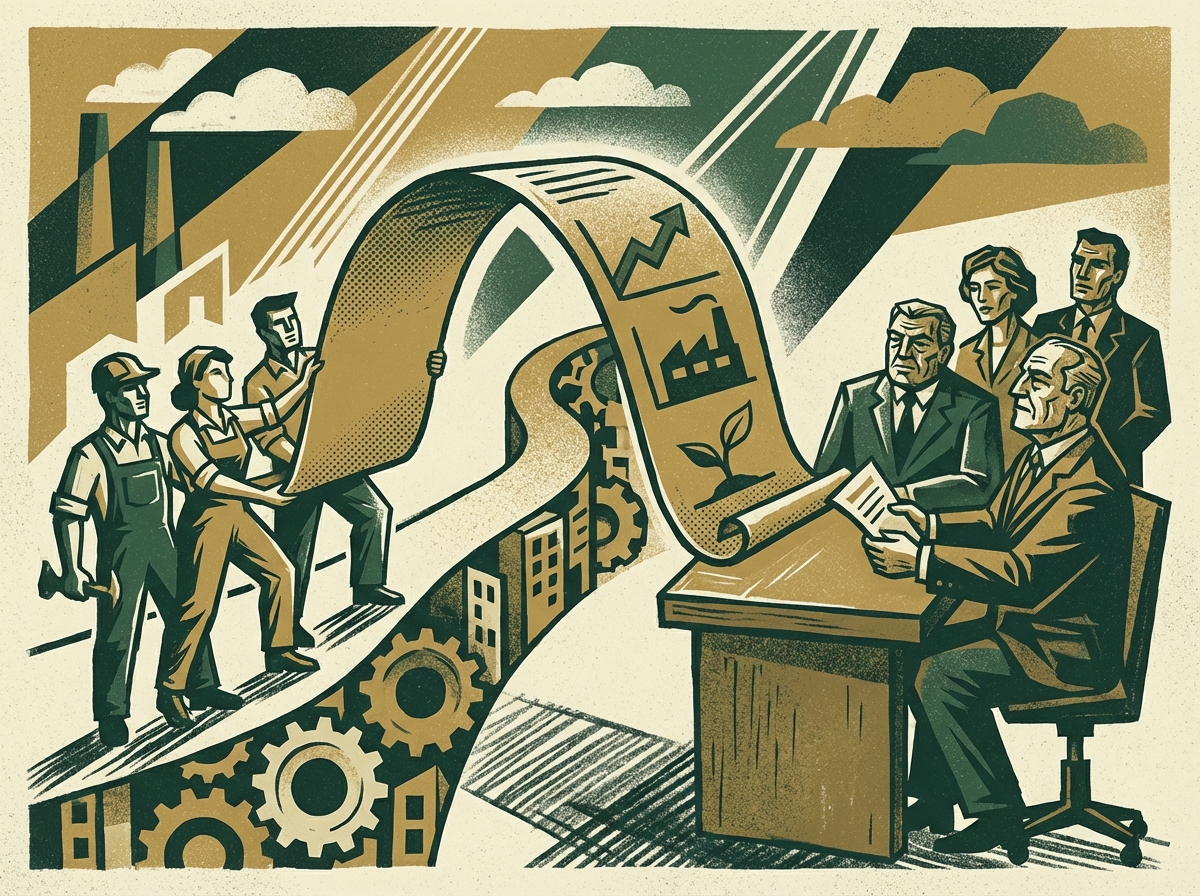
Executing the Turn: Metrics to Watch
Executing a pivot successfully requires a complete overhaul of your Key Performance Indicators (KPIs) to align with the new strategic direction. The metrics that defined success for your old business model are now irrelevant and, worse, distracting. If you’ve pivoted from a B2C freemium model to an enterprise sales model, tracking “Daily Active Users” is meaningless. You need to become obsessed with a new set of numbers.
The leadership team must define and rally the entire company around a handful of “pivot KPIs.” These are almost always leading indicators that provide an early signal if the new strategy is gaining traction. The finance team's role in this is to build the dashboard that becomes the company's new pulse.
For a hypothetical pivot to enterprise SaaS, the new dashboard might include:
Number of Qualified Sales Demos: Is the new value proposition resonating enough to get a foot in the door?
Pilot Program Conversion Rate: Are prospects who try the product converting to paid contracts?
Average Contract Value (ACV): Is the deal size large enough to support the new, higher-cost sales model?
Sales Cycle Length: How long does it take to close a deal? This is a direct input into your new cash flow forecast.
This shift in metrics is a critical part of the change management process. It signals to the entire organization that the past is the past and that this new set of goals is all that matters now. With business leaders continuing to prioritize transformation, getting this part right is non-negotiable for success in 2026 and beyond.
The pivot is the crucible in which great companies are forged. It demands financial discipline, narrative control, and unwavering leadership. It’s a moment where a company stops being a slave to its original idea and starts building a resilient, market-driven business. It’s terrifying, but with the right financial leadership, it’s also the moment your company’s real story begins.
Frequently Asked Questions
How do you manage cash flow during a strategic pivot?
To manage cash flow during a pivot, you must immediately implement a “cash diet.” This involves aggressively re-forecasting based on the new strategy, cutting all non-essential costs tied to the old model, and preserving capital to extend your runway. The focus shifts from growth-at-all-costs to capital efficiency, converting fixed costs to variable costs wherever possible and tying every dollar of spend directly to the new strategic objectives.
How do you communicate a pivot to investors?
You communicate a pivot to investors by framing it as a strategic evolution, not a failure. Create a compelling narrative arc that acknowledges market realities, presents the new insight you’ve gained, and details the new plan with a solid, defensible financial model. The key is to project confidence and demonstrate that this new direction has a higher probability of success based on what you’ve learned.
What role does the CFO play in validating a new direction?
The CFO, particularly a Fractional CFO for Startups, plays the critical role of the objective validator. They are responsible for pressure-testing the new strategy's assumptions with rigorous financial modeling. They analyze the total addressable market, unit economics (CAC, LTV), and potential revenue scenarios to confirm that the new direction is not just a good idea, but a viable business. Their analysis provides the data-driven foundation needed for the CEO and board to confidently commit to the pivot.
