
The Outsourced CFO vs. The Controller: Knowing Who Actually Steers the Ship
Published: 2026-06-03 • Estimated reading time: 9 min
I’ve sat across the table from hundreds of founders who have built remarkable companies, scaling from a garage idea to north of $5 million in revenue. They’re brilliant, relentless, and almost always running into the same wall. Their financials are clean, the books are closed on time, and yet, they’re flying blind. They’ve mistaken a pristine historical record for a forward-looking flight plan. They have a fantastic Controller, but what they desperately need is a strategic financial partner—an Outsourced CFO.
The confusion is understandable. Both roles traffic in numbers, but they speak entirely different languages. One speaks the language of the past—of accuracy, compliance, and reporting. The other speaks the language of the future—of strategy, capital, and risk. Getting this distinction wrong isn’t just a semantic error; it’s the kind of mistake that can leave a thriving business dead in the water.
The Bottom Line Up Front
The fundamental difference between a Controller and a CFO is their orientation to time. A Controller is a historian, meticulously recording and verifying the financial past to ensure accuracy and compliance, while a Chief Financial Officer (CFO) is a strategist, using that historical data to model, predict, and shape the company’s financial future.
For a company in the $5–$50 million revenue range, the key insight is this: you need both. A Controller safeguards the integrity of your financial present, but only an Outsourced CFO or fractional CFO is equipped to translate those numbers into a coherent strategy for growth, capital allocation, and risk management. You need someone to keep the ship’s log accurate, but you also need someone at the helm, steering toward a specific destination.
Recording History vs. Predicting the Future
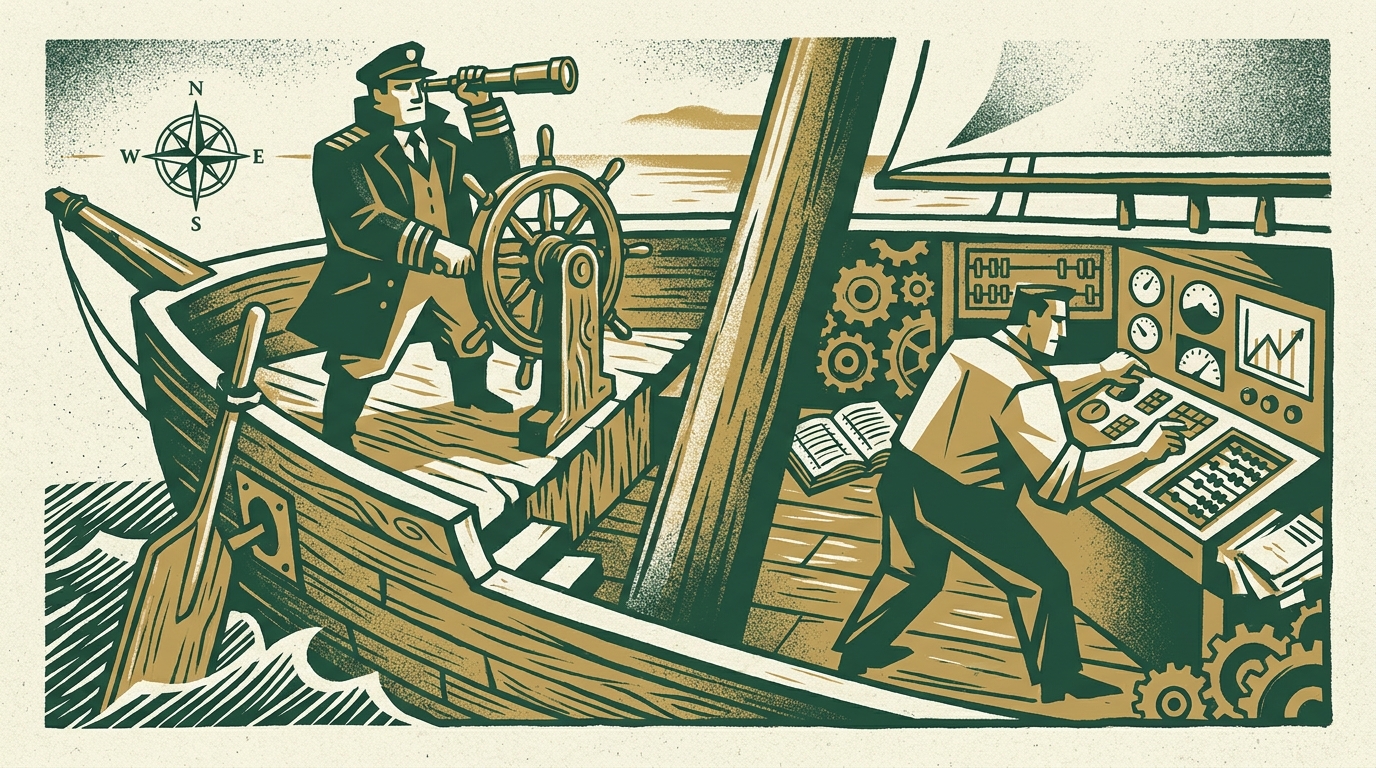
A Controller’s job is to tell you, with unimpeachable certainty, what happened. They ensure the monthly close is accurate, the financial reporting adheres to GAAP, and the company is ready for an audit at a moment’s notice. Think of the Controller as the ship’s chronicler, maintaining a perfect logbook of every nautical mile traveled, every barrel of cargo loaded, and every provision consumed. This record is non-negotiable; without it, you’re lost.
An Outsourced CFO, on the other hand, takes that logbook and uses it to chart the course forward. They ask: Based on our burn rate, do we have enough provisions to reach the next port? Is there a storm on the horizon (a market downturn, a new competitor) that we need to navigate around? Should we invest in a bigger sail (a capital expenditure) to get there faster, and should we fund it with debt or equity? The Controller reports the ship’s position; the CFO decides where it’s going.

This role delineation is critical. I’ve seen companies with immaculate books—managed by a top-tier Controller—run straight into a cash flow crisis because no one was looking at the horizon. Here’s a simple breakdown of the two domains:
The Controller's Domain: Accuracy and Compliance
The Controller’s domain is the bedrock of the entire finance function. They are the masters of accounting operations, responsible for building and maintaining the systems that produce reliable financial data. Their world is one of rules, processes, and controls, ensuring every transaction is recorded correctly and that the company’s financial reporting is compliant with Generally Accepted Accounting Principles (GAAP), a standard my team sees as non-negotiable.
Their key responsibilities include:
Managing the Close Process: Ensuring the books are closed accurately and on time each month.
Overseeing Accounting Operations: Managing day-to-day functions like accounts payable, accounts receivable, and payroll.
Implementing Internal Controls: Designing processes to prevent fraud and ensure the integrity of financial data, a crucial step for any business scaling past its first few million, as noted by experts at UFL.
Ensuring GAAP Compliance: Making sure financial statements are prepared in accordance with rigorous accounting standards, a prerequisite for audits and investor confidence.
Liaising with Auditors: Serving as the primary point of contact for external audits, providing the necessary documentation and support.

Without a strong Controller or an equivalent team, your financial data is quicksand. Any strategy built upon it is doomed to fail. This role owns the “what,” providing the executive leadership team with a clean, trustworthy picture of the company’s financial health.
The CFO's Mandate: Capital, Risk, and Strategy
An Outsourced CFO's mandate begins where the Controller's work culminates. They take the accurate financial statements and ask, “So what?” and “What’s next?” Their job is not to record history but to make it. This is especially true in the fractional CFO model, which has exploded into a $7.8 billion market in the U.S. alone, growing at over 18% annually as middle-market companies demand elite financial leadership without the $450,000+ average annual cost of a full-time executive, according to a 2026 talent outlook from Bespoke Partners.

An Outsourced CFO focuses on three core pillars:
Strategy & Financial Planning (FP&A): This involves building the financial models that translate the CEO’s vision into a quantitative plan. They design rolling cash flow forecasts, analyze unit economics, and develop key performance indicators (KPIs) that align the entire organization. A good CFO can tell you not just if you’ll run out of money, but precisely when, and what three levers you can pull to change that outcome.
Capital & Investor Relations: The CFO leads the charge on capital raising, whether it’s securing a line of credit from a bank or raising a Series B. They prepare the board decks, manage investor relations, and articulate the company’s financial story in a way that resonates with lenders and equity partners. As one veteran from a Big Four advisory firm told me, “A Controller can get you a clean audit. A CFO gets you a term sheet.”
Risk Management: They identify and mitigate financial risks, from interest rate exposure and customer concentration to ensuring the business has the right insurance and treasury management policies in place. With economic uncertainty becoming a constant, 62% of finance leaders now cite risk management as a top pressure point, a sharp increase from previous years as highlighted in a Protiviti survey.
Building the Hybrid Finance Stack
So, if you’re a CEO with a business doing over $5 million in revenue, the question isn’t if you need these functions, but how you should structure them. The answer, for the vast majority of companies my team advises, is a hybrid model.
The most effective finance department structure for this stage is to hire a full-time, in-house Controller (or a robust accounting team that fulfills that function) and engage a top-tier Outsourced CFO on a fractional basis. This model has become the de facto standard for smart scaling, with reports showing that businesses using a fractional CFO can save up to 75% compared to a full-time hire, while still accessing C-suite expertise. Research from market analysts like Eagle Rock CFO confirms that this approach maximizes ROI, delivering strategic firepower precisely when it's needed.
This hybrid finance stack gives you the best of both worlds:
Day-to-day excellence: Your in-house Controller and their team handle the daily accounting operations, manage the close, and keep the financial engine running smoothly.
On-demand strategic leadership: Your Outsourced CFO provides high-level guidance, leads board meetings, manages your banking relationships, and steers the company’s long-term financial strategy—all without the burn of a full-time executive salary.
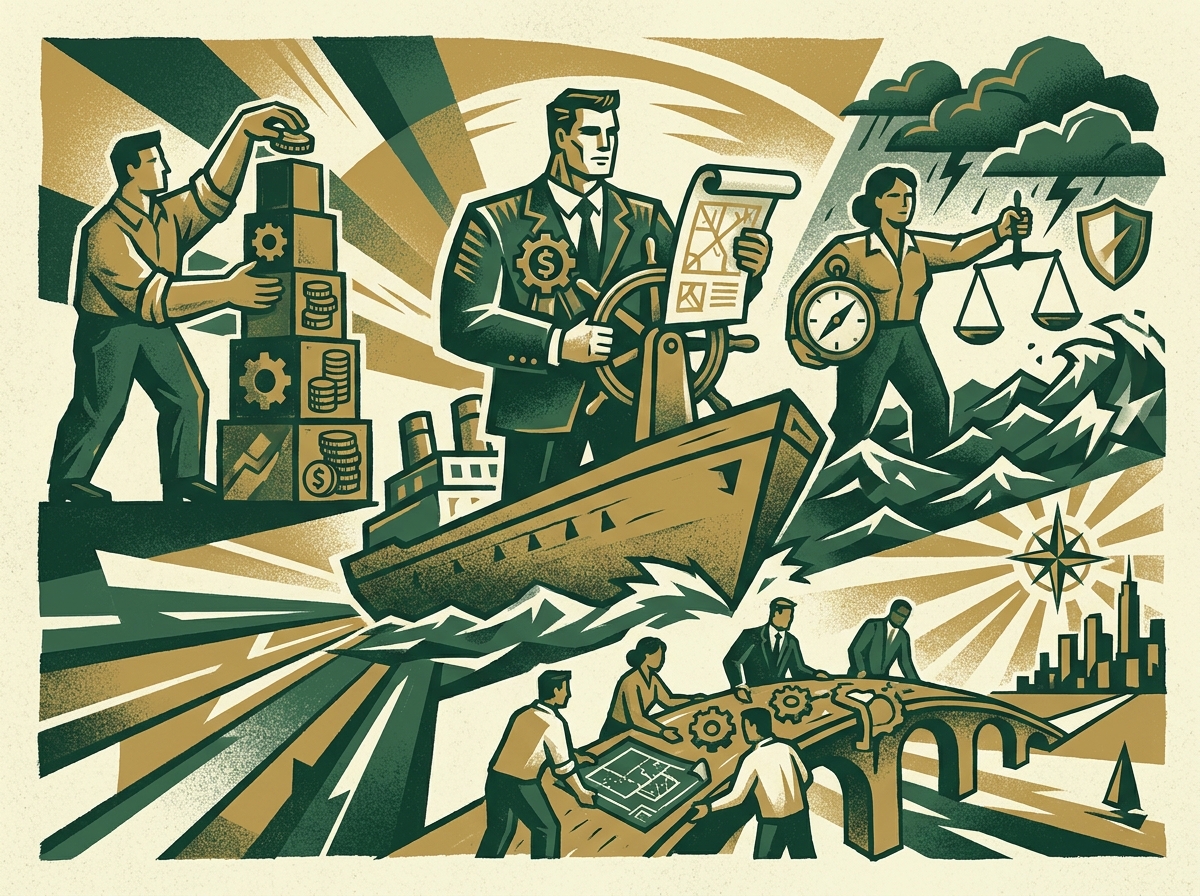
This structure ensures that someone is minding the ship’s logbook with diligence and precision, while a seasoned captain is at the helm, charting a course through the open sea. For a scaling company, it’s not just a smart approach—it’s the only one that truly covers all your bases.
Frequently Asked Questions
What is the difference between a Controller and a CFO?
The primary difference is function and time orientation. A Controller is backward-looking, focused on ensuring historical financial data is accurate, compliant, and reported correctly. An Outsourced CFO is forward-looking, using that data to develop financial strategy, manage risk, and plan for future growth.
Do I need an outsourced CFO if I have a strong accounting team?
Yes, you almost certainly do. A strong accounting team, even one led by an excellent Controller, is focused on accounting operations and historical reporting. An Outsourced CFO provides the strategic financial leadership—like capital raising, cash flow forecasting, and M&A advisory—that falls outside the scope of a traditional accounting function.
Who should handle day-to-day financial operations?
Day-to-day financial operations, such as bookkeeping, accounts payable, accounts receivable, and payroll, should be managed by your internal accounting team, led by a Controller or a senior accountant. This ensures the foundational data is clean and timely, which an Outsourced CFO then uses for strategic analysis.
References
https://preferredcfo.com/insights/controller-vs.-cfo-the-yin-and-yang-of-corporate-finance
https://www.protiviti.com/us-en/survey/top-risks-cfo-finance-2026
https://www.eaglerockcfo.com/blog/research/fractional-cfo-industry-report
https://cfo.ufl.edu/procedures-training-resources/internal-controls/internal-controls-fundamentals/
https://www.bespokepartners.com/cfo-talent-outlook-what-s-ponsors-need-to-prepare-for-in-2026/
