
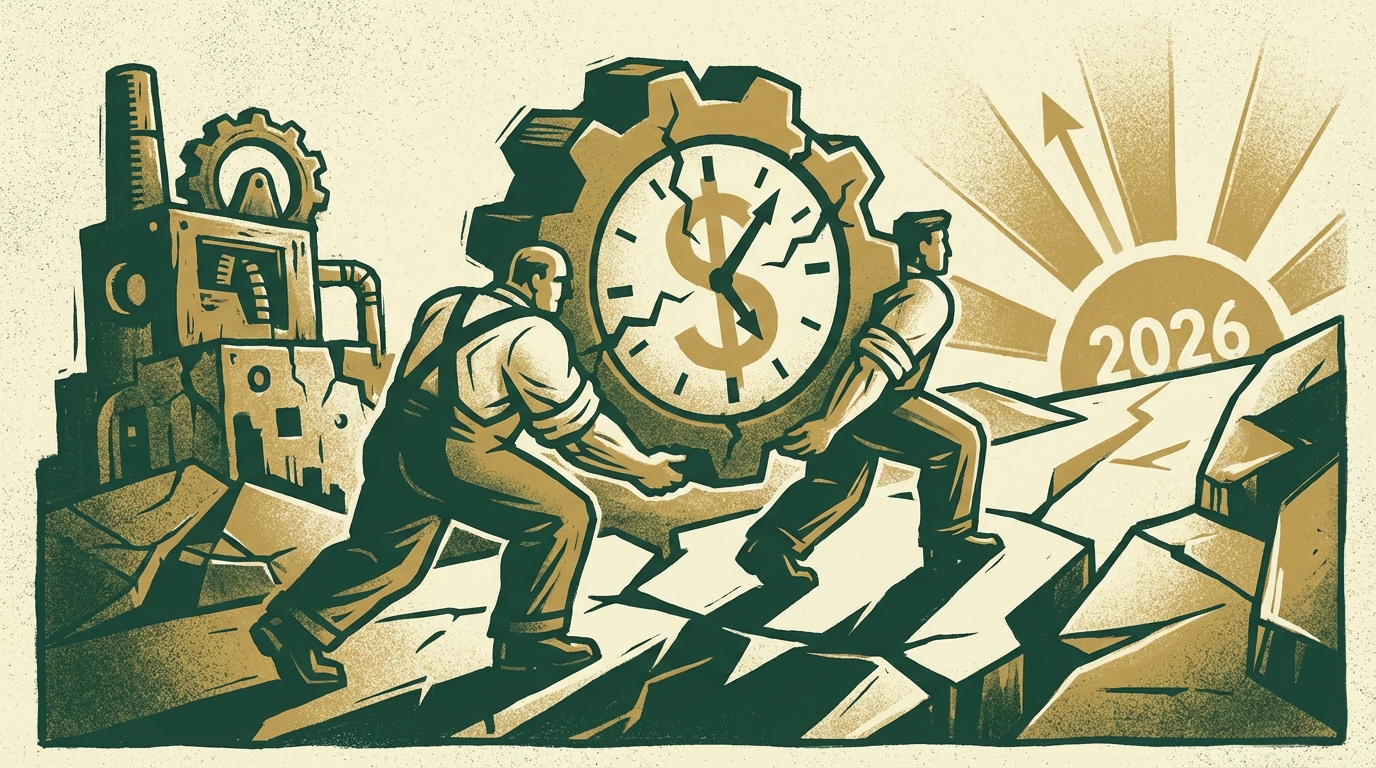
The Hidden Costs of Legacy ERPs: A 2026 Migration Guide
Published: 2026-01-30 • Estimated reading time: 9 min
I once sat in a boardroom with a CEO who was immensely proud of his company’s ERP. It was a custom-built monument to 1990s server architecture, a fortress of convoluted code that had, against all odds, chugged along for two decades. He saw it as a testament to frugal engineering. I saw it as a ticking time bomb wired to his balance sheet. This isn't just a story; it's a scene I've witnessed in dozens of companies teetering on the edge of irrelevance. The conversation around legacy systems is often framed by the sticker shock of a new implementation. But the real, conversation-ending cost is the one you’re already paying to keep that digital dinosaur alive. Understanding the latest in Tools, Technology & Innovation in Finance isn't about chasing shiny objects; it's about stanching the bleeding from a thousand tiny cuts your old system inflicts every single day.
The Cost of Doing Nothing: Technical Debt Quantified
The hidden cost of maintaining a legacy ERP is best described as technical debt, which is the implied cost of rework caused by choosing an easy, limited solution now instead of using a better approach that would take longer. It’s the interest payment on decades of poor technology decisions. Every time your team builds a custom patch to get the old system to talk to a new sales tool, you’re not fixing a problem; you’re taking out a high-interest loan against your future agility. The principal on that loan is the astronomical maintenance fees, the salaries for developers who know an archaic programming language, and the ever-present security vulnerabilities. According to McKinsey, companies can spend 10 to 20 percent of their technology budget set aside for new products just on servicing this debt.
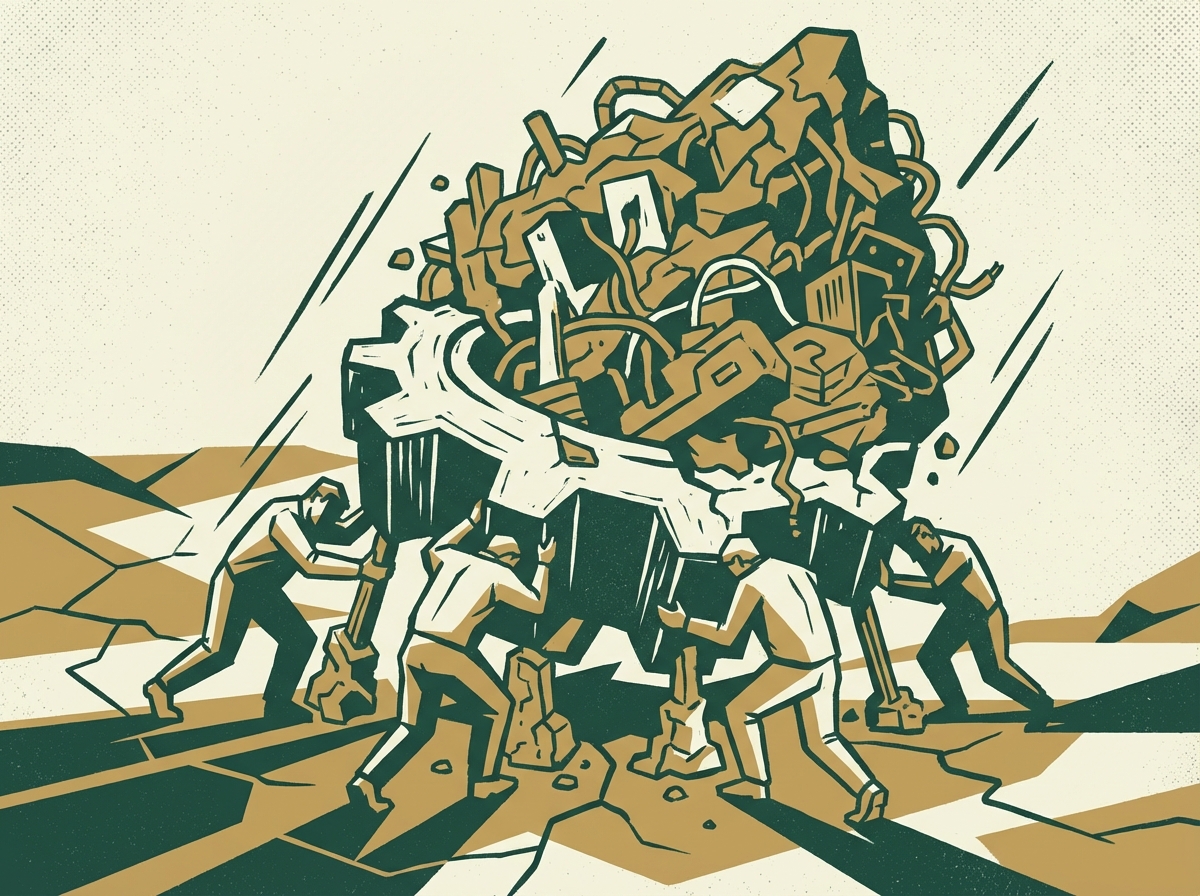
My team worked with a mid-market manufacturer whose on-premise ERP was so customized that their annual maintenance contract was higher than the cost of a full cloud ERP subscription. Worse, they couldn't attract top financial talent because no ambitious analyst wants to build a career on a system that looks like a DOS prompt. That’s the silent killer of technical debt: it repels the very people you need to innovate.
The Agility Tax: Missing Opportunities
The Agility Tax is the opportunity cost you pay for being stuck in the technological past. It’s the M&A deal you can’t close because integrating another company’s financials would take two years. It's the subscription pricing model you can’t launch because your system only understands one-time sales. It's the market you can't enter because you lack multi-currency or multi-entity capabilities. This isn't just about inconvenience; it's about ceding ground to competitors who can pivot on a dime because their systems were built for this century.
A Broadridge study found that 89% of C-suite executives believe AI will be critical for staying ahead of competitors. Where does that AI get its data? A clean, modern, API-friendly ERP. Your legacy system isn’t just slow; it’s a data prison, preventing you from using modern analytics and AI to spot trends, manage inventory, or forecast demand. You're flying blind while your competition has satellite imagery.

The Migration Business Case: ROI Beyond Efficiency
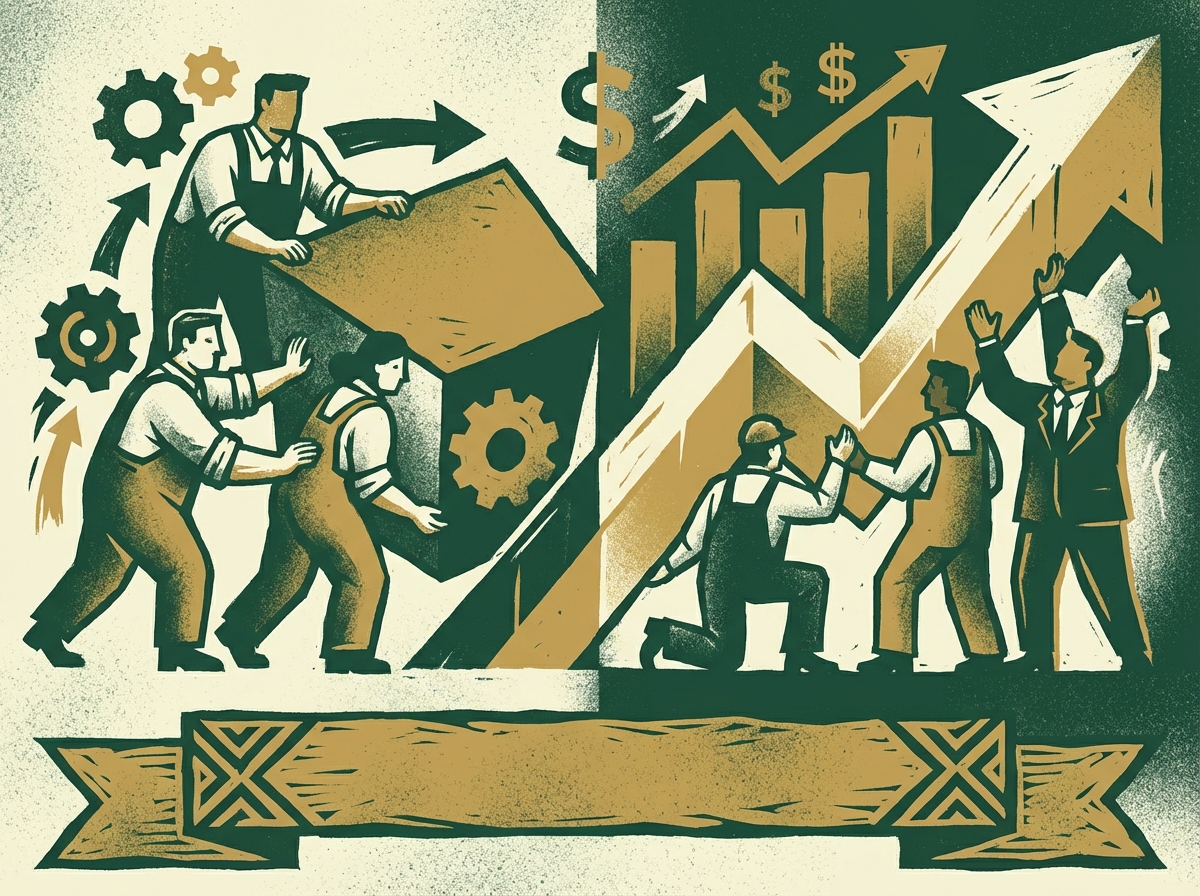
The business case for an ERP migration rests on strategic value, not just operational efficiency. Yes, a modern cloud ERP will automate processes and reduce manual data entry, but that’s table stakes. The real ROI is found in what you can do with the new system. It's about having a single source of truth that allows your executive team to make critical decisions with real-time data, not last month’s cobbled-together spreadsheets. It's about unlocking the strategic potential of your finance function, transforming it from a cost center into a value-creation engine. A Panorama Consulting report found that 57% of businesses achieve a positive ROI from their ERP in two years or less, a timeline that reflects these broader strategic gains.
The Fractional CFO's Role in Driving Value
A Fractional CFO is the strategic and financial quarterback responsible for ensuring an ERP project delivers on its promised value. They act as the essential translator between the C-suite's business objectives and the IT team's technical execution. In my experience at Greenwood Business Consultants, the projects with the highest success rates are those where a finance leader, unburdened by day-to-day accounting, owns the business case. They ensure the chosen system can actually support the 5-year growth plan, build the financial models to justify the investment, and hold the implementation partner accountable for delivering on scope and budget, not just flipping a switch.
Selecting the Right Stack: One Size Does Not Fit All
The best ERP stack is the one that aligns with your specific business model, industry, scale, and—most importantly—your future growth trajectory. The goal is not to buy the biggest or most feature-rich platform; it's to select a core system that can serve as a flexible foundation for your company's unique set of Tools, Technology & Innovation in Finance. This means prioritizing a system with a strong API and a healthy ecosystem of integrated partners.
QuickBooks vs. NetSuite: The Classic Mid-Market Crossroads
QuickBooks is an accounting tool that many businesses outgrow, while NetSuite is a true ERP platform built for scale. For a company crossing the $5M to $10M revenue threshold, the choice between these two platforms is a common, and critical, inflection point. QuickBooks got you here, but it will not get you to $50M and beyond. The limitations around inventory management, revenue recognition, and multi-entity consolidation become crippling.

Considering the Broader Ecosystem of Tools, Technology & Innovation in Finance
A modern ERP must integrate seamlessly with your broader tech stack, from your CRM to your HRIS to emerging AI-powered forecasting tools. The era of the monolithic, all-in-one ERP is over. Today, the smartest companies adopt a “composable” strategy, where the ERP serves as the stable financial core, connected via APIs to best-in-class applications that handle specific functions. As Generative AI becomes more integrated into workflows, a system’s ability to send and receive data cleanly will be its most valuable feature.
Governance: Avoiding the Implementation Money Pit
Strong project governance is the single most critical factor in preventing ERP implementation failures and cost overruns. I’ve seen more projects torpedoed by weak leadership and scope creep than by any technical glitch. A successful implementation is not an IT project; it is a business transformation project that happens to involve technology. It requires ruthless prioritization, unwavering executive sponsorship, and a clear understanding that the 'go-live' date is the starting line, not the finish line.

One of the biggest mistakes is underestimating the data migration effort. It's a painful, painstaking process of cleaning, mapping, and validating years of messy data. Skipping this step is like building a skyscraper on a foundation of sand. A study by Epicor found that 40% of ERP projects fail to meet their business case within one year of going live, often due to these governance-related issues. In my experience, you can have the best software in the world, but without a disciplined governance framework and relentless executive sponsorship, you're just buying a very expensive problem.
Frequently Asked Questions
What are the hidden costs of maintaining legacy ERP systems?
The primary hidden costs are technical debt, which includes high maintenance fees, the cost of custom integrations, security vulnerabilities, and difficulty attracting talent. A second major cost is the "Agility Tax"—the opportunity cost of being unable to launch new business models, integrate acquisitions, or leverage modern data analytics, causing you to lose ground to more nimble competitors.
How should a mid-market company approach ERP migration in 2026?
A mid-market company should approach migration as a business transformation project, not an IT upgrade. The process should begin with a clear business case led by a strategic finance leader, like a Fractional CFO. Key steps include defining future-state business requirements first, selecting a flexible cloud-based platform that fits your growth trajectory (not just current needs), rigorously planning for data migration and cleansing, and establishing strong project governance with clear executive sponsorship.
What role does a Fractional CFO play in ERP implementation?
A Fractional CFO acts as the crucial bridge between the executive team, the finance department, and the IT implementers. Their role is to own the business case, ensure the project's ROI is based on strategic value, select a vendor that aligns with the company's long-term financial goals, manage the budget, and hold all parties accountable for delivering a solution that solves business problems, not just technical ones.
References
McKinsey & Company: Breaking technical debt’s vicious cycle to modernize your business
Broadridge: 2025 Digital Transformation and Next-Gen Tech Study
Panorama Consulting Group: The ROI of ERP: How to Measure Success Beyond Go-Live
VersaCloud ERP: From Clicks to Commands: How Generative AI is Reprogramming ERP Workflows
