


The Annual Strategic Review: A CFO's Agenda
Published: 2026-02-20 • Estimated reading time: 9 min
I’ve sat through more annual strategic planning sessions than I care to count. Most are a spectacular waste of expensive time. The executive team flies in, holes up in a soulless conference room for two days, and emerges with a deck full of buzzwords and a vague sense of accomplishment. By April, that deck is gathering digital dust in a forgotten SharePoint folder, and everyone’s back to fighting the same old fires. It’s a corporate ritual that accomplishes little but burning cash.
There’s a better way. The annual review, when structured correctly, isn’t a ritual; it’s the operating system for your business. It's the moment you stop reacting and start architecting the future. As a CFO, my role is to ground this process in reality—to be the gravitational force that pulls aspirational visions into an executable plan. This is the essence of true Strategic Financial Planning: transforming ambition into a funded, measurable roadmap. This is the agenda my team and I use to make strategy happen.
Preparation: The Data Packet
The price of admission to the strategy session is a thoroughly prepared data packet. This non-negotiable pre-read, distributed at least 72 hours in advance, ensures that the discussion is grounded in objective reality, not gut feelings or the opinion of the highest-paid person in the room. If someone shows up unprepared, they don’t get to talk until they’ve done the reading. It’s that simple.
My team’s data packet is the single source of truth for the entire exercise. It’s not a data dump; it’s a curated narrative told through numbers. It must be brutally honest and analytically sound.

What’s Inside the Packet:
Financial Performance Review: Three-year look-back on P&L, Balance Sheet, and Cash Flow Statement. We highlight trends in key metrics: gross margin, operating margin, customer acquisition cost (CAC), lifetime value (LTV), and cash conversion cycle. This isn't just about the numbers; it’s about the story they tell.
Sales & Marketing Funnel Analysis: A breakdown of the entire funnel, from leads to closed-won deals. We analyze conversion rates at each stage, cohort performance, and the ROI on major marketing expenditures.
Operational KPIs: Key metrics from each department—product engagement, manufacturing uptime, customer support ticket resolution times, employee turnover. We’re looking for signs of strength and weakness in the core operational engine.
Prior Year Strategic Initiative Scorecard: A stark, one-page summary of last year’s strategic goals. Each one is graded: Hit, Miss, or In Progress. For every Miss, a concise, blame-free post-mortem is required.
Session 1: The Look Back (Performance Analysis)
This first session is a forensic audit of the past 12-24 months. The sole objective is to establish a shared, fact-based understanding of our current position without resorting to excuses or revisionist history. The discussion is structured around a simple framework: What did we say we’d do? What actually happened? Why is there a difference?
This isn’t about blame; it’s about diagnosis. Was the strategy wrong, or was the execution flawed? Did a market shift render our plans obsolete? A culture of intellectual honesty is paramount. This process of Performance Benchmarking against our own promises is the foundation for all future Strategic Objectives & KPI Tracking.

To keep this focused, my team often uses a simple table to structure the conversation:
This session ends when everyone in the room agrees on the final column for every major initiative. This is the bedrock of Executive Alignment.
Session 2: The Market View (Trends & Threats)
This session forces the team to look outside the four walls of the company. Having established where we are, we now need to understand where the world is going. This involves a disciplined review of the competitive landscape, macroeconomic shifts, and technological disruptions that could either propel us forward or render us obsolete.
We don’t just talk about trends; we quantify their potential impact. For instance, with a potential economic slowdown, we model the impact on our sales cycle and cash flow, guided by forecasts from sources like the Congressional Budget Office. We dissect our top three competitors’ recent moves and "war game" our potential responses. The goal is to move beyond vague awareness to proactive Risk Management & Mitigation and Scenario Planning & Modeling.

It’s during this session that I often remind the team of a quote commonly attributed to Peter Drucker: “The best way to predict the future is to create it.” This external view isn’t about being reactive; it’s about identifying the waves we want to catch and the undertows we need to avoid. Many leaders get Strategic Alignment wrong by focusing only internally, a mistake that a recent analysis in the Harvard Business Review highlights as a critical failure point.
Session 3: The Look Forward (Goals & Initiatives)
This is where we transition from analysis to action. The look forward is a structured process of defining a compelling Long-Term Vision and then breaking it down into a handful of strategic priorities for the coming year. We use the Objectives and Key Results (OKR) framework for this. An Objective is the ambitious, qualitative goal (e.g., “Become the market leader in the enterprise segment”). The Key Results are the measurable, quantitative outcomes that prove we’ve achieved it (e.g., “Increase enterprise revenue from $10M to $25M,” “Win 20 new Fortune 500 logos”).
The key is ruthless prioritization. You cannot have ten strategic priorities. You can have three, maybe four. Any more than that, and you have none. My job as CFO is often to be the “Chief Reality Officer,” forcing the team to make hard choices. According to a recent FTI Consulting survey, over 60% of CFOs are now spending more time on strategic leadership, and this is exactly where that leadership is tested.
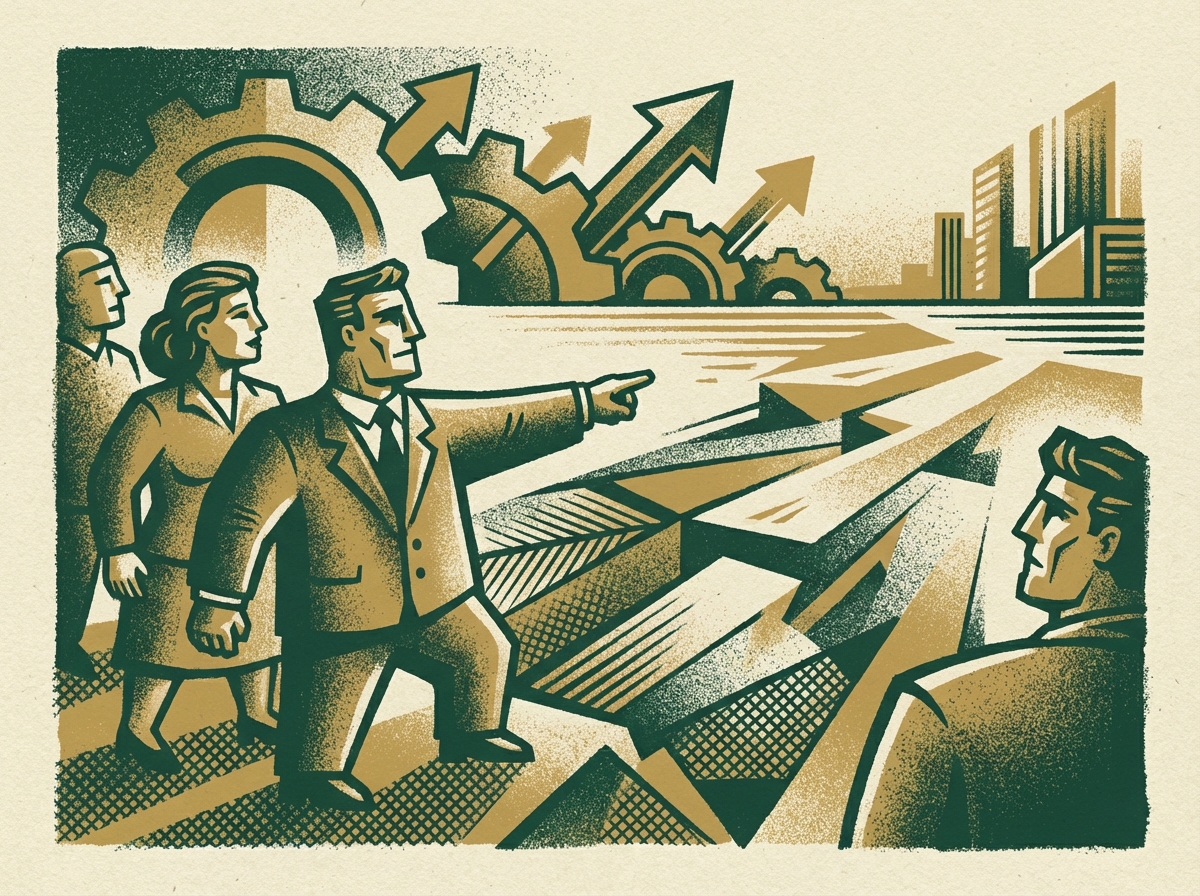
Each initiative must have a single, accountable owner, a timeline, and a preliminary resource request. This isn’t the final budget, but it’s the first step in connecting the strategy to the P&L.
Output: The Strategic Budget
The final output of the annual review is a budget that is a financial expression of the strategy. A strategy without a budget is a hallucination. This is where my team takes the lead, translating the prioritized OKRs and initiatives from Session 3 into a detailed financial plan. This process of Budget Alignment is the ultimate test of our strategic commitments.
If “Expand into Europe” is a key objective, the budget must reflect the necessary headcount, marketing spend, and capital expenditures. If it’s not in the budget, it’s not a priority. This Capital Allocation Strategy is the most powerful tool a leadership team has to signal what truly matters. We move away from incremental, "last year plus 5%" budgeting to a zero-based approach for all new initiatives. A recent survey from Mercer shows that companies are planning significant budget increases for talent and technology; our strategic plan must explicitly justify these investments against expected returns.
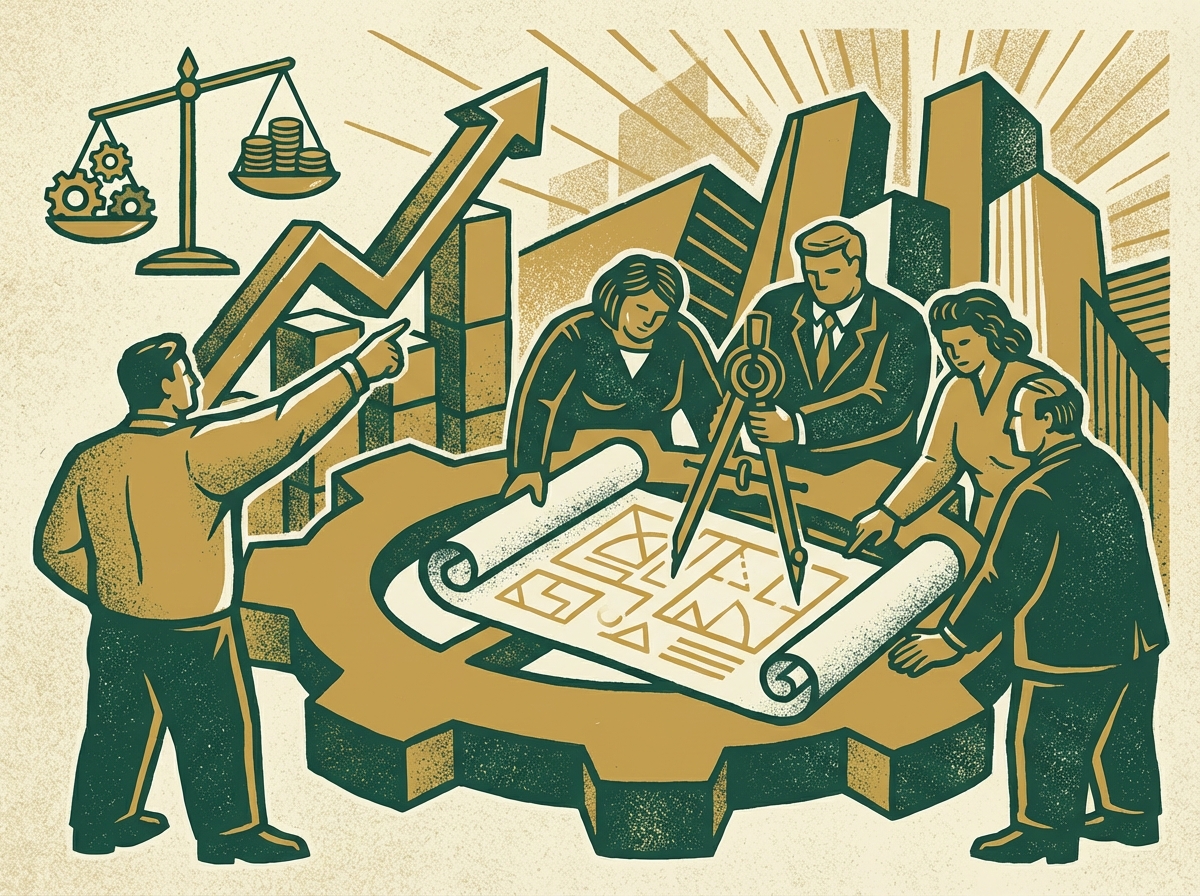
This strategic budget isn’t a static document. It’s paired with Rolling Forecasts & Cash Flow models that are updated monthly. It becomes the basis for our Quarterly Business Reviews (QBRs), creating a continuous loop of planning, execution, and measurement. The annual strategic review doesn’t end when the meeting does; it kicks off a year of disciplined execution guided by a clear financial roadmap.
Frequently Asked Questions
What should be on the agenda for an annual strategic financial review?
The agenda should be a logical progression from past to future. Start with a data-driven review of past performance against prior goals (The Look Back). Follow with an analysis of external market trends, competitive threats, and opportunities (The Market View). Then, use those insights to set a few key priorities and goals for the upcoming year (The Look Forward). Finally, translate those goals into a funded plan (The Strategic Budget).
Who should attend the strategy session?
Attendance should be limited to the core executive team and the direct leaders of major business functions (e.g., Head of Sales, Head of Engineering, Head of Product). The group should be small enough for open debate but large enough to represent all critical parts of the business—typically 8-12 people. The key is to have the decision-makers and the people directly responsible for execution in the same room.
How do you translate strategy into a budget?
You translate strategy into a budget by directly linking every major strategic initiative or Objective and Key Results (OKR) to specific resource requests. Instead of incremental budgeting, this approach requires each initiative owner to build a business case for the people, technology, and capital they need. If an initiative is a priority, it gets funded. If it’s not, it doesn’t. The budget becomes a mirror of your strategic choices.
