


The AI Forecasting Gap: Why Your Cash Flow Management Tech Is Failing
Published: 2026-04-26 • Estimated reading time: 8 min
Let’s be blunt. You’ve likely spent a small fortune on a sophisticated new platform promising AI-powered cash flow management. The demo was slick. The charts were beautiful. The algorithm, you were told, was a black box of pure genius that would finally give you a crystal-clear view of your future liquidity. Yet here you are, months later, and the ‘predictions’ feel more like expensive guesses. Your team still spends half its time wrangling spreadsheets, and you’re no more confident about next quarter’s working capital than you were last year.
This isn’t just your problem. My team and I see it constantly with new clients. There’s a massive chasm between the marketing hype of AI forecasting and the messy reality of its implementation. The dirty little secret is that the technology itself is rarely the point of failure. The failure lies in the plumbing—the data, the processes, and the people it connects to.
According to recent Gartner research, a staggering 93% of organizations have yet to realize a material return on their AI investments. This isn’t a technology problem; it’s a systems problem. Getting this right is the single biggest competitive advantage in financial operations today.
The Disconnect Between AI Hype and Cash Flow Reality
The fundamental disconnect is that AI forecasting tools are sold as a magic solution but function as powerful amplifiers. An amplifier, by definition, makes a signal louder. If you feed it a clean, clear signal—structured, timely, and accurate data—it produces brilliant, high-fidelity insights. But if you feed it noise—messy, latent, and inconsistent data—it just gives you louder, more confident-sounding noise. Most companies, without realizing it, are paying top dollar for very loud noise.
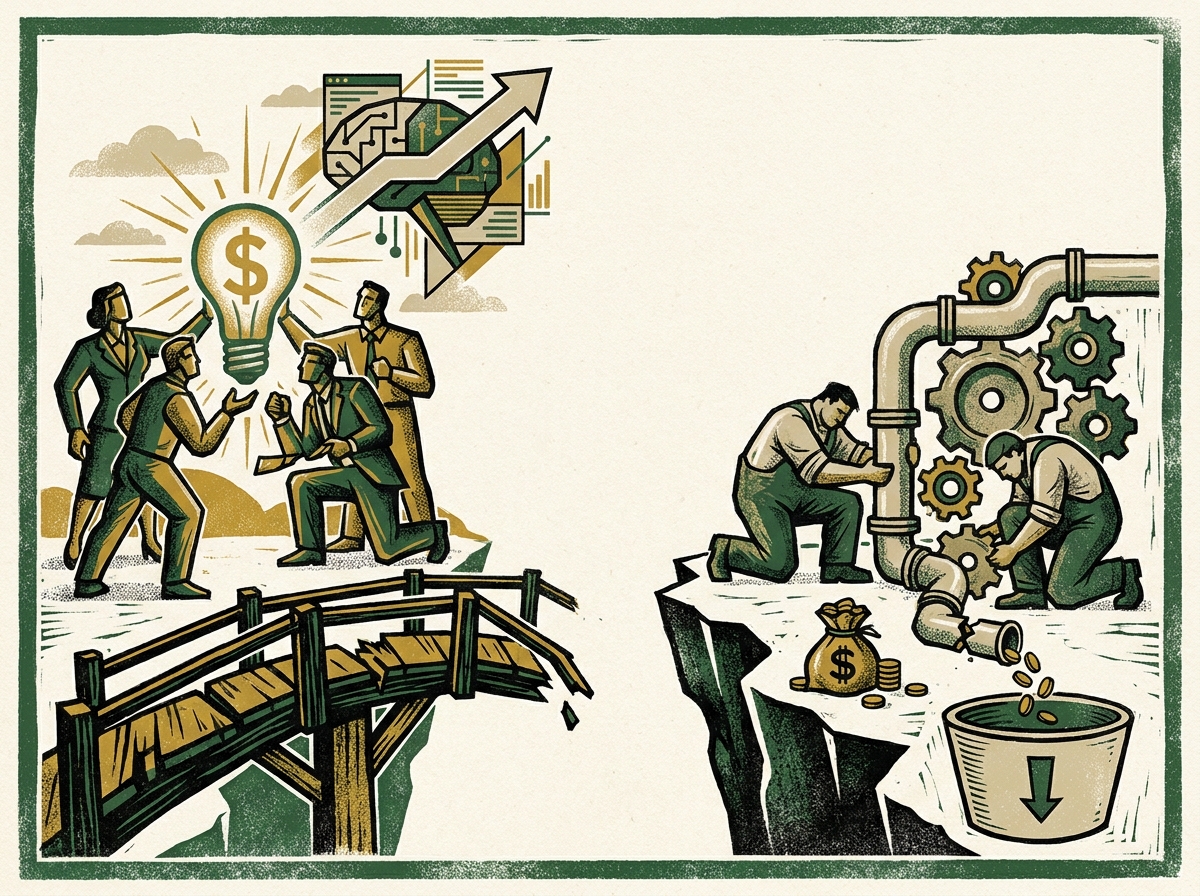
We’ve been conditioned by vendors to focus on algorithmic modeling and predictive analytics, but the real work happens before the algorithm ever sees a single number. It’s about creating an environment where the AI can actually succeed. The current failure to do so is why so many CFOs, who plan to increase tech spending significantly, are becoming disillusioned. They’re buying a race car but neglecting to build a road.
Garbage In, Garbage Out: The Silent Killer of Financial Automation
The single greatest killer of any cash flow automation initiative is poor data quality. This isn’t a new concept, but its consequences are magnified tenfold in the world of AI, where models learn and build upon the data they’re given. An AI model can’t intuit that “ABC Corp” and “ABC Corporation, Inc.” are the same vendor or that an invoice paid on the 31st but reconciled on the 1st of the next month throws off its understanding of payment cycles.
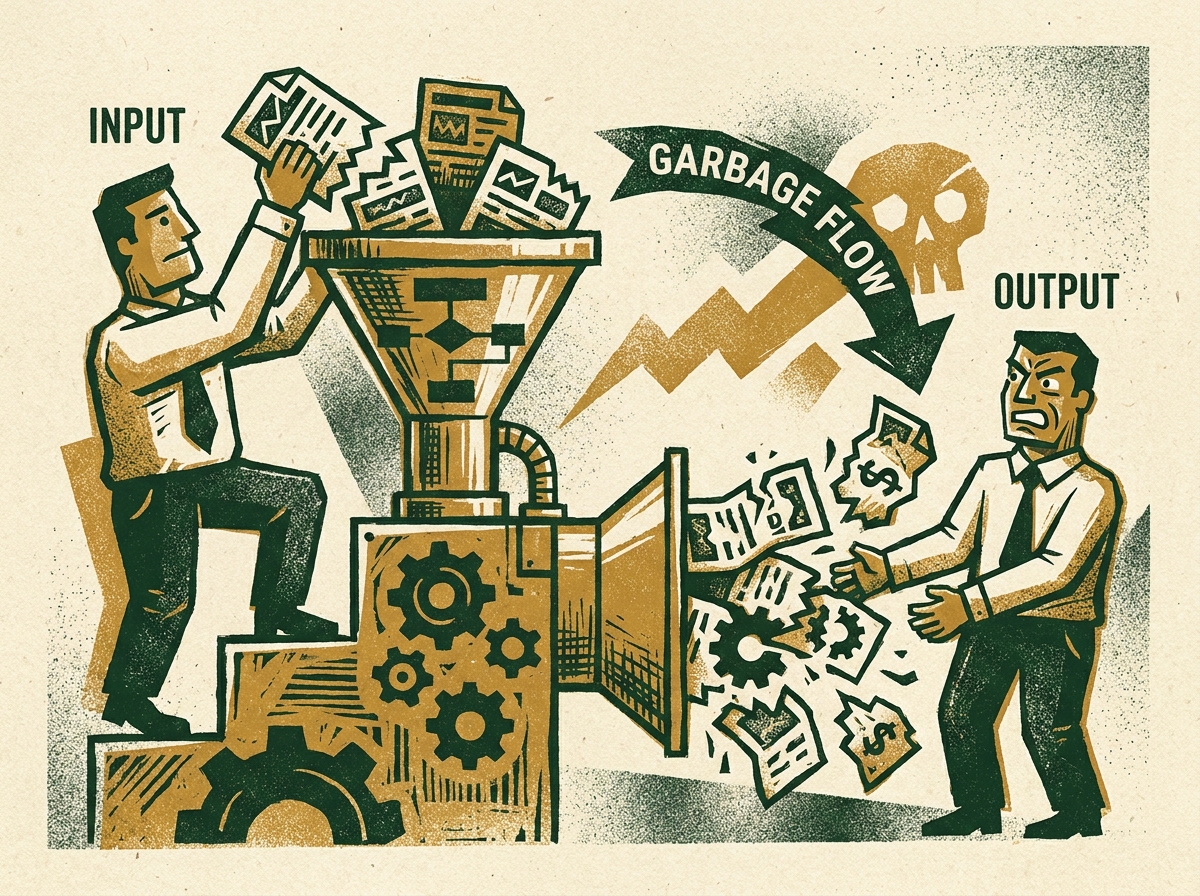
The financial cost of this is immense. Some studies show that bad data can cost a business up to 15-25% of its revenue, a figure that becomes terrifying when you’re feeding that data into models that dictate your company’s liquidity strategy. Your ERP systems, bank feeds, and accounts payable platforms all produce a firehose of raw data. Without a systematic process for data hygiene, you’re not enabling AI; you’re just automating chaos.
The Data Hygiene Checklist for Accurate Predictive Modeling
A disciplined approach to data hygiene is the non-negotiable prerequisite for successful AI-driven cash flow management. This isn’t a one-time project; it’s an ongoing operational discipline. My team uses a straightforward framework to get clients on the right track, focusing on standardization, reconciliation, and governance.
Standardize Your Data Inputs
Standardizing data inputs means creating a single, consistent format for all financial information entering your systems. This involves enforcing uniform naming conventions for customers and vendors, categorizing transactions with a consistent chart of accounts, and ensuring all date formats are identical. Without this, your AI model wastes most of its processing power just trying to figure out what it’s looking at, rather than identifying predictive patterns in customer payment behavior or supplier terms.
Implement Automated Reconciliation
Automated reconciliation is the process of using technology to match transactions across different systems—like your bank statements and your general ledger—in near-real-time. Manual, batch-based reconciliation at the end of the month is a death knell for predictive accuracy because the AI is always working with stale, unverified data. Real-time reconciliation ensures the model is trained on the most current and accurate picture of your cash position.
Establish a Data Governance Framework
A data governance framework establishes the rules, roles, and responsibilities for managing your financial data. This defines who can enter or modify data, what the standards are for data quality, and how exceptions are handled. It’s the human and process layer that ensures the integrity of the technology stack. Think of it as the constitution for your financial data; it’s not exciting, but without it, you have anarchy.
Here’s a simple comparison of the old way versus the necessary new way:

Integrating Automated Insights into Actual Human Decision-Making
Successfully integrating AI means treating it not as an oracle but as a uniquely powerful colleague on your finance team. The best AI forecasting systems don’t just spit out a number; they provide a range of probable outcomes (e.g., Monte Carlo simulations), identify the key drivers behind the forecast, and flag anomalies that require human investigation. The goal is to elevate your team from data entry clerks to strategic decision-makers.

This requires a workflow transformation. When the AI model flags a projected cash shortfall in three weeks because of a predicted delay in receivables from a specific customer segment, what happens? The right answer isn’t a passive report. The right answer is an automated alert to your AR team to begin proactive outreach, a notification to treasury to evaluate short-term credit options, and a dashboard update for the CFO. The insight must be a catalyst for action, embedding predictive analytics directly into the decision-making workflows of the organization.
Moving from Reactive Reporting to Proactive Liquidity Management
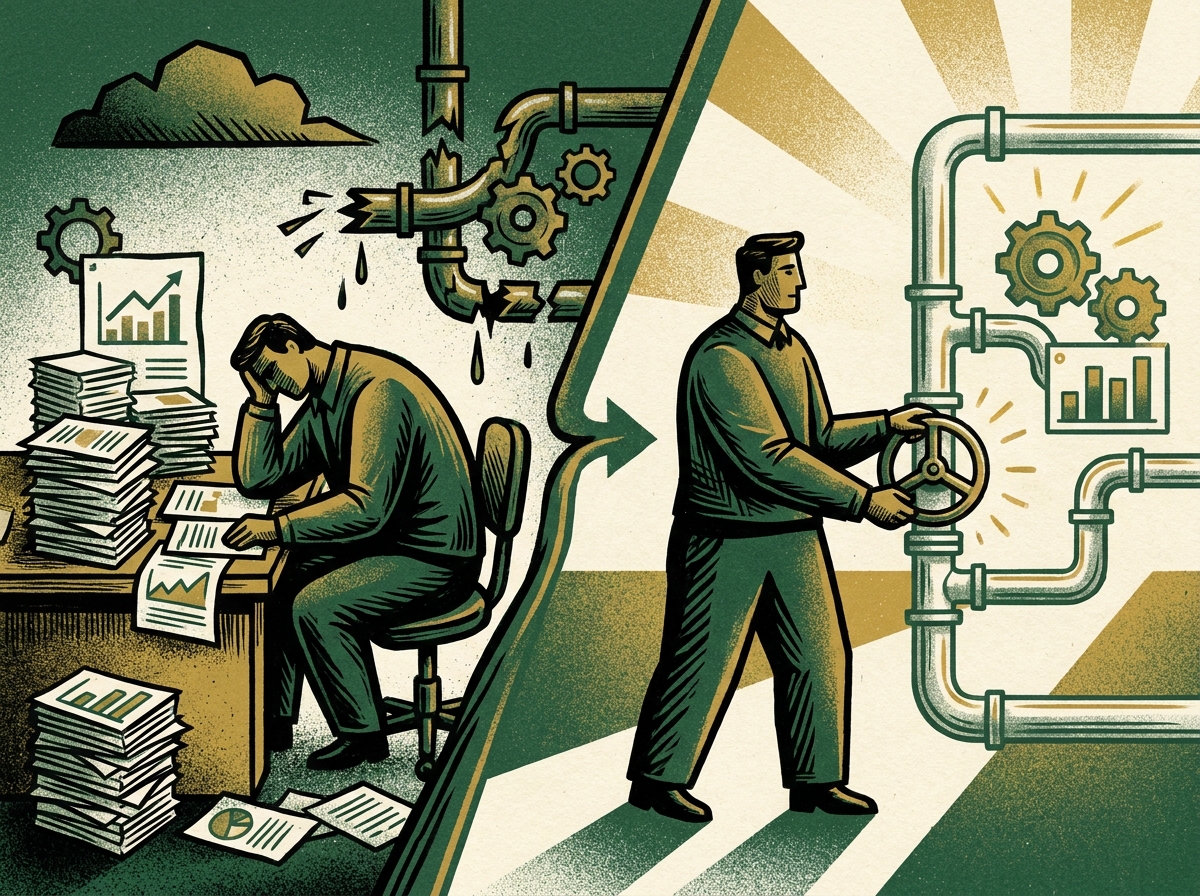
The ultimate goal of effective cash flow management is to transform the finance function from a historical scorekeeper into a forward-looking strategic partner. Instead of generating reports that tell you what your cash balance was, you should be running scenarios that tell you what it could be. This is the leap from reactive reporting to proactive liquidity management.
When implemented correctly, the results are game-changing. A McKinsey report highlights that AI-driven approaches can improve forecasting accuracy by 30-50%. This isn’t just an academic improvement. It translates directly into better working capital optimization, a reduced cash conversion cycle, and the ability to confidently seize opportunities—like strategic investments or advantageous supplier terms—that your less-prepared competitors cannot. This is how you turn a cost center into a powerful engine for value creation and build a durable competitive moat in an uncertain economy.
Frequently Asked Questions about AI in Cash Flow Management
Why are AI cash flow forecasting projects failing to deliver ROI?
AI cash flow forecasting projects primarily fail to deliver ROI because companies focus on the technology itself while neglecting the three pillars required for its success: clean data infrastructure, clear governance rules, and integrated human decision-making workflows. The most sophisticated algorithm is worthless if it’s fed inconsistent, untimely, or inaccurate data, a classic “garbage in, garbage out” scenario that undermines the return on technology investment.
How does data quality impact automated cash flow management?
Data quality is the single most critical factor in automated cash flow management because the AI models learn directly from the data they process. Poor data—with issues like duplicate entries, inconsistent vendor names, or unreconciled transactions—trains the model to make inaccurate predictions. This leads to flawed liquidity forecasts, poor working capital decisions, and a fundamental lack of trust in the system, ultimately causing the automation initiative to fail.
What are the steps to properly implement predictive financial analytics?
Properly implementing predictive financial analytics involves a three-stage approach. First, you must build a foundation of data hygiene by standardizing inputs, automating reconciliation, and establishing a governance framework. Second, you must select and implement the right technology that fits your specific business context. Finally, and most critically, you must redesign your financial workflows to ensure the AI’s insights are actively used to inform and trigger human decisions, moving your team from reactive reporting to proactive, data-driven strategy.
