


Tax Day Post-Mortem: What You Missed in 2025 (And Can Fix for 2026)
Published: 2026-04-15 • Estimated reading time: 6 min
The ink is barely dry on your 2025 return. The wire transfer to the Treasury has cleared. For most founders, this moment is a deep exhale—a problem solved, a box checked, a file cabinet closed until next spring. That’s a mistake. Treating your tax return like a final exam you’ve just passed is one of the most expensive habits in business. The real work, the kind that separates the merely successful from the strategically wealthy, starts right now. This isn't about just filing; it's about initiating a rigorous Strategic Financial Planning cycle that turns tax compliance from a painful chore into a competitive advantage.
Don't Just File and Forget: Your Tax Return Is a Black Box
The most crucial post-filing step is to treat your tax return not as a final document, but as an operational playbook for the year ahead. I tell my clients to think of their Form 1120 like the black box recovered from a flight. It contains a perfect, unvarnished record of every financial decision—good, bad, and ugly—that you made over the last 12 months. Shoving it in a drawer is like ignoring a flight recorder that could tell you exactly how to avoid turbulence next time. This post-tax season checklist is your debriefing. It’s where you dissect the data to find the story behind the numbers, transforming a reactive, backward-looking document into a proactive, forward-looking strategy.

The Variance Analysis: Where Your Plan Met Reality
A variance analysis is a direct comparison between your projected tax liability throughout the year and the actual tax you owed on April 15th. The difference between a controlled tax position and a “surprise” tax bill isn't complexity—it's the absence of a monthly dashboard that flags deviations before they become crises. Did your revenue surge in Q3? Did a major capital expense get pushed to the next fiscal year? These events create a gap between your estimated tax payments and your final liability. In fact, according to an IRS taxpayer analysis, businesses overpay estimated quarterly taxes by an average of $47,000 a year, essentially giving the government an interest-free loan. A proper tax liability analysis closes that gap.

Here’s how most companies operate versus how they should operate:
Missed Opportunities: The Low-Hanging Fruit of Tax Credits
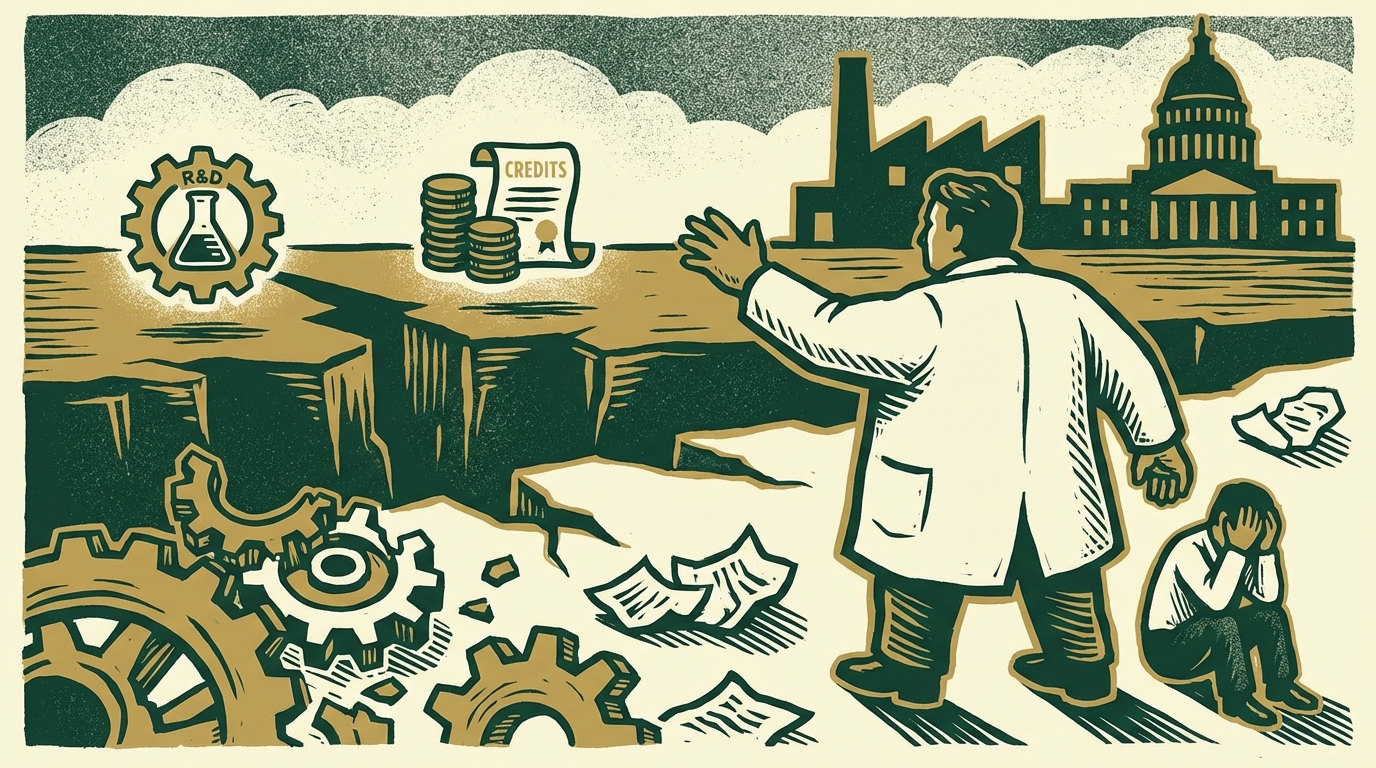
You are almost certainly leaving money on the table by overlooking eligible tax credits, especially those related to research and development. When I ask a new client about their R&D credits, I usually get a shrug. “We’re not a biotech lab,” they’ll say. But the IRS definition is far broader than you think. Did you develop a new internal software process? Improve a manufacturing technique? Experiment with a new product formula? That’s R&D. According to the U.S. Treasury Department, a staggering $32.2B in R&D tax credits went unused by U.S. businesses. The problem is even wider; a NACPA survey found that 86% of mid-market companies miss one to two eligible tax credits annually. This isn’t about creative accounting; it’s about claiming what is rightfully yours. A core part of any proactive tax strategy is an active, ongoing hunt for these opportunities.
Decoding the ‘Surprise’ Check: A Symptom, Not a Cause
A surprise tax bill is the direct result of a reactive financial process where tax planning is an annual event rather than an integrated operational function. No one likes writing an unexpected five- or six-figure check to the IRS. But the pain you feel isn’t just about the cash outflow; it’s the feeling of being out of control. That surprise is a lagging indicator of a deeper issue. A survey from the CFO Leadership Council revealed that 72% of executives describe their tax planning as “reactive rather than proactive.” That same report found this reactive posture costs them, on average, an 18% higher total tax liability. Your corporate tax strategy can’t be something you delegate and forget. It must be woven into your monthly financial review. The “surprise” is just the bill coming due for a year of flying blind.

Your 2026 Tax Dashboard: The Four Pillars of Financial Control
A proactive tax dashboard should be a living document that tracks four key areas monthly: P&L variance, credit eligibility, cash flow timing, and estimated liability. To avoid a repeat of 2025’s scramble, your focus must shift from a year-end review to a year-round dashboard. This is the cornerstone of effective Strategic Financial Planning. My team works with founders to build this out, but the principles are straightforward. It’s about creating a system of financial hygiene that provides clarity and prevents surprises.

Here’s your checklist to build a rudimentary version:
Monthly P&L Variance Review: Don’t just look at revenue and expenses. Look at them against your projections. Where did you overperform? Underperform? A 20% revenue beat is great news, but it carries a significant tax implication your estimates might not have captured.
Quarterly Credit & Deduction Scan: Schedule a 30-minute meeting each quarter with your finance lead specifically for
deduction optimization. Ask one question: “What did we spend money on this quarter that could qualify for a credit?” Think new software, process improvements, or hiring in specific zones.Cash Flow vs. Tax Liability Timing: Map out your projected tax payment dates against your business’s cash flow cycles. If you know Q4 is your big cash collection quarter, ensure your Q3 estimated payment doesn’t put you in a squeeze.
Real-Time Liability Projection: This is the master metric. It’s a simple formula: (Year-to-Date Net Income x Estimated Tax Rate) - (Estimated Taxes Already Paid). Update it monthly. The goal isn’t perfect accuracy; it’s about knowing the score, always.
Frequently Asked Questions About Post-Tax Season Strategy
What should you review immediately after filing taxes?
Immediately after filing, you should conduct a variance analysis comparing your estimated tax payments to your final tax liability to understand precisely why there was a difference. Beyond the variance analysis, review your largest P&L line items and ask if every potential deduction was maximized. Finally, read through the full return with your CPA to identify any changes in your business operations (like new state nexus or asset classes) that will impact the coming year's Strategic Financial Planning.
How can you prevent tax surprises next year?
You can prevent tax surprises by shifting from an annual tax review to a monthly or quarterly “tax dashboard” that provides a real-time projection of your year-end liability. The key is to make tax awareness a part of your regular financial cadence. By tracking profit variance and potential credits throughout the year, you eliminate the information gap that causes April surprises. It transforms tax planning from a once-a-year event into an ongoing operational discipline.
Are you missing out on R&D credits?
It is highly likely you are missing out on R&D credits, as the definition is much broader than just laboratory research and includes activities like developing internal software, improving processes, or prototyping new products. Most founders I work with initially believe they don't qualify. But once we dig into their operational spending—from software developer salaries for an internal tool to costs for testing a new service delivery method—we often uncover significant opportunities. Given that 86% of similar companies miss credits, a proactive review of your eligibility for R&D tax credits is one of the highest-ROI activities you can undertake post-filing.
