

SOC 2 Compliance Is Not Just for Engineering: A Finance Mandate
Published: 2026-06-09 • Estimated reading time: 8 min
In the modern corporate arena, effective financial risk management is no longer just about hedging currency fluctuations or managing cash flow—it’s about proving to the market that your enterprise data isn’t a ticking liability. It is a peculiar modern tragedy that companies will spend millions building a revolutionary product, only to have their entire revenue pipeline frozen because a twenty-something procurement analyst at a Fortune 500 company asked for a compliance framework they do not have.
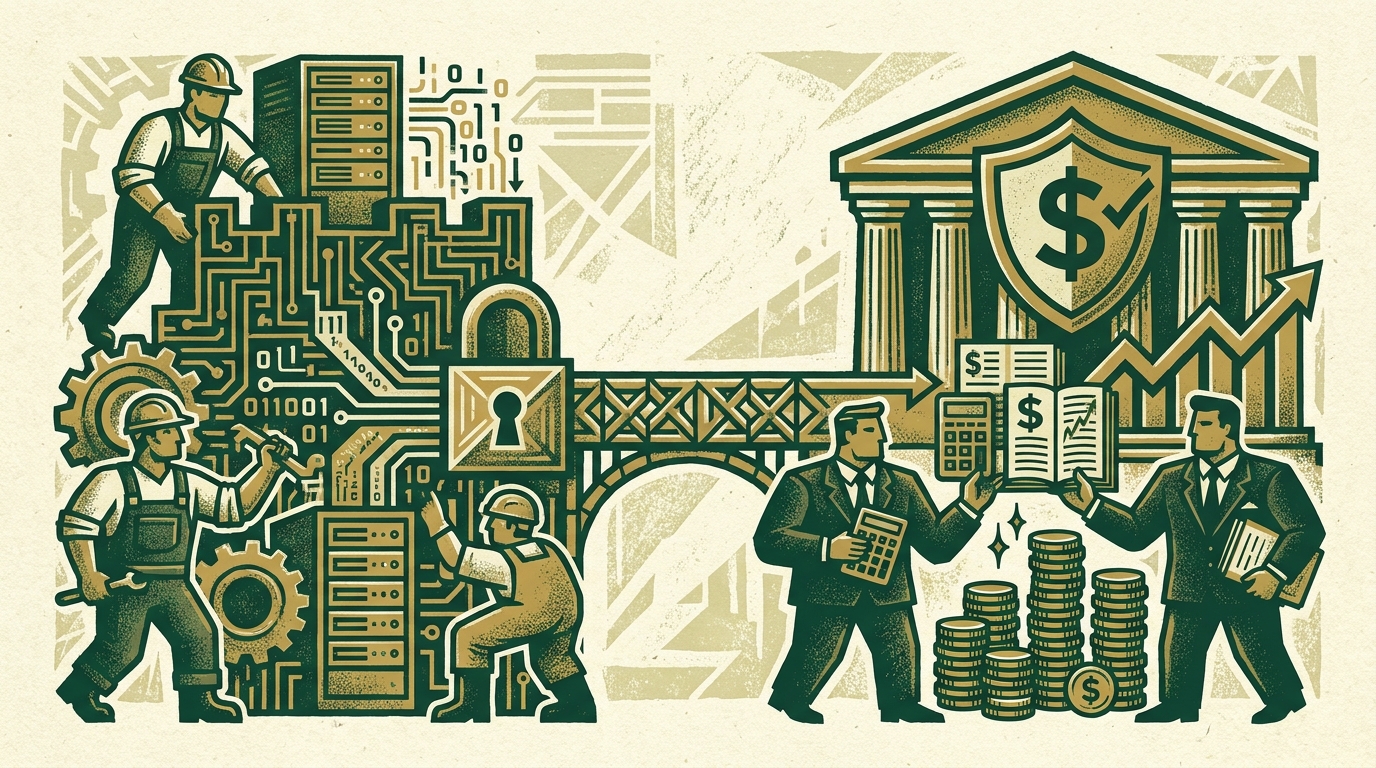
My team at Greenwood Business Consultants has watched a fascinating and ruthless shift over the last three years. SOC 2 compliance used to be an annoying checklist shoved onto the CTO’s desk. Today, it has migrated from the server room to the boardroom. It is no longer an engineering milestone; it is a finance mandate.

The Executive Reality of Financial Risk Management
SOC 2 compliance is fundamentally a financial risk management mandate that dictates a company’s ability to close enterprise deals and protect its balance sheet. For CEOs and Founders steering companies past the $5M revenue mark, the realization often hits late: your security posture is your financial posture.
Consider the mathematics of modern vendor relationships. According to Atlas Systems, an astonishing 97 percent of organizations experienced at least one supply chain breach in 2025. Furthermore, these same companies are now sharing highly confidential data with roughly 300 third-party vendors on average. When you hold another company’s data, you hold their financial liability.
“CFOs are no longer just counting the money; they are actively responsible for safeguarding the digital systems that track and transmit it,” as industry experts at Allied Telecom have noted. If the CFO does not view data security as a core component of their financial risk management strategy, they are effectively flying blind.
Why Your Enterprise Deal Just Stalled in Procurement
Enterprise deals stall in procurement because buyers now treat SOC 2 Type 2 reports as a non-negotiable prerequisite for managing their own vendor risk. You know the scenario. You are popping champagne over a verbal “yes” from a massive enterprise client. The economic buyer loves your software. The implementation team is ready. Then, the contract goes to procurement.
Procurement doesn't care about your slick UI. They care about enterprise sales blockers and information governance. They ask for your SOC 2 Type 2 report. You don’t have one, or you only have an outdated Type 1. Suddenly, your six-figure deal is shoved into a 6-month legal purgatory from which it may never return.

Why the sudden paranoia from enterprise buyers? Because the threat landscape has made them liable for your mistakes. According to the same research from Allied Telecom, almost half—roughly 50 percent—of organizations have faced direct data breaches in the past two years. Buyers simply cannot afford to absorb the regulatory compliance fallout of a vendor’s weak internal controls. If you cannot produce a SOC 2 report, you are signaling to their CFO that you are a financial risk they should not underwrite.
The CFO’s Role in the Trust Services Criteria and Financial Risk Management
Chief Financial Officers must govern the Trust Services Criteria because the controls required for data security directly mirror the internal controls necessary for accurate financial reporting.
SOC 2 is evaluated across five Trust Services Criteria: security, availability, processing integrity, confidentiality, and privacy. To an engineer, these are technical configurations. To a CFO, these are the exact same principles that underpin the COSO Framework, which has governed internal control over financial reporting for decades.
When a destructive cyber attack occurs, it doesn't just take down servers; it erases or corrupts critical financial data. The financial sector vividly illustrates this growing severity, where incident costs routinely skyrocket. Let's look at how the perspective shifts when finance takes the wheel:

As defined by the Secure Controls Framework, the Trust Services Criteria require ongoing governance, not just a one-time code patch. This requires the CFO's oversight to allocate budget, enforce cross-departmental accountability, and ensure audit prep is treated as a continuous operational habit rather than an annual fire drill.
Mapping Financial Data Flows for the Auditors
Mapping financial data flows requires finance teams to trace exactly how sensitive information moves through cloud accounting systems to ensure audit-ready internal controls.
You cannot protect what you cannot see. One of the most glaring vulnerabilities my team uncovers in mid-market companies is the “shadow data” moving between the CRM, the billing engine, and the cloud accounting software.
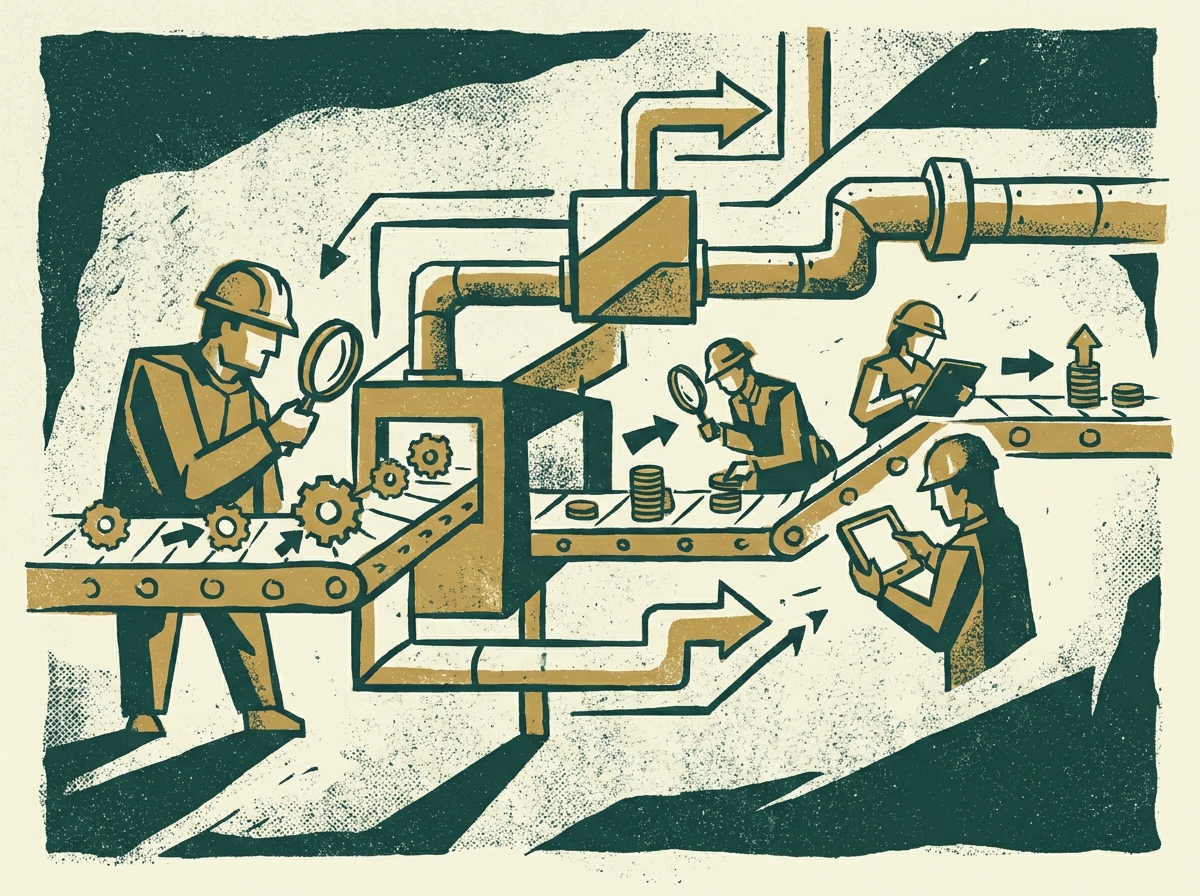
Auditors don’t want to hear that your data is “probably safe in the cloud.” They want a documented, verifiable map of financial data governance. They will ask:
Who has administrative access to modify invoices in the system?
Is there a continuous audit trail logging every financial transaction?
When an employee leaves, how quickly is their access to financial systems revoked?
If the CFO hasn't mapped these data flows, the organization will fail the processing integrity and confidentiality portions of the SOC 2 audit. Information governance is no longer a theoretical exercise; it is the tactical execution of tracing every dollar and every data packet from origin to ledger.
Turning Compliance into a Competitive Advantage
Organizations that integrate SOC 2 compliance into their core financial operations accelerate sales cycles, reduce vendor risk friction, and build a defensible competitive advantage.
Far too many founders view compliance as a sunk cost—a necessary evil to appease enterprise procurement. This is a strategic miscalculation. We are operating in an environment where, according to IBM, the average global cost of a data breach has swelled to over $4.88 million. Enterprise buyers are terrified.
When you present a pristine SOC 2 Type 2 report alongside your proposal, you are doing something profound: you are weaponizing trust. You instantly eliminate the vendor risk anxieties of the buyer's CFO. You bypass the enterprise sales blockers that trap your competitors. You transform compliance from a defensive chore into an offensive revenue generator, often reducing procurement friction by up to 40 percent.

SOC 2 compliance is not just a badge for your website; it is proof of elite operational discipline. And in a marketplace overflowing with risk, discipline is the ultimate competitive advantage.
Frequently Asked Questions
Why does finance need to be involved in SOC 2 compliance?
Finance must be involved in SOC 2 compliance because data security breaches pose severe financial risks and directly impact enterprise valuation. CFOs are ultimately responsible for safeguarding the company's assets, mitigating vendor risk, and ensuring that lack of compliance does not become an enterprise sales blocker that damages revenue predictability.
How does data security impact financial risk management?
Data security directly impacts financial risk management by threatening the integrity of financial reporting and exposing the company to massive liability costs. A data breach can lead to regulatory fines, lost enterprise contracts, and the corruption of critical financial data, making robust data security a non-negotiable pillar of protecting the balance sheet.
What controls are required for cloud accounting systems?
Cloud accounting systems require rigorous access controls, continuous audit trails, and encrypted data flows to meet SOC 2 processing integrity standards. Finance teams must implement strict internal controls over who can view, alter, or export financial data, ensuring that all actions are logged and verifiable during an audit.
