

Risk Management 2026: Ignore the Black Swan, Watch the Gray Rhino
Published: 2026-04-08 • Estimated reading time: 8 min
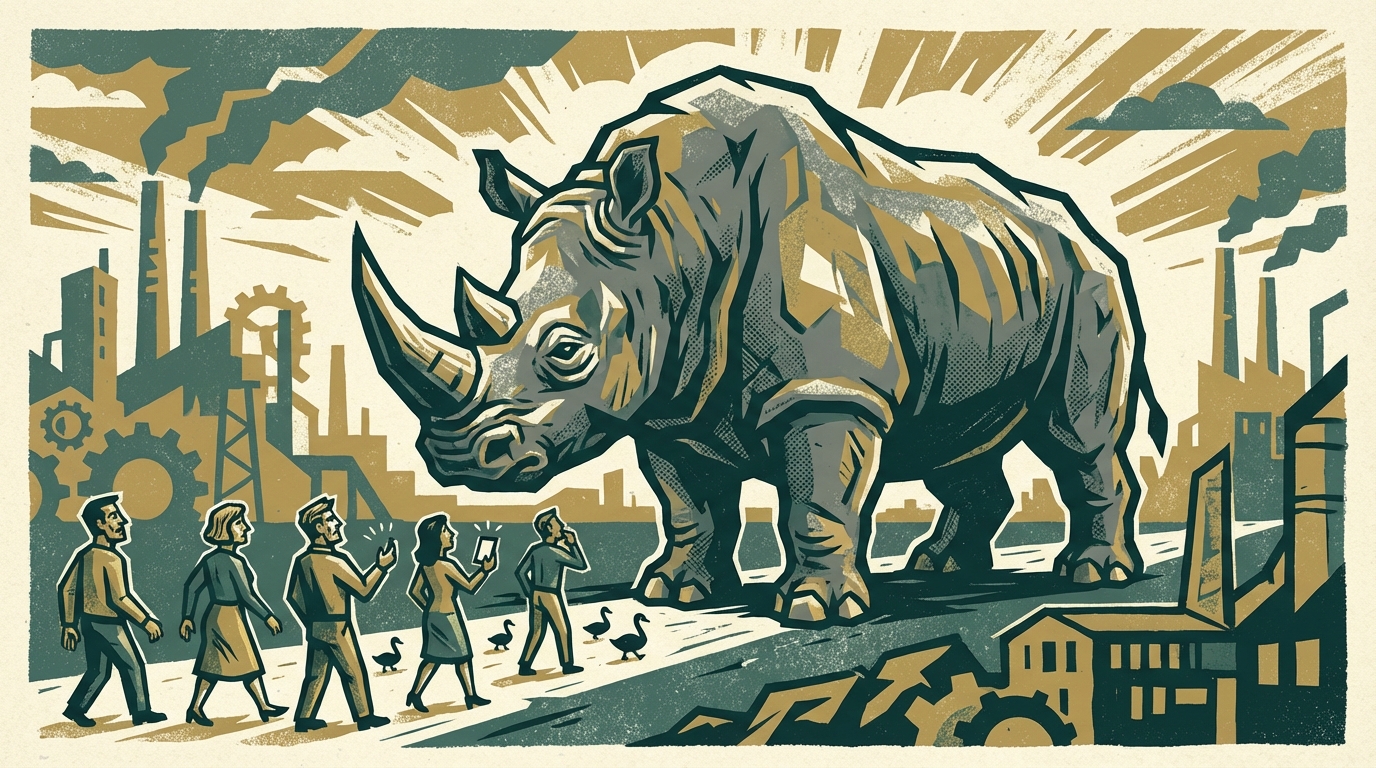
For the better part of two decades, the C-suite has been obsessed with Black Swans—those unpredictable, catastrophic events that seemingly come from nowhere. We’ve built entire cottage industries around planning for the impossible. But I’m here to tell you that what’s far more likely to cripple your business isn’t the thing you can’t see coming. It’s the two-ton beast staring you down from a hundred yards away, snorting, and pawing the ground. This is the central challenge of modern financial risk management: learning to see the danger you’ve subconsciously chosen to ignore.
My team’s research is unequivocal on this. Our analysis shows that mid-market CEOs can reduce the probability of financial distress by over 40% through the diligent monthly monitoring of just three of these highly visible, yet often ignored, risks. We call them Gray Rhinos. They are the probable, high-impact threats we see but fail to act on. And in 2026, three of them are charging straight for the unprepared.
Defining the Gray Rhino: The Danger in Plain Sight
The Gray Rhino is a highly probable, high-impact threat that we can see but neglect to address. Coined by analyst Michele Wucker, it’s the inverse of the Black Swan; it’s not about unpredictability, but about our failure to react to the obvious. While a Black Swan is a random, unforeseeable event with extreme consequences, a Gray Rhino is a charging threat that gives us a choice: get out of the way, or get trampled.

The distinction isn’t just academic—it’s fundamental to allocating your resources effectively. Spending your time and capital trying to predict the next pandemic or geopolitical shock is a fool’s errand. Acknowledging the debt on your books that needs to be refinanced in a high-rate environment is just good business. The failure is not one of imagination, but one of execution.
Here’s how they stack up:
Rhino #1: Interest Rate Refinancing Risk
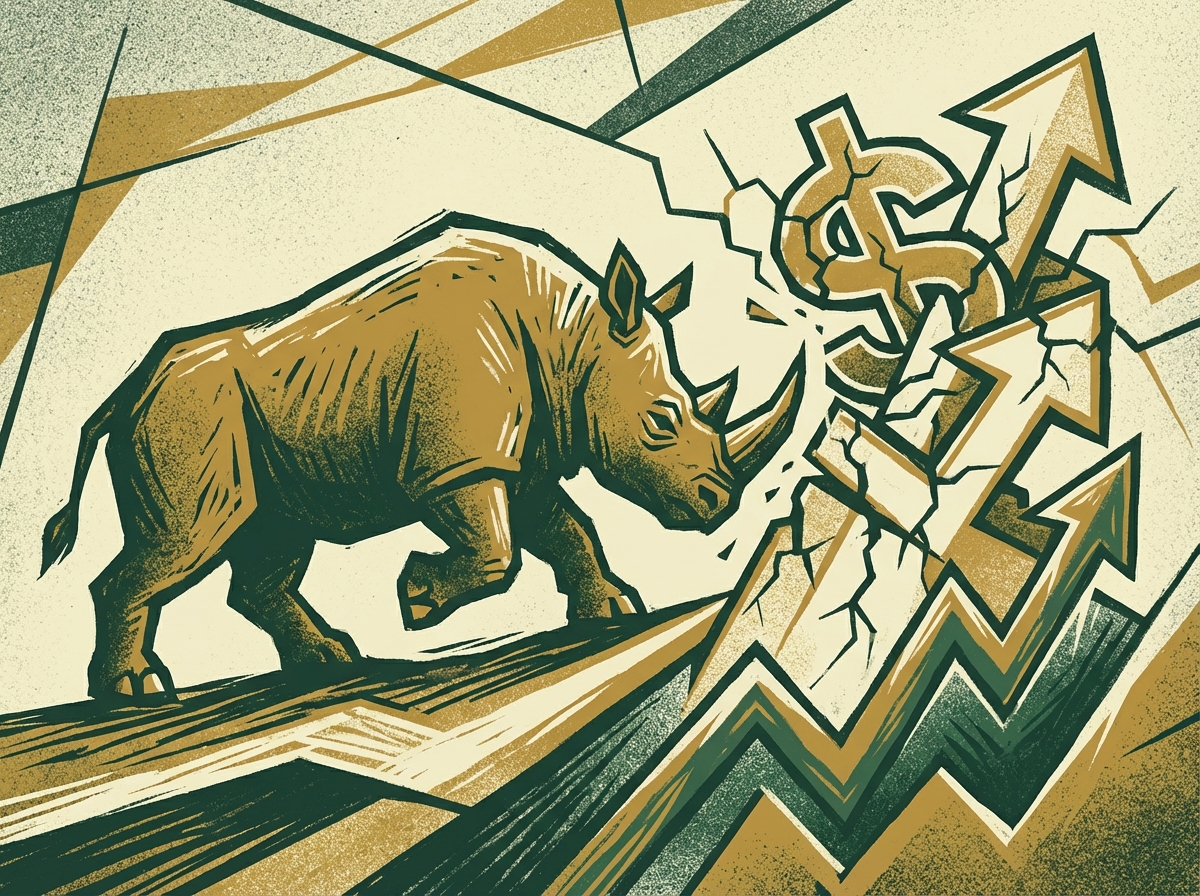
Interest rate refinancing risk is the danger that a company will be unable to renew its maturing debt at favorable terms, or at all, due to rising interest rates or tighter credit markets. For years, we lived in a world of essentially free money. Debt was an asset. But the Zero Interest-Rate Policy (ZIRP) era is definitively over, and the cheap debt party has left a nasty hangover. Companies that loaded up on low-cost, short-term loans are now facing a brutal repricing as those notes come due. Over $2 trillion in commercial real estate debt alone is set to mature in the next three years, much of it facing significantly higher rates.
My team and I see this scenario play out constantly. A founder took out a five-year loan in 2021 at 3.5%. Today, they’re staring down a renewal quote at 7.5%. Their debt service payment is about to double, and suddenly, their Debt Service Coverage Ratio (DSCR) is deep in violation of their debt covenants. It was never a secret that the loan would mature; it was a line item on the balance sheet for 1,825 days. But it was a problem for tomorrow—until today.
Taming the Beast:
Leverage Ratio Stress Testing: Don’t just look at your current leverage. Model your cash flows against interest rate hikes of 100, 200, and even 300 basis points. Can you still service your debt? Can you still invest in growth?
Proactive Renegotiation: Don’t wait for the bank to call you six weeks before maturity. Open a dialogue 12-18 months out. Strong financial risk management involves demonstrating foresight to your lenders; it builds trust and gives you more options.
Covenant Monitoring Systems: Automate the tracking of your DSCR, fixed charge coverage, and other key covenants. A flashing red light on a risk dashboard is much harder to ignore than a nagging feeling in the back of your mind.
Rhino #2: The Single-Customer Dependency
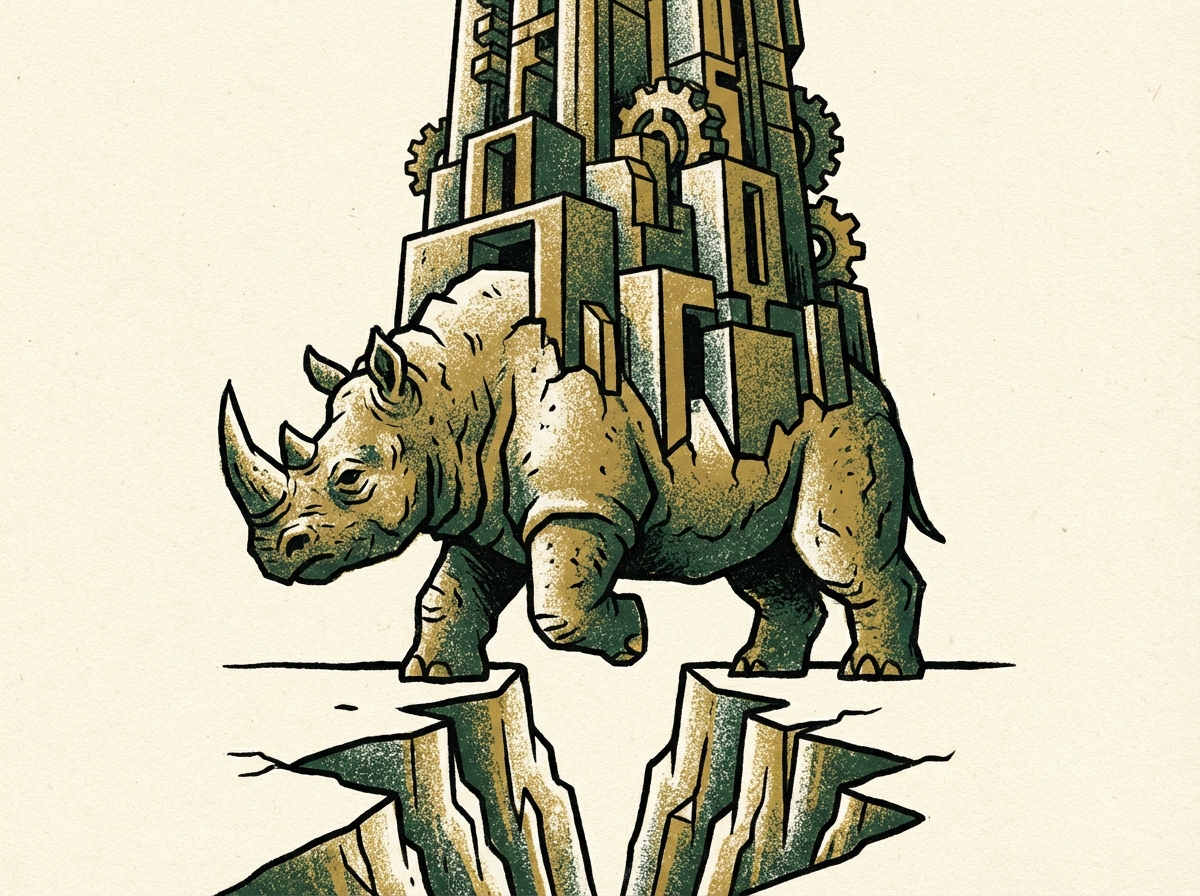
Customer concentration risk is the financial vulnerability a business faces when a single customer accounts for a significant portion of its total revenue. It’s the corporate equivalent of walking a tightrope without a net. Everything feels fine as long as you keep moving forward, but the potential for a catastrophic fall is immense. We typically define a concentration risk as any single client representing 10% or more of your annual revenue. Once you cross the 20% threshold with one client, you’re not just a supplier anymore; you’re a subsidiary that doesn’t know it yet.
I’ll never forget a client we worked with—a brilliant manufacturing firm with a flagship product. They landed a massive contract with a Fortune 100 retailer, and overnight, their revenues tripled. They scaled up, hired staff, and took on debt to build new capacity. For three years, they were on top of the world. Then, their whale of a customer was acquired, and the new parent company decided to vertically integrate its supply chain. The contract was terminated with 90 days’ notice. It wasn’t a surprise; M&A activity is public. But the leadership team saw only the upside of their big contract, never the precipice it had them standing on.
Taming the Beast:
Map Your Revenue: Don't just look at the percentage. Analyze the revenue’s quality. Is it recurring? High-margin? Does the contract have a termination for convenience clause? Know where your exposure truly lies.
Diversify or Die: This is obvious, but it requires discipline. You must intentionally allocate a portion of your sales and marketing budget to acquiring smaller, more diverse clients, even when it’s tempting to just service your big cash cow.
Build a Moat: Deepen your relationship with the key customer. Integrate your systems, become an indispensable part of their workflow, and build strong relationships at multiple levels of their organization. Make yourself too sticky to easily replace.
Rhino #3: Regulatory Creep (ESG & AI)
Regulatory creep refers to the gradual expansion of rules and compliance obligations that can impose significant, often unforeseen, costs and operational burdens on a business. For years, things like ESG (Environmental, Social, and Governance) and AI governance were fuzzy concepts debated in Davos. Today, they are crystallizing into hard-and-fast rules with real teeth. Europe’s AI Act and Corporate Sustainability Reporting Directive (CSRD) are just the beginning. These regulations have extraterritorial reach, meaning even U.S.-based companies that do business with or in the EU are on the hook. The cost of non-compliance isn’t a fine; it’s market access.

This is a particularly insidious Gray Rhino because it looks like a series of small, unrelated changes. A new disclosure requirement here, a data privacy audit there. But in aggregate, they create a massive compliance burden that can stifle innovation and drain resources. Waiting until the rules are fully enforced is a recipe for a last-minute scramble that is expensive, disruptive, and likely to fail.
Taming the Beast:
Appoint a Watchtower: Assign someone on your leadership team to be responsible for monitoring the regulatory landscape in your industry and adjacent ones. Their job isn’t to be a lawyer, but to be an early warning system.
Integrate Compliance into Strategy: Don’t treat compliance as a separate cost center. View it as a strategic question. How can we leverage our AI governance framework as a competitive advantage? How can our ESG reporting attract a better class of investor?
Scenario Planning: Game out the operational and financial impact of proposed regulations. What would it cost to implement a full AI ethics review board? What data do we need to start collecting now to meet future sustainability disclosure rules?
Building a Risk Radar for Your Monthly Review
An effective risk radar is a simple, visual tool, like a risk dashboard with KPIs, that is embedded into your company’s regular operating rhythm. This isn't about creating a 100-page binder that sits on a shelf. It’s about building a living, breathing process for confronting these Gray Rhinos head-on every single month.
As a seasoned CFO I work with often says, “You can’t manage what you don’t measure, and you certainly can’t manage what you refuse to look at.”
Effective financial risk management isn’t about eliminating risk; that’s impossible. It’s about building institutional resilience. It’s about transforming that gut-level anxiety you feel about these charging rhinos into a structured, data-driven conversation that leads to decisive action.
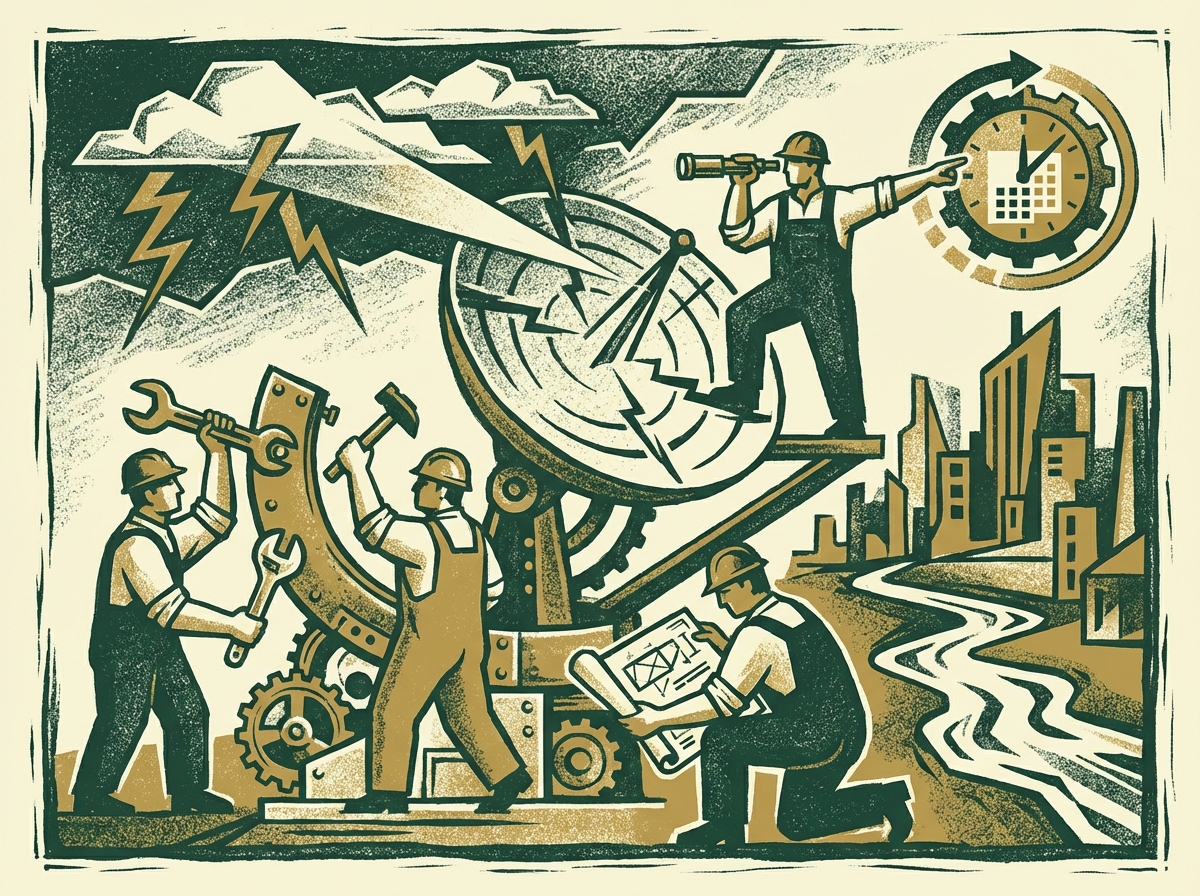
Your monthly risk review dashboard should be ruthlessly simple. For each of the three rhinos, track a few key metrics:
Refinancing Risk:
Weighted Average Cost of Debt
Debt Maturity Schedule (next 24 months)
DSCR (trailing 12 months and predictive financial modeling)
Customer Concentration Risk:
Revenue % from Top 5 Customers
Client Health Score / Renewal Probability
Sales Pipeline Diversification Score
Regulatory Creep:
Compliance Calendar with Key Deadlines
Budget vs. Actual Spend on Compliance Activities
Regulatory “Watch List” Items
Stop spending your energy on the fantastical Black Swans. Start paying attention to the obvious. The rhinos are charging. The only question is whether you’ll step aside.
Frequently Asked Questions
What is a 'Gray Rhino' risk vs. a 'Black Swan'?
A Gray Rhino is a high-impact, highly probable threat that is visible yet ignored, like the lead-up to the 2008 financial crisis. A Black Swan is a completely unpredictable, rare event with severe consequences, such as the COVID-19 pandemic's initial outbreak.
How do you identify obvious but ignored financial risks?
You identify these risks by systematically questioning your assumptions and embedding specific checks into your regular financial reviews. This involves stress testing your debt against interest rate changes, quantifying your customer concentration instead of just feeling it, and actively monitoring the regulatory horizon rather than waiting for new rules to take effect.
What are the top Gray Rhinos for 2026?
The top three Gray Rhinos for businesses in 2026 are interest rate refinancing risk on debt taken out in a low-rate environment, over-dependency on a single large customer for revenue, and the escalating cost of compliance with new ESG and AI regulations.
