

Real-Time vs Periodic Reporting: Standardizing Your Tech Stack for a Part-Time CFO
Published: 2026-05-03 • Estimated reading time: 7 min
I was sitting across from the CEO of a fast-growing SaaS company last month, and he was venting. “I hired one of the sharpest Part-Time CFOs in the business,” he said, pushing a stale-looking spreadsheet across the table. “But all I get are these… historical documents. It feels like I’m driving by looking in the rearview mirror.”
He’s not wrong. His problem wasn’t his CFO; it was the plumbing. His finance department was a Frankenstein’s monster of disconnected apps, manual processes, and data entry errors, forcing his high-priced strategist to spend her limited hours playing data archaeologist.
This is an epidemic in the $5M+ business space. It’s a problem of technological fragmentation that creates a staggering inefficiency gap. In fact, a recent study found that 97% of accounting firms admit they use their technology inefficiently, according to research from Bill.com. For founders, this translates into wasted capital and squandered strategic opportunities. The solution isn’t working harder; it’s building a smarter, standardized system that serves data on a silver platter.
The Autopsy of the Month-End Close: Why Backward-Looking Data Fails
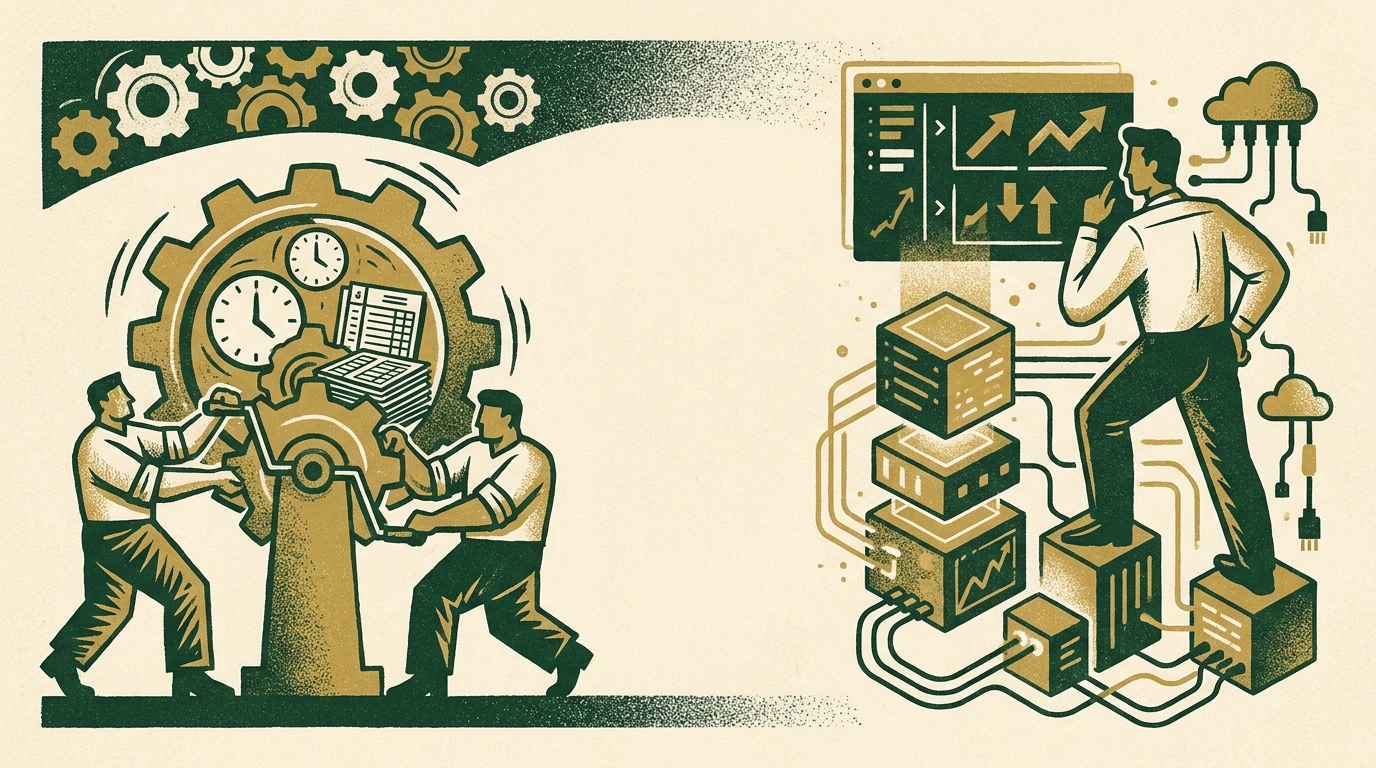
Backward-looking data fails because it forces you to make mission-critical decisions based on an outdated, historical snapshot of the business rather than its current reality. The traditional month-end close is an autopsy of a period that is already dead and gone. My team sees it constantly: finance teams spend the first 8 to 10 days of every month painstakingly stitching together reports from the previous 30 days, a cycle time benchmarked by organizations like APQC. By the time you see the numbers, they're artifacts, not actionable intelligence.
Imagine trying to navigate a ship through a storm by only looking at a photograph of where you were 15 minutes ago. It’s absurd. Yet, that’s precisely what running your business on periodic reports amounts to. You miss the subtle shifts in cash flow, the slight dip in a key SaaS metric, or the spike in customer acquisition cost until it’s too late to be proactive. Real-time financial visibility, powered by an integrated system, transforms this. It’s the difference between a historical document and a live command center.
The Cost of Technological Fragmentation in the Finance Department
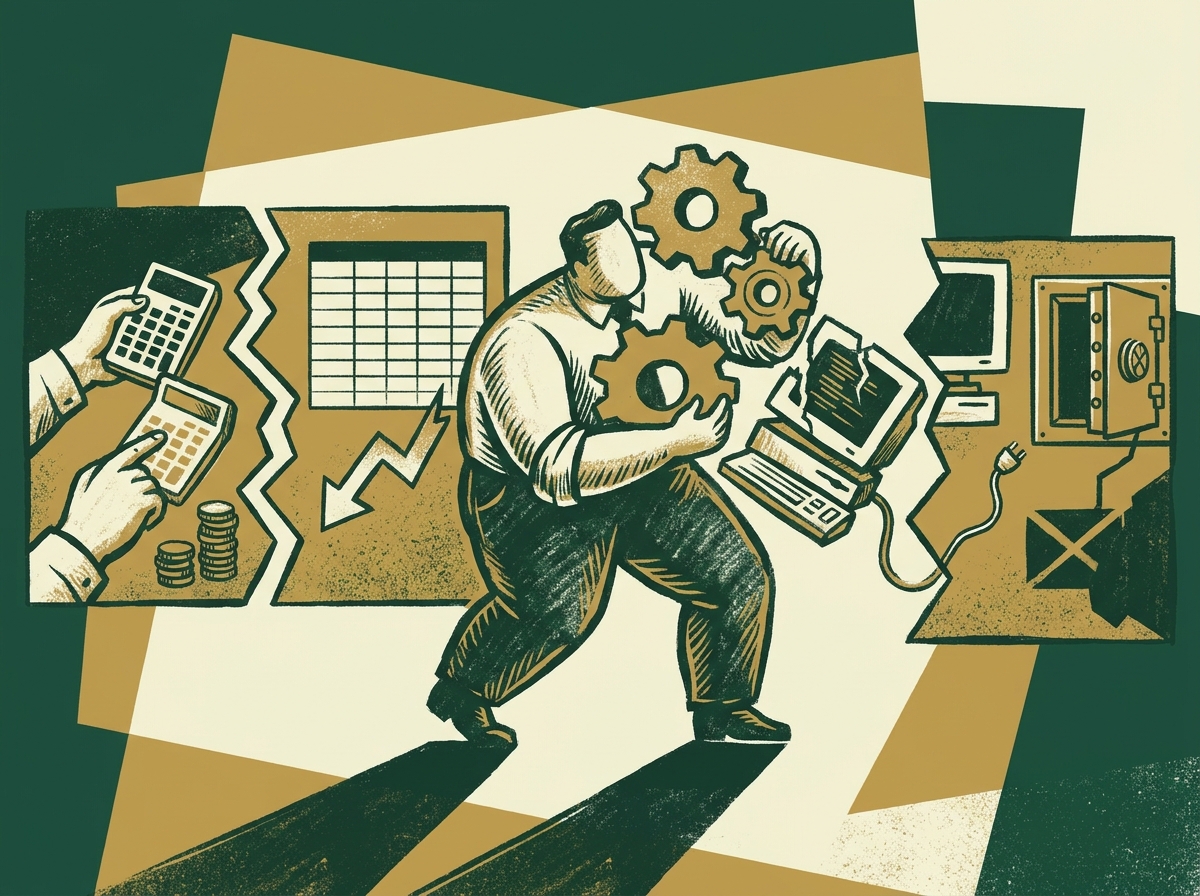
Technological fragmentation creates data silos, manual work, and a high risk of errors, effectively handcuffing your finance team and your Part-Time CFO. When your accounting software doesn't speak to your payroll system, and neither connects to your expense management platform, you create a breeding ground for inefficiency. The primary symptom is “swivel-chair integration”—a human being physically turning from one screen to another to copy and paste data. It's as inefficient as it sounds, and it’s dangerous.
A CFO.com report highlighted that 59% of accountants admit to making several errors every single month. These aren’t failures of people; they are failures of process. Each manual touchpoint is an opportunity for a typo, a misplaced decimal, or a miscategorized expense that can cascade into flawed strategic planning.
“CEOs hire a fractional CFO for strategic horsepower, not to be a highly-paid data archeologist,” a colleague of mine at a PE firm recently lamented. “Yet they saddle them with a tech stack that forces them to spend 80% of their time digging for data.”
This is the real cost: your most valuable financial mind is bogged down in tactical grunt work instead of focusing on capital allocation, forecasting, and growth strategy.
The Non-Negotiable Tech Stack Checklist for a $5M+ Business
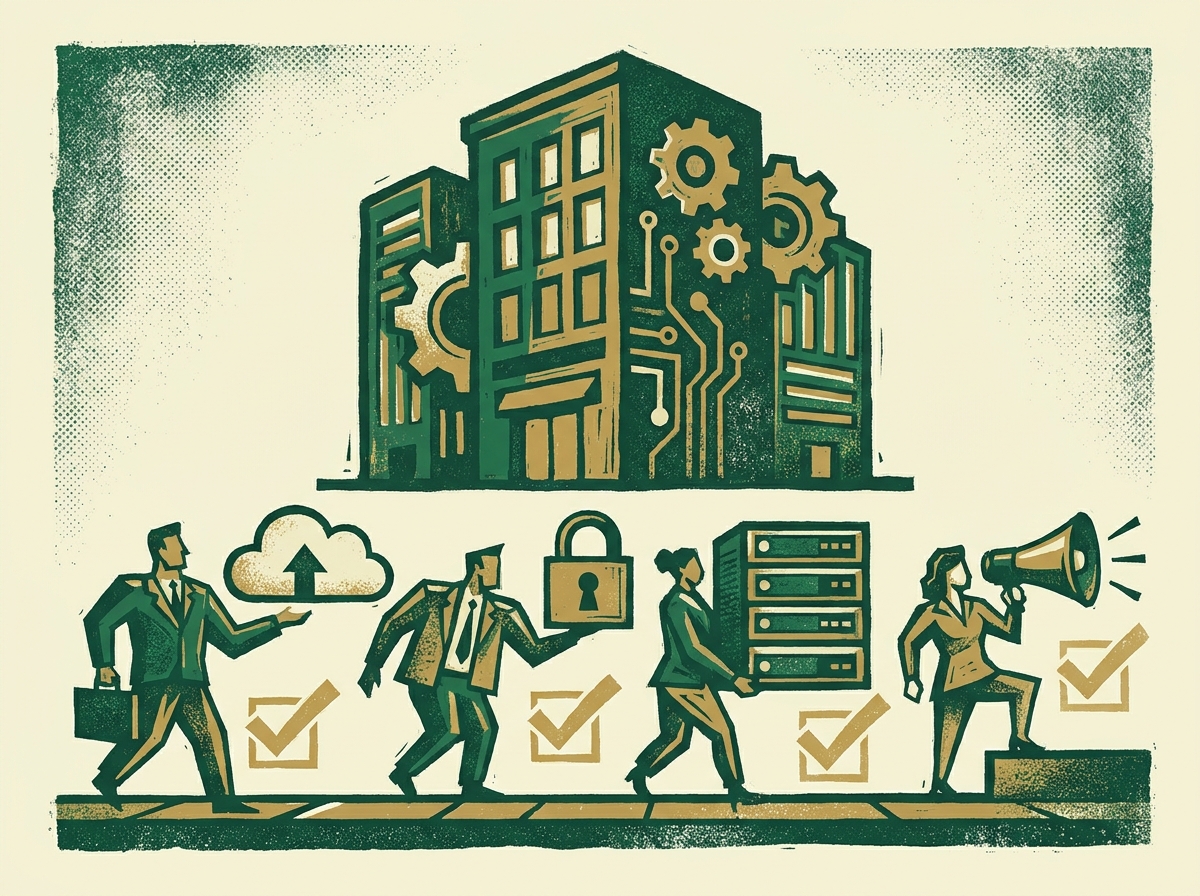
A standardized tech stack for a business of your size must include a cloud-based accounting system, an integrated payroll/HRIS platform, automated AP/AR, a corporate card and expense management tool, and a business intelligence (BI) dashboard. This isn't about having the fanciest tools; it's about having the right tools, all speaking the same language, seamlessly, through APIs. My team calls this achieving “financial hygiene.”
Here’s a breakdown of the core components.
The Core: Cloud-Based Accounting System
This is the central nervous system of your financial operations, serving as the single source of truth. A robust cloud-based General Ledger (think QuickBooks Online Advanced, NetSuite, or Sage Intacct) is non-negotiable because it acts as the hub for all other systems to plug into.
The People Engine: Integrated Payroll & HRIS
This system manages your largest expense and biggest asset: your people. Modern platforms (like Gusto or Rippling) integrate payroll, benefits, and HR data directly into your General Ledger, eliminating manual journal entries and ensuring payroll expenses are categorized correctly in real time.
The Cash Flow Engine: Automated AP/AR
This engine governs the cash moving in and out of your business, which is its lifeblood. Tools like Bill.com or Melio automate invoice processing, approvals, and payments, while platforms like Stripe or Chargebee handle accounts receivable, giving you a live, accurate view of your cash conversion cycle.
The Spend Engine: Corporate Card & Expense Management
This component provides control and visibility over team spending. Smart corporate card platforms (like Brex or Ramp) replace archaic expense reports with real-time transaction data, automated receipt matching, and direct integration into your accounting system, closing the books on expenses daily, not monthly.
The Command Center: Business Intelligence & Dashboards
This is where the magic happens, layering on top of all the other systems to provide real-time decision intelligence. A BI and forecasting tool (like Jirav, Fathom, or Microsoft Power BI) pulls data from all your integrated sources and presents it in live, intuitive dashboards, empowering agile forecasting and strategic scenario planning.
Here’s how these two worlds stack up:
Ensuring Data Integrity Across API Connections
Data integrity across API connections is maintained by establishing a single source of truth, implementing automated reconciliation processes, and enforcing strict data governance protocols from day one. An API (Application Programming Interface) is simply a digital messenger that allows your software systems to talk to each other. But if they're passing messy, inconsistent information back and forth, you’ve just automated chaos. The old axiom holds true: garbage in, garbage out.
This is why system implementation is so critical. You can’t just turn on the integrations and hope for the best. My team insists on a rigorous implementation process that includes mapping the chart of accounts correctly across systems, setting up rules for transaction categorization, and building automated alerts for reconciliation mismatches. This foundational work ensures that the data flowing into your BI dashboard is clean, reliable, and trustworthy. Your Part-Time CFO can then spend their time analyzing the insights, not questioning the data’s origin.
Empowering Your Part-Time CFO with Real-Time Decision Intelligence
You empower your Part-Time CFO by providing them with a standardized, automated tech stack that feeds real-time dashboards, transforming their role from a financial historian into a forward-looking strategic partner. When your systems are integrated and the data is reliable, the conversation with your financial leader changes completely. It moves from “What happened last month?” to “What’s our cash runway if we hire three new engineers next week?”
This is no longer a distant dream. The technology is here, and the best financial leaders expect it. A recent Grant Thornton survey revealed that by 2025, 75% of CFOs will be the primary drivers of digital transformation within their organizations. They are no longer just the stewards of the balance sheet; they are the architects of the company’s data infrastructure.
By investing in this infrastructure, you give your Part-Time CFO the two things they need most: time and data. This allows for agile forecasting, where you can model different scenarios in minutes, not days. It also improves morale and retention; another study found that 84% of finance leaders believe automation has helped them retain key talent, as noted by Quadient. You free your best people from the drudgery of manual work and elevate them to the high-impact strategic challenges they were hired to solve. That's how you turn a fractional executive into a force multiplier for your entire business.

Frequently Asked Questions
Why is real-time reporting better than periodic reports?
Real-time reporting is superior because it provides an immediate, live view of your company's financial health, enabling proactive, data-driven decisions. Periodic reports, in contrast, offer a delayed, historical snapshot, forcing you to react to outdated information long after opportunities to influence outcomes have passed.
What are the essential tools for a modern financial tech stack?
The five non-negotiable tools for a standardized financial tech stack are a cloud-based accounting system (the hub), an integrated payroll/HRIS platform, automated accounts payable and receivable (AP/AR) software, a corporate card and expense management system, and a business intelligence (BI) tool for dashboards and forecasting.
How does a fragmented tech stack hinder a part-time CFO?
A fragmented tech stack hinders a Part-Time CFO by forcing them to spend a majority of their limited and valuable hours on low-value tasks like manual data entry, reconciliation, and report building. This prevents them from focusing on high-impact strategic work such as financial modeling, fundraising, capital allocation, and providing forward-looking advisory to the CEO.
