

Managing Payroll Cash in a Lumpy-Revenue Business
- Payroll is the one fixed, non-negotiable obligation that arrives like clockwork, which makes it the central challenge of Cash Flow Management in a business whose revenue is lumpy or seasonal.
- The mismatch is the problem: payroll is constant while revenue spikes and dips, so the business must bridge the gap in low-revenue periods without ever missing payroll.
- The foundation is a cash reserve. Businesses with lumpy revenue should target 3 to 6 months of operating expenses, leaning to the higher end the more volatile they are.
- Mapping the cash cycle, overlaying revenue and expense patterns over at least 12 months, reveals the tight periods to plan around and lets you time expenses to revenue peaks.
- A pre-arranged line of credit is the safety net: drawn in slow periods and repaid in busy ones, it covers payroll gaps, and it must be in place before you need it.
In a business with steady revenue, making payroll is rarely a conscious worry. In a business with lumpy or seasonal revenue, it is the thing that can keep a founder up at night, because payroll arrives every period regardless of whether the revenue did. The fixed, recurring, non-negotiable nature of payroll, against the spiky, unpredictable nature of the revenue, is the defining Cash Flow Management challenge for these businesses. Missing payroll is catastrophic, so the entire cash strategy has to be built around protecting it through the lean stretches. The good news is that lumpy revenue is manageable with the right structure. Here is how to keep payroll funded when revenue refuses to cooperate.
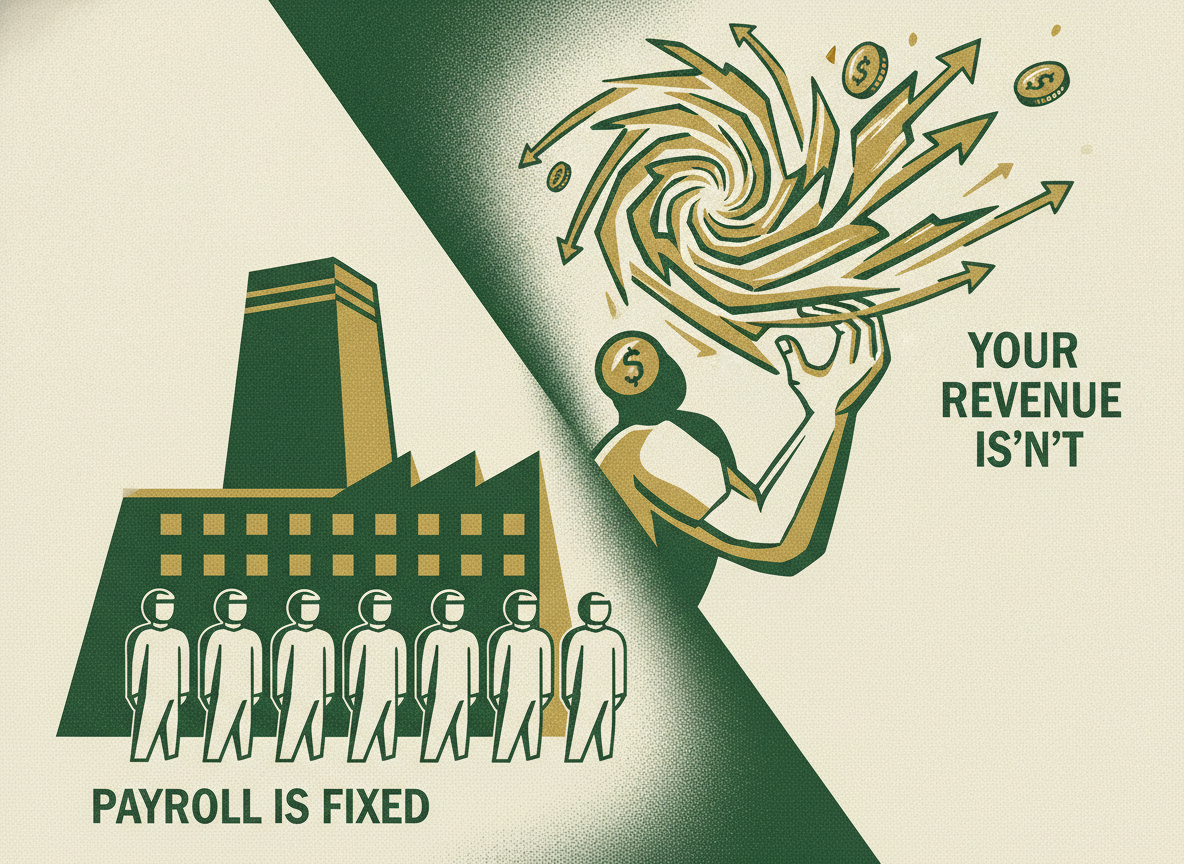
Payroll Is Fixed; Your Revenue Isn't
The core of the problem is a structural mismatch: payroll is a fixed, recurring obligation that must be paid every period, while in a lumpy-revenue business the cash coming in varies dramatically from period to period. Payroll does not care that this was a slow month; it arrives on schedule and must be met in full, because missing it is among the most damaging things a business can do, destroying employee trust and potentially the business itself. This makes payroll the non-negotiable anchor against which all the variable revenue must be managed.
This mismatch is what makes Cash Flow Management so much harder and more important in a lumpy-revenue business than in a steady one. A company with even revenue can roughly match its payroll to its incoming cash, but a company with spiky or seasonal revenue will have periods where the revenue is far below the payroll obligation, and it must have a way to cover payroll through those periods anyway. The entire cash strategy, reserves, forecasting, expense timing, and financing, exists primarily to ensure that payroll and other fixed obligations are met during the low-revenue stretches, funded by the cash accumulated during the high-revenue stretches. Recognizing that payroll is fixed while revenue is not, and that the central task is to bridge that gap reliably, frames the whole challenge correctly. The goal is not to make revenue less lumpy, which is often impossible, but to manage the cash so that the lumpy revenue never causes a missed payroll, which is entirely achievable with the right practices. This is the foundational mindset for managing cash in a seasonal or project-based business.
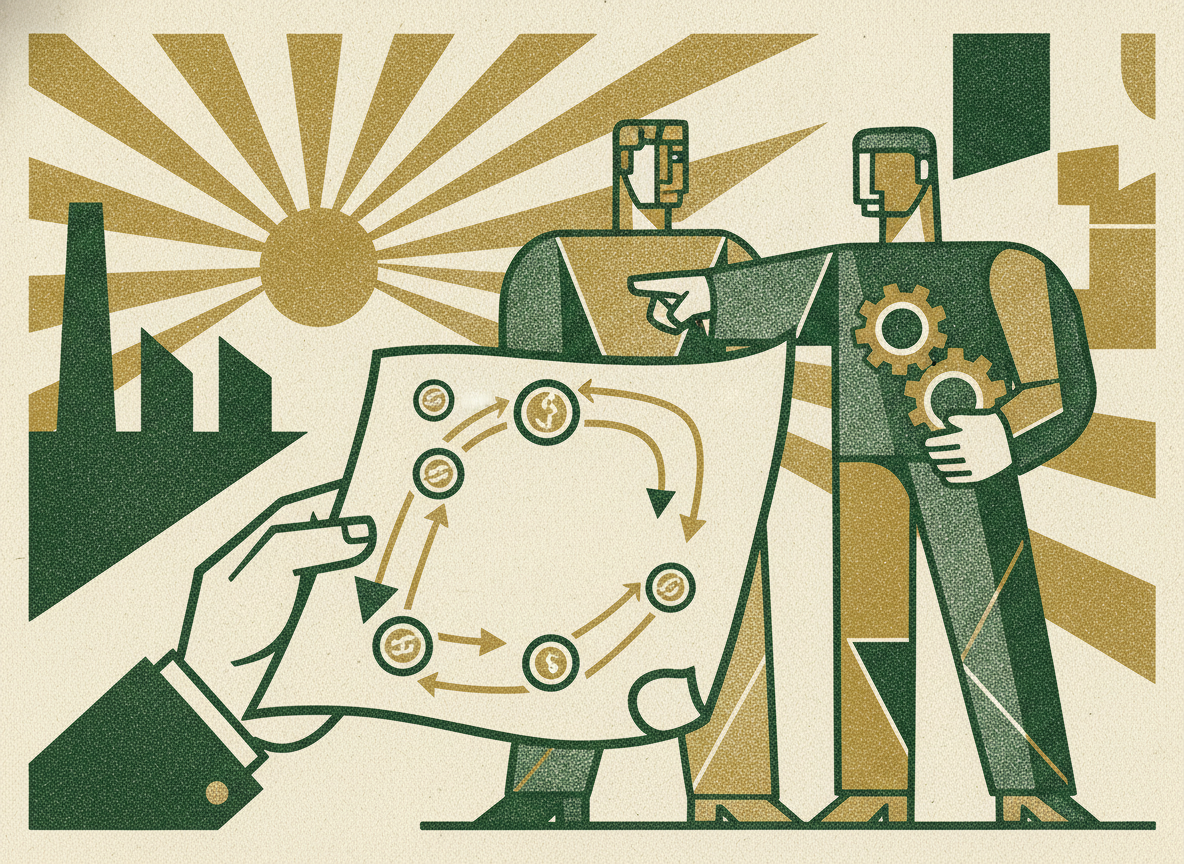
Map the Cash Cycle Before You Manage It
Before a founder can manage lumpy cash flow, they need to understand its pattern, which means mapping the revenue and expense cycles over time to see exactly when cash is abundant and when it is tight. The foundational step is to review at least 12 months of revenue data to identify the seasonal peaks and valleys, monthly variations, and quarterly cycles, and to map the expense patterns separately, distinguishing fixed expenses like payroll from variable ones and from spikes like quarterly tax payments, as Business Initiative advises. Overlaying the revenue and expense patterns reveals the cash flow cycle: the high-cash months, the low-cash months, and the critical periods where cash is tightest.
This mapping transforms lumpy cash flow from an unpredictable threat into a known pattern that can be planned around. Once a founder can see that revenue reliably dips in certain months while payroll continues, they know exactly which periods require bridging and how large the gap will be, which is the essential information for managing it. The map shows where the business will be cash-tight and by how much, enabling deliberate preparation rather than reactive scrambling. This analysis should feed a forward-looking 12-month cash flow forecast that projects income and expenses for every month, not just the peaks, so the founder can see the cash position throughout the year and anticipate the tight periods well in advance. For Cash Flow Management in a lumpy-revenue business, this mapping and forecasting is the indispensable first step, because every other strategy, sizing reserves, timing expenses, arranging financing, depends on knowing when the gaps occur and how big they are. A founder who has mapped their cash cycle is managing a known challenge; one who has not is perpetually surprised by entirely predictable shortfalls.

The Reserve That Protects Payroll
The single most important defense against a missed payroll in a lumpy-revenue business is a cash reserve large enough to cover the obligations through the low-revenue periods, and the more volatile the revenue, the larger that reserve must be. The guidance for businesses with lumpy cash flow is to target 3 to 6 months of operating expenses as a minimum reserve, with seasonal or highly unpredictable businesses aiming for the higher end, as Get Holdings advises. This reserve is the buffer that lets the business meet payroll during the stretches when revenue is insufficient, funded by the cash it banked during the strong periods.
The reserve is what makes the lumpy-revenue business stable despite its uneven income, because it absorbs the gaps between when cash comes in and when payroll goes out. The challenge is that most companies cannot build a 3-to-6-month reserve all at once, so the practical approach is to build it progressively: each busy season or strong period, earmark a percentage of the profits, say 5 to 10%, and transfer it into a separate account treated as untouchable except during the slow months or emergencies, as the field recommends. Over time, this disciplined accumulation builds the reserve to a level that reliably covers the lean periods. Keeping the reserve in a separate account, mentally and literally walled off from operating cash, is what prevents it from being spent in good times and protects it for the lean ones it exists to cover. For Cash Flow Management in a seasonal business, this reserve is the cornerstone, because it is what guarantees payroll can be met regardless of the revenue timing. A founder who has built an adequate reserve has largely solved the payroll problem; one who operates without a reserve is one slow period away from a crisis, dependent on the revenue arriving exactly on time, which in a lumpy business it often does not.
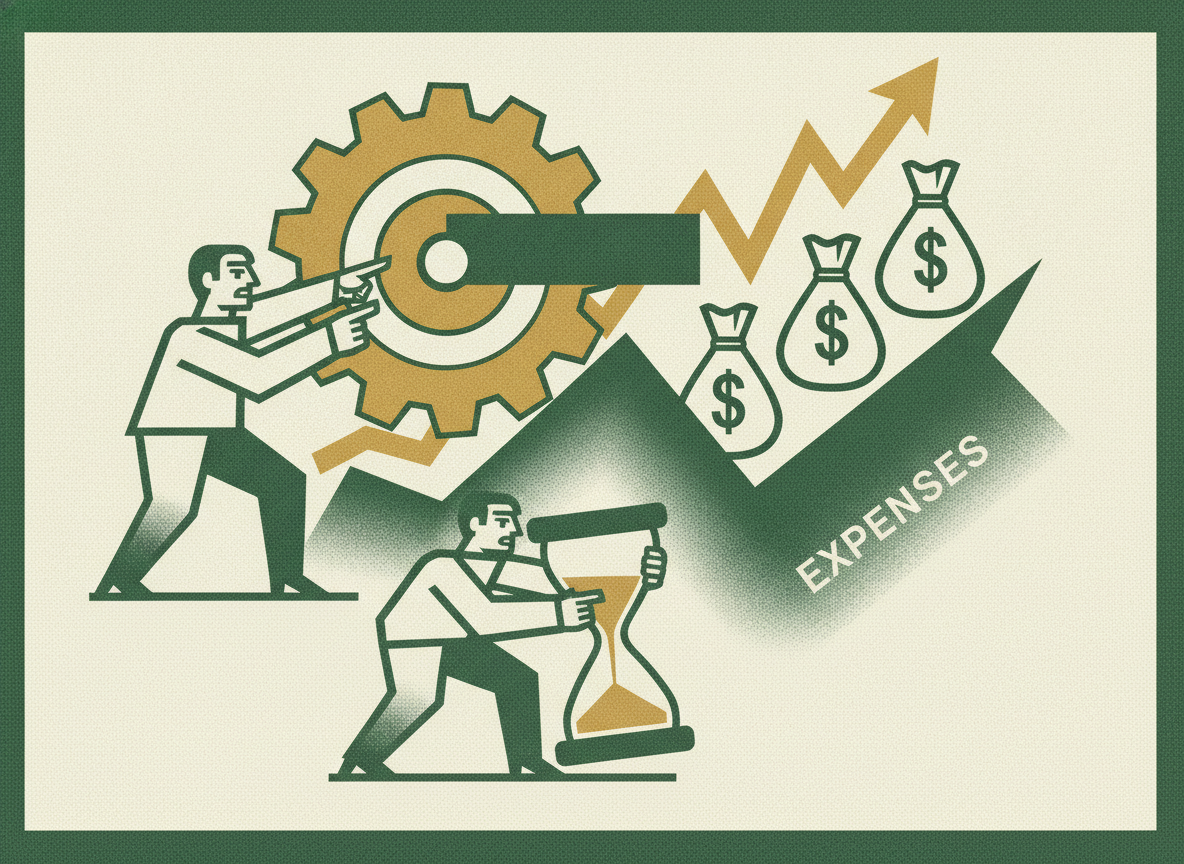
Timing Expenses Around Revenue
Beyond holding a reserve, a powerful lever for managing lumpy cash flow is timing the controllable expenses to align with the revenue, so that cash goes out when cash is coming in rather than during the tight periods. The principle is to time major expenses to align with revenue peaks where possible, delaying discretionary spending when cash is tight and accelerating it when cash is abundant, as Business Initiative describes. While payroll and other fixed obligations cannot be moved, many other expenses can be, and shifting them to the high-cash periods relieves pressure during the low-cash ones.
This expense timing works hand in hand with the cash-cycle map, because knowing when the tight periods fall is what allows a founder to schedule discretionary spending, equipment purchases, major projects, non-urgent investments, into the strong periods instead. A business that makes its large discretionary outlays during its peak-revenue months, and minimizes spending during its trough months, smooths its cash position considerably, reducing the size of the gaps the reserve and financing must cover. The discipline is to treat the timing of every controllable expense as a cash-management decision, asking whether a given expense can be deferred to a stronger period or should be accelerated into the current strong one, rather than spending whenever the impulse arises. For Cash Flow Management in a lumpy business, this deliberate sequencing of expenses around the revenue cycle is a meaningful tool that complements the reserve, because it actively reduces the cash strain during the lean periods rather than just buffering against it. Combined with the reserve and the forecast, timing expenses to the revenue cycle helps ensure that the fixed obligations like payroll are never threatened by an avoidable bunching of discretionary spending during the very periods when cash is already tight.
The Credit Line as a Safety Net
The final piece of the structure is a pre-arranged line of credit, which serves as the safety net for covering payroll and other obligations during the deepest troughs, especially before the reserve is fully built. A business line of credit is often ideal for managing seasonal cash flow: the business draws on it during the slow season to cover expenses and repays the balance as revenue returns in the busy season, using it as a revolving safety net year after year, as Crestmont Capital explains. This provides flexible, on-demand cash precisely when the revenue cycle creates a gap.
The critical discipline with a credit line is to arrange it before it is needed, not during a crisis. As the field stresses, if payroll gaps happen more than once or twice a year, having a credit line in place before you need it is one of the smartest moves a founder can make, because credit is far easier to obtain when the business is healthy than when it is scrambling to make payroll. A line of credit secured in advance, during a strong period, sits ready to be drawn when a trough arrives, ensuring payroll can always be met even if the reserve is insufficient or still being built. Used properly, drawn in the slow periods and repaid in the strong ones, it bridges the cash gaps without becoming a permanent debt, complementing the reserve as a second line of defense. For Cash Flow Management in a lumpy-revenue business, the combination of an adequate reserve, a mapped and forecasted cash cycle, expense timing aligned to revenue, and a pre-arranged credit line as backup constitutes a complete structure for protecting payroll through any revenue pattern. A founder who has built this structure can run a seasonal or project-based business with confidence that payroll will always be met, which is the ultimate goal, turning lumpy revenue from a recurring threat into a managed, predictable challenge.

Frequently Asked Questions
Why Is Payroll So Challenging in a Lumpy-Revenue Business?
Because payroll is a fixed, recurring, non-negotiable obligation that arrives every period regardless of whether the revenue did, while lumpy or seasonal revenue varies dramatically from period to period. This structural mismatch means the business will have periods where revenue falls well below the payroll obligation, and it must cover payroll anyway. Since missing payroll is catastrophic, the entire cash strategy must be built around protecting it through the lean stretches.
How Large a Cash Reserve Should a Lumpy-Revenue Business Hold?
Generally 3 to 6 months of operating expenses, with seasonal or highly unpredictable businesses aiming for the higher end. This reserve is the buffer that lets the business meet payroll during low-revenue periods, funded by cash banked during strong ones. Since most companies cannot build it all at once, the practical approach is to accumulate it progressively, earmarking 5 to 10 percent of profits each strong period into a separate, untouchable account.
How Do You Plan Around Lumpy Cash Flow?
Map the cash cycle first. Review at least 12 months of revenue data to identify seasonal peaks and valleys, map the expense patterns separately, and overlay them to find the high-cash months, low-cash months, and critical tight periods. Feed this into a forward 12-month forecast projecting income and expenses for every month. This turns unpredictable cash flow into a known pattern you can prepare for, revealing exactly which periods need bridging and by how much.
How Should You Use a Line of Credit for Payroll?
As a pre-arranged safety net, drawn during slow periods to cover obligations and repaid as revenue returns in busy ones, functioning as a revolving buffer year after year. The key is to arrange it before you need it, while the business is healthy, since credit is far harder to obtain when you are scrambling to make payroll. It complements the cash reserve as a second line of defense for covering payroll gaps during the deepest troughs.
References
