

The Owner Earnings Number Buyers Really Care About
- When you sell a business, buyers do not value your net income; they value a normalized owner-earnings number, and understanding it is central to Exit Planning.
- For smaller businesses, that number is usually Seller's Discretionary Earnings (SDE), the total financial benefit the business provides to one full-time owner-operator.
- SDE and Adjusted EBITDA differ mainly in owner compensation: SDE adds back the full owner salary, while Adjusted EBITDA adds back only the excess over a market-rate manager.
- The number is built from add-backs, owner salary, personal expenses, interest, depreciation, and non-recurring items, that recast the financials to show the true earning power.
- Not every add-back survives due diligence. Each must be documented and defensible, because unsupported adjustments get rejected, shrink the number, and limit buyer financing.
The single most important number in selling a business is one that does not appear on your tax return: the normalized owner-earnings figure that buyers actually use to value the company. A founder who thinks their business will be valued on its reported net income is in for a surprise, in both directions, because the real number recasts the financials to show what the business genuinely earns for an owner, adding back the discretionary and owner-specific costs that depress reported profit. Getting this number right, and defensible, is one of the highest-leverage parts of Exit Planning, because it directly determines the sale price. Here is the owner-earnings number buyers really care about and how to manage it.

Buyers Don't Buy Your Net Income
The foundational insight of selling a business is that buyers do not value the reported net income; they value a normalized measure of what the business truly earns for its owner, because reported net income is distorted by owner-specific and discretionary items that do not reflect the business's real earning power. A founder typically runs various personal expenses through the business and pays themselves in ways designed to minimize taxes, which depresses reported profit well below what the business actually generates. Buyers know this, so they recast the financials to a normalized owner-earnings figure that strips out these distortions and shows the genuine cash the business produces.
This is why the reported bottom line is the wrong number to fixate on for Exit Planning. A business showing modest net income after the owner's salary, personal expenses, and tax-optimized structuring might actually generate substantially more in true owner benefit, and it is that larger, normalized number that determines the valuation. Conversely, a number padded with add-backs that do not hold up will be cut down by the buyer's diligence. The normalized owner-earnings figure, not the tax-return net income, is what gets multiplied to produce the sale price, which makes understanding and managing it essential. For a founder planning an exit, recognizing that the business will be valued on this recast number, not on reported profit, reframes how they should think about their financials in the run-up to a sale. The goal is to present a true, defensible picture of the business's earning power, which is almost always higher than the reported net income, and that recast number is the heart of the valuation.
SDE vs. Adjusted EBITDA
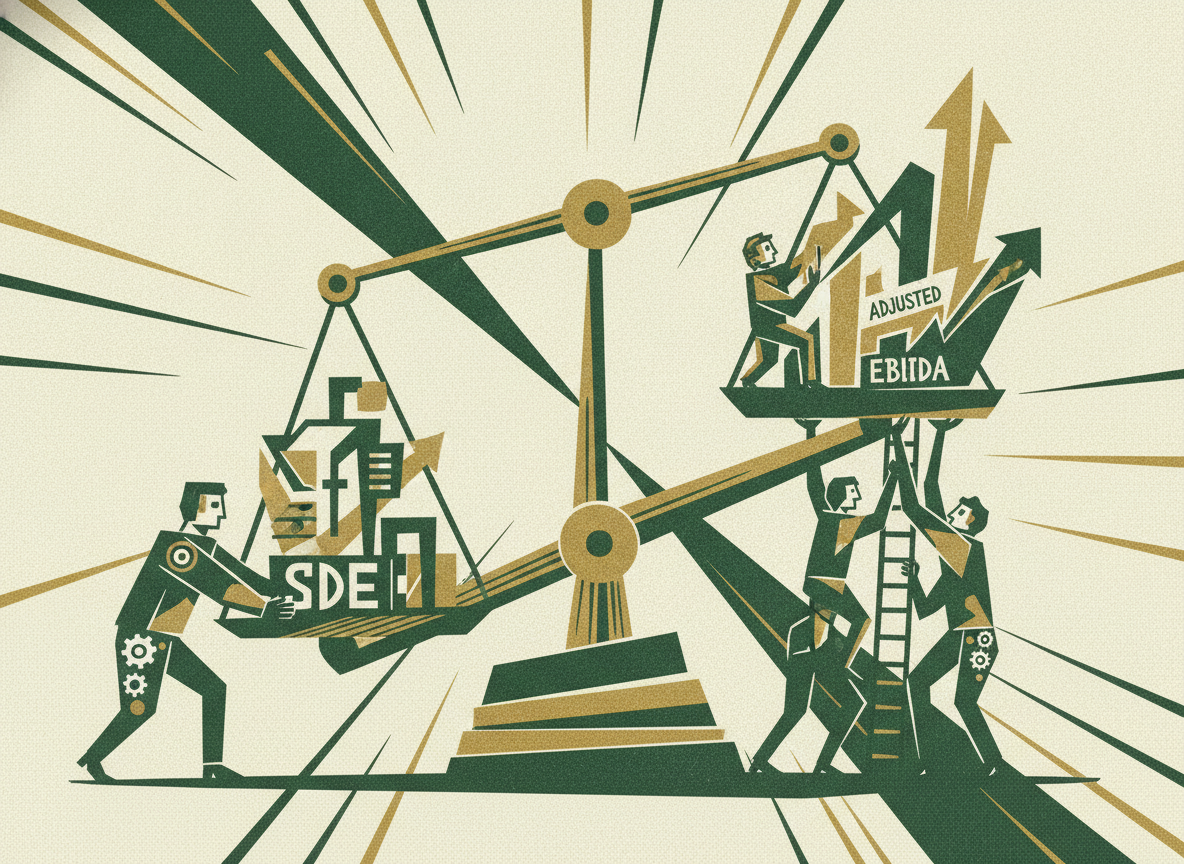
The normalized owner-earnings number comes in two main forms, Seller's Discretionary Earnings (SDE) and Adjusted EBITDA, and knowing which applies to your business is important because they treat owner compensation differently and are used at different business sizes. SDE represents the entire financial benefit the business provides to a single full-time owner-operator, and it adds back the full owner salary and benefits, on the logic that a new owner-operator would capture all of that benefit themselves, as MidStreet explains. Adjusted EBITDA, by contrast, normalizes owner compensation to a market rate, adding back only the excess over what a hired manager would earn.
The difference is concrete and significant. If the owner's compensation is $300,000 and a market-rate manager would earn $180,000, SDE adds back the full $300,000, while Adjusted EBITDA adds back only the $120,000 excess, leaving a market manager's salary as an expense. This makes SDE the larger number, appropriate for smaller owner-operated businesses where the buyer will run the business themselves, while Adjusted EBITDA suits larger businesses bought by buyers who will hire management. The size threshold roughly follows this logic: most businesses under about $1 million in earnings are valued on SDE, while those above roughly $1.5 million are typically valued on an EBITDA multiple, as they tend to sell to private equity or strategic buyers who hire managers, per MidStreet. For Exit Planning, knowing which metric will value your business matters because it determines how owner compensation is treated and therefore the size of the number, and because the appropriate multiple differs between the two. A founder should understand which framework applies to their business's size and likely buyer, since it shapes the entire valuation conversation.
The Add-Backs That Build the Number
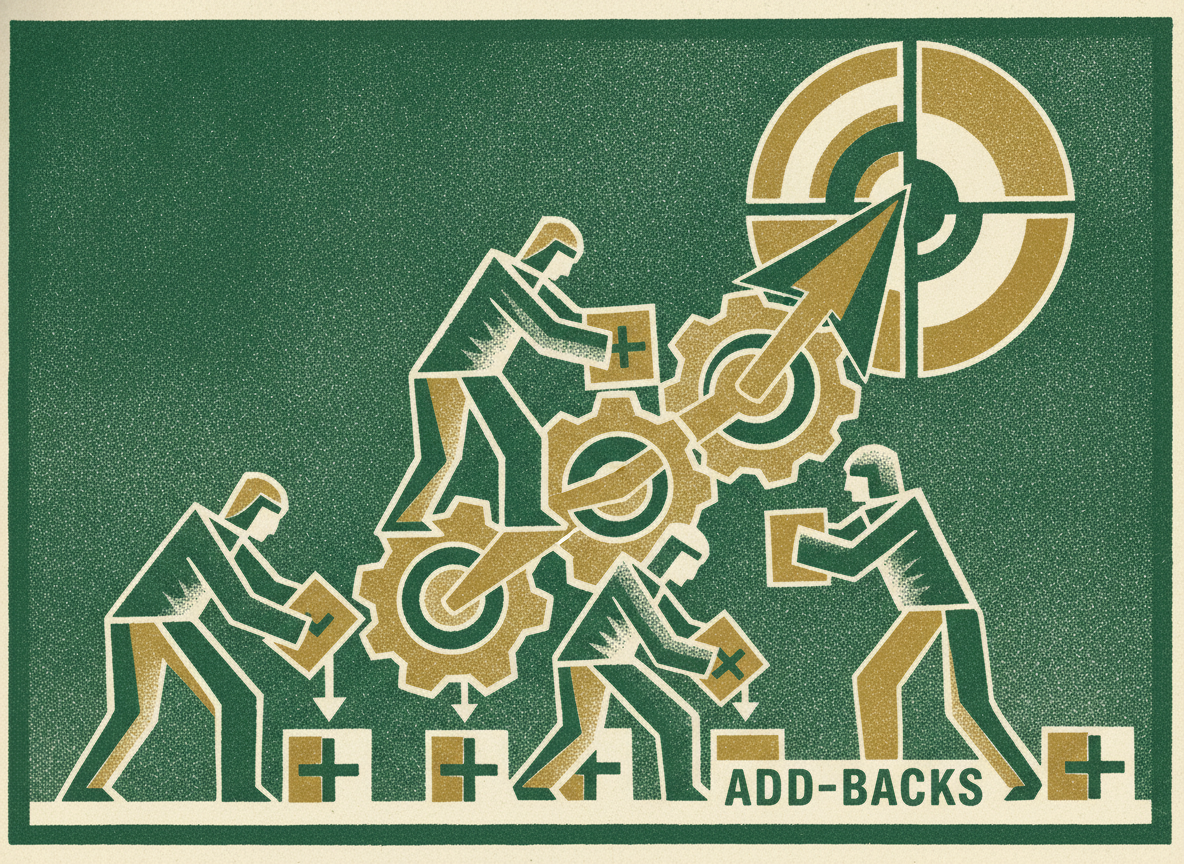
The normalized earnings number is constructed through add-backs, adjustments that recast the reported financials by adding back to net income the expenses that are owner-specific, discretionary, or non-recurring, and understanding the common ones reveals how the number is built. Typical SDE add-backs include the owner's salary and the payroll taxes on it, interest, depreciation and amortization, personal expenses run through the business, and any one-time or non-recurring items, as Wall Street Prep details. Each of these is added back because it either represents owner benefit the buyer would capture, a non-cash or financing item, or a cost that will not recur for the new owner.
These add-backs are what bridge the reported net income up to the true owner-earnings figure, and they can substantially increase the number. The owner's salary and benefits are usually the largest, reflecting the compensation a new owner-operator would take. Personal expenses, the owner's car, travel, meals, or other personal costs run through the business, are added back because they are not genuine business expenses a buyer would incur. Interest and depreciation are added back as financing and non-cash items, standard in any earnings normalization. Non-recurring items, a one-time legal cost, a single large repair, are added back because they distort the recurring earning power. Together, these recast the financials to show what the business actually earns for an owner on a normalized basis. For a founder, understanding the add-backs is essential to Exit Planning because it shows both how the valuation number is built and where the opportunities and risks lie. The number depends entirely on which add-backs are included and accepted, which makes the next consideration, whether they survive scrutiny, critically important.

Which Add-Backs Survive Due Diligence
The crucial reality that separates a strong sale from a disappointing one is that not every add-back survives the buyer's due diligence, and unsupported adjustments get rejected, shrinking the number and the price. As They Got Acquired emphasizes, not all add-backs are accepted, particularly by lenders financing the buyer, and unsupported adjustments can both reduce the valuation and limit the buyer's financing options, shrinking the pool of qualified buyers. A founder who builds a high SDE on aggressive, poorly documented add-backs will watch it get cut down during diligence, often after the negotiation has anchored on the inflated figure, which damages trust and the deal.
The defense is documentation: every add-back must be supported by evidence that a buyer's Quality of Earnings reviewer can independently verify. This means thoroughly documenting each adjustment in the SDE schedule with receipts, contracts, W-2s, or other proof that establishes the add-back is legitimate. A personal expense added back needs evidence it was genuinely personal and will not recur for the buyer; a non-recurring item needs proof it was truly one-time. Well-documented add-backs hold up under scrutiny and preserve the valuation; vague or aggressive ones get challenged and removed. The distinction matters enormously for the final price, because the valuation is the accepted earnings number times the multiple, and the accepted number is only as large as the defensible add-backs allow. For Exit Planning, this means the goal is not to maximize the add-backs on paper but to build a number from add-backs that will survive diligence, which requires honest, well-documented adjustments. A founder who prepares a clean, defensible earnings schedule preserves their valuation through diligence; one who pads the number with unsupportable add-backs sets up a painful and value-destroying renegotiation when the buyer's reviewers reject them.

Managing the Number Before You Sell
The most strategic insight about owner earnings is that the number is not something to calculate once at sale time but something to manage in the years before a sale, which is where Exit Planning delivers its greatest value. As Arthur Berry and others note, a professional valuation does more than compute the figure; it identifies which add-backs will hold up, which are vulnerable, and what an owner can do now to strengthen the number that will eventually determine their sale price. Treating the earnings number as something to cultivate over time, rather than to assemble at the last minute, materially improves the outcome.
Managing the number ahead of a sale involves several moves. It means cleaning up the financials so the true earning power is clear and the add-backs are well-documented and defensible, ideally for the two or three years buyers will examine. It means reconsidering whether to keep running aggressive personal expenses through the business, since each one becomes an add-back that must be defended, and clean financials with fewer adjustments are easier to sell. It means addressing the vulnerable add-backs and, where possible, growing the genuine, recurring earnings that need no adjustment, since recurring-revenue businesses command higher multiples and durable earnings are worth more than ones propped up by adjustments. A founder who begins this a few years before exit can present a clean, growing, well-documented earnings number that survives diligence and supports a strong valuation, rather than scrambling to recast messy financials at sale time. This is the essence of why Exit Planning is a multi-year endeavor: the owner-earnings number that determines the sale price is shaped by the financial decisions and discipline of the years leading up to the sale. The founders who realize the best outcomes are those who managed this number deliberately, building a clean, defensible, growing figure that buyers can trust and pay full value for, which is the ultimate payoff of treating owner earnings as the central number in the entire exit.

Frequently Asked Questions
What Number Do Buyers Use to Value a Business?
Not reported net income, but a normalized owner-earnings figure that recasts the financials to show what the business truly earns for an owner. Founders run personal expenses through the business and structure pay to minimize taxes, depressing reported profit below real earning power. Buyers recast this into a normalized number, usually Seller's Discretionary Earnings for smaller businesses, and multiply that to set the price, so it is the recast figure, not the tax-return net income, that matters.
What Is the Difference Between SDE and Adjusted EBITDA?
Mainly how they treat owner compensation. SDE adds back the full owner salary and benefits, representing the total benefit to a single owner-operator, and is used for smaller businesses where the buyer runs it themselves. Adjusted EBITDA adds back only the excess owner compensation over a market-rate manager's salary, used for larger businesses bought by buyers who hire management. SDE is the larger number; the threshold is roughly under $1 million in earnings for SDE, above about $1.5 million for EBITDA.
What Are Common Add-Backs?
Adjustments that recast net income to true owner earnings: the owner's salary and payroll taxes on it, interest, depreciation and amortization, personal expenses run through the business, and non-recurring one-time items. Each is added back because it represents owner benefit, a financing or non-cash item, or a cost that will not recur for the new owner. The owner's compensation is usually the largest, and together the add-backs bridge reported profit up to the genuine owner-earnings figure.
Why Don't All Add-Backs Survive Due Diligence?
Because buyers and their lenders reject unsupported adjustments, which shrinks the number, reduces the price, and limits buyer financing. Every add-back must be documented with receipts, contracts, W-2s, or other proof that a Quality of Earnings reviewer can independently verify. Aggressive or vague add-backs get challenged and removed, often after the price anchored on the inflated figure. The goal is a number built from defensible, well-documented add-backs that hold up under scrutiny.
References
