

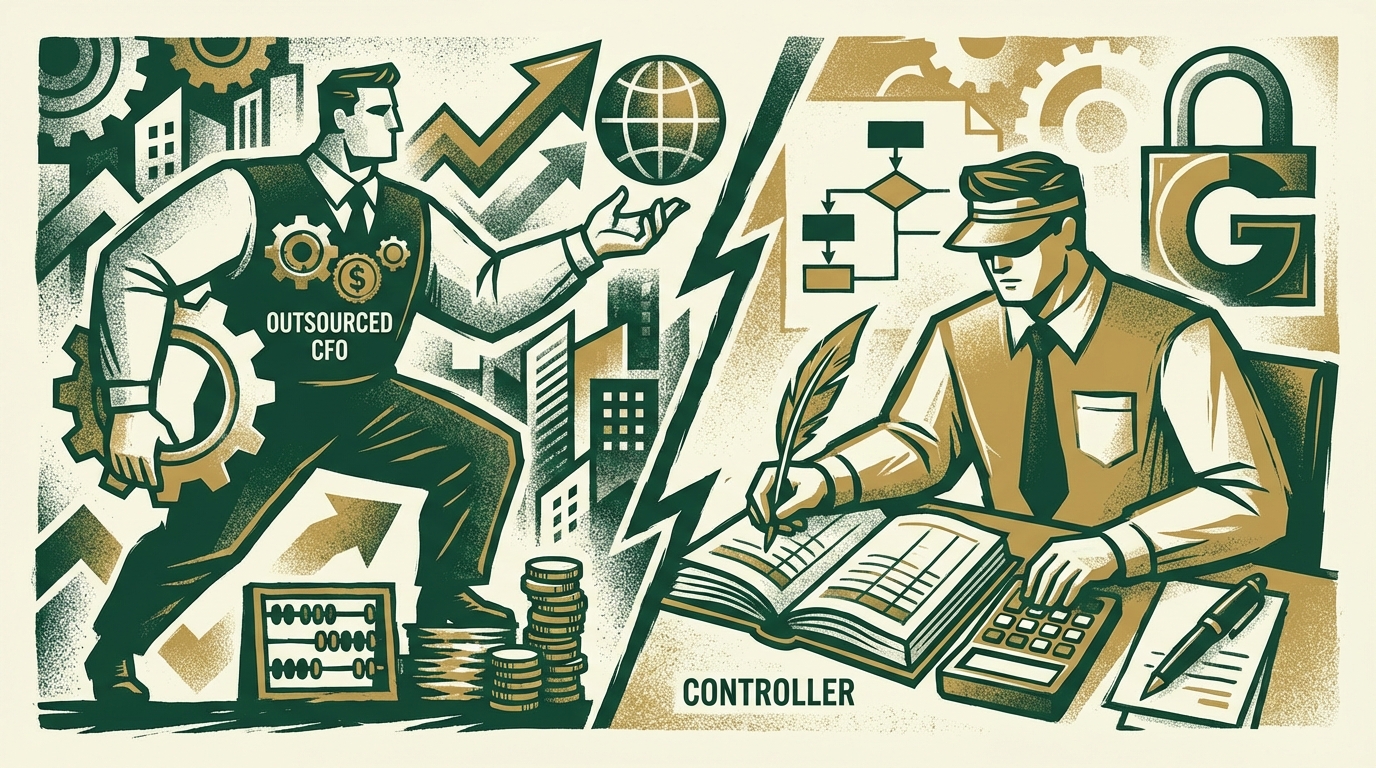
Outsourced CFO vs. Controller: Know the Difference
Published: 2026-03-05 • Estimated reading time: 8 min
I’ve sat across the table from hundreds of founders steering ships with north of $5 million in revenue. They’re brilliant, they’re driven, and they’re often making the same million-dollar mistake: confusing their Controller with a Chief Financial Officer (CFO). It’s an understandable error. Both roles live in the world of numbers. But confusing the two is like mistaking the person who records history with the person who uses those lessons to predict and shape the future.
Let’s get this straight from the jump. The fundamental difference is that a Controller is the guardian of your financial truth, ensuring your historical data is accurate and compliant. An Outsourced CFO is the architect of your financial strategy, using that truth to build a roadmap for growth. For a company at your stage, you don’t just need one or the other; you need both roles working in perfect concert. Trying to get one person to do both jobs is a recipe for burning out your best numbers person or getting strategic advice that’s still tethered to the past.
The Rearview Mirror: What a Controller Does
A Controller’s primary role is to manage and ensure the integrity of your company’s historical financial records. They are the masters of accounting, compliance, and control, responsible for producing accurate and timely financial statements. Think of them as looking in the rearview mirror; their job is to tell you exactly where you’ve been, with precision.

The Controller’s world is one of GAAP, closing the books, managing audits, and implementing internal controls. They own the accounting function. This backward-looking perspective is non-negotiable for a healthy business. It’s the foundation upon which all else is built. According to research, controllers can spend nearly 50% of their time just on transaction processing and the monthly close, a testament to their focus on historical accuracy as noted by NetSuite.
Key responsibilities include:
Managing the accounting team (bookkeepers, staff accountants).
Overseeing the monthly, quarterly, and annual “close” process.
Ensuring tax and regulatory compliance.
Producing financial statements like the Income Statement and Balance Sheet.
Implementing and maintaining internal financial controls.
The GPS: What a CFO Does
A Chief Financial Officer uses the accurate data provided by the Controller to plot a strategic course for the future. If the Controller has the rearview mirror, the CFO is staring out the windshield, holding the GPS and the map. Their focus is on finance and strategy—building financial models, managing cash flow, securing capital, and advising the CEO on the financial implications of every major business decision.
This is the critical role an Outsourced CFO plays for most growing companies. They’re not bogged down in the day-to-day accounting; they are your strategic partner. A recent Deloitte survey found that 82% of CFOs see driving business growth as their top priority, highlighting this strategic, forward-looking mandate (Deloitte). They’re asking “what if?” and “what’s next?” for the business.
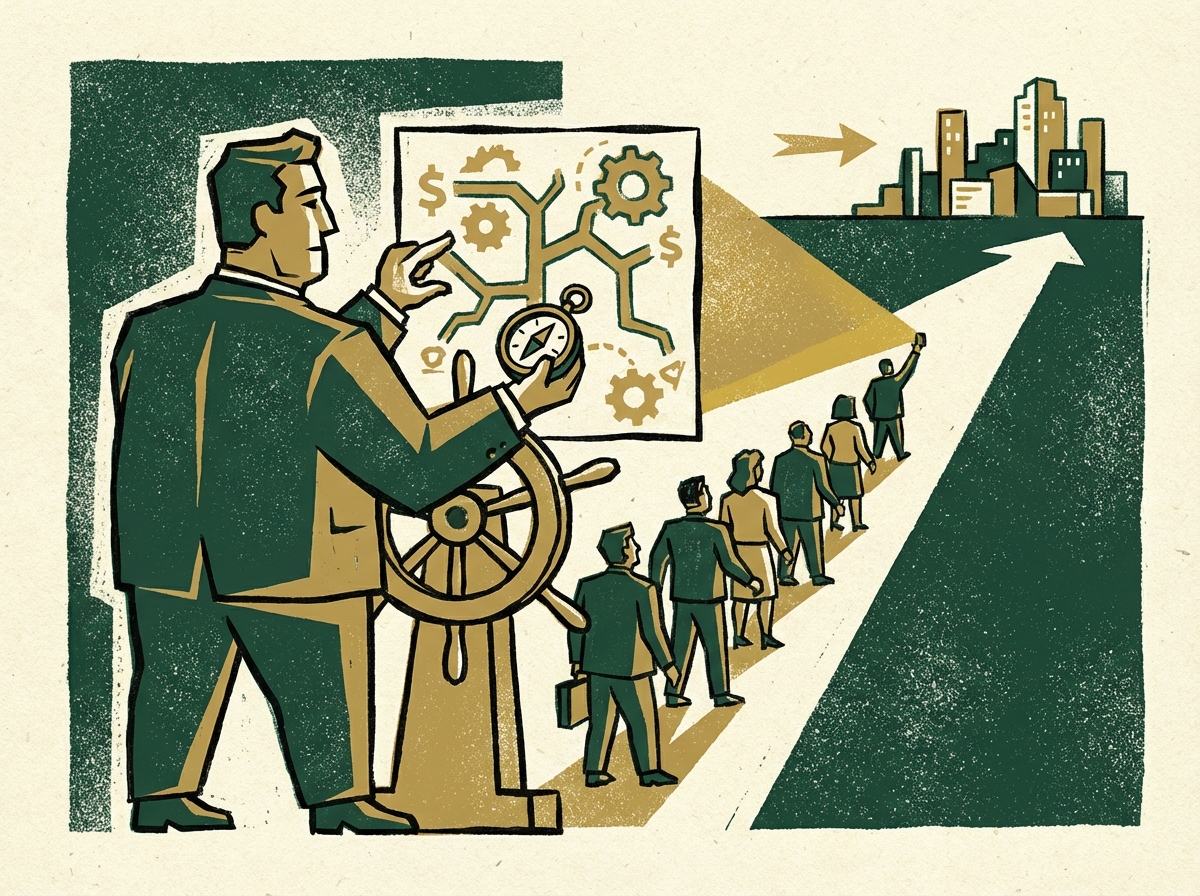
Here’s a simple breakdown of how their roles differ:
The 'Super-Controller' Myth
The most expensive mistake I see founders make is promoting a great Controller into a CFO role they aren’t equipped for, or hiring a “strategic controller” to save money. This rarely works. A Controller’s entire professional training is rooted in precision, historical accuracy, and risk mitigation. A CFO, on the other hand, must be comfortable with ambiguity, predictive modeling, and calculated risk-taking. The skill sets are not just different; they are often philosophically opposed.
As my colleague often says, “I’ve seen dozens of founders try to save money by hiring a 'strategic controller.' It’s like asking your ship's historian to navigate through an economic storm. You need both, but for entirely different jobs.”
Trying to force one person into both roles leads to immense pressure and, often, failure. It’s a contributing factor to why CFO turnover has hit a five-year high, with the average tenure now just 4.7 years, according to a study by Russell Reynolds Associates.
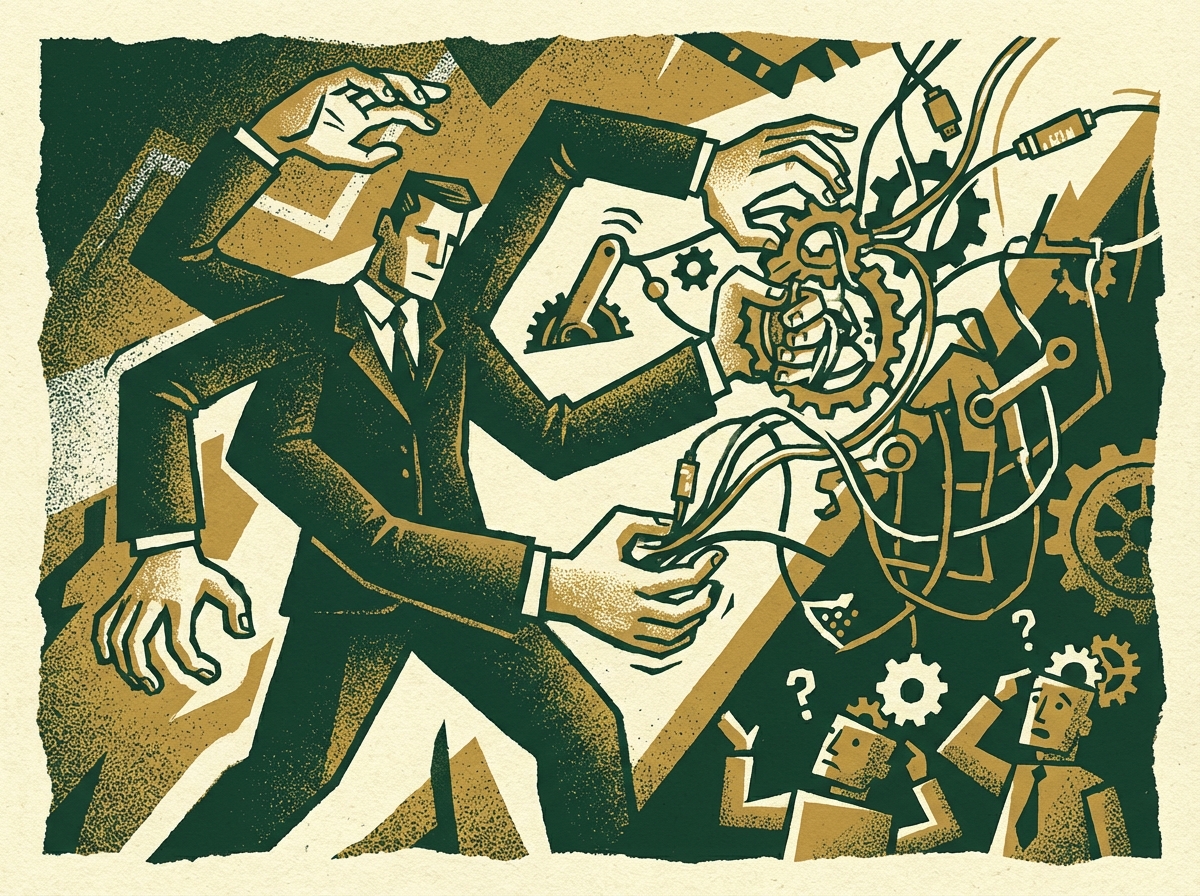
An excellent Controller who is forced to make forward-looking strategic bets will feel immense professional discomfort. Conversely, a true CFO who gets dragged into the weeds of closing the books will be frustrated and misused. You need to honor the distinction.
Building the Stack: Bookkeeper -> Controller -> Fractional CFO
The proper finance hierarchy for a scaling business is a layered build-out, not a single hire. You need to build a stable foundation before you can construct the strategic penthouse. For a founder of a business doing over $5M, the structure should look like this.
Bookkeeper(s): The foundation. They handle the daily transactional data entry—invoices, bills, payroll. This must be flawless.
Controller: The manager and guardian of accuracy. They manage the bookkeepers, own the monthly close, and produce the historical financial statements. They ensure the data is clean, compliant, and reliable. This can be a full-time or outsourced role.
Fractional or Outsourced CFO: The strategic partner. Once you have a reliable Controller function, you bring in a fractional or Outsourced CFO to use that pristine data to build forecasts, manage banking relationships, analyze M&A opportunities, and act as your strategic co-pilot. This model provides access to top-tier strategic talent without the full-time executive salary.

The popularity of this model is surging for a reason. Demand for fractional CFO services has grown by over 35% in the last two years (NOW CFO). Why? Because it’s efficient. My team has found that companies engaging a fractional CFO often see a return on investment exceeding 300% through better cash flow management and strategic cost savings (CFO Advisors). You get the strategic mind you need, precisely when you need it, while your Controller keeps the financial engine running smoothly.
Frequently Asked Questions
What is the difference between a Controller and a CFO?
The simplest difference is that a Controller focuses on the past while a CFO focuses on the future. A Controller is an accounting expert who ensures your financial history is recorded accurately and complies with regulations. A CFO is a finance strategist who uses that accurate history to forecast, plan, and guide the company’s growth and financial health.
Do I need a Controller if I have a Fractional CFO?
Yes, you absolutely need a Controller (or a very strong senior accountant fulfilling that function). A high-impact Fractional CFO is only as good as the data they receive. They rely on the Controller to provide timely, accurate financial information. Without a competent Controller, your Fractional CFO would have to spend their expensive time cleaning up the books, negating their strategic value.
Who manages the accounting team?
The Controller manages the day-to-day accounting team, which typically includes bookkeepers and staff accountants. The Controller, in turn, reports to the CFO. The CFO manages the overall finance and accounting function at a high level, setting direction and strategy, but the Controller is responsible for the direct management and execution of the accounting operations.
