


Moving Past Hero-Based Growth: The Shift to System-Dependent Executive Financial Leadership
Published: 2026-05-05 • Estimated reading time: 9 min
Let’s talk about the most dangerous number in business: five million dollars. Getting there is a testament to your grit, your hustle, your sheer force of will. You were the hero of your own story, slaying dragons daily. But the skills that got you to $5M are the very same ones that will suffocate your company’s growth to $10M and beyond. My team and I see this pattern constantly. The founder, once the engine of growth, becomes its primary bottleneck. The path forward requires a fundamental identity shift—from hero to architect—and the implementation of true executive financial leadership.
This isn’t about working harder; it’s about building a machine that works for you. It’s about trading frantic, reactive decision-making for a calm, predictable operational cadence. It’s about evolving from the Chief Everything Officer to the visionary your company desperately needs you to be.
The Founder's Trap: When Your Hustle Becomes the Bottleneck
The founder’s trap is the painful reality where a leader’s personal involvement becomes the limiting factor for organizational growth. It’s a gilded cage you build for yourself, one where every significant decision, every important client call, and every financial approval has to pass through you. You’ve become the central processing unit for the entire organization, and you’re running out of bandwidth. A startling 67% of fast-growing companies that crash and burn hit the wall right around the $5 million revenue mark, often because the founder can’t escape this trap, as highlighted in a case study by Smart Business Flow.
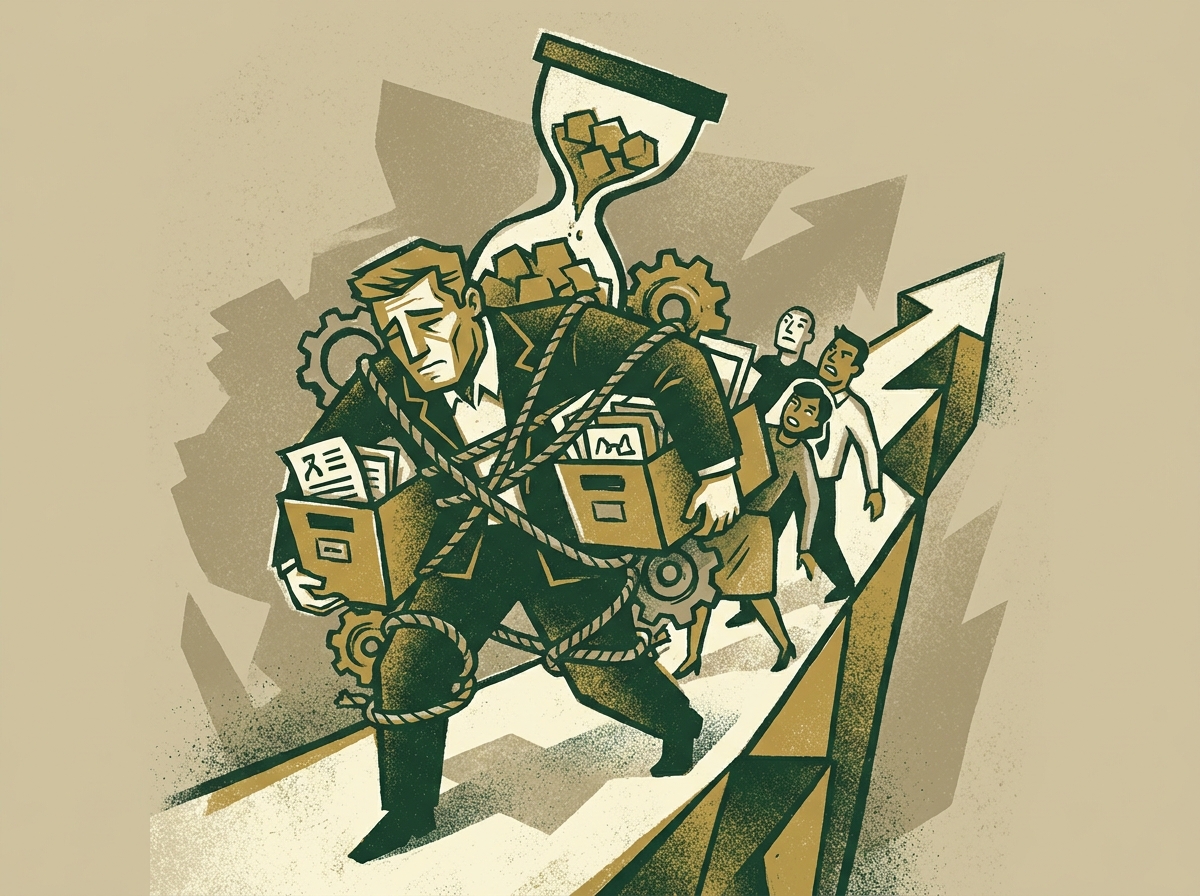
Why does this happen? Because the heroic, all-in approach that launched your venture is fundamentally unscalable. There are only so many hours in a day. As a revealing Harvard study on CEO time management found, founders of growing companies work an average of 62.5 hours per week, with that time fragmented across countless tasks. This relentless grind leads directly to decision fatigue, a phenomenon where the quality of your choices degrades over the course of the day. The result? You’re making worse calls about your company’s future simply because you approved a new-hire bonus and negotiated with a vendor before lunch, a pattern well-documented by research into decision fatigue in executives. The hustle that felt like a superpower at $1M in revenue has become a liability, and every new hire and every new customer only tightens the bottleneck.
Deconstructing the “Hero” Culture in Financial Operations
A hero-based culture is an operational model that relies on the extraordinary efforts of key individuals—usually the founder—to solve problems and drive results. It’s a culture of firefighting, where the person who stays latest to fix the broken payroll file is celebrated, rather than the person who designed a system where it never breaks in the first place. This approach to leadership is the polar opposite of a system-dependent one, where robust processes, not people, ensure predictable outcomes. According to a paper from Oxford’s Primary Health Care department, this distinction between a “hero leader” and a “system leader” is crucial for long-term organizational health.
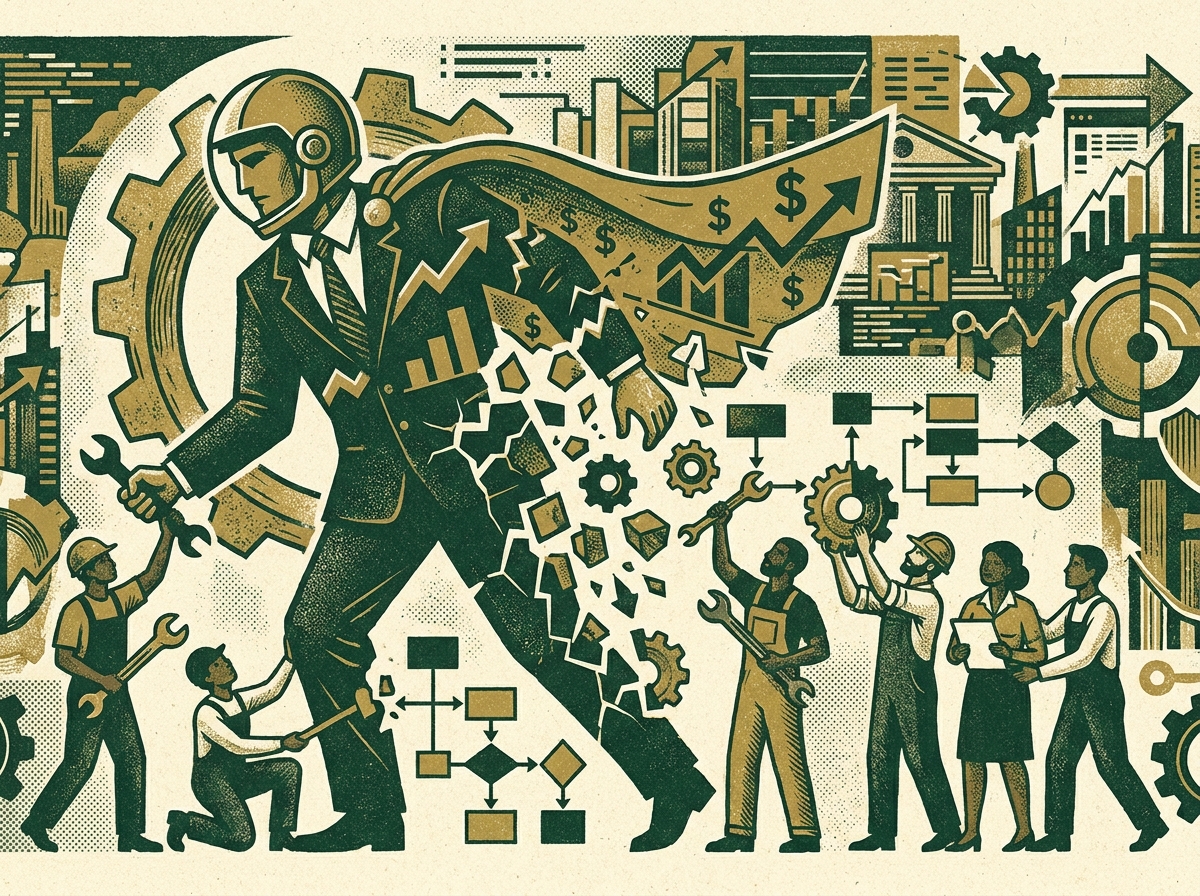
I once worked with a CEO of a fast-growing SaaS company who personally reviewed every single expense report over $500. He saw it as fiscal responsibility. His team saw it as a message: “I don’t trust you.” His “heroism” created delays, frustrated his managers, and kept him buried in tactical weeds while strategic opportunities passed him by. The real heroism would have been building a budget approval framework and empowering his team to operate within it. The difference in these two approaches is stark.
Building the Machine: KPIs, Cadences, and Process Documentation
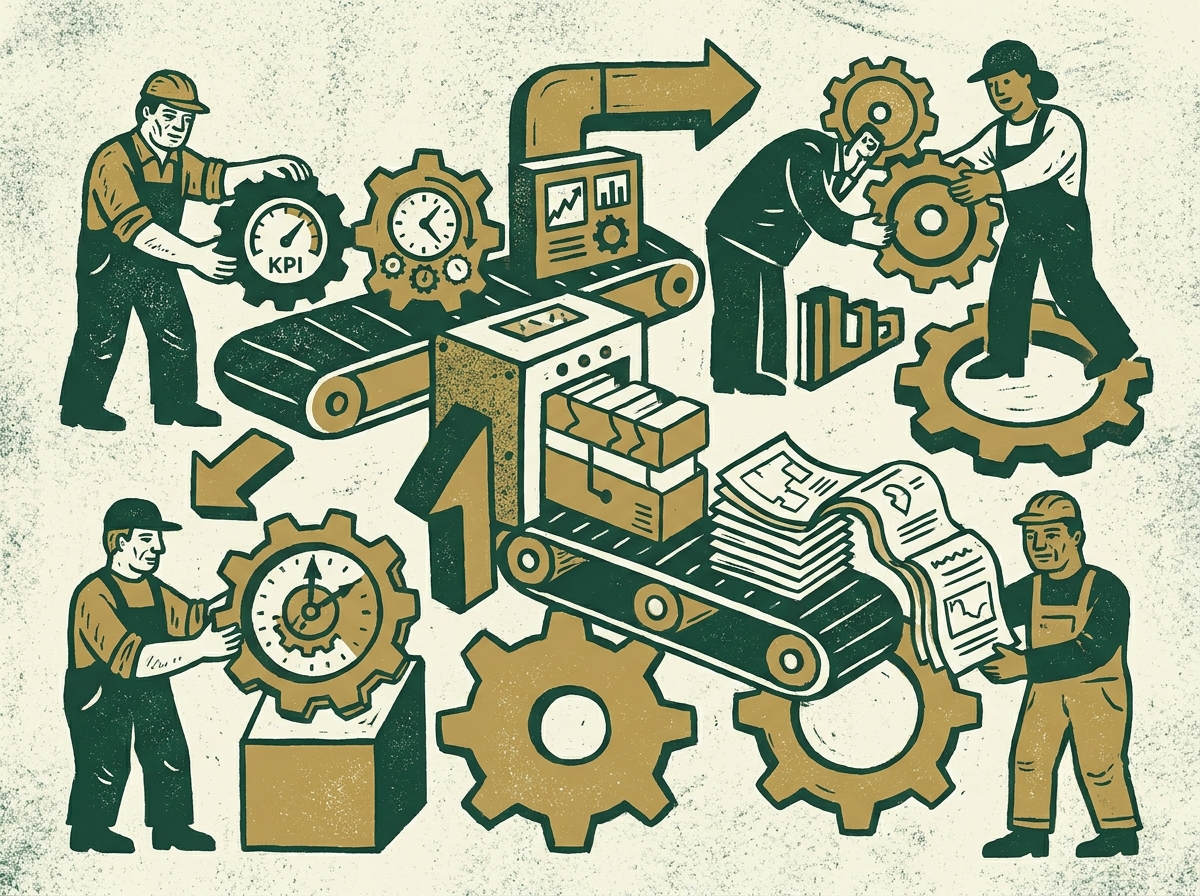
Transitioning to a system-dependent model requires building the management infrastructure that allows the business to run itself. This isn’t about soul-crushing bureaucracy; it’s about creating clarity, predictability, and leverage. My team focuses on three core pillars to architect this shift: Key Performance Indicators (KPIs), a disciplined operational cadence, and clear process documentation.
Define Your Key Performance Indicators (KPIs)
KPIs are the vital signs of your business, providing an objective view of its health without requiring you to be in the operating room. They are the foundation of effective executive financial leadership. The key is to focus on a handful of metrics that truly drive the business forward—typically 5-7, not 50. This means a mix of lagging indicators (like monthly recurring revenue and gross margin) and leading indicators (like sales pipeline velocity and customer churn risk). A well-designed dashboard doesn’t just report the news; it gives your leadership team the data they need to make the news.

Establish a Disciplined Operational Cadence
An operational cadence is the rhythm of meetings that runs the business, ensuring information flows and accountability is maintained. This isn’t about adding more meetings; it’s about having the right meetings with the right purpose. As outlined by modern growth experts, a strong cadence typically includes a daily huddle, a weekly tactical meeting for the leadership team, and monthly strategic check-ins. This rhythm, as described by Hypergrowth Partners, forces issues to the surface, aligns the team around the KPIs, and creates a predictable structure where decisions are made and executed without your constant intervention.
Institutionalize Knowledge Through Process Documentation
Process documentation is how you turn one person’s expertise into an organizational asset. Documenting a core process—how you onboard a client, how you close the books, how you handle an overdue invoice—is the single most effective way to create leverage in your business. Research consistently shows the immense value of this, with one study from Assured Strategy finding that companies with documented processes experience significantly higher growth and employee satisfaction. Start small. Pick one recurring process that causes friction and create a simple, one-page checklist. You’re not writing an encyclopedia; you’re building a playbook so your team can win without you on the field.

Empowering a Leadership Team to Make $100K Decisions
Empowering a team means creating a framework where they can make significant decisions confidently and competently. This is the art of delegation, a skill that a Gallup poll identified as one of the single biggest management challenges for entrepreneurs. The goal is to get your leaders making the $10,000 and $100,000 decisions so you can focus on the $1,000,000 ones. True empowerment isn’t just dumping tasks; it’s delegating outcomes and the authority that goes with them.
To do this, you must provide two things: clarity and guardrails. Clarity comes from the KPIs and strategic goals you’ve set. Guardrails are the non-negotiable boundaries, often rooted in your budget and company values. A simple but powerful framework I use with clients is the “disagree and commit” principle. Encourage rigorous debate, but once a decision is made by the empowered leader, everyone on the team commits to its success. This builds trust, accelerates decision-making, and develops the next generation of leaders within your organization. A recent 2024 study published in Harvard Business Review reinforces this, showing that strategic delegation of decision-making authority is directly linked to higher organizational agility and performance.
As one CEO I coached put it, “My job is no longer to have the best answer. It’s to build a team that can find the best answer without me.” That’s the psychological shift at the heart of this transition.
The Evolution from Chief Everything Officer to True Visionary
The final step in this journey is embracing your new role as the company’s visionary and chief architect. When you successfully replace personal heroics with durable systems, you liberate your time—often 15-20 hours per week—from the operational whirlwind. That reclaimed time is the most valuable asset in your company. It’s the time you can now invest in the activities that only you, the founder, can do: shaping strategy, building key relationships, evangelizing the company’s vision, and anticipating the next big shift in your market.
This is the ultimate expression of executive financial leadership: creating an organization that generates predictable results and scales beyond the capacity of any single individual. Your legacy is not the number of problems you solved personally, but the resilient, self-sufficient machine you built. By letting go of being the hero, you become something far more powerful: the force multiplier that enables a hundred heroes to thrive.
Frequently Asked Questions
What are the first steps to building a system-dependent company?
The first steps are to document one core financial process, such as accounts payable, to understand the workflow. Next, define 3-5 key performance indicators (KPIs) that represent the true health of the business. Finally, establish a weekly leadership meeting cadence to review those KPIs and hold the team accountable for results.
What is the role of a Fractional CFO in this transition?
A Fractional CFO acts as the architect and guide for building your financial systems. They provide the high-level executive financial leadership needed to establish KPIs, implement financial controls, and mentor your existing team without the full-time cost. This makes them an ideal partner for companies navigating this critical growth stage, with industry rates reflecting the high value of this specialized expertise according to 2026 market analysis.
How do you measure the success of shifting to system-dependent leadership?
Success is measured by a decrease in the founder’s involvement in daily operational decisions, an increase in the speed and quality of team-led initiatives, and consistent, predictable performance against key financial KPIs. The ultimate test is whether the business can run and grow smoothly for a week or more without the founder's direct, tactical intervention.
References
https://www.phc.ox.ac.uk/blog/a-hero-leader-vs-a-system-leader-learning-to-let-go
https://playbooks.hypergrowthpartners.com/p/the-operational-cadence-of-modern-growth-teams
https://hbr.org/2024/09/research-how-to-delegate-decision-making-strategically
https://madrasaccountancy.com/blog-posts/fractional-cfo-rates-by-industry-2026
