


Mastercard's AI Push and the Commoditization of the Virtual CFO
Published: 2026-04-25 • Estimated reading time: 9 min
When a company that processes 175 billion transactions a year decides to get into your line of work, you pay attention. So, when my team and I saw the announcement for Mastercard’s new AI-powered “Virtual CFO” platform, the reaction in our office wasn’t panic—it was a knowing nod. This isn’t the death knell for strategic financial leadership; it’s the starting gun for its most important evolution.
For years, we’ve seen the steady march of cloud-based platforms and automated dashboards promising to bring enterprise-level financial visibility to mid-market companies. And for the most part, they’ve delivered. But Mastercard’s entry, powered by a proprietary data set that’s the financial equivalent of owning the world’s oceans, signals a fundamental market shift. The basic blocking and tackling of financial reporting—the “what happened last month”—is officially a commodity. This is a fantastic development for businesses, but it creates a dangerous illusion for CEOs: the belief that a dashboard, no matter how intelligent, can sit in the CFO’s chair. The true challenge isn’t finding the data anymore; it’s knowing what to do with it. And that, I’ll argue, is where the real value of a modern Virtual CFO is being forged.
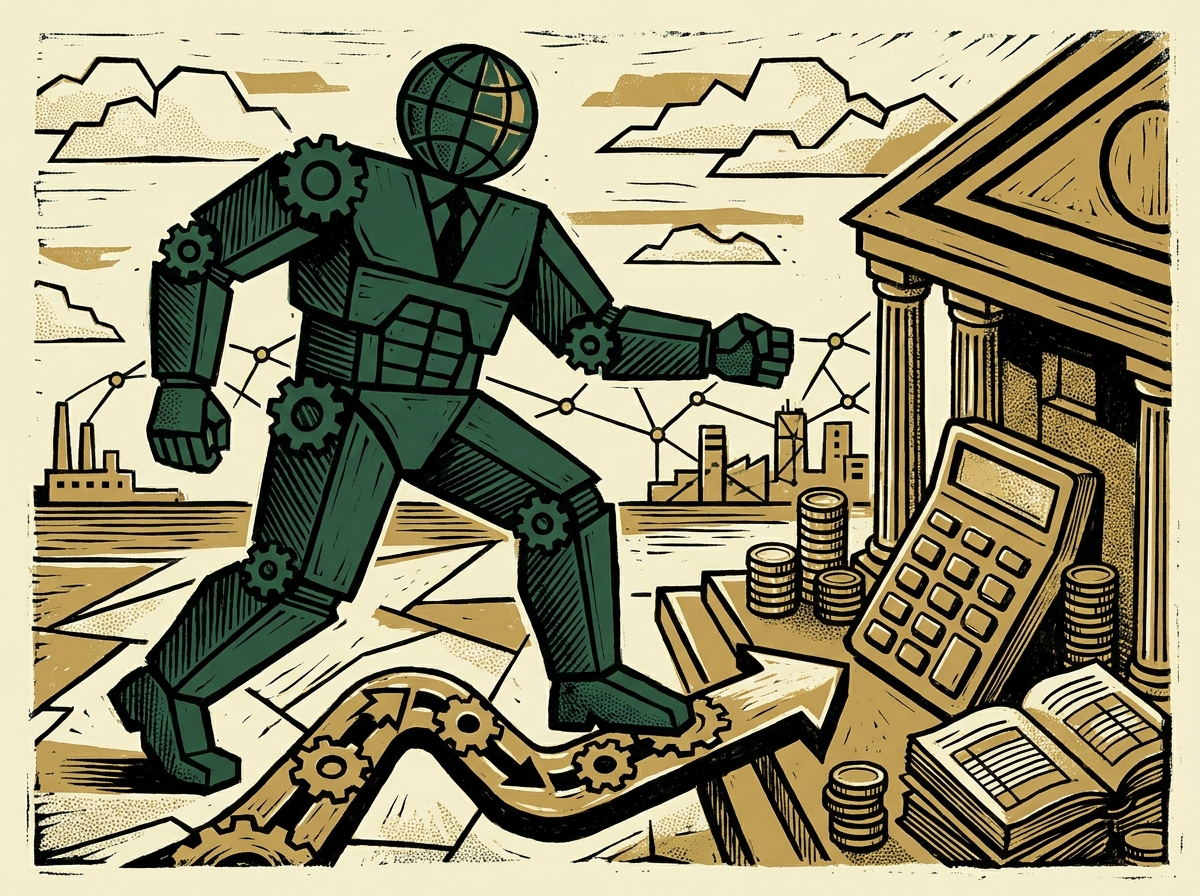
The Mainstream Shift: When Global Giants Enter the CFO Space
Mastercard's entry into the virtual CFO market signals that core financial visibility tools are becoming a commoditized utility, driven by access to vast proprietary payment infrastructure data. This isn’t a niche fintech player launching another SaaS tool. This is a global giant with unparalleled insight into B2B and B2C spending patterns deciding to productize its data advantage. They aren’t just offering a service; they’re leveraging an existing enterprise infrastructure to provide predictive analytics on everything from cash flow risks to supplier payments with a level of accuracy most banks would envy. By analyzing trillions in anonymized transactional data, their machine learning models can offer anomaly detection and forecasting that is, on a purely operational level, incredibly powerful. This mainstreaming of advanced analytics is the final step in the digital transformation of the finance function, making high-level data accessible to any company willing to pay a subscription fee.
The Illusion of the AI Executive: Dashboards Do Not Make Decisions
An AI-driven dashboard provides data visualization and predictive analytics but fundamentally lacks the contextual judgment, stakeholder management, and strategic accountability required for true executive decision-making. The slick interface of Mastercard’s new offering, or any of its competitors, can tell you that your burn rate is increasing or that a customer segment is becoming less profitable. It can even forecast future scenarios with startling accuracy. What it cannot do is walk into a board meeting and defend a high-risk, high-reward capital allocation strategy. It can’t negotiate with your bankers, intuit the morale of your sales team, or understand that a seemingly inefficient supplier is run by the CEO’s brother-in-law.
This is the critical gap between information and wisdom. We see it constantly in the market; despite 63% of organizations having fully deployed AI, a report from Morgan Stanley reveals that only 21% report tangible value delivered to date[18]. The tools are there, but the ability to translate their outputs into strategic wins is missing. It’s no surprise, then, that while 87% of CFOs predict AI will be extremely or very important in 2026, a staggering 92% fear they cannot execute effectively on an AI strategy, according to a recent survey[10][13]. The dashboard is a powerful instrument, but it still needs a maestro to conduct the orchestra.
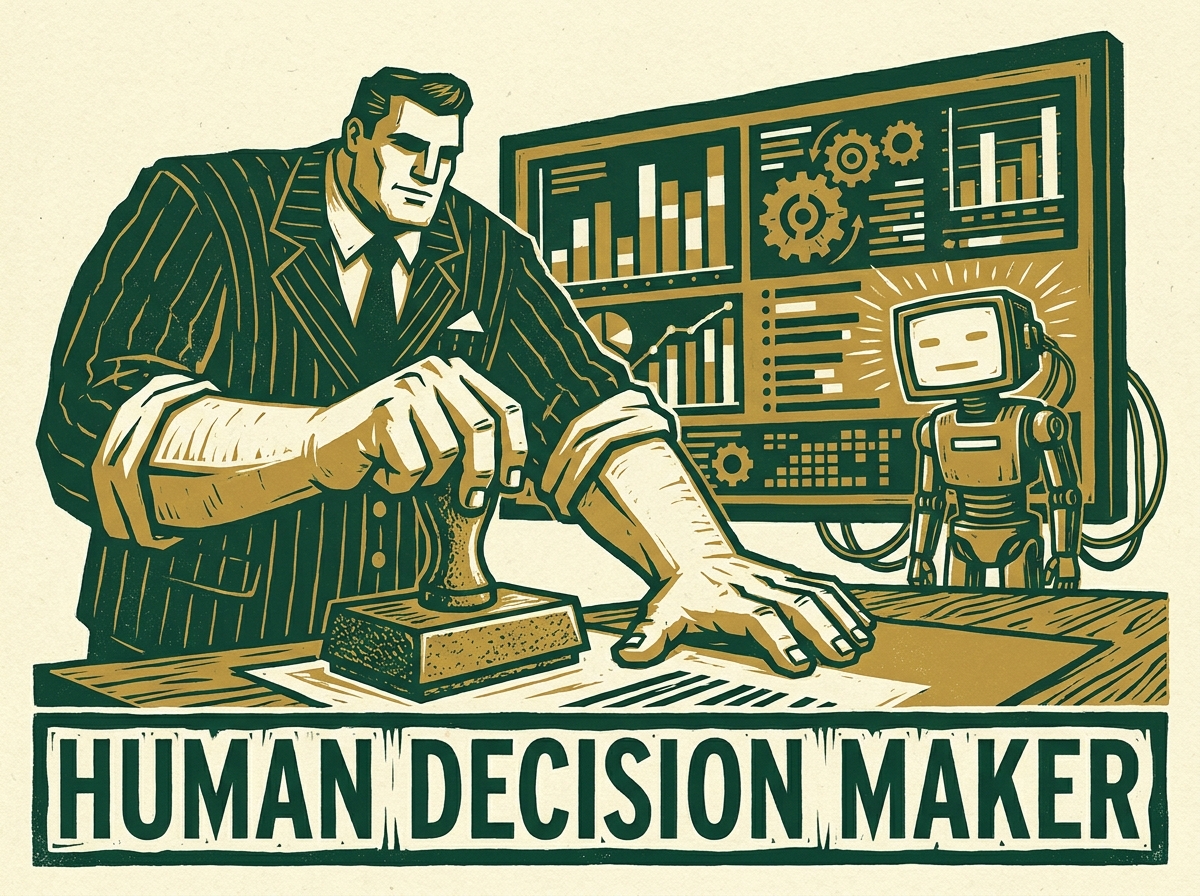
Where Algorithms Fail: The Need for Human Strategic Nuance
Algorithms fail where business context, human relationships, and non-quantifiable risks are paramount, areas where a human virtual CFO provides the essential strategic nuance that artificial intelligence cannot replicate. An algorithm might flag a key supplier for consistently late payments and recommend termination to optimize working capital. A human CFO, however, knows that this supplier is the only one in the country with a specific certification required by your largest customer and is navigating a temporary factory upgrade. The algorithm sees a data point; the human sees the relationship, the context, and the long-term risk of a rash decision.
As Mark Barnett, Global Head of SME at Mastercard, aptly puts it, “Judgment, accountability, and context are inherently human. AI can highlight patterns and possibilities, but it cannot understand a company’s values, relationships, or long-term vision.”[9] This human layer is where strategic foresight is born. The choice isn't about rejecting AI—it's about understanding its limitations. An experienced CFO uses these tools to automate the mundane precisely so they can focus their energy on the complex.
Here’s how my team thinks about the division of labor:

The True Value of a Virtual CFO for a $5M+ Enterprise
For companies with over $5 million in revenue, the true value of a virtual CFO lies in their ability to translate commoditized data from AI tools into an actionable, forward-looking strategy that drives growth and mitigates complex risks. The $5 million mark is a crucial inflection point. At this stage, a business is no longer a simple operation. It has multiple value streams, a growing team, and is beginning to attract the attention of competitors, investors, and acquirers. The cost of a strategic error—a poorly timed expansion, a mispriced product, a missed compliance deadline—is no longer a bump in the road; it can be an existential threat.
This is where the commoditization of data becomes an advantage, but only in the right hands. An AI tool that can instantly reconcile fragmented data is a godsend, especially when you consider that research from PR Newswire shows only 5% of companies can access spend data instantly in a single system[10]. Freeing the finance function from this manual drudgery allows a strategic leader to focus on higher-order problems. For example, AI-powered cash forecasting can lead to incredible efficiencies; one study showed companies using it reported $1.04 million in average additional net interest earnings by reducing idle cash by 47%[33]. A dashboard can find that idle cash. A virtual CFO can architect the M&A deal or capital expenditure project to deploy it for maximum strategic return.
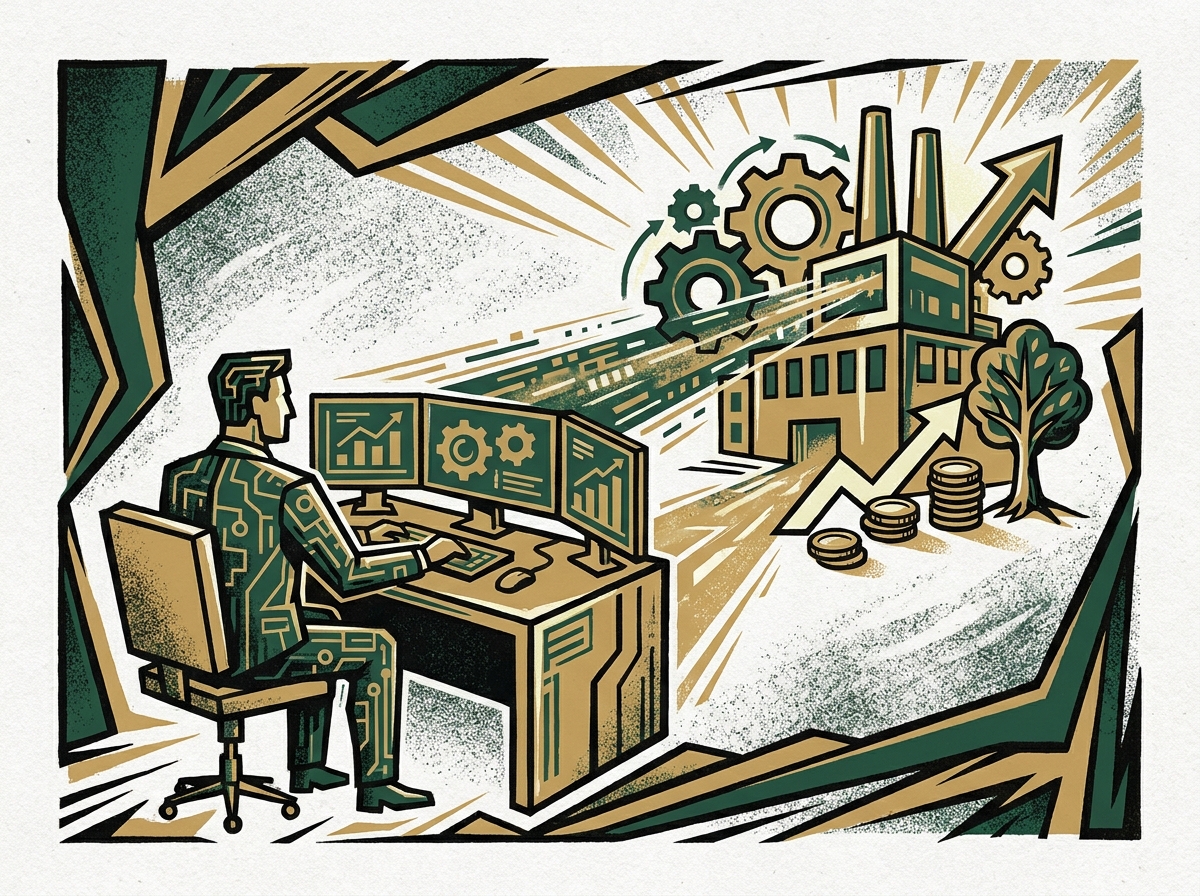
Building a Tech Stack That Augments, Rather Than Replaces, Leadership
An effective financial tech stack integrates best-in-class AI for automation and analytics while empowering a human virtual CFO to focus on high-value strategic nuance and decision support. The goal of technology integration is not to build a self-piloting airplane. It’s to build a modern cockpit that gives a skilled pilot—your CFO—the visibility and control to fly higher and faster than ever before. This hybrid model recognizes that machines and humans excel at different tasks.
Your future-proof finance function should look something like this:
The Foundational Layer: Your ERP and accounting system (e.g., NetSuite, Dynamics 365) act as the single source of truth, ensuring
data integrity.The Intelligence Layer: This is where tools like Mastercard’s Virtual CFO or other AI-driven analytics platforms sit. They plug into the foundation, handling data aggregation,
predictive analytics, and operational automation.The Strategic Layer: This is the human. The Fractional or
Virtual CFOwho interprets the outputs from the intelligence layer, overlays them with business context, crafts the narrative for the board, and ultimately, owns the financial strategy and its outcomes.
This structure even prepares you for the next wave of Agentic AI, where AI systems can take action on your behalf. You absolutely want a human expert setting the rules, parameters, and strategic goals for those agents, not a black box operating without oversight. As one financial technology expert noted, “The choice isn’t between AI and not AI. The choice is between using it with your rules or pretending that AI isn’t already part of your finance function.”[22] Building the right stack is about building a system of intelligent augmentation, not blind replacement.

Frequently Asked Questions
What does Mastercard's entry into the virtual CFO market signal?
Mastercard’s entry signals the commoditization of financial analytics and operational automation for mid-market companies, shifting the competitive landscape from data access to strategic interpretation. It confirms that sophisticated financial visibility is no longer a differentiator but a baseline expectation.
Can an AI-driven virtual CFO replace human financial leadership?
No, an AI-driven virtual CFO cannot replace human financial leadership because it lacks the strategic nuance, contextual understanding, accountability, and emotional intelligence required to manage stakeholder relationships, navigate complex business environments, and make high-stakes judgment calls.
Why do mid-market companies outgrow automated financial dashboards?
Mid-market companies outgrow automated dashboards when their strategic complexity surpasses the tool's ability to provide context. As they face decisions involving M&A, complex capital allocation, international expansion, and nuanced investor relations, they require a human partner who can translate data into a compelling strategic narrative and assume accountability for outcomes.
