
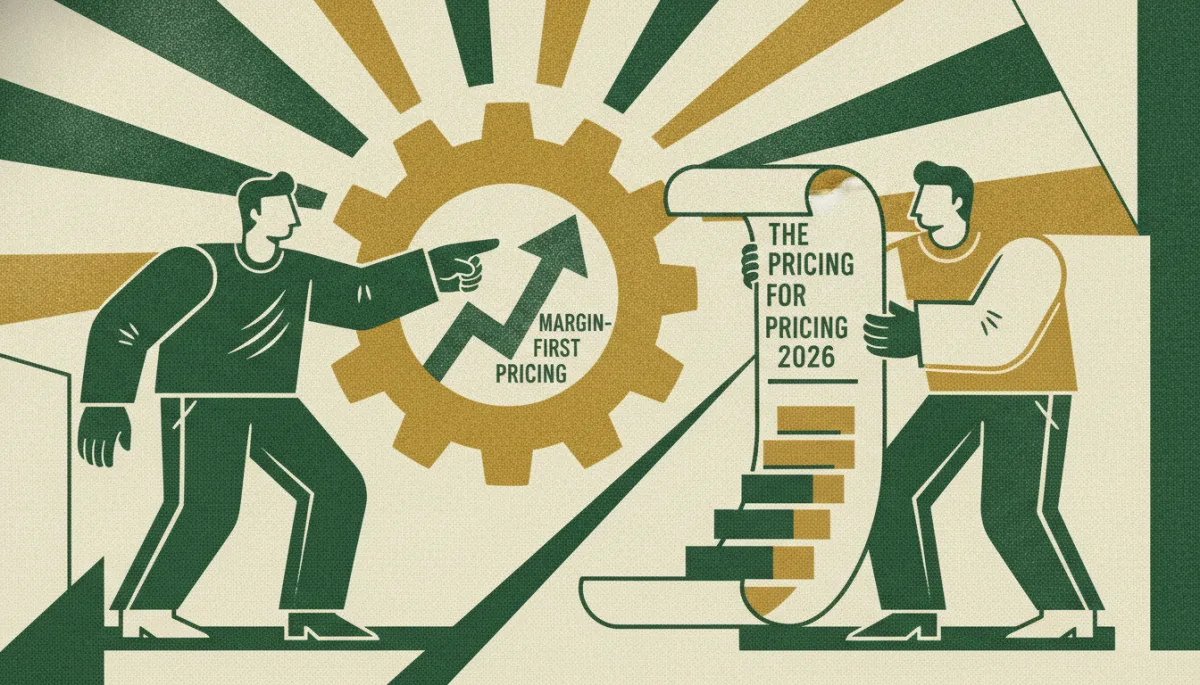
Pricing for 2026: The Margin-First Pricing Review Every Founder Should Run
- Pricing is the single fastest lever on profit, and Strategic Financial Planning that ignores it leaves money on the table every month. A price change flows almost entirely to the bottom line.
- The pressure is real: nearly half of US small businesses are raising prices in 2026 to protect margins, with most targeting increases of 2.1 to 5 percent.
- Most teams should review pricing at least once a year, and more often in a fast-moving, inflationary market. Reactive pricing is what destroys margins.
- Build prices from your target margin first, then test against the market, rather than copying competitors and hoping the math works.
- Customers will accept increases that come with a clear value story and reject ones that do not. The story matters as much as the number.
Of all the levers a founder can pull, pricing is the one with the highest return and the least attention. A 5 percent price increase, fully captured, drops almost straight to profit, yet most founder-led companies set prices once, years ago, and never revisit them. Strategic Financial Planning that takes pricing seriously is rare, which is exactly why it is such an advantage. Here is the margin-first pricing review I run with clients every January, and how to raise prices without losing the customers you want to keep.

Why Pricing Is the Fastest Lever You Are Not Pulling
Pricing is the fastest profit lever because, unlike cost cuts or new sales, a price increase carries almost no incremental cost. Sell more and you incur delivery costs; cut expenses and you risk capability; raise price and the difference is nearly pure margin. Yet founders treat price as fixed and chase volume instead, which is the harder, more expensive path to the same profit.
The market is already moving. Nearly half of US small businesses are raising prices in 2026 to protect margins against higher costs, tariffs, and tax changes, with most aiming for 2.1 to 5 percent, according to Website Builder Expert. If your competitors are adjusting and you are not, your relative position erodes every quarter. Strategic Financial Planning means treating price as a variable you manage deliberately, not a number you set once and forget, because the cost of neglect compounds silently.

Start From Margin, Not From the Market
Build your price from the margin you need, then check it against the market, not the other way around. The common mistake is to look at competitors, land somewhere near them, and accept whatever margin falls out. That is reactive pricing, and as ValueSelling argues, reactive pricing is precisely what destroys margins over time. You end up funding the business on whatever the market leaves you instead of on what you actually need.
The margin-first approach inverts that. Start from your fully loaded cost to deliver, add the margin your model requires to be healthy and to fund growth, and arrive at a target price. Then test it against the market. If the market will bear it, you have a sound price. If it will not, you have learned something important about your cost structure or your positioning, which is far more useful than quietly accepting a thin deal. Margin-first pricing turns price-setting into a decision rather than a reaction.
The Annual Pricing Review, Step by Step
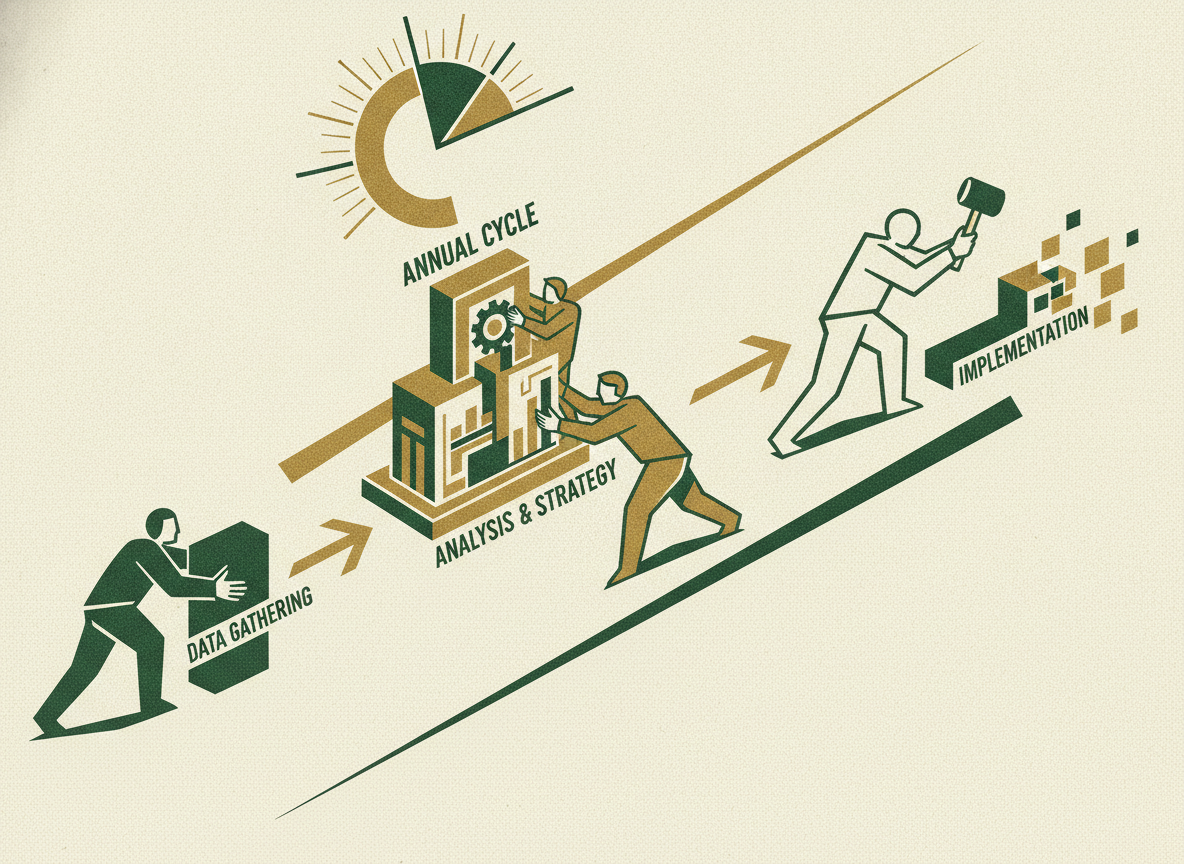
Run a deliberate pricing review at least once a year, because pricing left alone drifts out of step with your costs and your value. Most teams review annually and adjust more often in inflationary markets, per Omnibound. The review has four steps. First, recompute your true delivery cost per offering, since costs have almost certainly moved. Second, measure the value each customer segment actually receives, which is the basis for what they will pay. Third, compare your current prices to both your target margin and the market. Fourth, decide the changes and the rollout.
The discipline is in doing it on a schedule, not in reaction to a cash crunch. A company that reviews price every January adjusts in small, defensible steps that customers absorb. A company that ignores price for three years eventually faces a painful, large correction that strains relationships. The pre-2020 habit of setting price once a year is already giving way, with some firms adjusting many times a year, but for most founder-led businesses a disciplined annual review with mid-year checks is the right cadence.

Raising Prices Without Losing Customers
A price increase succeeds or fails on the value story attached to it. Customers facing rising costs everywhere are reluctant to accept hikes unless they are matched by meaningful improvements in value, as Omnibound notes. The number alone reads as taking; the number plus a clear articulation of what they are getting reads as fair. Same increase, very different reception.
Practically, that means pairing the increase with evidence: outcomes you have delivered, features added, service levels maintained while costs rose. Give existing customers notice and a rationale rather than a surprise on the next invoice. Segment the increase where it makes sense, since not every customer values your offering equally and a flat percentage may be too much for some and too little for others. Handled this way, most increases lose very few of the customers worth keeping, and the ones who leave over a 4 percent adjustment were rarely profitable to begin with.

From Cost-Plus to Value-Based Pricing
The long-term move is from cost-plus pricing to value-based pricing, and 2026 is accelerating it. Cost-plus sets price by marking up your costs, which is simple but caps your margin at whatever multiple you choose and ignores what the offering is actually worth to the buyer. Value-based pricing sets price on the value the customer receives, which is where the real margin lives. As value-based pricing gains traction, the companies that understand their customers' perception of value are the ones expanding margin while others defend it.
The shift does not happen overnight, and it does not have to. Start by identifying the offerings where you deliver outsized value and are clearly underpriced relative to that value, and move those first. Use cost as your floor, never your ceiling. This is the heart of Strategic Financial Planning applied to pricing: understanding that price is a reflection of value delivered, not cost incurred, and steadily repricing toward what your work is genuinely worth. Done consistently, it is the highest-return planning work a founder can do.

Frequently Asked Questions
How Often Should You Review Pricing?
At least once a year, with mid-year checks in fast-moving or inflationary markets. Most teams review annually and adjust more often when costs are volatile. The key is to review on a schedule rather than in reaction to a cash crunch, because regular small adjustments are absorbed easily while years of neglect force a large, painful correction.
Should You Raise Prices in 2026?
For most businesses, yes, deliberately. Nearly half of US small businesses are raising prices in 2026 to protect margins, with most targeting 2.1 to 5 percent. If your costs have risen and your prices have not, your margin is eroding. The question is not whether to adjust but how much, and how to pair the increase with a clear value story.
How Do You Raise Prices Without Losing Customers?
Attach a value story to the number. Customers accept increases matched by clear improvements in value and reject increases that feel like pure extraction. Give notice and a rationale, point to outcomes delivered and service maintained, and segment the increase where customers value the offering differently. Handled well, most increases lose few customers worth keeping.
What Is Value-Based Pricing?
Value-based pricing sets price on the value a customer receives rather than on your cost plus a markup. It focuses on the customer's perception of value and what they are willing to pay for the benefits delivered. It typically expands margin relative to cost-plus pricing, because cost becomes your floor rather than your ceiling, and it is the direction B2B pricing is trending in 2026.
References
