

Legacy: Building a Financially Resilient Company
Published: 2026-02-21 • Estimated reading time: 8 min
I’ve sat in enough boardrooms to see the two types of leaders. There’s the quarterly warrior, eyes glued to the Bloomberg terminal, chasing the next earnings beat like a greyhound chasing a rabbit. Then there’s the quiet steward, the one playing a different game entirely. They understand that true executive financial leadership isn’t about winning the next 90-day sprint; it’s about building a company that’s still running marathons a decade after they’re gone. This is the art of building a corporate legacy, a structure of such profound financial resilience that it can withstand the inevitable storms of the market.
Too many founders confuse growth with strength. They scale at all costs, taking on debt and complexity, creating a beautiful, towering structure with foundations made of sand. When the tide goes out—and it always does—we see what’s left. My team and I are often called in to sort through the wreckage. The goal of this article is to ensure you’re never the one making that call.
The Infinite Game: Finance Beyond the Quarter
Balancing short-term profit with long-term health requires you to operate with a dual-horizon mindset, treating quarterly targets as waypoints on a map to a much more distant, and valuable, destination. It’s about making decisions today that your successor will thank you for in 2036. This philosophy is the bedrock of sustainable growth and long-term value creation. It’s the difference between extracting value and creating it.
The market’s addiction to the short-term is a powerful drug. The pressure from analysts, investors, and even your own board can be immense. But the most sophisticated players in the market are already looking past the noise. According to a report from Morgan Stanley, a staggering 80% of asset owners are now integrating sustainable, long-term factors into their investment strategies. They know that companies built on a foundation of flimsy, short-term accounting tricks will eventually crumble.
The constant pressure for immediate results has real consequences. The average CEO tenure, as noted by Spencer Stuart, is now just under 5 years. This isn't a leadership model; it's a revolving door, incentivizing leaders to juice the numbers and get out before the bill comes due. Playing the infinite game means refusing to sacrifice the future for a fleeting headline.
Building a Fortress Balance Sheet
A financially resilient company is one whose balance sheet can absorb shocks, fund opportunities without existential risk, and provide strategic flexibility in any economic climate. It is not merely a record of assets and liabilities; it's a strategic document, a war chest, and a testament to disciplined leadership. It’s your company’s economic moat, and your primary job as a leader is to make it wider every year.
I’ve seen far too many promising companies vaporize because they confused revenue with resilience. They had impressive top-line growth but their balance sheets were a house of cards. A sobering analysis reminds us that roughly 29% of startups fail simply because they run out of cash, as reported by Equidam. They didn’t fail for lack of a good idea; they failed for lack of a fortress.
Building this fortress requires a shift in how you view your financials. It’s less about accounting and more about strategy. Here’s a simple comparison my team uses with our clients:
This isn't just about surviving a downturn. A fortress balance sheet is a weapon. When your competitors are scrambling for cash, you’re the one buying their assets for fifty cents on the dollar.
Cultivating Talent: The Next Generation
Succession planning is the ultimate act of financial stewardship, ensuring the institutional wisdom and strategic discipline you’ve built are transferred to a new generation of leaders. It's the mechanism that makes a legacy tangible. Without a deliberate plan to cultivate talent, you are, by default, planning for your company’s eventual decline. Your company’s resilience is only as strong as the people who will be in charge tomorrow.
This is a point of catastrophic failure for many otherwise successful enterprises. A recent Deloitte survey revealed that nearly 70% of family businesses do not have a formal succession plan. This isn’t a paradox; it’s a time bomb. The skills that built the company are rarely passed down through osmosis. They must be taught, mentored, and institutionalized.
Effective executive financial leadership involves identifying potential successors early and investing in them relentlessly. This means:
Rotational Assignments: Give them P&L responsibility in different divisions. Let them see the business from every angle.
Board Exposure: Have them present to the board regularly. Let them learn to think and communicate at that altitude.
Mentorship: Pair them with seasoned executives—and not just you. They need a council of advisors, not a single point of failure.
The goal is not to create a clone of yourself, but to forge a leader who understands the core principles of financial resilience and can apply them to a future you can’t yet see.
The Ethical Standard: Trust as an Asset
Trust is the most valuable, yet un-line-itemed, asset on your balance sheet, representing the sum of your company's reputation, reliability, and integrity. This isn't a soft, HR-driven concept; it’s a hard financial reality. When you have the trust of your employees, customers, and investors, your cost of capital goes down, your sales cycle shortens, and your ability to attract top talent goes up. A strong risk culture is what protects this asset.
“The balance sheet tells a story,” I often tell my clients. “A great leader ensures it’s an epic of resilience, not a tragedy of short-term gains.”
That story is written every day in the thousands of small decisions your team makes. Are they empowered to say “no” to a profitable but shady deal? Is bad news encouraged to travel upwards, fast? That is the essence of a healthy risk culture.
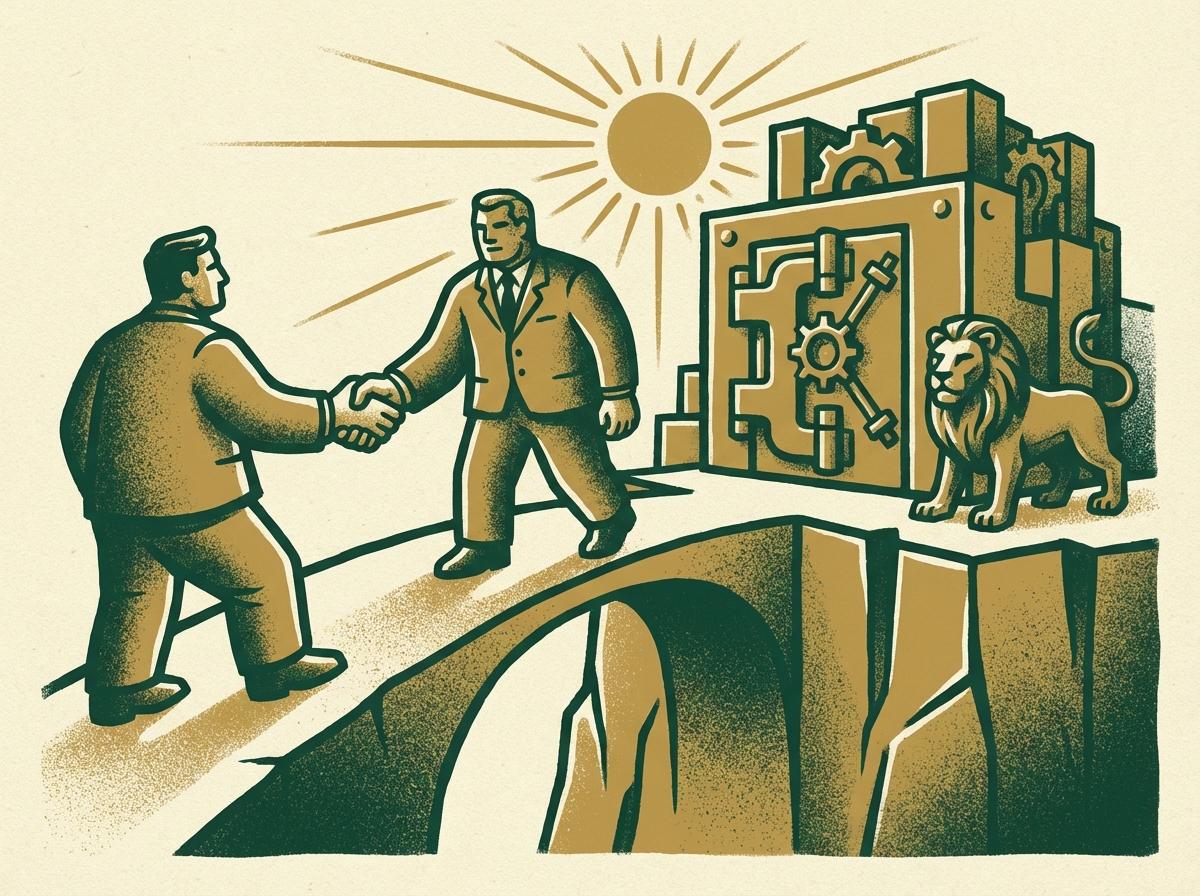
The financial cost of a broken ethical standard is astronomical. We see it in the headlines every year—companies losing billions in market cap overnight because of a scandal that was allowed to fester. It erodes your corporate legacy faster than any market crash.
Your Company, 10 Years from Now
Your legacy as a great CFO or CEO will be defined by the company's ability to thrive long after you've left the building. It won’t be measured by a single year’s stock performance but by its enduring strength, its adaptability, and the quality of the leaders you’ve mentored. This forward-looking perspective is what separates true stewardship from mere management.

What are you building toward? Is it a quick exit or an enduring institution? The answer dictates every decision you make about capital allocation, hiring, and strategy. With 65% of business leaders citing economic uncertainty as their top concern, according to Acrisure, the imperative to build for resilience has never been clearer. This isn’t about being defensive; it’s about being perpetually prepared to seize the opportunities that chaos always creates.
Take a moment and ask yourself: If I walked away today, what is the financial and cultural foundation I leave behind? Is it a well-oiled machine ready for the next decade, or a personality-driven venture that will crumble without me? The answer to that question is your real bottom line.
Frequently Asked Questions
What's the first step in building a fortress balance sheet?
The first, most critical step is to conduct a rigorous stress test of your current financials. Model out worst-case scenarios: a 50% drop in revenue, the loss of your largest customer, a doubling of interest rates. This exercise moves the concept from theoretical to tangible and immediately highlights your most significant vulnerabilities, typically your cash reserves and debt covenants.
How does succession planning contribute to long-term value creation?
Succession planning creates stability and predictability, two things the market highly values. It de-risks the enterprise by ensuring that leadership transitions are smooth and that institutional knowledge is preserved. This continuity prevents the strategic disruption and loss of momentum that often accompany abrupt leadership changes, thereby protecting and enhancing long-term shareholder value.
Can a strong ethical standard really improve financial performance?
Absolutely. A strong ethical standard, which builds a culture of trust, acts as a powerful economic lubricant. It attracts and retains top-tier talent, fosters deeper customer loyalty, and can lead to a lower cost of capital as investors view the company as less risky. While difficult to quantify on a quarterly report, its long-term financial impact is profound, preventing catastrophic reputational damage and creating durable competitive advantages.
