


From Compliance Theater to Active Resilience: A New Paradigm for Financial Risk Management
Published: 2026-04-21 • Estimated reading time: 8 min
I’ll never forget the call. It was from the founder of a manufacturing firm we’ll call “Acmatech.” From the outside, they were crushing it—$18 million in revenue, clean audits, and a GRC (Governance, Risk, and Compliance) platform that spit out beautiful, green-lit dashboards. The board slept soundly. But six months later, their largest customer, a big-box retailer representing 65% of their revenue, was acquired and immediately consolidated its vendor list. Acmatech was out. Their enterprise value plummeted overnight, and the green dashboards turned into a sea of red.
This wasn't a failure of compliance; it was a failure of imagination. Acmatech was a star performer in what I call “Compliance Theater”—the art of looking secure without actually being secure. They had all the right paperwork but zero resilience. This is the critical, often fatal, blind spot in modern financial risk management, and it’s a trap I see far too many successful companies fall into.
The Danger of Checking Boxes: Why Compliance Theater Kills Companies
Compliance theater is the practice of performing security and risk management activities to satisfy auditors and regulations, rather than to genuinely reduce risk. It’s a beautifully choreographed stage play where the props are policies and the actors are executives, but the threat of a real fire burning down the theater is completely ignored. This focus on check-box compliance creates a dangerous illusion of safety, leaving companies vulnerable to threats that don’t appear on a standard audit questionnaire.
According to a report on the hidden costs, this approach isn’t just ineffective; it’s expensive, leading to wasted resources and a false sense of security that stifles true risk quantification. The problem is that passive risk frameworks, often borrowed from massive public companies, are failing mid-market businesses because they are designed to manage procedural norms, not to anticipate dynamic, existential threats. They’re built to stop you from getting sued, not to stop you from going bankrupt.

My team and I see a clear divide between companies that merely comply and those that actively build resilience. Here’s how we break it down:
As leadership consultant Gene Kim put it, “Risk management is a culture, not a cult.” Compliance theater turns it into a cult of paperwork, while active resilience integrates it into the company’s cultural DNA.
Quantifying the Unseen: The $3.6M Cost of Customer Concentration
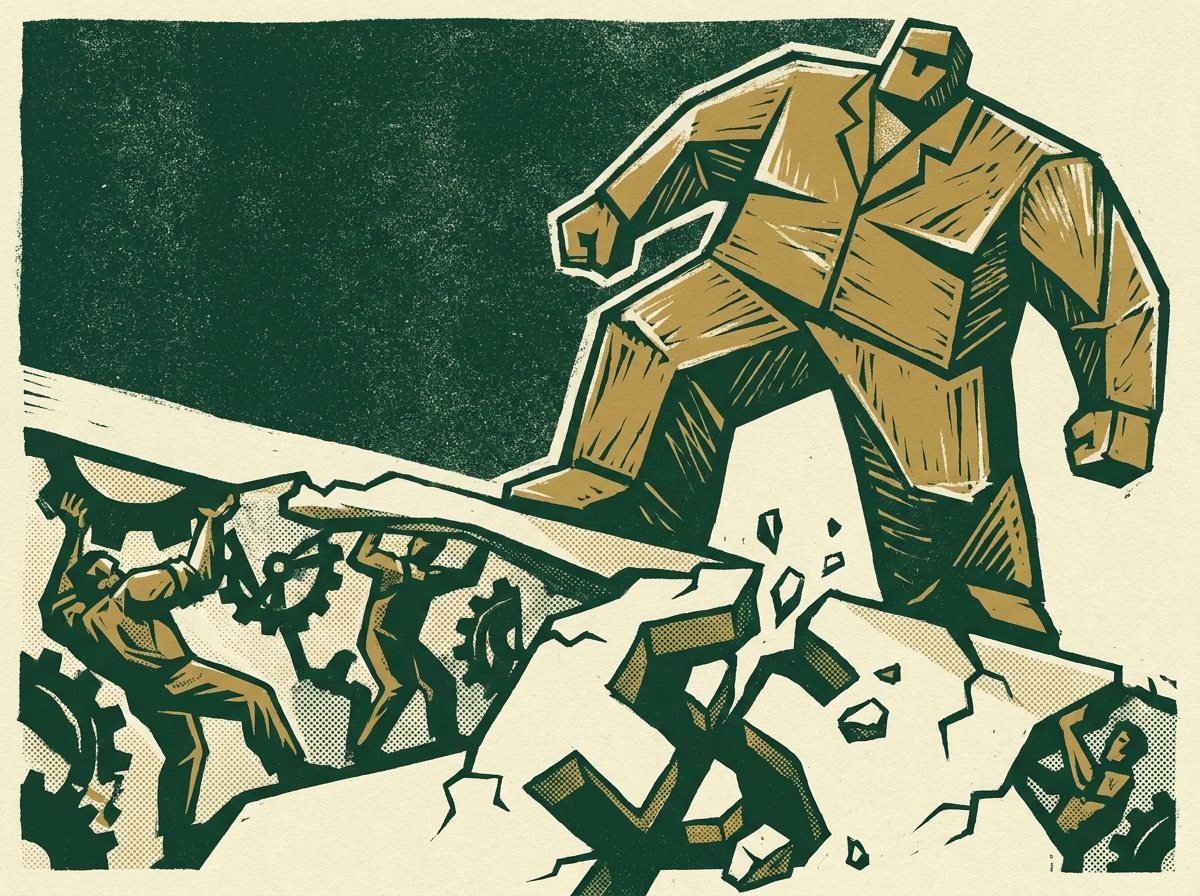
Customer concentration risk is a financial exposure where a significant portion of a company's revenue is derived from a very small number of clients. Acmatech’s story is a classic case. When we performed a post-mortem valuation, we determined their over-reliance on a single client had created a massive, unpriced risk. Buyers and investors heavily discount companies with high customer concentration because the loss of one client can be catastrophic. The general rule of thumb my M&A colleagues use is a valuation haircut of 20-25% or more if a single customer accounts for over 20% of revenue, a sentiment echoed by M&A advisors at WebsiteClosers.com.
For Acmatech, which was optimistically valued at $12 million pre-incident, the perceived risk translated into a real-world loss. A 30% valuation haircut meant their theoretical enterprise value was immediately reduced by $3.6 million the moment a potential buyer looked at their books—and that was before they actually lost the client.
So how do you quantify this? It’s not just about percentages. We model the financial impact by asking three questions:
Probability: What is the real-world likelihood of losing this key customer in the next 24 months? (e.g., Are they in an M&A-heavy industry? Is your contract up for renewal?)
Impact: What would be the immediate bottom-line impact on EBITDA and cash flow if that revenue vanished tomorrow?
Recovery Cost: How long would it take and how much would it cost (in sales and marketing spend) to replace that revenue stream?
Mapping this out turns a vague worry into a concrete number—a number you can take to your board to justify investments in diversification and strategic reserves.
Moving to Active Resilience: A Proactive Approach to Financial Risk Management
Active resilience is a strategic framework focused on proactively identifying, modeling, and mitigating threats before they materialize into full-blown crises. It moves beyond passive compliance by treating risk management as a continuous, dynamic function of strategic leadership, not a static, annual exercise. This means anticipating threats like supply chain disruptions, sudden shifts in market volatility, or geopolitical shocks—risks that CFOs have been increasingly concerned about, according to McKinsey.
Building active resilience involves three core pillars:
Threat Hunting: Instead of waiting for a risk register to be updated, your team should be actively looking for icebergs. This includes everything from monitoring the financial health of your key customers to modeling the impact of a port shutdown in Southeast Asia on your supply chain.
Scenario Modeling: Don’t just list risks; model them. What happens if your top three suppliers go offline for a month? What if a key competitor launches a disruptive product? Running these “business war games” reveals weaknesses in your operational and financial plans.
Strategic Reserves: This isn’t just about having six months of cash in the bank. It's about building redundancy. That could mean qualifying secondary suppliers, cross-training key employees, or having a pre-negotiated line of credit you can tap in an emergency. It’s your
capital preservationwar chest.

The CFO’s Role in Stress-Testing Revenue Streams
The Chief Financial Officer’s responsibility in this new paradigm is to champion the shift from a compliance-based to a resilience-based approach to financial risk management. The modern CFO must act as the chief stress-tester, constantly probing for weaknesses in the company's financial structure. This means borrowing a page from the big banks, which have been required to conduct rigorous stress tests since the Dodd-Frank Act, as detailed by the Federal Reserve.
For a mid-market company, this doesn't require a team of quants. It requires a disciplined process for stress-testing your most critical revenue streams.
Identify Chokepoints: Map out your primary revenue streams and identify the single points of failure. Is it a single customer? A single distribution channel? A single technology platform?
Apply Macro-Stressors: Model the impact of external shocks. What does a 2% rise in interest rates do to your debt service and customer spending? What does a 15% appreciation in the dollar do to your international sales?
Build a Financial Dashboard for Resilience: Your financial reports should include leading indicators of risk, not just lagging indicators of performance. Track customer concentration ratios, supply chain lead times, and cash conversion cycles as rigorously as you track revenue and profit.
This proactive stance is critical. A 2026 survey by Protiviti highlights that CFOs see economic conditions and capital availability as top risks, making proactive financial resilience more crucial than ever.

Building a Bulletproof Financial Moat for 2026
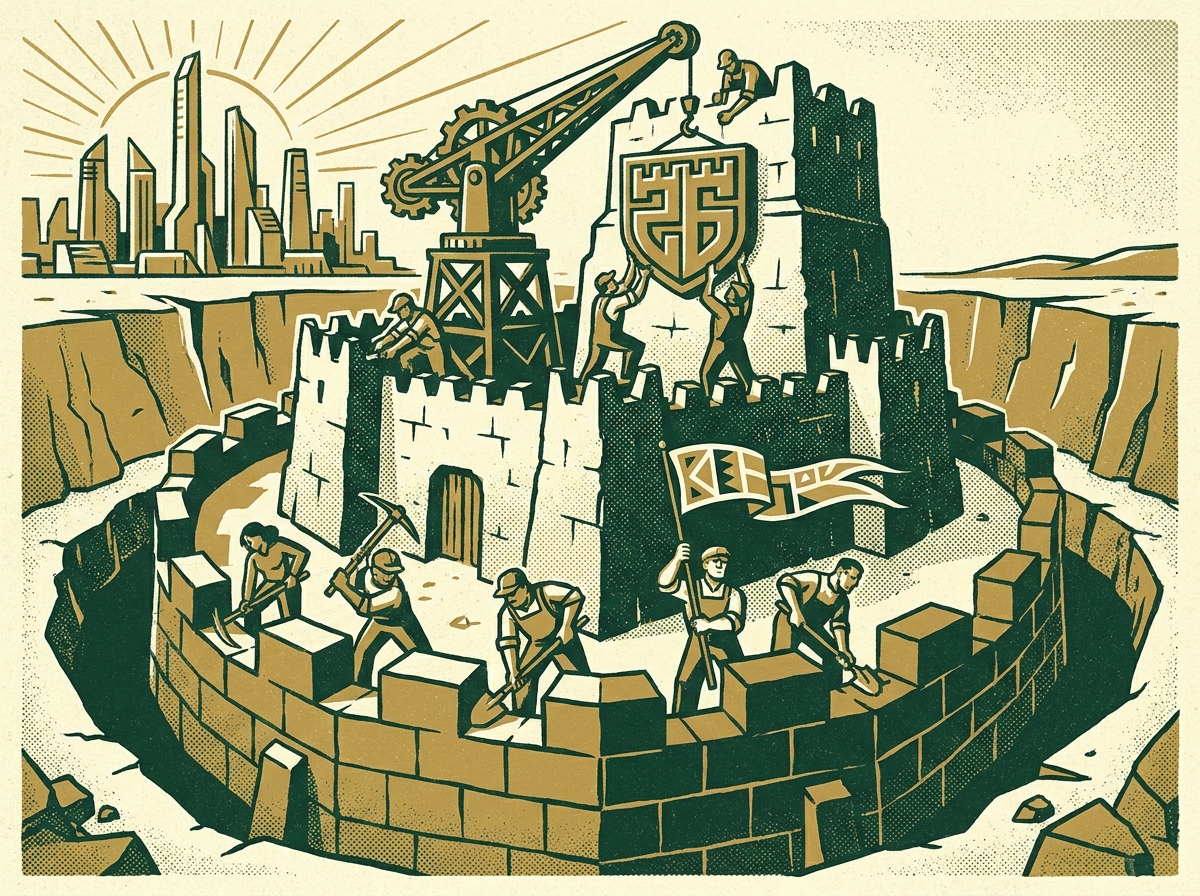
A bulletproof financial moat for 2026 is built not from the bricks of compliance, but from the steel of active resilience, operational discipline, and strategic foresight. It’s an organization-wide commitment to ensuring your company can withstand unexpected shocks and emerge stronger. The board of directors has a clear fiduciary responsibility to oversee this transition, moving risk from a line item in a report to a central topic of strategic conversation.
Here are the foundational elements:
Diversify Everything: Your customer base is the obvious one, but also think about diversifying suppliers, geographic markets, and product lines. The goal is to eliminate any single point of failure.
Fortify Your Balance Sheet: Maintain a strong cash position and manage debt intelligently. A healthy balance sheet is the ultimate shock absorber, giving you the freedom to make strategic moves when competitors are forced to retreat.
War-Game Your
Business ContinuityPlan: Your BCP shouldn't be a dusty binder on a shelf. Run a live drill at least twice a year. Simulate a cyber attack or a major supplier failure and see how your team actually responds. This is where theory meets reality.
Ultimately, moving from compliance theater to active resilience is a shift in mindset. It’s the difference between building a business to pass a test and building a business to last for generations. The former might get you a gold star from an auditor; the latter is what builds enduring enterprise value.
Frequently Asked Questions
What is the difference between active risk management and compliance theater?
Active risk management is a proactive, strategic process focused on identifying and mitigating real-world threats to a business's continuity and value, while compliance theater is a reactive, performative activity aimed at satisfying regulatory requirements and passing audits without necessarily reducing underlying risk.
How do you quantify customer concentration risk?
Customer concentration risk is quantified by calculating the percentage of total revenue derived from your top customers and then applying a valuation discount based on that percentage. This is further refined by modeling the financial impact (in terms of lost EBITDA and recovery costs) and the probability of losing a key customer.
Why are passive risk frameworks failing mid-market companies?
Passive risk frameworks are failing mid-market companies because they are often overly bureaucratic, focused on historical compliance data rather than future threats, and lack the agility to address dynamic risks like supply chain vulnerabilities, rapid market shifts, and geopolitical instability. They create a false sense of security while ignoring the unique, high-stakes threats that can quickly cripple a growing business.
