

Fractional CFO vs Full-Time CFO: The Six-Figure Decision Most $5M Founders Get Wrong
- The fractional CFO vs full-time CFO decision is really a cost-per-output decision, not a salary comparison — and the salary number is the smallest part of the full-time bill.
- A full-time CFO at a growth-stage company costs $300,000 to $500,000 all-in once you load benefits, bonus, equity, and a search fee on top of a $437,000 median base.
- A fractional engagement runs $3,000 to $12,000 a month and bills for hours you actually use — a 50% to 80% saving, and as much as 80% to 90% at Series B scale.
- For most founder-led companies between $2M and $20M in revenue, fractional wins on math. The full-time hire becomes the right call past roughly $20M to $25M, or when four specific inflection points show up.
- Below, I model both paths for a $10M company and give you the four signals that flip the decision.
I have watched more than one founder hire a full-time CFO a year too early, and the mistake rarely announces itself as a mistake. The new hire is excellent. The board deck gets sharper. And then you look at the fully-loaded cost against what the role actually produced in those first twelve months, and you realize you bought a Formula 1 car to drive to the grocery store. The fractional CFO vs full-time CFO question gets framed as "can we afford a CFO yet," but that is the wrong frame. The right one is: what does each dollar of financial leadership actually produce at our stage, and where does that math flip? Let me walk you through the real numbers, because the headline salary hides most of the bill.
The Real Fully-Loaded Cost of a Full-Time CFO
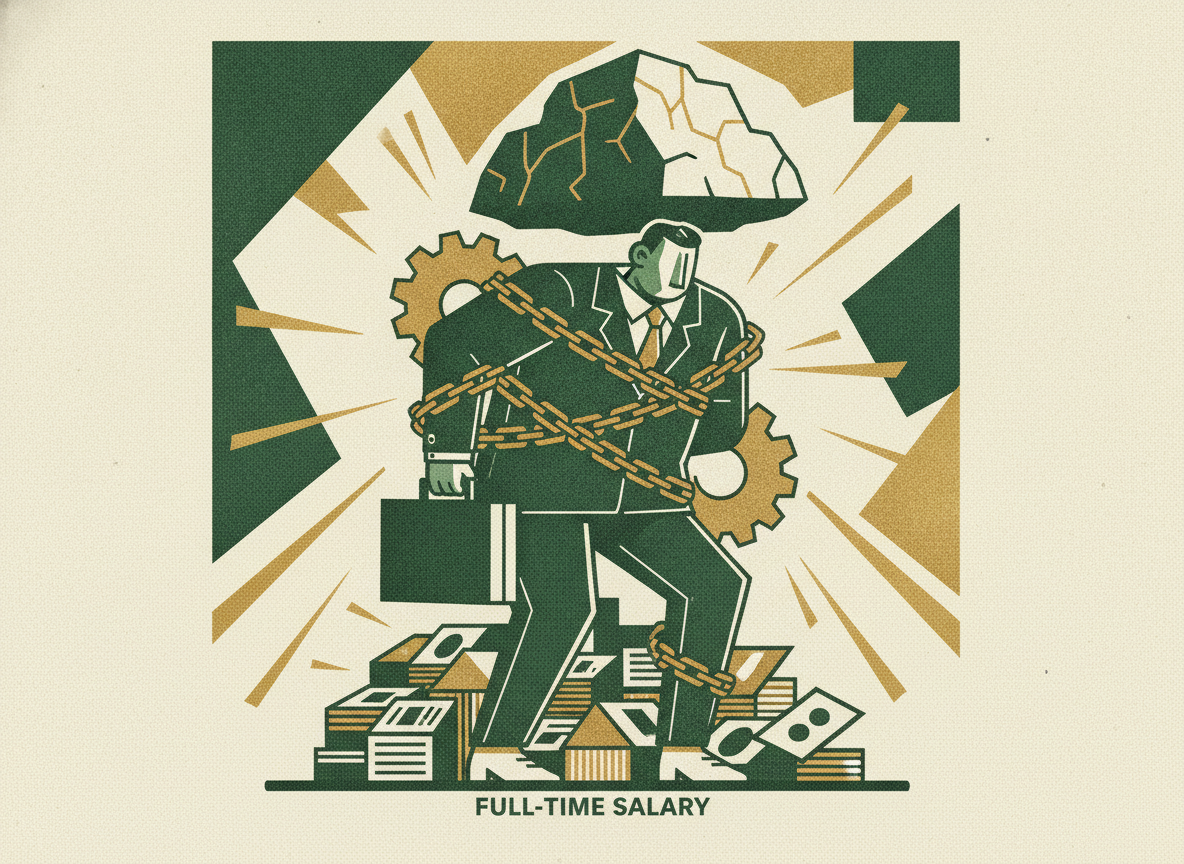
The full-time CFO costs far more than the salary line, and pretending otherwise is how founders underwrite a decision they would never approve with clear eyes. The median U.S. CFO base salary is roughly $437,000, with median total compensation reaching about $586,000 once bonus, equity, and long-term incentives are counted, according to JM Search. For a middle-market company, the most common base lands at $350,000 to $399,000, paired with a target bonus of 50% to 59% of base and roughly 1.00 to 1.24 equity points, per Bennett Financials.
Now load the rest. Payroll taxes, health benefits, and a 401(k) match add 20% to 30% on top of cash. A retained search to find the person runs another 25% to 33% of first-year base, paid whether or not the hire works out. And the equity you grant is real dilution that compounds at every future round. The salary is the down payment. The fully-loaded cost — cash, benefits, dilution, and the search to get there — is the mortgage. When I model this for a client, the all-in first-year number for a growth-stage full-time CFO almost always sits between $300,000 and $500,000, before anyone has built a single forecast.
What a Fractional Engagement Covers — and What It Doesn't
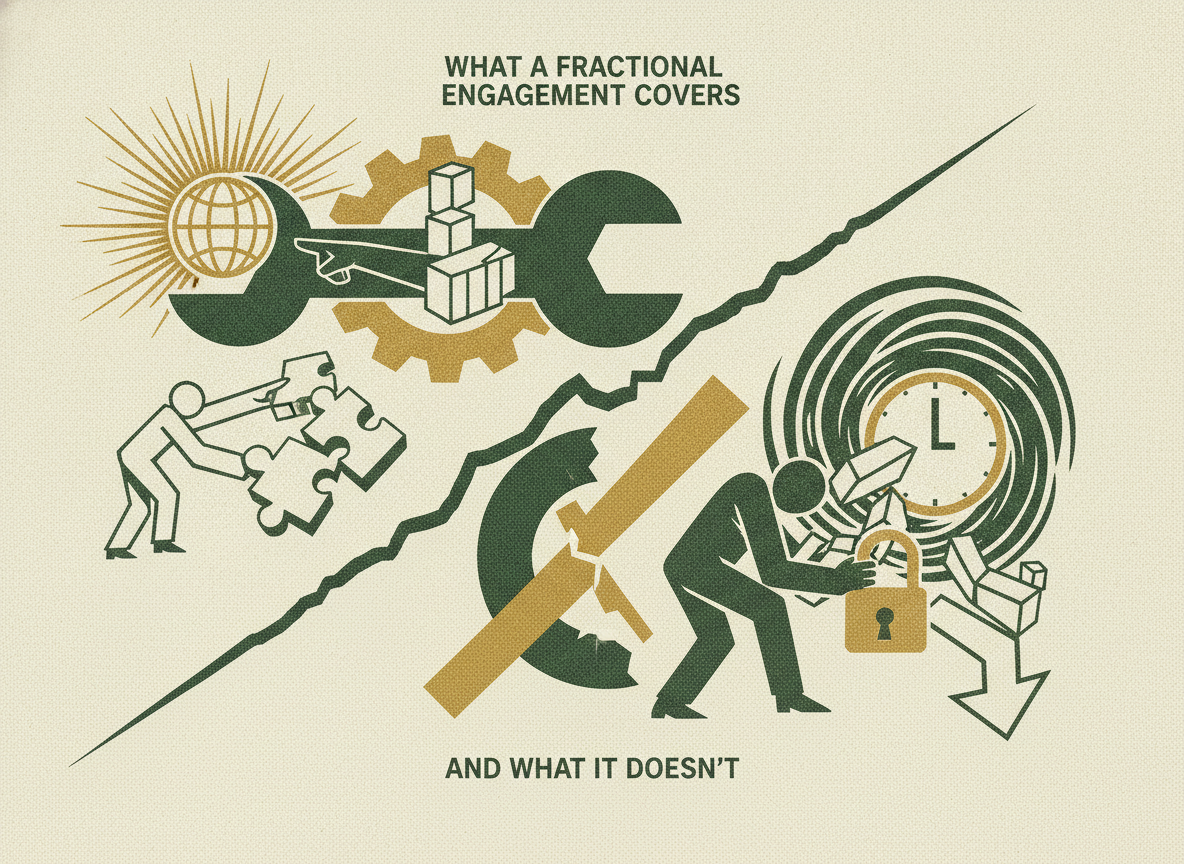
A fractional engagement buys you senior financial judgment by the hour instead of by the seat, which is exactly right when your need is real but not yet full-time. In practice that means a defined scope: monthly close review, cash flow forecasting, board reporting, KPI dashboards, and fundraising support when a raise is live. A $5M to $15M company typically engages a fractional CFO for 25 to 30 hours a month, dropping between funding rounds and spiking to 40 to 50 hours during an active raise, according to Graphite Financial. You are paying for output, not attendance.
Here is the honest other side. A fractional CFO is not sitting in your office at 6 p.m. when a key customer threatens to churn. They are not going to absorb thirty hours a week of operational firefighting, run a full finance department day to day, or be the single throat to choke for every reconciliation. Fractional works because the role is scoped to the decisions that move the company — capital allocation, the model, the raise, the margin plan — and because a controller or bookkeeper handles the daily mechanics underneath. When founders are disappointed by a fractional engagement, it is almost always because they bought strategic hours and expected an operational full-timer. Match the scope to the need and the model holds.

Four Inflection Points That Justify the Full-Time Hire
A full-time CFO becomes the right hire when the work itself turns continuous rather than periodic — and four specific signals tell you that has happened. The revenue line has moved: most analysis now puts the point where full-time clearly beats fractional above roughly $20M to $25M, not the old $10M rule of thumb, with the fractional sweet spot widening to about $2M to $20M, per Pacific Accounting & Business Services. Revenue alone, though, is a lagging signal. Watch these four instead.
First, the decision cadence goes daily. When capital allocation, pricing, and cash calls need an owner in the room every day rather than every other week, you have outgrown an hours-based engagement. Second, the board gets complex. Institutional investors, a real audit committee, and quarterly governance demand a full-time counterpart who lives in the details. Third, a transaction is on the table — an acquisition, a large debt facility, or an exit process — that will consume a full-time leader for months. Fourth, the finance team itself needs full-time management: once you are hiring analysts and a controller reports up, someone has to lead them every day. Hit two of these four and the math has flipped, regardless of where your revenue sits.

Fractional CFO vs Full-Time CFO: A Side-by-Side Cost Model for a $10M Company
For a typical $10M company, the fractional path costs a fraction of the full-time path and produces the decisions that actually matter at that stage. Let me put real numbers on it. The full-time route: a $400,000 all-in package — call it $350,000 base, a 50% target bonus partly paid, benefits, plus a one-time search fee around $90,000 in year one — lands near $450,000 to $490,000 of true first-year cost, before equity dilution. The fractional route: 25 hours a month at a blended $300 an hour is $7,500 monthly, or $90,000 a year, with no benefits, no payroll taxes, no search fee, and no dilution.
That gap is not a rounding error. A Series B SaaS startup can save 80% to 90% with a fractional CFO versus a full-time hire — an annual saving of roughly $415,000 to $634,250 on 2025 market rates, according to CFO Advisors. The contrarian point worth sitting with: a full-time CFO's headline salary understates both cost and risk, because a mis-hire at this level can burn a year of runway, as Cowen Partners notes. At $10M, the fractional path does not just save cash. It removes the single most expensive mistake on the org chart.

How to Structure a Fractional Engagement You Can Scale
The best fractional engagement is built to expand with you, so you never have to rip it out and start over when you do need full-time. Structure it in three layers. Start with a fixed monthly retainer tied to a clear deliverable list — close review, board pack, rolling forecast — so both sides know what "done" looks like. Build in a flex band for fundraising and transactions, where hours can climb to 40 or 50 a month without renegotiating the whole relationship. And put a controller or strong bookkeeper underneath from day one, so the strategic hours are spent on strategy.
This structure is not an accident of cost. It is why the model is spreading: demand for fractional CFOs has risen about 40% over five years, and 40% of mid-market C-suites are expected to go fractional by 2027, per SDO CPA. When the four inflection points arrive, a well-structured fractional engagement converts cleanly — your fractional CFO has already built the model, the board cadence, and the team that a full-timer inherits. You are not hiring into chaos; you are promoting a system that already works. If you want to pressure-test which path your own numbers point to, my team can model both for your company on a short introductory call. Schedule an introductory call and we will run the math on your actual revenue, stage, and board.

Frequently Asked Questions
Is a Fractional CFO Worth It?
For most founder-led companies between $2M and $20M in revenue, yes. You get senior strategic finance for 50% to 80% less than a full-time hire, and you only pay for the hours you actually use rather than carrying a six-figure seat year-round.
How Many Hours Does a Fractional CFO Work?
Commonly 8 to 30 hours a month. A $5M to $15M company usually engages 25 to 30 hours, which drops between funding rounds and rises to 40 to 50 hours during an active fundraise, when data room prep and the model consume the most time.
Fractional CFO vs Full-Time CFO: Which Is Cheaper?
Fractional, in almost every case below roughly $20M in revenue. Expect $3,000 to $12,000 a month fractional versus $300,000 to $500,000 fully loaded for full-time — typically an 80% to 90% saving at Series B scale, with no benefits, payroll taxes, search fee, or equity dilution.
When Does a Startup Need a Full-Time CFO?
Usually past roughly $20M to $25M in revenue, or sooner when capital decisions turn daily, the board grows complex, a major transaction is live, or a finance team needs full-time management. Two of those four signals together generally flip the decision.
Can a Fractional CFO Help With Fundraising?
Yes. Data room preparation, the financial model, and investor diligence are core fractional deliverables, which is exactly why engagement hours spike during a raise. A fractional CFO who built your model is well positioned to defend it in diligence.
References
- JM Search — 2025 CFO Compensation & Insights Study
- Bennett Financials — CFO Compensation Report
- Graphite Financial — Fractional CFO Hourly Rates
- Pacific Accounting & Business Services — Fractional or Full-Time CFO
- CFO Advisors — 2025 Fractional CFO Cost Benchmark
- Cowen Partners — CFO Salary Guide
- SDO CPA — When to Hire a Fractional CFO
