

Implementing an ERP Without Derailing the Business
- An ERP becomes the data backbone of the company, the foundation your reporting and Financial Modeling run on, which is exactly why a botched implementation is so damaging.
- The odds are sobering: ERP implementation failure rates run 55 to 75%, and failed projects cost an average of $10.6 million plus years of disruption.
- Cost and time overruns are the norm, not the exception, with budgets commonly exceeded by 300 to 400% and timelines stretched well beyond plan.
- The failures are rarely technical. The leading causes are inadequate planning, poor change management, the wrong vendor, and data migration problems.
- The way to succeed is to define scope rigorously, invest heavily in change management and training, migrate data carefully, and roll out in phases rather than all at once.
An ERP implementation is one of the highest-risk projects a growing company undertakes, and the statistics are genuinely frightening: most ERP projects fail to meet their objectives, and the failures are expensive and disruptive. Yet at a certain scale, a company needs an ERP to run, because its operations have outgrown disconnected systems. The challenge is to implement one without becoming a cautionary statistic, without derailing the business or corrupting the data that your reporting and Financial Modeling depend on. The good news is that the causes of failure are well understood and largely avoidable. Here is how to implement an ERP without it derailing your company.
Why So Many ERP Projects Fail
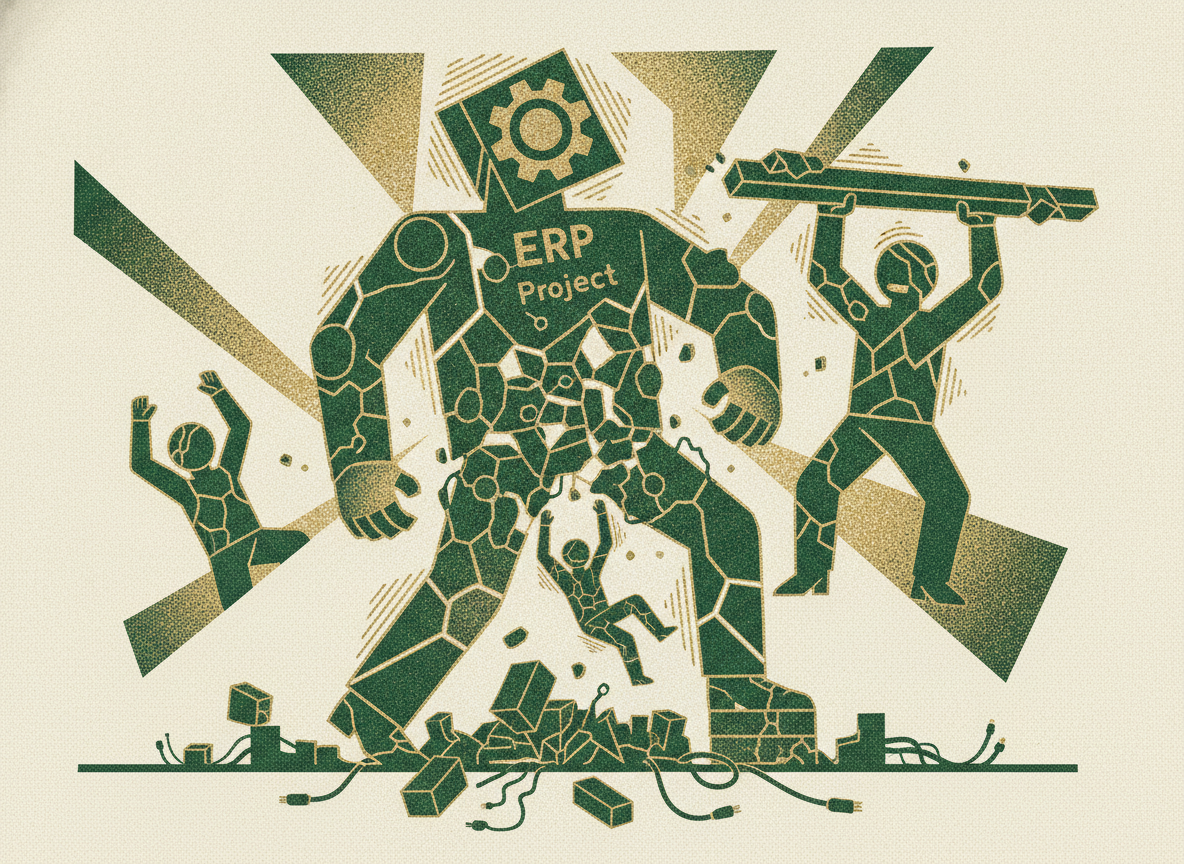
The first thing to understand about ERP implementation is just how often it goes wrong, because that frames the seriousness of the undertaking. ERP implementation failure rates are commonly estimated at 55 to 75%, meaning a majority of projects fail to meet their intended objectives, and in some sectors it is worse, with 73% of discrete manufacturing ERP projects failing, as KPC Team reports. This is not a risk to take lightly; it is the base rate of a project that more often than not disappoints.
Crucially, these failures are rarely about the technology itself. The leading causes are organizational and managerial: inadequate planning and unrealistic scope, insufficient change management leading to poor user adoption, mismatched vendor selection, and data migration problems. In other words, ERP projects fail not because the software does not work, but because the implementation is poorly planned, poorly managed, and poorly adopted. This is actually encouraging for a founder, because it means the failure factors are within your control. The companies that succeed with ERP are not the ones with the best software but the ones that managed the implementation well, addressing the human and planning factors that sink most projects. Understanding that ERP failure is a management problem, not a technology problem, is the key to approaching it correctly and avoiding the disruption that derails so many businesses.

The Real Costs of a Botched Implementation
Understanding what a failed ERP implementation actually costs underscores why getting it right matters so much, because the downside is severe. Failed ERP implementations cost companies an average of $10.6 million, not including the lost productivity, damaged relationships, and competitive disadvantages that can persist for years, as Godlan details. And even projects that do not outright fail routinely blow through their budgets and timelines: most ERP projects exceed their initial budgets by 300 to 400% and experience significant timeline extensions.
These overruns and failures carry a cost beyond the financial, particularly for the data that runs the business. A botched ERP implementation can corrupt or lose financial data, disrupt operations during the transition, and leave the company with a system that does not produce reliable information, which directly undermines reporting and Financial Modeling. Because the ERP becomes the system of record, a failed implementation does not just waste money; it can damage the company's ability to know its own numbers for an extended period. For a smaller company, an implementation that consumes far more time and money than planned, or that fails outright, can be a serious blow to the business. This is why the stakes justify treating the implementation with the rigor it requires, rather than underestimating it as a software installation. The cost of doing it badly is high enough that doing it well is worth real investment.
Plan the Scope Before You Touch the Software
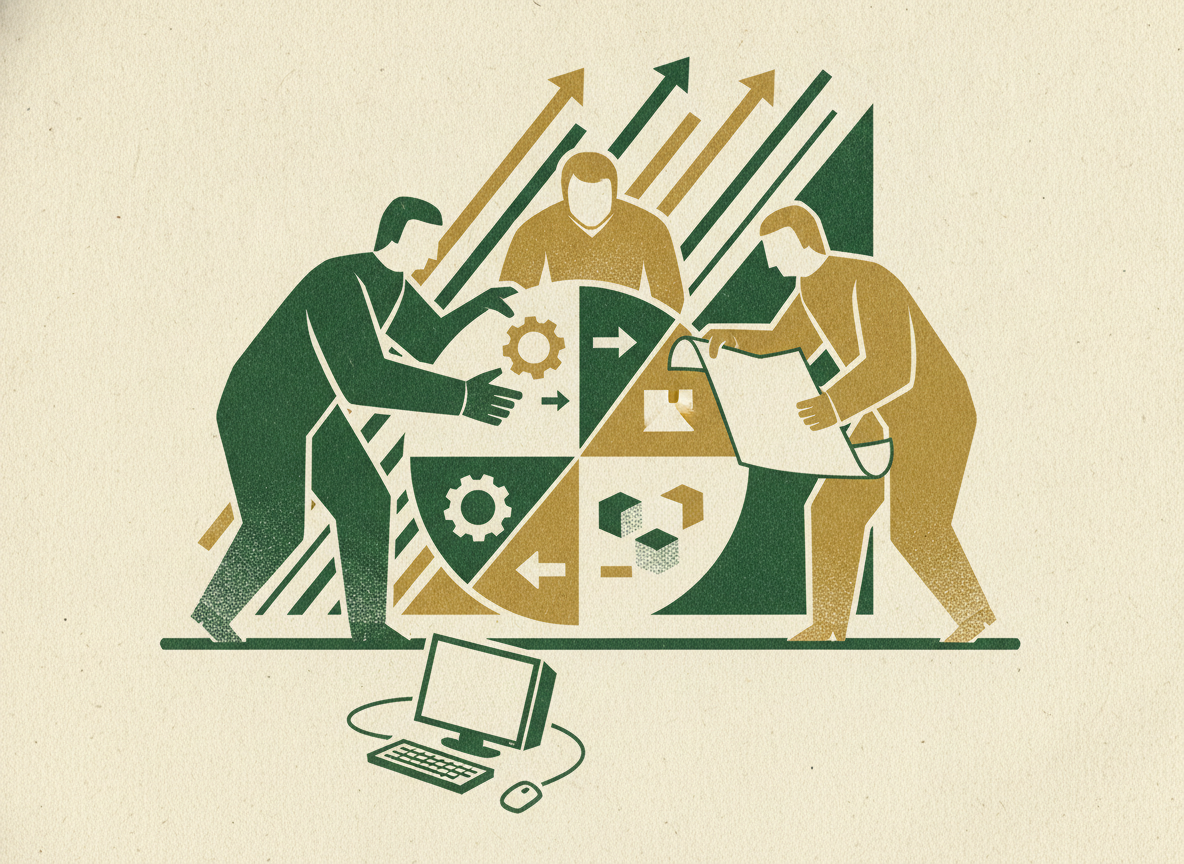
The single most important factor in a successful ERP implementation is rigorous upfront planning, because inadequate planning and unrealistic scope are leading causes of failure. Before touching the software, a company should allocate ample time to define the project scope precisely, set realistic timelines, and conduct a comprehensive needs analysis, as initOS advises. This planning phase determines whether the implementation has a clear target or drifts into the scope creep and unrealistic expectations that sink projects.
Good scoping answers the essential questions before the work begins: what specific problems must the ERP solve, what processes must it support, what does success actually look like, and how long and how much should it realistically take. Defining this clearly prevents the two related failures of vague scope and unrealistic timelines, both of which lead to projects that overrun and disappoint. The needs analysis also informs vendor selection, ensuring the ERP chosen actually matches the business's requirements, since a mismatch between the system and the company's needs is itself a common failure cause. For a founder, resisting the urge to rush into implementation and instead investing in thorough planning is counterintuitive but essential, because the time spent planning is recovered many times over in avoided rework and reduced risk. The ERP projects that succeed are the ones that knew exactly what they were building before they started, which is why the planning phase, unglamorous as it is, is where the implementation is won or lost.

Change Management: The Human Side That Sinks Projects
The factor that derails ERP implementations more than any technical issue is the human one: insufficient change management leading to low user adoption. An ERP changes how people across the company do their work, and if employees are not prepared, trained, and supported through that change, resistance emerges and adoption fails, leaving the company with an expensive system that people work around rather than use, as the field consistently emphasizes. A technically successful implementation that nobody adopts is still a failure.
Change management means preparing the organization for the changes the ERP brings through communication, training, and support, so that people understand why the change is happening and are equipped to work in the new system. This is precisely where smaller companies are most vulnerable: while most large enterprises provide their staff substantial training, only a small fraction of SMEs do the same, and SMEs often lack the internal super users and dedicated project managers needed to drive adoption. A founder implementing an ERP must therefore invest deliberately in the human side, training, communication, and identifying internal champions, rather than assuming people will simply adapt. The temptation is to focus all the attention and budget on the technical implementation and treat training as an afterthought, which is exactly the mistake that produces low adoption and failed projects. Treating change management as a core part of the implementation, not a footnote, is what gets the system actually used, which is the only definition of success that matters.

Data Migration and Phased Rollout
Two final practices substantially improve the odds of a successful implementation: careful data migration and a phased rollout rather than a single overwhelming switch. Data migration is a common stumbling block, with around half of organizations struggling with it, because legacy systems store data in outdated or incompatible formats and the data has often become duplicated, inconsistent, or incomplete over time. Migrating this data carefully, cleaning it, validating it, and testing the migration thoroughly, is essential, because the ERP and all the reporting and Financial Modeling built on it will inherit whatever quality the migrated data has. Garbage migrated in is garbage you will be modeling on for years.
The phased rollout addresses the risk of trying to change everything at once. Rather than one overwhelming overhaul, the better approach is to implement in small, consistent steps, which reduces resistance, builds buy-in, and makes the project manageable instead of daunting, as UpSquare recommends. A phased rollout lets the organization absorb the change in digestible pieces, surface and fix problems on a smaller scale before they affect everything, and build confidence as each phase succeeds. This should be paired with rigorous testing at each stage, unit testing, integration testing, and user acceptance testing, so problems are caught before they reach production. Together, careful data migration and a phased, well-tested rollout dramatically reduce the disruption and risk of the implementation. Combined with thorough planning and serious change management, they are how a company implements an ERP without becoming one of the majority that fail, protecting both the business and the integrity of the data that its Financial Modeling and decision-making depend on.

Frequently Asked Questions
How Often Do ERP Implementations Fail?
Frequently. Failure rates are commonly estimated at 55 to 75 percent, meaning most ERP projects fail to meet their intended objectives, and in some sectors like discrete manufacturing it reaches 73 percent. Crucially, these failures are rarely about the technology; the leading causes are organizational, inadequate planning, poor change management, wrong vendor selection, and data migration problems, which means they are largely within a company's control to avoid.
What Does a Failed ERP Implementation Cost?
A lot. Failed implementations cost companies an average of $10.6 million, plus lost productivity, damaged relationships, and competitive disadvantages that can persist for years. Even projects that do not outright fail commonly exceed their budgets by 300 to 400 percent and overrun their timelines. Because the ERP becomes the system of record, a botched implementation can also corrupt financial data and undermine reporting for an extended period.
What Is the Most Important Factor for ERP Success?
Rigorous upfront planning. Inadequate planning and unrealistic scope are leading causes of failure, so before touching the software, define the project scope precisely, set realistic timelines, and conduct a comprehensive needs analysis. This prevents the scope creep and unrealistic expectations that sink projects, and it informs choosing a vendor whose system actually matches your needs. The implementation is largely won or lost in the planning phase.
How Do You Avoid Disrupting the Business During an ERP Rollout?
Invest in change management and roll out in phases. Prepare employees through training, communication, and support to drive adoption, since low adoption is a top failure cause and SMEs especially under-invest here. Migrate data carefully after cleaning and validating it. And implement in small, consistent steps with rigorous testing at each stage, rather than one overwhelming overhaul, which reduces resistance and lets problems surface on a manageable scale.
References
