
Dynamic Discounting and Early-Payment Programs
- For a company with surplus cash, paying suppliers early in exchange for a discount is one of the highest-return, lowest-risk uses of that cash, a sophisticated Cash Flow Management move.
- Dynamic discounting lets a buyer pay invoices early for a discount that scales with how early they pay, calculated dynamically rather than as a single fixed offer.
- The returns are striking: a 2% discount on "2/10, net 30" terms equals roughly a 37% annualized return, and even a 1% discount delivers about 18%, effectively risk-free.
- It is a win-win. Suppliers get faster cash and avoid external financing, while buyers reduce their cost of goods and earn a high yield on idle cash.
- It differs from supply chain finance: dynamic discounting uses the buyer's own balance sheet, while supply chain finance uses third-party funding.
Most discussions of payment terms focus on holding cash as long as possible, which is right when cash is tight. But for a company sitting on surplus cash earning little in the bank, the opposite move can be far more valuable: paying suppliers early in exchange for a discount. The returns on early-payment discounts are extraordinarily high and essentially risk-free, which makes deploying idle cash this way one of the best investments many companies can make. Dynamic discounting formalizes this into a flexible program that benefits both sides. For sophisticated Cash Flow Management, understanding when and how to pay early is as important as knowing when to pay late. Here is how dynamic discounting and early-payment programs work.

When You Have Cash, Paying Early Is an Investment
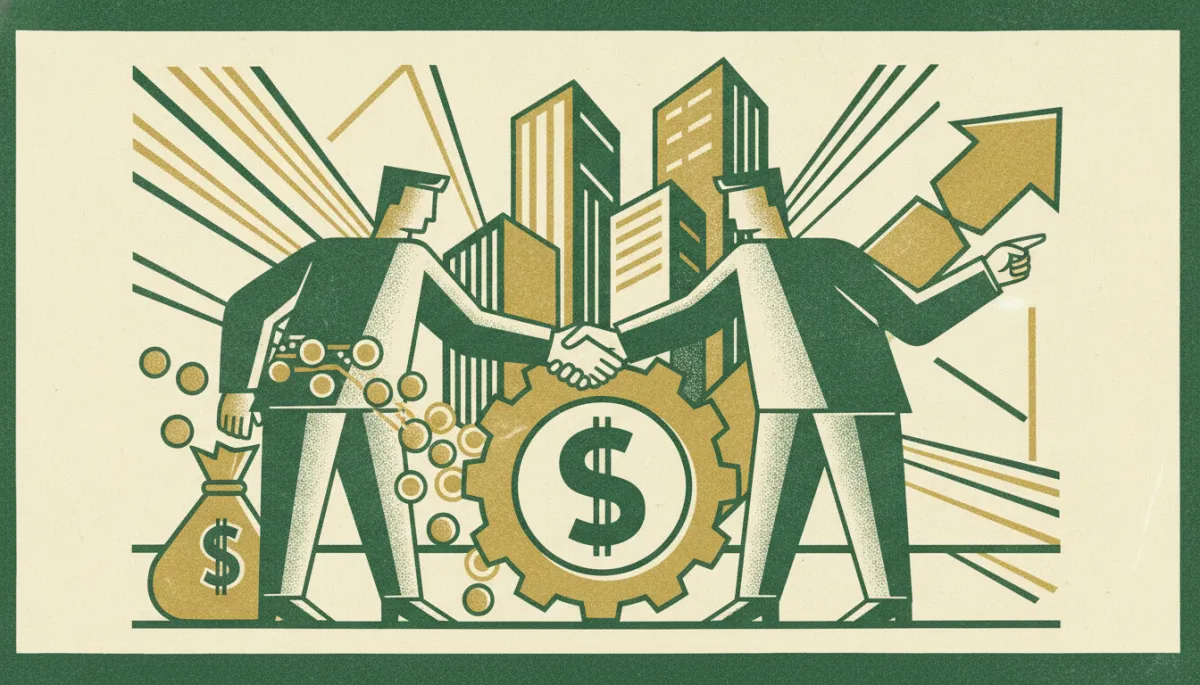
The key insight that unlocks early-payment programs is that, for a company with surplus cash, paying a supplier early in exchange for a discount is not just a payment, it is an investment of that cash at a high rate of return. When you have more cash than you need for operations and it is sitting in a bank account earning a modest yield, using some of it to capture supplier discounts redeploys that idle cash into a far higher return, which is a smart use of Cash Flow Management for a cash-rich company.
This reframes early payment entirely. Whereas a cash-constrained company should hold cash as long as possible and forgo most early-payment discounts, a cash-rich company should view available discounts as investment opportunities competing with its other uses of cash, and the discounts usually win because their effective returns are so high. The buyer funds the early payment from its own balance sheet, effectively investing surplus cash to earn the discount, which typically yields far more than the cash would earn sitting idle, as the field explains. The decision becomes a straightforward comparison: does capturing this discount return more than the next-best use of the cash? For a company with excess liquidity, the answer is almost always yes, because the discount returns dwarf money-market yields. Recognizing that early payment is an investment decision, not just an accounts-payable choice, is the mindset that lets a cash-rich company turn its idle cash into one of its best-returning assets. This is the flip side of the hold-cash-longer discipline, and it applies precisely when the company has cash to spare, making it an important and often overlooked tool in Cash Flow Management.
How Dynamic Discounting Works
Dynamic discounting is the mechanism that formalizes early payment into a flexible program, and understanding how it works clarifies why it is more powerful than a simple fixed discount. Dynamic discounting is a buyer-led arrangement in which the buyer offers to pay a supplier's invoice early in exchange for a discount, where the discount is calculated dynamically based on how many days before the due date the payment is made, as eCapital describes. The earlier the payment, the larger the discount, and it scales smoothly rather than being a single all-or-nothing offer.
The "dynamic" element is what distinguishes it from a traditional fixed discount like "2/10, net 30," which offers one discount for payment by a single date. In dynamic discounting, the discount adjusts continuously with the payment date: pay very early and earn a larger discount, pay somewhat early and earn a proportionally smaller one. For example, a supplier might offer terms where the discount is highest for the earliest payment and reduces as time passes, so if the buyer pays partway through the period, it receives a pro-rated discount calculated for that timing. This flexibility lets the buyer optimize, paying as early as makes sense given its cash position and the return on offer, rather than being forced into a single fixed date. It also lets the buyer deploy whatever surplus cash it has across whichever invoices and timing produce the best returns. For Cash Flow Management, this dynamic structure turns early payment into a flexible, optimizable investment of surplus cash, where the buyer can fine-tune how much cash to deploy and when to maximize the return, which is more sophisticated and more valuable than a rigid fixed-discount arrangement.

The Returns: Risk-Free Double Digits
The reason early-payment discounts are so compelling is the magnitude of their effective returns, which are remarkably high and essentially risk-free, making them better than most other uses of surplus cash. The classic example illustrates it: a 2% discount under "2/10, net 30" terms, paying 20 days early to save 2%, translates to roughly a 37% annualized return, and even a 1% discount delivers about an 18% annualized return, as Phoenix Strategy Group calculates. These are extraordinary returns for what is effectively a risk-free deployment of cash.
The reason the annualized returns are so high is that the discount is earned over a short period, paying just 20 days early to capture 2% annualizes to a very large rate because that 2% is earned 18 times a year. And the return is essentially risk-free, because the buyer is simply paying an obligation it already owes, just earlier, in exchange for a guaranteed discount; there is no market risk, credit risk, or uncertainty about the payoff. This combination, double-digit and often very high annualized returns with essentially no risk, is rare and valuable, far exceeding what surplus cash earns in a money-market account or short-term investment. For a company with idle cash, capturing these discounts is therefore one of the best risk-adjusted returns available to it, which is why sophisticated finance teams actively pursue them. The discounts also directly reduce the buyer's cost of goods sold, improving margins as well as returning cash. For Cash Flow Management, the lesson is that a cash-rich company leaving available early-payment discounts on the table is forgoing exceptional risk-free returns, which is itself a form of poor cash management. Deploying surplus cash to capture these discounts is, for a company that has the cash, simply smart investing.

Why Suppliers Want It Too
A crucial feature of dynamic discounting is that it benefits the supplier as much as the buyer, which is what makes it a sustainable, win-win arrangement rather than one side extracting value from the other. For suppliers, the major advantage is access to faster payment, which is especially valuable for smaller businesses or those with limited cash reserves that would otherwise have to wait for the full payment term, as eCapital notes. By accepting a modest discount in exchange for early payment, the supplier improves its own liquidity without resorting to external financing like factoring or a line of credit, which would cost it money and effort.
This mutual benefit is what makes dynamic discounting durable and relationship-strengthening rather than adversarial. The supplier gains predictable, faster access to cash, improving its working capital and reducing its need for borrowing, while the buyer earns a high return on its surplus cash. Both sides are better off: the supplier values the early liquidity more than the small discount it gives up, and the buyer values the discount return more than holding the cash a few extra weeks. For smaller suppliers in particular, the ability to get paid early on demand, when they need cash, is a genuine financial benefit that can be more valuable than the discount costs them, especially compared to the alternative of expensive external financing. This alignment of interests is why dynamic-discounting programs work and can strengthen the buyer-supplier relationship, as the buyer becomes a source of flexible liquidity for its suppliers. For Cash Flow Management, recognizing that early payment can be structured as a genuine win-win, where the buyer's surplus cash meets the supplier's liquidity need to the benefit of both, elevates it from a simple discount grab into a relationship-building financial arrangement that serves both parties' cash needs.
Dynamic Discounting vs. Supply Chain Finance
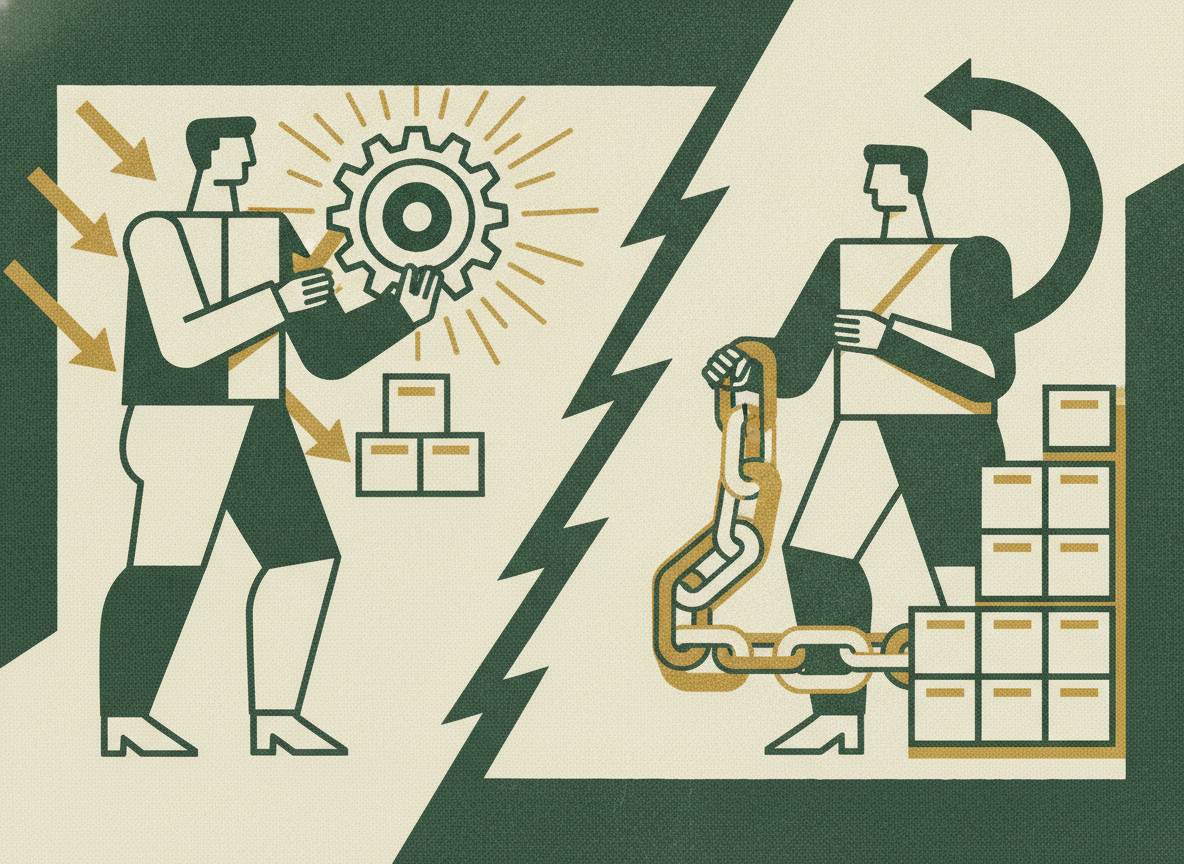
To use early-payment programs well, it helps to understand how dynamic discounting differs from the related tool of supply chain finance, because the two serve different situations depending on the buyer's cash position. The fundamental distinction is the source of funding: dynamic discounting uses the buyer's own balance sheet, the buyer pays the supplier early with its own surplus cash, while supply chain finance uses a third-party funder, typically a bank, that pays the supplier early, with the buyer settling with the funder later, as C2FO explains.
This distinction determines which tool fits which situation. Dynamic discounting is ideal for a buyer with surplus cash, because it lets that buyer earn the high discount returns by investing its own idle cash, keeping the full benefit. Supply chain finance, by contrast, suits a buyer that wants its suppliers paid early but prefers not to use, or does not have, its own cash for the purpose, relying instead on a bank's funding while extending its own payment terms. A company with excess cash should generally prefer dynamic discounting, because capturing the discount returns with its own cash is more valuable than paying a third party to fund the early payments. A company without surplus cash, but wanting to support its suppliers' liquidity, might use supply chain finance instead. Understanding this distinction lets a founder choose the right early-payment tool for the company's circumstances, dynamic discounting to deploy surplus cash for high returns, or supply chain finance to support suppliers without using the company's own cash. For sophisticated Cash Flow Management, knowing both tools and when each applies allows a company to optimize its supplier payments around its actual cash position, capturing exceptional returns when it has surplus cash through dynamic discounting, which is the higher-value option whenever the cash is available.

Frequently Asked Questions
When Does Paying Suppliers Early Make Sense?
When the company has surplus cash earning little in the bank. For a cash-rich company, paying early to capture a supplier discount redeploys idle cash into a far higher return, making it an investment rather than just a payment. A cash-constrained company should hold cash and forgo most discounts, but a cash-rich one should treat available discounts as high-return investment opportunities, which they almost always beat, given how high the effective returns are.
What Is Dynamic Discounting?
It is a buyer-led arrangement where the buyer pays a supplier's invoice early in exchange for a discount calculated dynamically based on how many days before the due date payment is made, the earlier the payment, the larger the discount. Unlike a fixed discount such as "2/10, net 30," it scales smoothly with the payment date, letting the buyer optimize how much surplus cash to deploy and when to maximize the return.
How High Are Early-Payment Discount Returns?
Very high and essentially risk-free. A 2 percent discount on "2/10, net 30" terms, paying 20 days early, equals roughly a 37 percent annualized return, and even a 1 percent discount delivers about 18 percent. The returns annualize so high because the discount is earned over a short period many times a year, and they are risk-free because the buyer is simply paying an obligation it already owes, just earlier, for a guaranteed discount.
How Is Dynamic Discounting Different From Supply Chain Finance?
The funding source. Dynamic discounting uses the buyer's own balance sheet, the buyer pays suppliers early with its own surplus cash and keeps the discount returns. Supply chain finance uses a third-party funder, usually a bank, that pays suppliers early while the buyer settles later. A company with surplus cash should prefer dynamic discounting to earn the high returns itself; one without spare cash might use supply chain finance to support suppliers without using its own cash.
References
