

Cybersecurity as a Finance Issue: The CFO's Role
Published: 2026-03-14 • Estimated reading time: 8 min
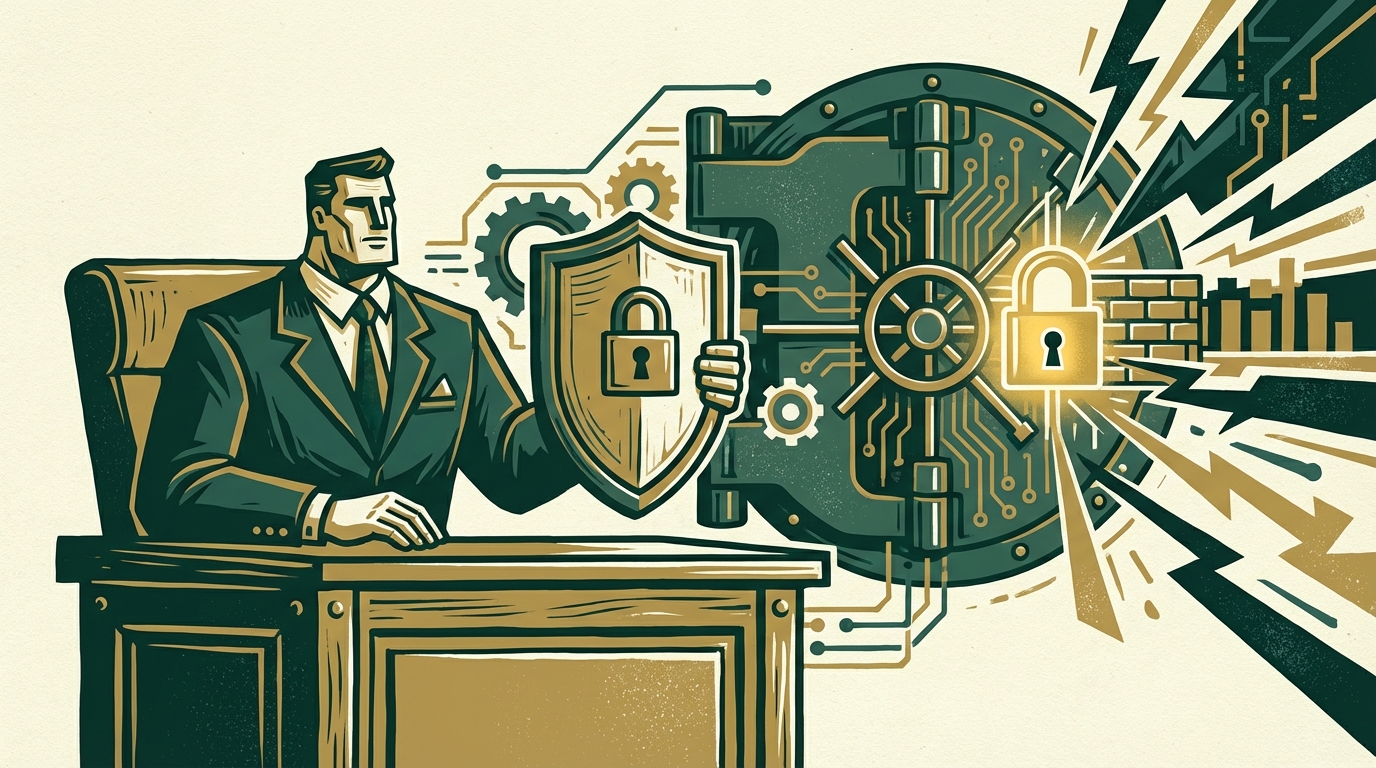
I once sat in a boardroom where the CEO, a brilliant product visionary, turned to his Chief Financial Officer and said, “The CISO handles the cyber stuff. You just tell me if we can afford his new firewall.” Three months later, a single sophisticated phishing email cost them $2.8 million. The firewall didn’t matter. The money was simply gone. That’s when the CEO learned what I’ve been telling my clients for years: cybersecurity isn’t a technology problem with a financial consequence. It’s a financial problem that, sometimes, has a technology solution. Effective financial risk management is now the last, and most important, line of defense.
The game has changed. Hackers aren’t just stealing data; they’re stealing cash. They’re exploiting the trust and processes within your finance department. And the person best positioned to stop them isn’t the one managing servers, it’s the one managing the balance sheet. My team’s research and fieldwork consistently show that CFOs who apply financial discipline to their security posture can slash breach-related costs by an estimated 40-50%. This isn’t about becoming a tech guru; it's about applying the same rigor to digital assets that you do to physical ones.
It's Not Just IT's Problem Anymore
The Chief Financial Officer must treat cybersecurity as a core component of financial risk management because modern cyberattacks directly target a company's financial assets, processes, and reporting integrity. For decades, the C-suite ghettoized cybersecurity. It was a dark art, confined to the IT department, measured in arcane metrics like “vulnerabilities patched” and “threats blocked.” But when an attacker bypasses your tech defenses, they don’t land in a server room—they land in your accounts payable process, your payroll system, and your bank accounts.
The global cost of cybercrime is projected to hit a staggering $12 trillion annually by 2025, according to Cybersecurity Ventures. That’s not a rounding error on a global scale; it’s a direct threat to your company’s solvency. The SEC’s disclosure rules now mean that a material breach isn’t just an operational headache; it’s a public filing, a hit to your stock price, and a potential Sarbanes-Oxley (SOX) compliance failure if the incident reveals weak internal controls over financial reporting.

This is why the conversation between the CFO and the CISO needs to be less about firewalls and more about financial impact analysis. The question isn’t, “Are we secure?” The question is, “What is the financial exposure if this specific process fails, and what controls can mitigate that dollar amount?” It’s a shift from a cost-center mindset to one of security governance and measurable risk reduction.
The CFO's Nightmare: The Seven-Figure Wire 'Mistake'
The most effective financial controls to prevent wire fraud are a strict segregation of duties and multi-person approval protocols, which dismantle the single point of failure that social engineering attacks exploit. Let’s play this out. An email lands in your controller’s inbox. It’s from the CEO, who’s traveling. The tone is urgent, the email signature looks perfect, and it references a confidential M&A deal—Project Nightingale. It instructs the controller to wire $1.2 million to a new consulting partner to close the deal. Don’t tell anyone; it’s sensitive. The controller, eager to please and under pressure, executes the wire. By the time they mention it to the real CEO two days later, the money has vanished into the global financial ether.
This isn’t a failure of technology. It’s a failure of process. It’s a textbook case of Business Email Compromise (BEC), a flavor of attack that, according to the World Economic Forum, has become the number one cyber concern for CEOs. And it’s squarely in the CFO’s domain to fix.
Building a Human Firewall
A human firewall is a set of non-negotiable verification procedures, like mandatory voice confirmation for any payment request that is unusual or exceeds a certain threshold, which short-circuits automated social engineering attacks. You can’t patch a human with software, but you can armor them with process. My team insists on a few simple, unbreakable internal controls:
- Dual Authorization: No single person can ever initiate and approve a wire transfer over a certain amount (say, $10,000). Ever.
- Out-of-Band Verification: Any change to vendor payment details or any unusual payment request must be confirmed via a different communication channel. If the request came by email, you pick up the phone and call a pre-established contact number for that person. You do not call the number in the email signature.
- Rigorous Vendor Onboarding: Your
vendor risk managementprocess must include verifying bank details and ownership when a vendor is first onboarded, making it much harder for an attacker to impersonate a legitimate partner.

These aren’t high-tech solutions. They are classic, boring, and incredibly effective accounting controls applied to a digital world. They are the financial equivalent of looking both ways before you cross the street.
Cyber Insurance: Your Parachute or Just an Expensive Napkin?
Determining the right amount of cyber insurance requires a quantitative financial impact analysis of a potential breach, balanced against the policy's specific exclusions and the strength of your own internal controls, which insurers are now scrutinizing heavily. Buying a cyber insurance policy and sticking it in a drawer is one of the most dangerous forms of security theater I see. Leaders feel covered, but when disaster strikes, they discover the fine print is a minefield of exclusions.
Insurers are getting hammered by claims, and as a result, underwriting has become intensely rigorous. They aren't just taking your word for it anymore. A 2025 trends report from Munich Re confirms that carriers are demanding evidence of mature controls before they’ll even issue a policy. Get a claim denied for a “failure to maintain” clause—where you didn't have the multi-factor authentication you swore you did—and you’re facing the full cost of the breach alone.

Here’s a simplified look at what a CFO needs to understand about their policy:
| You Think It Covers... | The Fine Print Often Says... |
|---|---|
| Ransom Payments | Covered, but only if you get pre-approval, use their designated negotiator, and haven't violated sanctions. |
| Data Recovery | Covers costs for technical experts, but often not the full cost of business interruption during recovery. |
| Regulatory Fines | Covered in some jurisdictions, but often excludes punitive damages or fines deemed “uninsurable” by law. |
| Acts of War | A major point of contention. A state-sponsored attack could be excluded, leaving you with nothing. |
Your policy is a backstop, not a primary defense. Its main value is forcing you to adopt the controls necessary to qualify for it in the first place.
The Ugly Math: Investing in Controls vs. Paying the Ransom
Investing in ransomware controls is a strategic financial decision that yields a higher ROI than paying a ransom, as the total cost of a ransomware attack—including downtime, recovery, and reputational damage—is often many multiples of the ransom demand itself. The moment your screens are locked with a skull and crossbones and a Bitcoin address, the clock starts ticking on your company’s life. The ransom demand might be $500,000, which feels like a gut punch. But the real costs are lurking beneath the surface.
As my colleague, a former FBI cyber agent, often says:
"The moment you’re staring at a ransomware screen is not the time to start drafting your incident response plan. By then, the financial damage is already compounding by the minute."
The average business downtime from a ransomware attack can stretch to a paralyzing 21 days, according to security researchers at RansomwareHelp. What’s the cost of three weeks of zero revenue? Zero production? Zero customer service? For most companies, it’s a figure that dwarfs the ransom demand. In fact, a 2025 analysis shows the total cost of ransomware recovery frequently exceeds $2 million, even before paying the criminals.
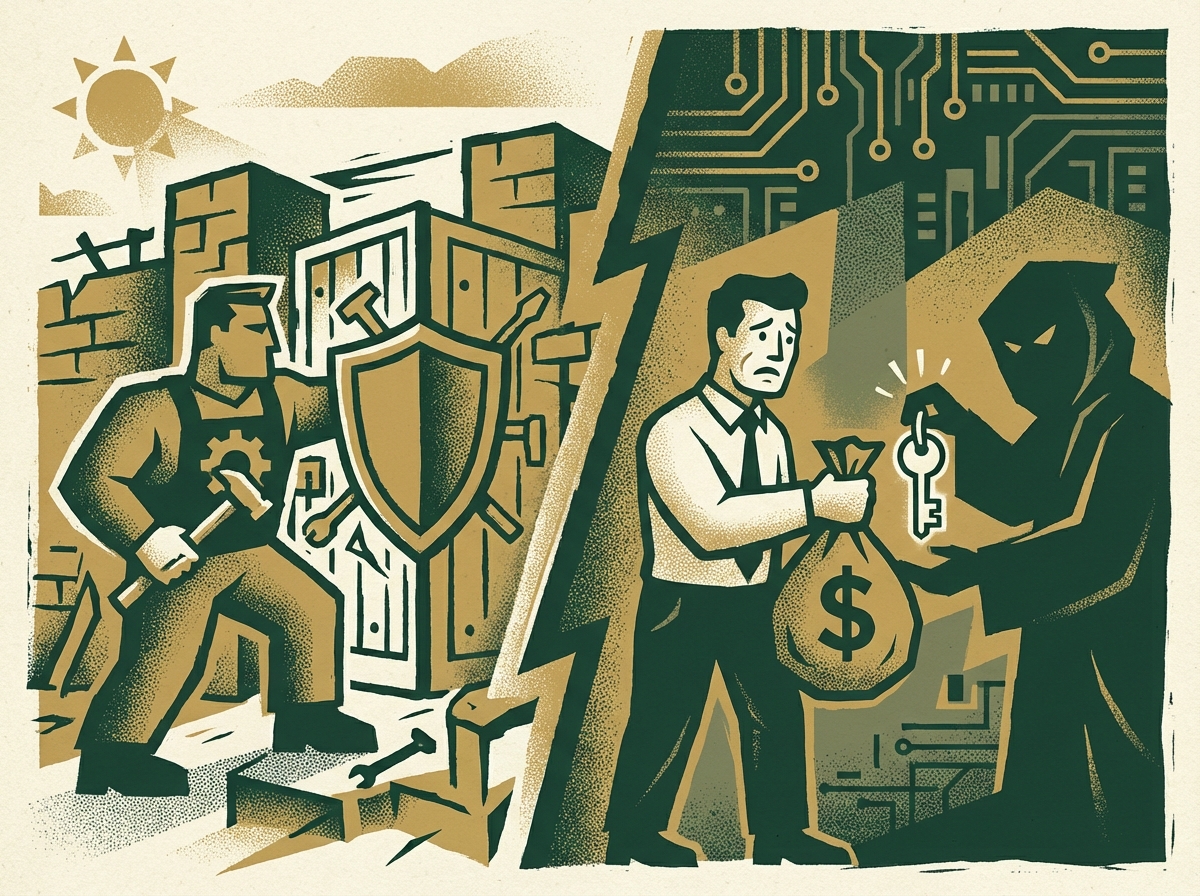
This is a CFO’s calculation. It involves liquidity management (do we even have the crypto on hand?), business continuity planning (how fast can we restore from backups?), and a cold, hard look at the ROI of preventative investment. Spending $100,000 on immutable backups and a tested incident response planning process to avoid a $2 million catastrophe isn't a cost; it's one of the best investments you can make.
The 40% Discount: A CFO’s ROI on Security
CFOs can directly reduce total breach costs by an estimated 40-50% by championing robust financial controls that prevent fraud and accelerate detection, reframing cybersecurity as a high-return investment in financial risk management. The single biggest factor in the cost of a data breach is time. Specifically, the time it takes to identify and contain it. The longer an attacker roams your network, the more damage they do. And the fastest way to detect a financial crime is with a financial control.
Think about it. A dual-authorization requirement for a wire transfer doesn’t just prevent the fraud; the second person’s query (“Hey, did you really ask for this wire to the Cayman Islands?”) is an immediate detection event. Strong internal controls are your tripwires. They turn a potentially catastrophic, month-long breach into a contained, one-hour incident. This is the source of that 40-50% cost reduction. It comes from prevention and rapid containment, which are the natural byproducts of financial discipline. This reframes the entire security budget. It's no longer just an IT expense; it's a financial control program with a measurable ROI, just like your internal audit function or your D&O insurance.
Frequently Asked Questions
Why should the CFO care about cybersecurity?
The CFO must care about cybersecurity because it has become a primary vector for catastrophic financial loss, regulatory penalties, and operational disruption. It is no longer an IT issue but a core component of financial risk management, directly impacting the balance sheet, cash flow, and shareholder value.
What are the financial controls to prevent wire fraud?
Key financial controls include mandatory dual authorization for all fund transfers, out-of-band verification (e.g., a phone call to a known number) for any changes to payment instructions or unusual requests, strict segregation of duties between those who can initiate and approve payments, and a rigorous vendor onboarding and verification process.
How much cyber insurance do I need?
The amount of cyber insurance needed depends on a comprehensive risk assessment that quantifies potential financial losses from various scenarios, including data breach recovery, business interruption, regulatory fines, and legal costs. It's not a one-size-fits-all number; it should be tailored to your company's specific risk exposure, industry, and the value of your digital assets.
