

7 Cash Flow Leaks Hiding in a Profitable $10M Business
- Cash Flow Management is where profitable companies quietly bleed. A business can post a healthy profit on the P&L and still be scraping the bottom of its operating account, because profit is an accounting opinion and cash is a fact. The gap between the two is where the leaks live.
- The seven most common leaks in a $10M business are billing lag, slow collections, loose payment terms, inventory creep, deferred-revenue blind spots, failed-payment (dunning) gaps, and supplier terms left unused. None of them show up as a line on the income statement.
- Most of the money is trapped in receivables. With a median days-sales-outstanding around 46 days and more than half of U.S. B2B invoices overdue, a company doing $10M in revenue can easily have a million dollars sitting in other people's bank accounts.
- The fixes are unglamorous and fast. Tightening a billing cycle, adding a structured collections cadence, and turning on smart payment retries can free six figures of working capital in a quarter without a single new sale.
- Start with a 30-day working capital recovery sprint: measure your cash conversion cycle, attack the one or two leaks costing you the most, and put a weekly cash number in front of the leadership team so it never drifts again.
Leak 1: Billing lag, the gap between finishing the work and sending the invoice

The first leak has nothing to do with customers. It is the time between when you deliver and when you actually send the bill. In a lot of $10M companies, work gets done on Monday and the invoice goes out ten or fifteen days later, once someone reconciles the job, chases an approval, and gets to it. Every one of those days is a day your cash clock has not even started.
The math is brutal because it compounds with everything downstream. If your terms are Net 30 but you invoice a week late, your real terms are Net 37 before the customer does anything wrong. Multiply an average one-week billing lag across a year of revenue and you are financing roughly two percent of your annual sales for free, on behalf of clients who would have gladly paid sooner.
The fix is a same-day or next-day billing rule. Invoice when the work is accepted, not at month-end. Move to milestone or progress billing on longer engagements so cash arrives in stages instead of one lump at the finish. If a manual approval is what holds invoices up, set a dollar threshold under which invoices go out automatically. This is the cheapest working capital you will ever recover, because the money is already yours; you are just asking for it on time.
Leak 2: Slow collections, money that is earned but uncollected
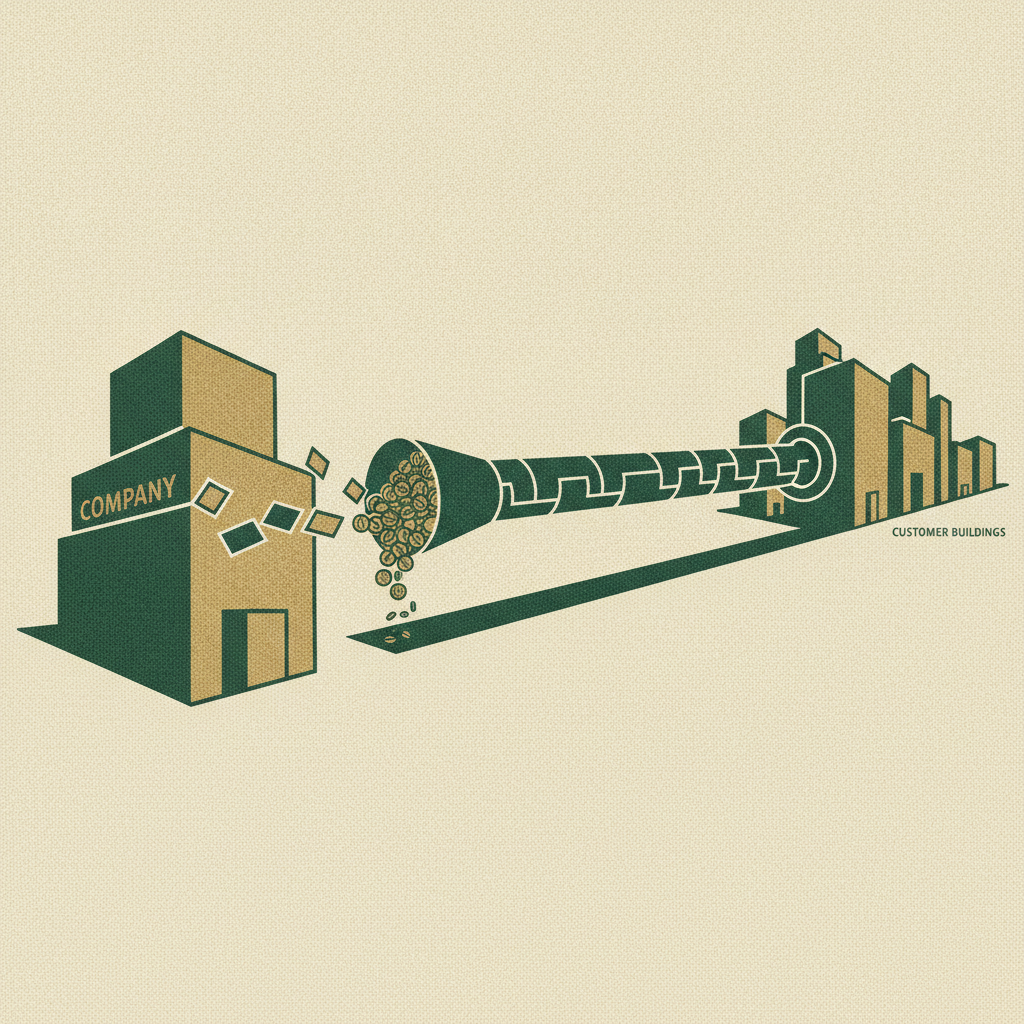
Once the invoice is out, the second leak opens: it does not come back. The benchmark here is sobering. The Hackett Group pegs the median days-sales-outstanding near 46 days, while top performers collect inside 28. More than half of U.S. B2B invoices are paid late, and Atradius found that 44 percent of North American B2B credit sales were paid past terms in 2025, with bad-debt write-offs averaging around 6 percent of receivables.
For a $10M company, the difference between a 46-day DSO and a 32-day DSO is roughly $380,000 in cash pulled back into your account. That is not a financing round. That is just collecting what you already earned, a little faster.
The fix is a collections cadence, not a collections mood. Send a friendly reminder before the due date, not after. Have a named person own the follow-up sequence at day 1, day 7, and day 15 past due. Segment your accounts so your five biggest slow payers get a human call and everyone else gets automated nudges. Collections is not about being aggressive. It is about being reliable, so paying you on time becomes the path of least resistance.
Leak 3: Loose payment terms you never actually decided on
The third leak is the one companies inflict on themselves. Payment terms often are not chosen; they are inherited from whatever the first big customer demanded. Enterprise buyers routinely dictate Net 60 or Net 90, and a mid-market supplier absorbs it because saying no feels like losing the deal. Over time those terms spread across the whole book, and the company is financing its customers without ever deciding to become a lender.
Late payment is not free to you even when you tolerate it. Studies put the average annual cost of late payments near $39,000 per company once you count the borrowing, the chasing, and the write-offs. When more than half your invoices run late by default, that number climbs quickly.
The fix is to treat terms as a pricing decision. Set standard terms and make longer terms cost something, either a higher price or a financing fee, so a customer who wants Net 60 pays for the privilege. Offer a small discount for early or upfront payment where margins allow. Ask new customers for a deposit or milestone payment. You are allowed to have a credit policy. Most $10M companies simply never wrote one down.
Leak 4: Inventory creep, cash frozen on the shelf
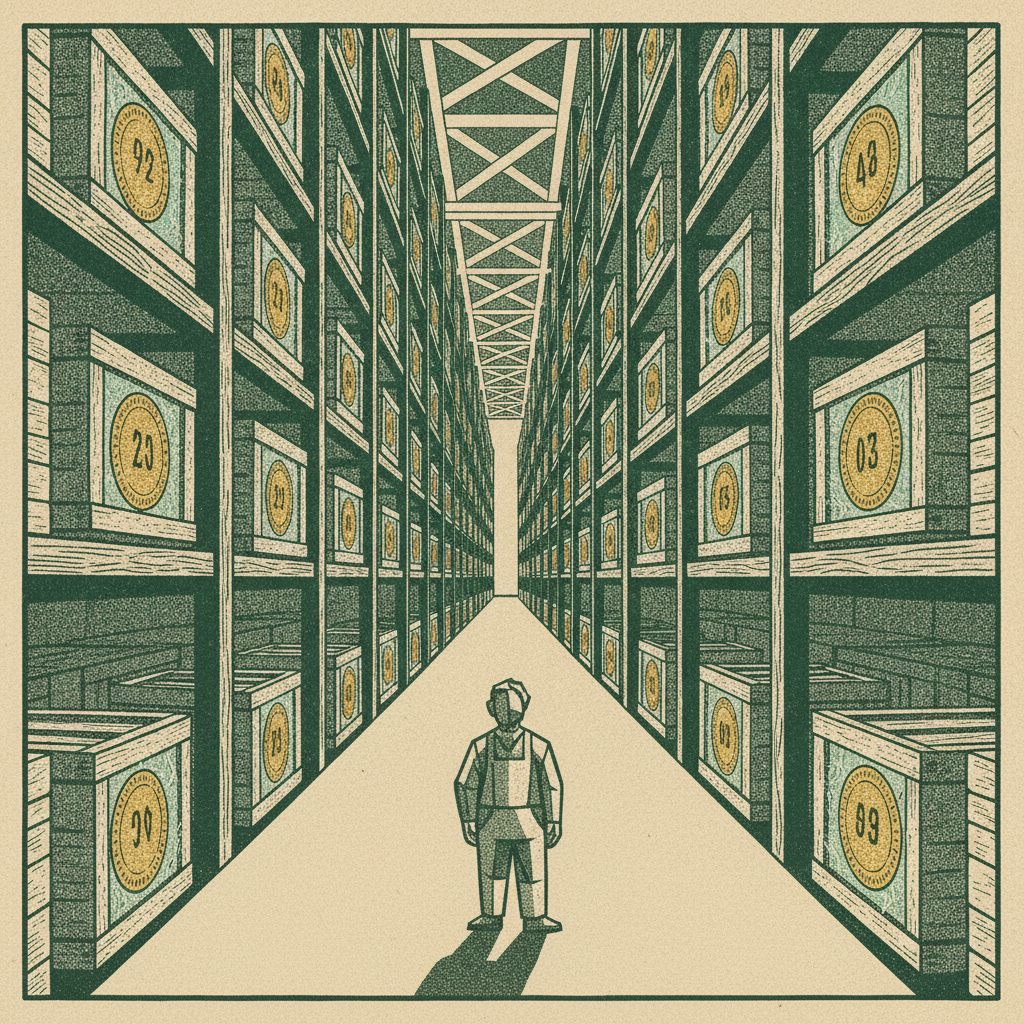
For any company that holds product, the fourth leak sits in the warehouse. Every unit on the shelf is cash you already spent that has not turned back into money. The metric that captures this is the cash conversion cycle, the number of days it takes a dollar to travel from inventory, through a sale, and back into your bank account. Hackett reported the average cash conversion cycle for large U.S. non-financial companies at about 37 days in 2024, and inventory is usually the swing factor.
Inventory creep is sneaky because it looks like prudence. You buy a little extra to avoid stockouts, hold a wider range of SKUs to please every customer, and keep slow movers because writing them off feels like admitting a mistake. Each choice is defensible. Together they park hundreds of thousands of dollars in a building.
The fix is to shorten days-inventory-outstanding deliberately. Identify your slowest 20 percent of SKUs and decide whether they earn their shelf space. Move to smaller, more frequent replenishment on your fast movers. Set reorder points from real demand data instead of gut feel. Cutting even ten days out of your inventory cycle on a product business can release a meaningful slug of cash you did not know you were storing.
Leak 5: Deferred-revenue blind spots
The fifth leak hides in companies that take money up front, then owe the service later, which is common in subscriptions, retainers, and prepaid contracts. Deferred revenue is a wonderful thing for cash flow, because the customer funds you before you deliver. The blind spot is treating that cash as if it were already earned and spendable.
When a business spends deferred revenue as if it were free cash, it quietly borrows from its own future obligations. The month you have to actually deliver the service, or worse, refund a canceled contract, the cash is gone and the work still has to be done. Growth makes this more dangerous, not less, because a fast-growing prepaid book can mask an operation that is not actually funding itself.
The fix is to separate what you have collected from what you have earned. Track deferred revenue as the liability it is, and hold a reserve against the obligations it represents. Time your billing so renewals and prepayments land ahead of your heaviest delivery costs. Used deliberately, upfront billing is one of the most powerful cash levers a company has. Used carelessly, it is a loan you forgot you took.
Leak 6: Dunning gaps, the payments that fail silently
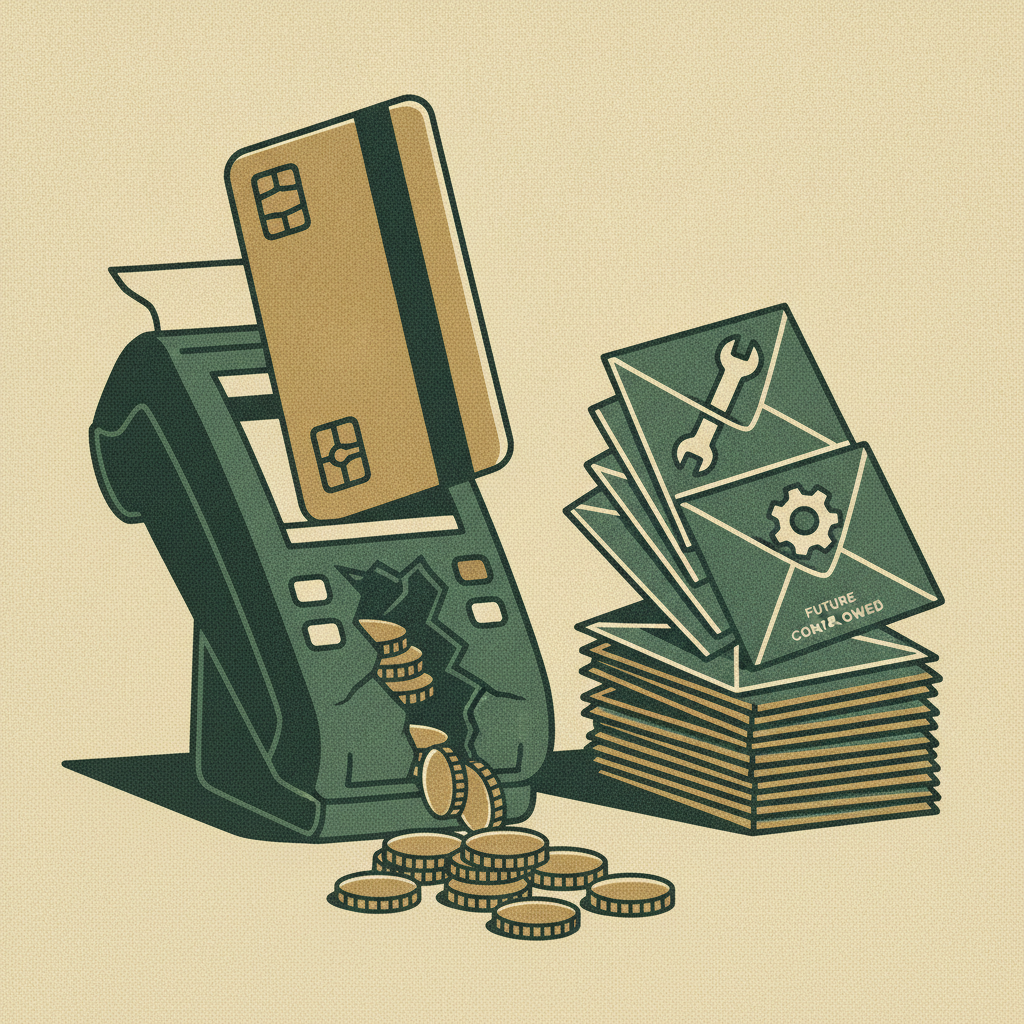
For any business with recurring or card-based billing, the sixth leak is the one nobody watches: payments that simply fail. A card expires, a bank declines a charge, and the customer never even knows. This is involuntary churn, and it accounts for an estimated 20 to 40 percent of all subscription losses. Recurly estimated that failed subscription payments cost businesses on the order of $129 billion in 2025.
What makes this leak worth fixing is that most of it is recoverable. The industry median recovery rate on failed payments sits near 48 percent, but layered programs that combine smart retries with email and SMS reminders push recovery to 70 to 85 percent among top performers. The gap between a basic setup and a good one is real money you already sold and simply did not collect.
The fix is a proper dunning system. Turn on intelligent retry logic that re-attempts declined charges at smart intervals instead of once. Add a sequence of reminders across email and text before a subscription lapses. Prompt customers to update expiring cards before they fail. This is revenue you have already earned. Recovering it is closer to plugging a hole than making a sale.
Leak 7: Supplier terms you paid for and never used
The last leak runs in the other direction, through what you pay. Suppliers often offer terms that are worth real money, and companies leave them on the table by default. The classic example is 2/10 net 30, a 2 percent discount for paying within 10 days instead of 30. Taken consistently, that discount works out to roughly a 37 percent annualized return, which is a better use of a spare dollar than almost anything else on your balance sheet.
The mirror image also matters. Days-payable-outstanding, the average time you take to pay suppliers, sits near 40 days in many industries, and paying earlier than you need to hands your cash to vendors before you have to. The trick is to be deliberate on both sides: capture the discounts that beat your cost of capital, and use the full term everywhere a discount is not on offer.
The fix is to make accounts payable a decision, not a reflex. Flag every early-payment discount and take the ones that beat your borrowing rate. Where there is no discount, pay on the last good day, not the first. If your AP process is too slow to hit tight discount windows, that slowness is quietly costing you the best return in the building.
A 30-day working capital recovery plan

You do not fix all seven at once. You measure, you rank, and you attack the biggest leak first.
In week one, calculate your cash conversion cycle and your DSO, and pull a simple aging report of who owes you what. Most companies have never looked at these numbers side by side, and the worst leak usually announces itself immediately.
In week two, attack the top one or two. If receivables are the problem, stand up a collections cadence and a same-day billing rule. If inventory is the problem, cull the slow SKUs and reset reorder points. Pick the leak with the most cash behind it and go.
In week three, tighten the systems that let money slip: turn on payment retries, write down a credit policy, and audit your supplier terms for discounts you are missing.
In week four, make it permanent. Put a single weekly cash number in front of the leadership team, a rolling thirteen-week view of cash in and cash out, so a leak can never quietly reopen. Cash Flow Management is not a project you finish. It is a number you watch.
None of this requires a new product, a price increase, or a fundraise. The money is already yours. It is sitting in a billing queue, a slow-paying account, a full warehouse, or a failed charge. The work is going and getting it.
Frequently Asked Questions
Why is my company profitable but cash poor?
Because profit and cash measure different things. Profit records a sale when you make it; cash records it when the money actually arrives. If your customers pay in 46 days, your inventory sits for weeks, and some invoices go out late, you can earn a real profit and still have an empty account. The profit is trapped in receivables, inventory, and timing gaps, not missing.
How do you find cash flow leaks?
Start with your cash conversion cycle and days-sales-outstanding, then compare them to your industry benchmarks. Pull an accounts-receivable aging report to see who is slow, review your inventory for slow-moving SKUs, and check whether recurring payments are failing. The leaks live in the gaps between finishing work, billing for it, and collecting the cash, so measure each stage.
How do you reduce days sales outstanding?
Invoice the same day you finish the work, send reminders before the due date, and run a consistent follow-up cadence at 1, 7, and 15 days past due. Give your biggest slow payers a human call and automate the rest. Set clear credit terms and make longer terms cost something. Moving from a 46-day to a low-30s DSO on $10M in revenue can free several hundred thousand dollars in cash.
References
- Growfin, "2025 DSO Benchmarks & Cash Flow Calculator."
- The Kaplan Group, "54 Statistics on B2B Payment Delays."
- SMB Compass, "82% of Small Businesses Fail from Cash Flow: The Data."
- J.P. Morgan, "Understanding and Optimizing Your Cash Conversion Cycle."
- Phoenix Strategy Group, "How Payment Terms Impact Cash Flow During Growth."
- HighRadius, "2/10 Net 30 Early Payment Discount: Formula & Examples."
- Phoenix Strategy Group, "How Early Payment Discounts Impact Working Capital."
- Slicker, "The $129 Billion Problem: Cutting 2025 Involuntary Churn."
- ProsperStack, "Subscription Dunning: Recover 80% of Failed Payments."
