

Burn Rate and Runway: The Numbers That Set Your Deadline
- Burn rate and runway are the two numbers that set your real deadline, and Cash Flow Management for any venture-backed company starts with knowing them cold.
- Gross burn is everything you spend; net burn is spending minus revenue. Runway is simply cash on hand divided by net burn, the months until zero.
- The 2026 bar has risen: investors now expect 24 to 30 months of post-funding runway, and companies holding 12+ months have roughly 3.5x better survival odds than those under six.
- Efficiency is judged by burn multiple, net burn divided by net new ARR, and the threshold has tightened to below 1.0x for Series A and beyond.
- You extend runway by widening the gap between burn and revenue, not just by cutting, and ideally before you are forced to.
Every founder has a deadline, whether they have calculated it or not. It is the day the bank account hits zero, and the two numbers that determine it, burn rate and runway, are the most important figures in early-stage Cash Flow Management. Knowing them is not optional; it is the difference between steering deliberately and discovering your deadline by surprise. In 2026, with fundraising slower and investors demanding more cushion, the math matters more than ever. Here is how to calculate burn and runway correctly, what the current benchmarks are, and how to extend your lifeline.
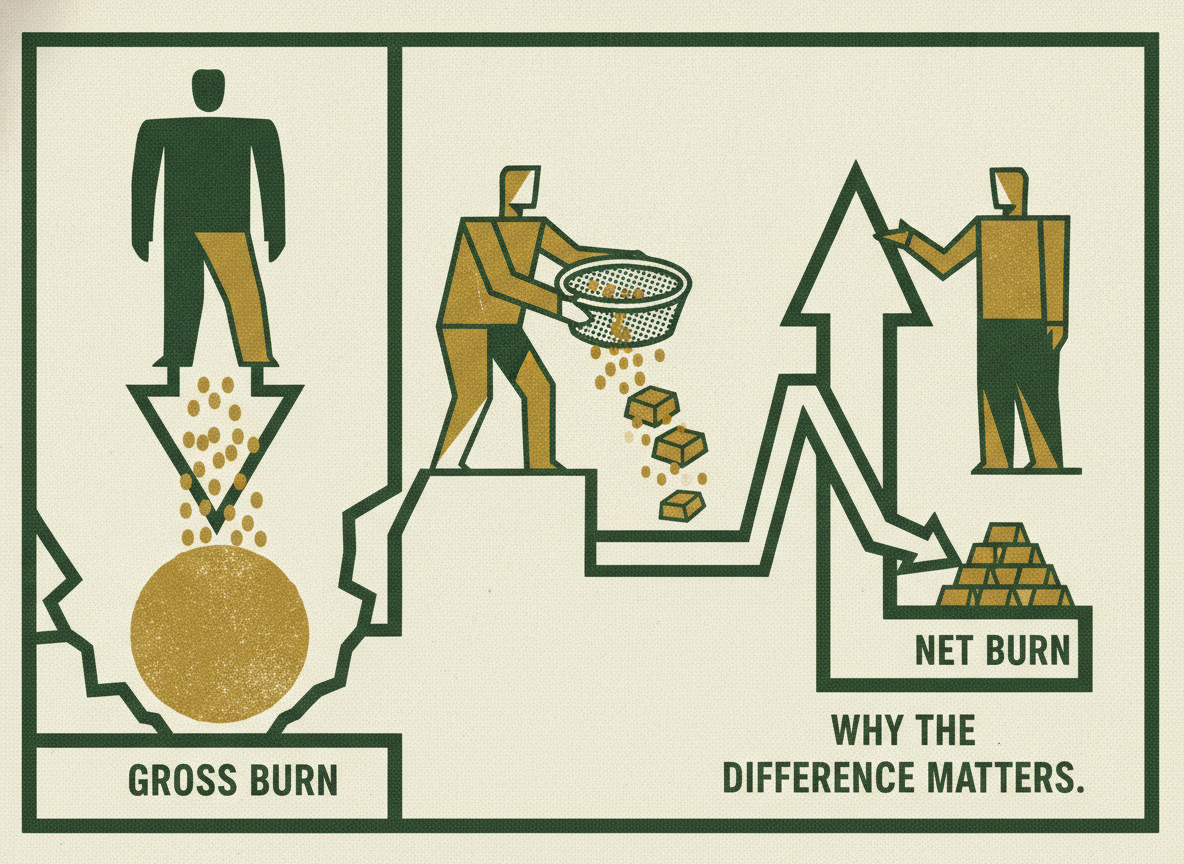
Gross Burn, Net Burn, and Why the Difference Matters
There are two burn rates, and confusing them leads founders to misjudge their runway. Gross burn is the total cash you spend each month regardless of revenue. Net burn is that spending minus the revenue you bring in, so a company spending $150,000 a month while earning $50,000 has a net burn of $100,000, as Jumpstart Partners lays out. Net burn is the number that actually drains your bank account, so it is the one runway is built on.
The distinction matters for decisions, not just definitions. Gross burn tells you your cost base, useful for understanding what cutting expenses can do. Net burn tells you your true cash consumption, which is what revenue growth improves. A company can have a high gross burn and a low net burn if revenue is strong, which is a very different and healthier situation than the same gross burn with no revenue. Good Cash Flow Management watches both: gross burn to manage the cost structure, net burn to manage survival. Reporting only one hides half the picture.

Calculating Your True Runway
Runway is cash on hand divided by net burn, and it tells you how many months until zero at your current rate. With $1.5 million in the bank and a $100,000 net monthly burn, your runway is 15 months, per Jumpstart Partners. The formula is simple, but the inputs deserve scrutiny, because a runway number built on optimistic assumptions is worse than no number at all.
The trap is using a single, best-case burn figure. Real burn varies, and revenue, which reduces net burn, is uncertain. A more honest approach calculates runway under a few scenarios: a base case, and a downside where revenue comes in light and burn runs a bit hot. That range tells you your true decision deadline, the point by which you must have raised, cut, or reached profitability. As benchmarks go, the median pre-Series A SaaS company burns about $175,000 a month and a Series A company around $450,000, according to Kruze Consulting's 2025 data referenced across the field, but your own number is the one that sets your clock. Calculate it conservatively and update it every time the inputs move.
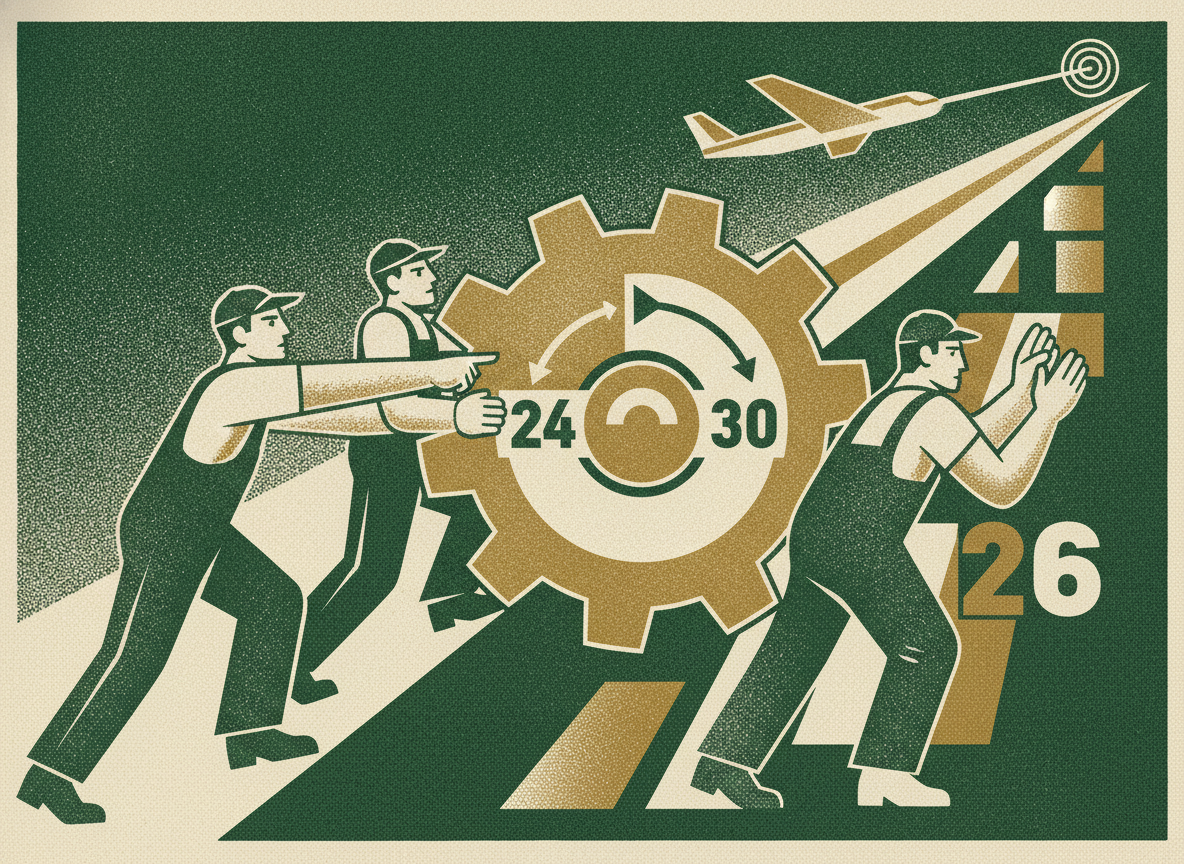
The 2026 Runway Target: 24 to 30 Months
The amount of runway considered safe has climbed, and 2026 expectations are higher than founders raised in easier years assume. Investors now expect 24 to 30 months of post-funding runway, reflecting how much longer fundraising takes in the current market. The cushion that felt generous in 2021 is thin today, because the next round is further away and less certain.
The survival data backs the higher bar. Companies maintaining 12 or more months of runway have roughly 3.5x better survival odds than those operating under six months, per First Round Capital's 2025 research cited widely in the field. Runway is not just a comfort metric; it is directly correlated with whether the company lives. The practical implication for Cash Flow Management is to plan your raise and your burn so that you land each round with enough runway to reach the next milestone plus a real buffer, rather than raising just enough to limp to the next conversation. In a slow market, runway is leverage and survival at once.
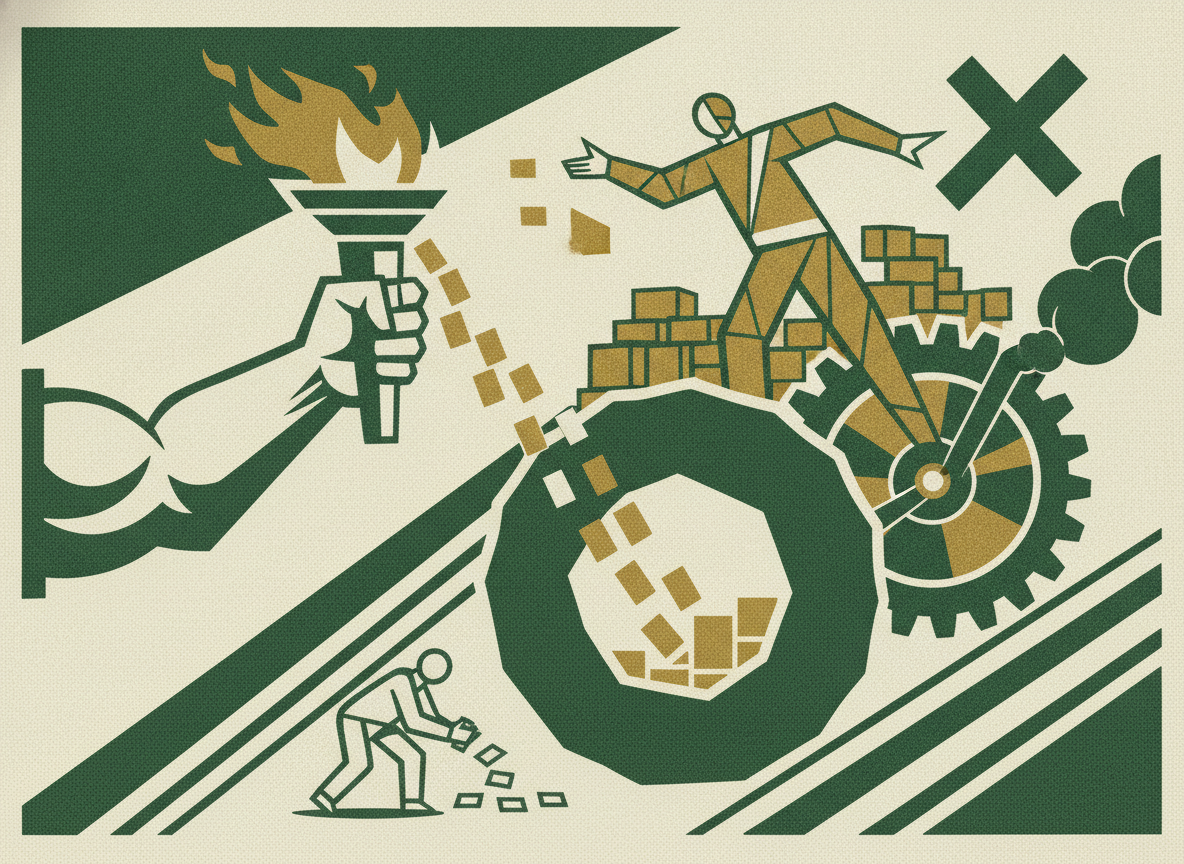
Burn Multiple: Are You Spending Efficiently?
Runway tells you how long you last; burn multiple tells you whether your spending is actually buying growth. Popularized by Bessemer Venture Partners, the burn multiple is net burn divided by net new ARR, so it measures how much cash you consume to add a dollar of recurring revenue. A burn multiple of 1.0x means you burned a dollar to add a dollar of ARR; lower is better.
The threshold has tightened sharply. What was acceptable at below 2.0x in 2021 is now expected below 1.0x for Series A and beyond, and the benchmarks reflect stage: seed companies average around 3.2x given early dynamics, while Series B companies average about 1.4x as they optimize unit economics, per Bessemer's 2025 data. The point for founders is that growth alone is no longer enough; efficient growth is the standard. A company burning heavily to post impressive ARR gains will struggle to raise if its burn multiple is high, because investors now read that as buying growth it cannot sustain. Watching burn multiple alongside runway is how modern Cash Flow Management judges not just survival but the quality of the spend.

Extending Runway Without Stalling Growth
Extending runway means widening the gap between what you spend and what you earn, and the smartest moves do it without killing the growth you are funding. The two levers are obvious but unequal. Cutting costs works immediately and is fully in your control, but cut too deep and you starve the engine. Growing revenue reduces net burn durably, but it takes time and is less certain. The art is to trim the spending that is not producing growth while protecting the spending that is.
Start with the spend that fails the efficiency test: tools, headcount, and programs that are not visibly moving the metrics that matter. That is muscle-sparing cost reduction, it extends runway without weakening the parts of the business driving growth. Then push on the revenue side: accelerate collections, raise prices where you can, and focus sales on the most efficient channels to lower your burn multiple. The timing rule is to act before you are forced to. A founder who extends runway with nine months left has options; one who waits until three months left is cutting in a panic and negotiating from weakness. Disciplined Cash Flow Management treats runway as something you manage continuously, not a number you check when the account looks low.

Frequently Asked Questions
What Is the Difference Between Gross Burn and Net Burn?
Gross burn is the total cash you spend each month regardless of revenue, while net burn is that spending minus revenue. A company spending $150,000 and earning $50,000 has a net burn of $100,000. Net burn is what actually drains your bank account and what runway is calculated from, while gross burn reflects your cost base. Tracking both gives the full picture of cash consumption.
How Do You Calculate Runway?
Runway equals cash on hand divided by net burn, giving the number of months until your account reaches zero. With $1.5 million in cash and $100,000 net monthly burn, runway is 15 months. Calculate it under a base case and a conservative downside rather than a single optimistic figure, since that range reveals your true decision deadline, the point by which you must raise, cut, or reach profitability.
How Much Runway Should a Startup Have in 2026?
Investors now expect 24 to 30 months of post-funding runway, reflecting longer fundraising timelines. Survival data supports the higher bar: companies with 12 or more months of runway have roughly 3.5 times better survival odds than those under six months. Plan your raise and burn so you land each round with enough to reach the next milestone plus a real buffer.
What Is a Burn Multiple and What Is a Good One?
Burn multiple is net burn divided by net new ARR, measuring how much cash you spend to add a dollar of recurring revenue. Lower is better, and the threshold has tightened to below 1.0x for Series A and beyond, versus below 2.0x in 2021. Benchmarks vary by stage, with seed around 3.2x and Series B near 1.4x. It signals whether your growth is efficient, not just fast.
References
