

Budgeting a Hiring Plan You Can Actually Afford
- Headcount is the biggest line in most budgets, which makes the hiring plan the single most consequential piece of a company's Strategic Financial Planning.
- Founders systematically underestimate the cost of a hire. Fully-loaded cost runs 20 to 30% above base salary, so a $100,000 hire really costs about $125,000.
- Every hire should tie to a revenue driver, so you know what each role is meant to produce before you extend the offer.
- New hires do not contribute immediately. Build in a 3 to 6 month ramp before counting on them, and budget for the gap.
- Build the hiring plan against your runway, sequencing hires so each one's cost is justified by what it produces and the cash holds.
For most companies, payroll is the largest single expense, which means the decision of how many people to hire, when, and for what is the most important financial decision a founder repeatedly makes. Get it right and headcount drives growth while the company stays solvent; get it wrong and a few premature hires burn the runway that would have funded the business to profitability. A disciplined hiring plan is therefore at the center of Strategic Financial Planning, not a separate HR exercise. Here is how to budget a hiring plan you can actually afford, with the real costs and the timing built in.

Headcount Is Your Biggest Budget Decision
In most companies, employee compensation is the single biggest item in the operating budget, which is why the hiring plan deserves more rigor than any other budget decision. As SignalFire puts it, managing headcount is the most impactful thing founders can do to preserve runway while driving growth, and the difference between success and failure often comes down to clarity and discipline about how many people to hire, when, and for which roles. Every other budget line is usually smaller and more reversible than a hire.
This matters because hires are sticky and expensive in both directions. Adding a person commits the company to a large recurring cost that is painful to reverse, while not adding the right person at the right time can leave the company unable to capitalize on growth. The hiring plan is where these trade-offs get made, and making them well requires treating headcount as a financial decision tied to the company's revenue and runway, not just a staffing decision driven by which team is loudest about being understaffed. Putting the hiring plan at the center of Strategic Financial Planning, with the same discipline you would apply to any major capital decision, is the starting point, because no other budget decision has as much power to determine whether the company thrives or runs out of cash.
The Fully-Loaded Cost Most Founders Underestimate
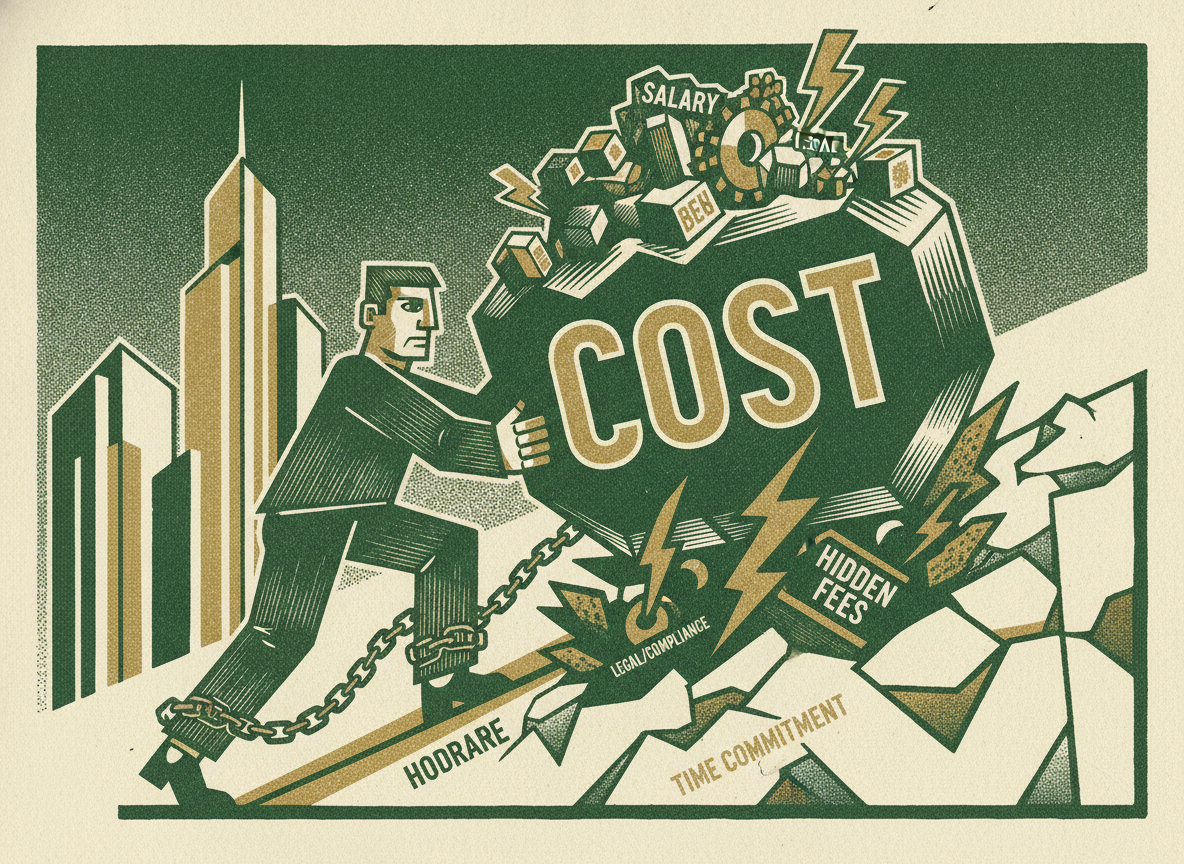
The first discipline of a sound hiring plan is budgeting the true cost of a hire, which is consistently higher than the salary founders fixate on. Fully-loaded cost runs 20 to 30% above base salary once you add employer payroll taxes, health insurance, retirement contributions, and workers' compensation, so hiring someone at $100,000 actually costs the company closer to $125,000, as Forecastr details. Budgeting only the base salary understates the real commitment by a quarter or more.
The fully-loaded number often includes even more than payroll add-ons. Beyond taxes and benefits, the true cost of a hire frequently includes bonuses, equity, and allocated overhead like software, equipment, and facilities, all of which scale with headcount. A company that plans its hiring against base salaries alone will find its actual payroll expense materially higher than budgeted, which erodes runway faster than expected. Building the hiring plan on fully-loaded costs, base plus the 20 to 30% in mandatory additions plus the overhead each new person requires, is essential to Strategic Financial Planning that holds up. It is the difference between a hiring plan that matches reality and one that quietly runs the company short, because the gap between budgeted salary and actual cost compounds across every hire on the plan.

Tying Every Hire to a Revenue Driver
The most important discipline in a hiring plan is connecting every hire to a specific purpose, ideally a revenue driver, so you know what each role is meant to produce before you commit to it. As Forecastr frames it, headcount planning ties every hire directly to a revenue driver, so you know what you are buying before you extend an offer. A sales hire should connect to a revenue target, an engineering hire to a product capability that drives growth, and so on, with each role's expected contribution made explicit.
This discipline prevents the most common hiring mistake: adding people because a team feels stretched rather than because the role will produce a justifiable return. When every hire is tied to a driver, the hiring plan becomes a set of investments, each with an expected return, that can be evaluated and sequenced rather than a wish list of headcount. It also forces honesty about which hires actually move the business versus which merely relieve pressure, a distinction that matters enormously when cash is finite. Roles that do not connect to a clear driver, revenue, a critical capability, a genuine operational necessity, get scrutinized harder, which is exactly right. Tying hires to drivers is what turns the hiring plan from a staffing request into a piece of real Strategic Financial Planning, where each dollar of payroll is spent to produce something specific.

The Ramp: When a Hire Actually Pays Off
A subtlety that wrecks many hiring budgets is the ramp: new hires do not contribute from day one, and budgeting as if they do creates a cash gap. A new hire typically needs a 3 to 6 month ramp before they are fully productive and you can count on them for their intended output, as Forecastr advises building in. During that ramp, you are paying the full cost while receiving partial contribution, which means the hire is a net cash drain before it becomes a net contributor.
Factoring the ramp into the plan changes both the timing and the cash math. A revenue-generating hire, a salesperson, for instance, costs money for months before they close enough to cover their own cost, so the plan must account for that lag rather than assuming the hire pays for itself immediately. This affects sequencing: you cannot stack many ramping hires at once without absorbing a large combined drain during their overlapping ramp periods. Budgeting the ramp, paying full cost for partial output for the first several months, then projecting when each hire crosses into paying for itself, is what keeps the hiring plan honest about cash. Founders who skip this discover that a wave of hires they thought they could afford burns far more runway than expected, because they counted on contribution that arrives months later than the cost. Building the ramp into the Strategic Financial Planning around headcount is what prevents that surprise.

Building the Plan Against Your Runway
The final step is to assemble all of this, fully-loaded costs, revenue-driver justification, and ramp timing, into a hiring plan tested against your actual runway, so the plan is one you can truly afford. A structured hiring plan connects your growth targets to your financial reality, projecting when each new salary starts paying off with the ramp factored in, and that discipline is what keeps cash flow positive while you scale, per Forecastr. The plan is not just a list of roles; it is a cash flow projection of what those roles cost and produce over time.
Building it against runway means sequencing the hires so the cash never runs out. Some hires are urgent and justify their drain immediately; others can wait until earlier hires have begun contributing or revenue has grown to support them. The plan should show, month by month, what payroll costs and what the business can afford, ensuring that the cumulative cost of the planned hires, including their ramp periods, stays within the runway. This is where revenue per employee and similar efficiency benchmarks help, by indicating whether your planned headcount is in line with the revenue it should support. The result is a hiring plan that is ambitious enough to drive growth but disciplined enough to remain solvent, which is the entire goal. For a founder, this is precisely the kind of analysis a fractional CFO brings, turning hiring from a series of pressured, one-off decisions into a deliberate, affordable plan, the most consequential output of Strategic Financial Planning.

Frequently Asked Questions
Why Is the Hiring Plan So Important Financially?
Because compensation is usually the single biggest item in the operating budget, making how many people to hire, when, and for what the most consequential repeated financial decision a founder makes. Hires are large, sticky, recurring commitments that are painful to reverse, so getting headcount right preserves runway while driving growth, and getting it wrong can burn the cash that would have funded the company to profitability.
What Is the True Cost of Hiring an Employee?
Fully-loaded cost runs 20 to 30 percent above base salary once you add employer payroll taxes, health insurance, retirement contributions, and workers' compensation, so a $100,000 hire really costs about $125,000. It often includes more, bonuses, equity, and allocated overhead like software, equipment, and facilities. Budgeting only the base salary understates the real commitment by a quarter or more and erodes runway faster than expected.
Why Should Every Hire Tie to a Revenue Driver?
So you know what each role is meant to produce before you commit to it. Tying hires to drivers, a sales hire to a revenue target, an engineering hire to a growth-driving capability, turns the hiring plan into a set of investments with expected returns rather than a wish list. It also forces honesty about which hires move the business versus which merely relieve pressure, which matters enormously when cash is finite.
How Should You Account for a New Hire's Ramp?
Build in a 3 to 6 month ramp before counting on a hire for full output, because you pay full cost while receiving partial contribution during that period. This affects sequencing, since stacking many ramping hires at once creates a large combined cash drain. Budget the ramp explicitly and project when each hire crosses into paying for itself, so the plan reflects the real cash gap between cost and contribution.
References
