

Banking Covenants: The Silent Killer of Growth
Published: 2026-03-06 • Estimated reading time: 9 min
I sat across from a CEO last month—let’s call him David—whose $30 million tech company was on the verge of implosion. It wasn’t a product failure or a sales slump that had him white-knuckling his coffee cup. It was a single line item in his credit agreement, a banking covenant he’d skimmed over a year ago. His company was growing so fast it had become too successful, burning through working capital and tripping a wire that put his entire credit facility into default.
This isn’t a rare story. In my work, I see it constantly. Founders, laser-focused on growth, treat their loan agreement like the iTunes terms and conditions. They scroll to the bottom, sign, and forget. But buried in that legalese is a set of rules that can halt your company’s momentum faster than a market crash. This isn’t just about making your payments on time; it’s about a sophisticated game of financial risk management where the rules are written by the bank.
The Fine Print You Ignored
Loan covenants are specific performance requirements and restrictions that a lender imposes on a borrower as a condition of the loan. Think of them as the bank’s early warning system, designed to trigger an alarm long before you actually miss a payment. They exist to protect the lender’s capital by ensuring your business operates within a certain band of financial health, mitigating their default risk.

Banks aren’t your partners; they are your counterparties. Their primary job is not to fund your dream but to get their money back, with interest. Covenants give them the right to intervene if they see you taking on too much risk, whether that’s a dip in profitability, an increase in leverage, or a major change in the business. The global outlook for leveraged finance suggests that lenders are continuing to tighten these very requirements, with a PineBridge Investments report noting a more cautious and selective credit environment for 2026.
What are the most common banking covenants in 2026?
The most common banking covenants today are financial metrics that measure a company’s ability to generate cash and service its debt. While they vary by lender and industry, my team and I consistently see a core group:
Debt Service Coverage Ratio (DSCR): The king of covenants. It measures your operating income against your total debt service.
Fixed Charge Coverage Ratio (FCCR): A more comprehensive version of DSCR that includes other “fixed” obligations like lease payments.
Leverage Ratio (Debt-to-EBITDA): This measures your total debt relative to your earnings, showing the bank how many years it would take for your earnings to pay off all your debt. A 2026 FTI Consulting survey found that leverage multiples are under intense scrutiny, with 65% of lenders expecting them to remain tight.
Minimum EBITDA: A simple floor for your earnings. If you fall below this absolute dollar amount, you’re in breach.
These aren’t just suggestions. They are hard-coded triggers that can have severe consequences.
DSCR vs. FCCR: The Math That Matters
Your Debt Service Coverage Ratio (DSCR) and Fixed Charge Coverage Ratio (FCCR) are the two most critical calculations in your compliance certificate, measuring your cash flow against your obligations. They are the heart of most covenants, and a misunderstanding here is often the root cause of a breach. The primary difference is that FCCR includes a broader set of fixed payments, like rent and equipment leases, offering a more conservative view of a company's financial health.
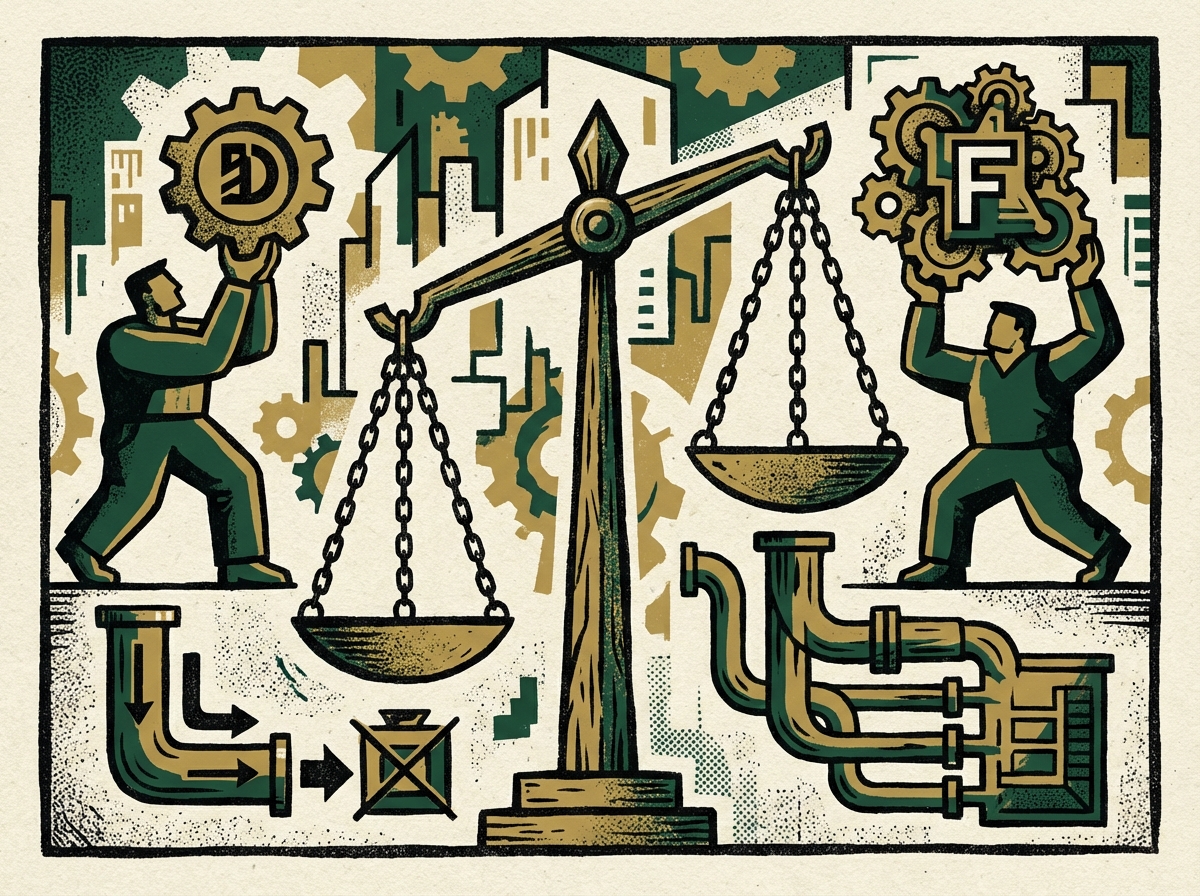
Let’s get this right. It’s not just about plugging numbers into a formula. The definitions—specifically what constitutes “EBITDA” or “Fixed Charges”—are fiercely negotiated and live in the fine print of your credit agreement. A recent analysis by Haynes Boone highlights how critical these definitions are, as they can dramatically alter the outcome of the calculation.
How do I calculate DSCR correctly?
To calculate your DSCR correctly, you must use the precise formula stipulated in your specific loan agreement, not a generic online calculator. Typically, the formula is (EBITDA - Unfunded Capital Expenditures) / (Principal + Interest Payments). The real battleground is in the numerator, with the definition of EBITDA. Banks often allow for certain “add-backs”—one-time expenses that aren’t part of normal operations. Think severance from a restructuring, legal fees from a lawsuit, or other non-recurring costs.
My team and I have seen founders miss out on millions of dollars in EBITDA add-backs simply because they weren’t meticulously tracking and documenting these expenses. Your ability to justify these add-backs can be the difference between passing and failing your covenant test.
Here’s a simplified breakdown of how DSCR and FCCR compare:
For a growth company, the FCCR can be a particular menace. As you sign new office leases or finance more equipment to scale, those fixed charges are added to the denominator, making the ratio harder to maintain even as your top-line revenue soars.
Monitoring Compliance: The Monthly Check
Effective covenant compliance monitoring is a proactive, continuous process of tracking your key financial ratios against the thresholds in your loan agreement. It’s not something you delegate to a junior accountant to handle five minutes before the quarterly report is due to the bank. It should be a core discipline of your financial risk management strategy, reviewed by senior leadership every single month.
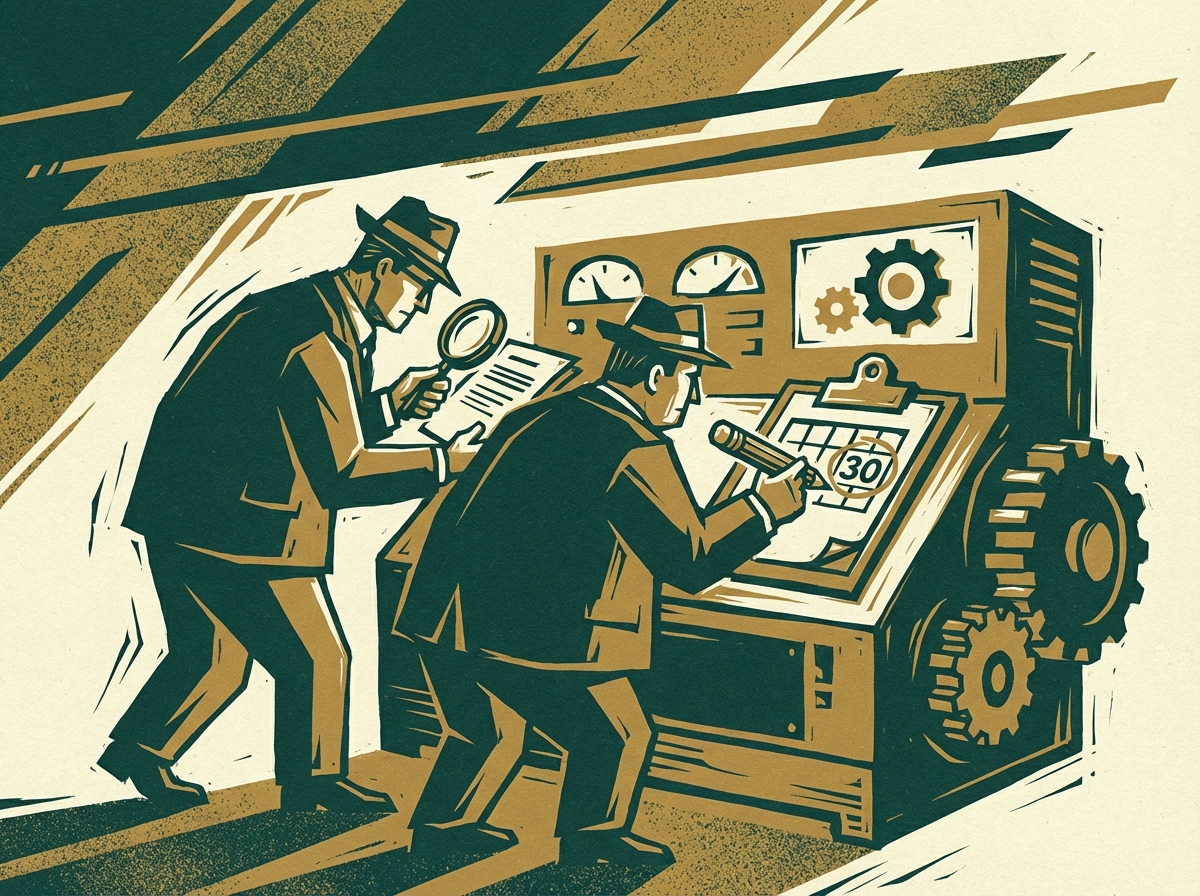
The goal is to see a potential breach coming from three to six months away, not to be surprised by it. This requires building a forward-looking financial model that stress-tests your covenants. What happens to our DSCR if sales dip by 15%? What if a major customer pays 30 days late? If you can’t answer these questions instantly, you’re flying blind.
Modern CFOs are increasingly turning to technology for help. The use of AI-powered dashboards to automate compliance monitoring is becoming a standard practice, allowing for real-time visibility into these critical metrics. A report from DataGrid.ai notes that AI can reduce monitoring errors by up to 90%, providing a crucial layer of protection. This proactive stance is essential, especially as a recent Deloitte CFO Signals survey revealed that only 34% of CFOs expressed rising optimism for their companies' financial prospects, indicating a cautious atmosphere where every basis point of compliance matters.
Negotiating the Cure: What to Do When You Breach
Breaching a loan covenant means you have violated a specific term of your credit agreement, which technically places your loan in default. The first thing you need to understand is that a breach doesn’t automatically mean the bank will call your loan and seize your assets. It does, however, give them the leverage to renegotiate the terms in their favor.
So, what happens if I breach a loan covenant? The moment you anticipate a breach—not after it happens—is when you must act. The single biggest mistake I see is founders hiding from their bankers. This is a relationship, and bad news does not get better with age. A proactive call to your relationship manager explaining the situation and presenting a clear plan to remedy it is infinitely better than letting them discover it in a cold, sterile compliance certificate.

Your lender will likely issue a “reservation of rights” letter, acknowledging the default but agreeing not to take immediate action. This opens the door for negotiation. Your goal is to negotiate a waiver for the current breach and, if the issue is systemic, an amendment to the covenant itself to provide more breathing room.
“The best time to talk to your lender about a problem is before it’s a problem. Proactive communication transforms a potential crisis into a collaborative problem-solving session.”
Be prepared for the bank to ask for something in return. This could be a fee (a “waiver fee”), a higher interest rate, or even additional collateral. This is the price of the misstep. But by managing the process professionally, you can maintain the relationship and secure the stability you need to continue growing. The key is to turn a moment of high-risk into a demonstration of competent financial risk management.
Your banking covenants aren’t just administrative hurdles. They are the guardrails on your path to growth. Ignoring them is like driving a race car without checking the gauges. Sooner or later, you’ll hear a noise you can’t ignore, and by then, it’s often too late.
Frequently Asked Questions
What are the most common banking covenants in 2026?
The most prevalent banking covenants are financial in nature, focusing on a company’s ability to service its debt. These include the Debt Service Coverage Ratio (DSCR), Fixed Charge Coverage Ratio (FCCR), Leverage Ratio (Total Debt to EBITDA), and often a minimum liquidity or tangible net worth requirement. These metrics serve as the primary tools for lenders to monitor financial health and manage default risk.
How do I calculate DSCR correctly?
You must calculate DSCR using the specific formula and definitions provided in your loan agreement, as generic formulas can be misleading. The calculation is typically (EBITDA - Unfunded Capital Expenditures) divided by the sum of your current principal and interest payments. Pay close attention to the definition of EBITDA and negotiate for favorable “add-backs” for non-recurring expenses to ensure the ratio accurately reflects your operational cash flow.
What happens if I breach a loan covenant?
If you breach a loan covenant, you are in technical default of your loan. This gives the lender the right, but not the obligation, to take actions such as calling the loan due, increasing your interest rate, or seizing collateral. More commonly, it triggers a negotiation where the lender may issue a waiver in exchange for a fee, stricter terms, or a detailed plan from you on how you will “cure” the breach and return to compliance.
