

Restaurant and Hospitality: Managing Prime Cost in 2026
- In a restaurant, the Unit Economics live in one number: prime cost, food plus labor, which typically runs 55 to 65% of revenue and decides whether the business makes money.
- The benchmark varies by concept: full-service aims for 60 to 65%, quick-service around 55%, fast casual 58 to 63%.
- Food cost should land at 28 to 35% and labor at 25 to 35%, but labor pressure is rising, with payroll now exceeding a quarter of restaurant expenses.
- Monthly prime cost reports are an autopsy. By the time the accountant says last month ran 68%, four weeks of margin are gone.
- The discipline that separates profitable operators is weekly prime cost tracking, which catches problems in days, not after the month closes.
A restaurant can be packed every night and still lose money, because in food service the margins are thin and the costs move daily. The number that determines survival is prime cost, the combination of food and labor, and the operators who thrive are the ones who manage it relentlessly. Everything else, ambiance, concept, reviews, matters only if the prime cost math works. Understanding and controlling this single number is the heart of restaurant Unit Economics, and in 2026, with labor costs climbing, it matters more than ever. Here is how to manage prime cost like an operator who intends to stay in business.
Prime Cost: The One Number That Runs a Restaurant
Prime cost is food cost plus labor cost, and it is the single most important figure in restaurant Unit Economics because together those two represent the largest, most controllable costs a restaurant has. It typically runs 55 to 65% of revenue, and where it lands within and around that range is the difference between a profitable restaurant and one quietly bleeding cash, as Taxfyle explains. Rent, utilities, and other costs matter, but they are largely fixed; prime cost is where daily management actually moves the outcome.
The reason it is the number to watch is leverage and volatility. Food and labor are large enough that a few points of prime cost swing the entire profit of the restaurant, and they move constantly with portioning, waste, scheduling, and sales mix. A restaurant running prime cost at 58% can be healthy while the identical concept running at 68% loses money, on the same revenue. This is why experienced operators treat prime cost as the heartbeat of the business: it concentrates the two costs they can most influence into one figure that tells them, faster than the P&L, whether the Unit Economics are working.
The Benchmarks by Concept
Prime cost targets vary by restaurant concept, and knowing your specific benchmark is essential because a number that is healthy for one format is a warning sign for another. Full-service restaurants generally aim for 60 to 65%, quick-service for around 55%, and fast casual lands between 58 and 63%, according to Stockcount. The differences reflect the trade-offs of each model: full-service carries more labor for the experience, while quick-service runs leaner on staff.
Inside prime cost, the two components have their own benchmarks. Food cost should generally fall between 28 and 35% of revenue, and labor between 25 and 35%, with full-service labor running higher and quick-service lower, per The Restaurant Warehouse. Knowing both your overall prime cost target and the right split between food and labor for your concept lets you diagnose problems precisely. A restaurant at 64% prime cost might be fine if it is full-service, or it might have a labor problem masking a good food cost, or vice versa. Sound restaurant Unit Economics depends on measuring against the right benchmark for your specific format, not a generic average.

Why Monthly Tracking Is an Autopsy
The single biggest mistake restaurant owners make is tracking prime cost monthly, because by then the damage is done. As the operators put it, monthly prime cost is an autopsy: by the time your accountant tells you last month ran 68%, you have already lost four weeks of margin you can never recover. The food was over-portioned, the labor was over-scheduled, and the waste happened, all before you saw the number. Monthly reporting tells you what killed the patient, not how to save them.
The fix is weekly prime cost tracking, which catches problems in days rather than weeks. When you measure food and labor weekly against your target, a creeping food cost or a scheduling problem shows up while you can still act on it, adjusting orders, tightening portions, fixing the schedule before another three weeks of margin vanish. This cadence is the practical heart of managing restaurant Unit Economics, and it is what separates operators who consistently hit their targets from those who are perpetually surprised. The numbers move daily, so the management has to be at least weekly. A restaurant that reviews prime cost every week is steering; one that reviews it monthly is reading the obituary.

Pulling Food and Labor Down Without Hurting the Guest
Reducing prime cost is about precision, not slashing, because cut too aggressively on food or labor and you damage the guest experience that drives revenue. On the food side, the levers are portion control, waste reduction, smart purchasing, and menu engineering that steers guests toward higher-margin items. These tighten food cost without shrinking what the guest perceives they receive. The goal is to eliminate the waste and over-portioning that quietly inflate cost, not to give diners less of what they came for.
On the labor side, the lever is scheduling matched to demand. Labor cost climbs when staffing does not flex with the actual flow of business, too many people on a slow Tuesday, too few on a busy Friday. Scheduling to forecasted demand, supported by sales data, holds labor at target without understaffing the floor when it matters. This discipline is increasingly urgent: payroll now makes up more than a quarter of restaurant expenses, up from 23% of revenue in 2021, per industry reporting via Toast. With labor pressure rising, demand-based scheduling is one of the few ways to protect margin without cutting service. Managing both food and labor with precision rather than blunt cuts is how a restaurant protects its Unit Economics and its guest experience at the same time.
Prime Cost as the Core of Restaurant Unit Economics
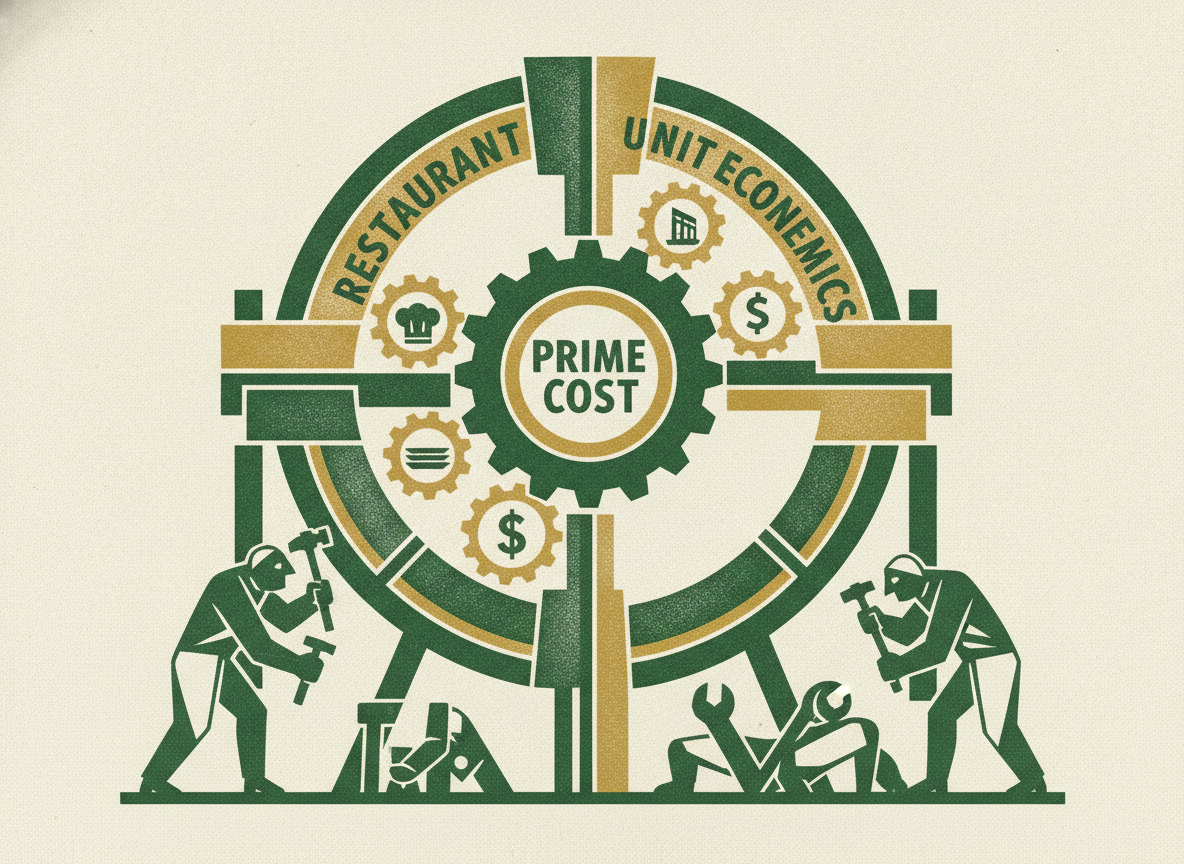
Everything in restaurant finance comes back to prime cost, which is why it deserves to be the number an owner knows at all times. The margins in food service are thin enough that there is little room for error, and prime cost is where that error either gets caught or compounds. An operator who manages prime cost to target weekly has the foundation for a profitable restaurant; one who does not is relying on volume to outrun a cost problem, which rarely works for long.
This focus also clarifies decisions across the business. A menu change should be evaluated for its effect on food cost and the labor to produce it. A staffing decision should be weighed against the labor benchmark. A pricing change should be checked for how it moves prime cost as a percentage of the new revenue. When prime cost is the lens, these choices become concrete rather than intuitive. The restaurants that endure are not usually the ones with the best concept or the most buzz; they are the ones whose owners treat prime cost as the core of their Unit Economics and manage it with weekly discipline. In a thin-margin business getting squeezed by labor costs, that discipline is the difference between a restaurant that lasts and one that does not.

Frequently Asked Questions
What Is Restaurant Prime Cost?
Prime cost is the sum of food cost and labor cost, the two largest and most controllable expenses a restaurant has. It typically runs 55 to 65 percent of revenue, and where it lands determines whether the restaurant is profitable. Because food and labor are large and volatile, a few points of prime cost swing the entire profit, which is why operators treat it as the most important number in the business.
What Is a Good Prime Cost Percentage?
It depends on concept. Full-service restaurants aim for 60 to 65 percent, quick-service for around 55 percent, and fast casual for 58 to 63 percent. Within prime cost, food cost should fall between 28 and 35 percent and labor between 25 and 35 percent. Measuring against the right benchmark for your specific format, rather than a generic average, is essential for diagnosing problems accurately.
How Often Should You Track Prime Cost?
Weekly, not monthly. Monthly prime cost is an autopsy: by the time the report shows last month ran high, four weeks of margin are already lost. Weekly tracking catches a creeping food cost or a scheduling problem in days, while you can still adjust orders, portions, and staffing. This cadence is what separates operators who consistently hit their targets from those who are always surprised.
How Do You Lower Prime Cost Without Hurting the Guest?
With precision, not blunt cuts. On food, use portion control, waste reduction, smart purchasing, and menu engineering toward higher-margin items. On labor, schedule to forecasted demand so staffing flexes with actual business. These tighten cost without reducing what the guest perceives they receive. With payroll now exceeding a quarter of restaurant expenses, demand-based scheduling is especially important for protecting margin while maintaining service.
References
