
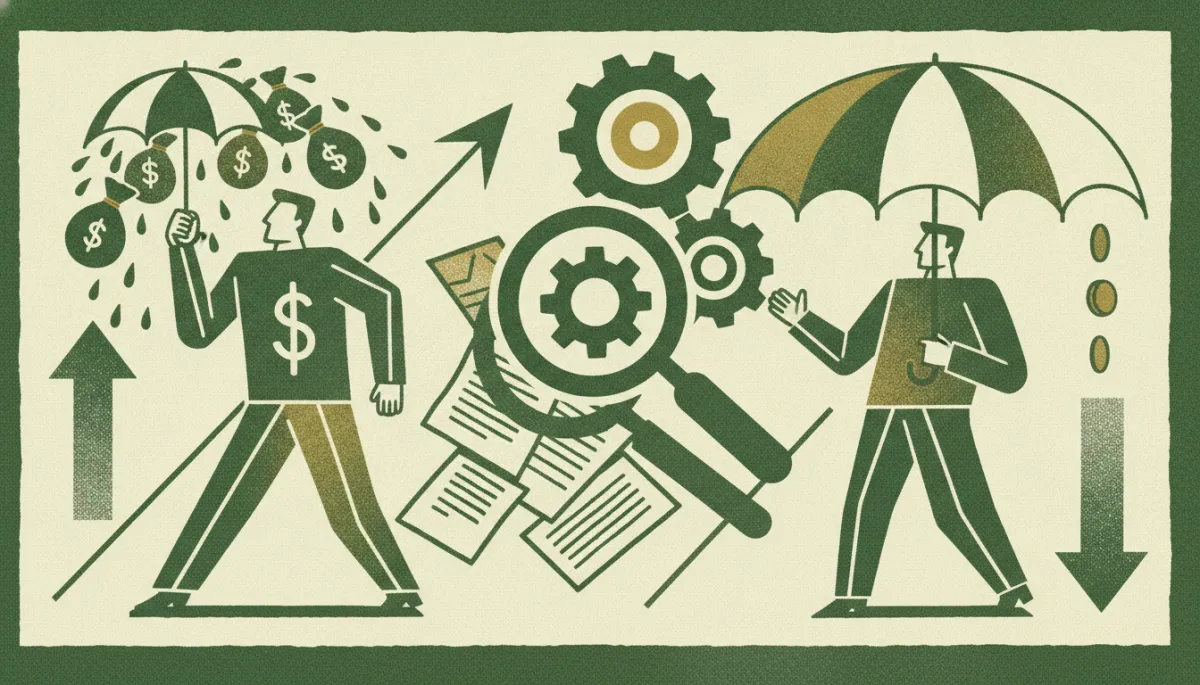
Insurance Audit: Are You Over or Under-Covered?
- Insurance is risk transfer, a core Financial Risk Management tool, yet most companies treat it as a renew-and-forget checkbox, leaving them simultaneously over-paying in some areas and dangerously exposed in others.
- Underinsurance is widespread: about 77% of small businesses are underinsured, up from 75% in 2023, even as revenues have grown.
- The gaps are specific. Many businesses lack adequate general liability, a quarter are missing needed professional liability, and roughly 35% carry no cyber insurance at all.
- Over-insurance and waste are the flip side: fragmented policies, automatic renewals, and obsolete data mean companies often pay for overlapping or unneeded coverage.
- A structured insurance audit, reviewing policies, risks, and premiums together, can close the gaps and cut the waste, often saving thousands while improving protection.
Insurance is one of those line items companies set up once and then renew on autopilot for years, which is exactly why it so often ends up both wasteful and inadequate at the same time. The business pays for coverage it no longer needs while lacking coverage it now does, because the policies were never updated as the company changed. Insurance is fundamentally a Financial Risk Management tool, transferring catastrophic risks to an insurer, and like any risk tool it needs periodic review to stay aligned with the actual risks. An insurance audit, a deliberate review of what you have, what you need, and what you pay, is how you find out whether you are over-covered, under-covered, or both. Here is how to think about it.

Insurance Is Risk Transfer, Not a Checkbox
The right way to think about business insurance is as risk transfer, a deliberate Financial Risk Management decision to pay an insurer to absorb risks too large for the company to bear itself, rather than as a compliance checkbox to be satisfied and forgotten. Each policy is a choice about which risks to transfer and how much to pay to transfer them, and that choice should reflect the company's actual risk profile, which changes as the business grows and evolves. Treating insurance as a static checkbox, set up once and renewed automatically, severs this connection between the coverage and the real risks it is meant to address.
This reframing matters because it explains why so many companies end up mis-insured. When insurance is just a checkbox, nobody revisits whether the coverage still matches the risks, so the policies drift out of alignment with the business, too much in areas that no longer matter and too little in areas that have grown. When insurance is treated as active risk management, by contrast, it is reviewed periodically against the current risk profile, ensuring the company is transferring the right risks at a fair price. For a founder, recognizing that insurance is a risk-management tool requiring periodic review, not a one-time administrative task, is the mindset that prevents the slow drift into being both over-insured and under-insured. The insurance program should be a deliberate reflection of which risks the company chooses to bear and which it transfers, and keeping it aligned with reality is a genuine part of Financial Risk Management that the renew-and-forget approach completely neglects.
The Underinsurance Epidemic
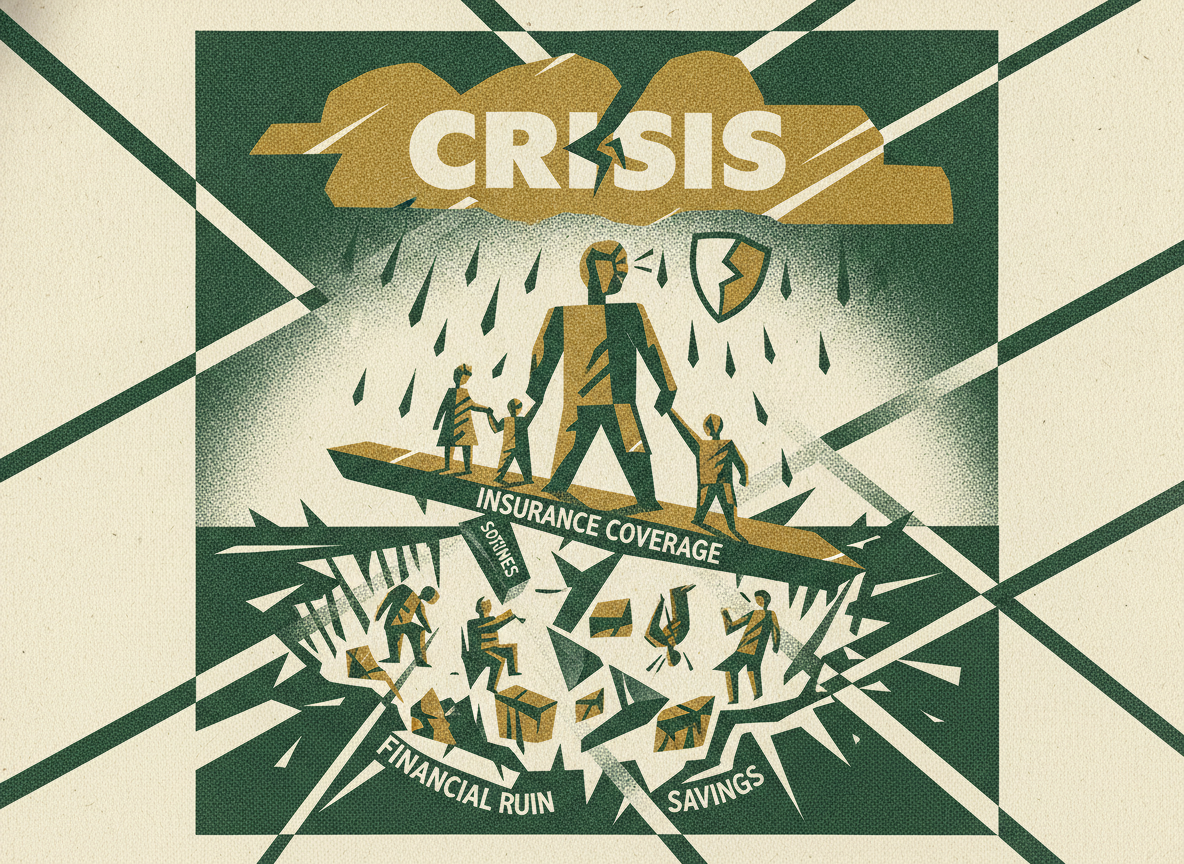
The most serious insurance problem facing growing businesses is underinsurance, being exposed to risks the company has not adequately transferred, and it is strikingly widespread. About 77% of small businesses are underinsured, up from 75% in 2023, according to Hiscox's research summarized by Risk & Insurance, and the problem is worsening even as businesses grow. The core dynamic is that revenue and operations have expanded while insurance coverage has not kept pace, leaving a growing gap between the company's actual risk exposure and the protection it carries.
This underinsurance is dangerous precisely because it is invisible until a claim exposes it. A company that has grown substantially but never updated its coverage may discover, only when something goes wrong, that its policy limits are far too low to cover the loss, or that it lacks a type of coverage entirely. The gap between what the business needs and what it has is a serious Financial Risk Management failure, because it leaves the company bearing risks it believes it has transferred. The reason this happens is the autopilot renewal: as the business adds employees, revenue, locations, products, or services, each change can increase its risk exposure, but if the insurance is simply renewed at the old levels, the coverage steadily falls behind the growing risk. The widespread and worsening nature of underinsurance, affecting more than three-quarters of small businesses, underscores how common this drift is. For a growing company, the underinsurance epidemic is a direct warning that coverage set up at an earlier stage is very likely inadequate now, which is exactly what an insurance audit is designed to catch and correct.

Where the Gaps Hide
Underinsurance is not abstract; it shows up as specific, identifiable gaps in coverage, and knowing where these gaps typically hide helps a founder check their own exposure. The data reveals concrete shortfalls: roughly 65% of small businesses carry general liability coverage, 49% have property insurance, and 42% have professional liability, meaning substantial fractions lack each of these, as Hiscox's report documents. More specifically, around 22% lack needed general liability coverage, 25% are without required professional liability protection, and about 35% are missing cyber insurance entirely.
These specific gaps point to where the risk is most commonly under-transferred. Cyber insurance is the starkest example: with more than a third of small businesses carrying none, despite the growing prevalence and cost of cyber incidents, this is a widespread and serious exposure for companies that handle data or depend on digital systems, which is nearly all of them now. Professional liability gaps leave service and advisory businesses exposed to claims arising from their work, and general liability gaps leave companies exposed to basic third-party claims. Each missing coverage represents a category of risk the company is bearing itself, often without realizing it. For a founder conducting an insurance review, these common gap areas, cyber, professional liability, and adequate general liability, are the first places to check, because they are where coverage most frequently falls short of the actual risk. Identifying which of these gaps exist in the company's own program is a central output of an insurance audit and a practical application of Financial Risk Management, surfacing exactly the exposures that the autopilot approach has left unaddressed.

The Over-Insurance and Waste Problem
While underinsurance is the more dangerous problem, its flip side, over-insurance and wasted premium, is also common and worth correcting, because companies frequently pay for coverage they do not need even as they lack coverage they do. The waste arises from several predictable sources. Fragmented coverage across several providers can create overlaps, where the same risk is covered by multiple policies, and gaps simultaneously. Accepting the same renewal terms year after year almost guarantees overpayment, because the premium is never tested against the market or the company's actual current risk. And failing to update the insurer on changes, or having pivoted the business model, can leave coverage misaligned, too much in areas that no longer matter.
This waste is a real cost that a review can recover. A structured insurance audit commonly finds that the company is paying for overlapping coverage, carrying limits higher than warranted in some areas, or insuring against risks that have diminished as the business changed, while basing premiums on obsolete revenue, payroll, or property data. Correcting these, consolidating fragmented policies, right-sizing limits to current needs, and updating the insurer on the actual state of the business, can save meaningful money, often thousands of dollars annually, without reducing necessary protection. The key insight is that over-insurance and underinsurance usually coexist in the same neglected program: the company wastes money on the wrong coverage while lacking the right coverage, both symptoms of the same failure to keep insurance aligned with the business. For Financial Risk Management, fixing the waste is the satisfying complement to closing the gaps, because the savings from eliminating over-insurance can often fund the coverage needed to close the underinsurance gaps, improving protection and reducing cost at the same time.

Running the Audit
The remedy for both over- and under-insurance is a structured insurance audit, a comprehensive review of the company's policies, risks, and premiums together, which is how a founder realigns the insurance program with the actual business. As the field describes, such an audit uncovers wasted spending, identifies coverage gaps, and frequently saves thousands of dollars annually, by examining what the company is paying for, what risks it actually faces, and where the two do not match. The audit is the deliberate review that the autopilot renewal never provides.
The process is straightforward in concept. It starts by cataloging the current coverage, all policies, limits, and premiums across all providers, then assessing the company's actual current risk profile given its present revenue, operations, employees, services, and exposures, and finally comparing the two to find where coverage is excessive, deficient, or misaligned. The comparison surfaces the gaps to close, like missing cyber or inadequate liability limits, and the waste to cut, like overlapping policies or obsolete-data overcharges. Updating the insurer on the company's real current figures, revenue, payroll, property values, ensures the premiums reflect reality rather than outdated assumptions. For most companies, doing this periodically, ideally annually and certainly after significant changes like a business-model pivot, growth milestone, or new service line, keeps the insurance program aligned with the evolving risk profile. A founder can run this with their broker or with help from a fractional CFO or risk advisor who brings an independent eye to whether the coverage truly fits the risks. The insurance audit is the concrete practice that turns insurance from a neglected checkbox back into active Financial Risk Management, ensuring the company is neither over-paying for protection it does not need nor dangerously exposed on risks it failed to transfer. Given how widespread both problems are, it is one of the higher-return reviews a growing company can perform.

Frequently Asked Questions
Why Does Business Insurance Need a Regular Audit?
Because insurance is risk transfer that must stay aligned with the company's actual risks, and those risks change as the business grows. Treated as a renew-and-forget checkbox, coverage drifts out of alignment, too much in areas that no longer matter and too little in areas that have grown. A periodic audit reviews policies, risks, and premiums together to catch this drift, which the autopilot renewal never does, keeping insurance as active risk management.
How Common Is Underinsurance?
Very common and worsening. About 77 percent of small businesses are underinsured, up from 75 percent in 2023, even as revenues have grown. The core problem is that operations expand while coverage stays at old levels, leaving a growing gap between actual exposure and protection. This underinsurance is dangerous because it stays invisible until a claim reveals that policy limits are too low or a coverage type is missing entirely.
Where Are Coverage Gaps Most Common?
In specific, identifiable areas. Around 22 percent of small businesses lack needed general liability, 25 percent are without required professional liability, and roughly 35 percent carry no cyber insurance at all. Cyber is the starkest gap given the rising frequency and cost of incidents. These common gap areas, cyber, professional liability, and adequate general liability, are the first places to check when reviewing your own program for under-transferred risk.
Can an Insurance Audit Save Money?
Yes, often thousands annually, while also improving protection. Audits commonly find fragmented policies with overlapping coverage, limits higher than warranted, premiums based on obsolete data, and coverage misaligned after a business pivot. Consolidating policies, right-sizing limits, and updating the insurer on real current figures cuts this waste. Frequently the savings from eliminating over-insurance can fund the coverage needed to close underinsurance gaps, improving protection and reducing cost together.
References
- Risk & Insurance: Small Business Underinsurance Hits New High Despite Revenue Growth
- Hiscox: Nearly Four in Five Small Businesses Aren't Protected Against Claims
- Stacker: The Small Business Insurance Audit, Are You Overpaying for Protection You Don't Need?
- Apex Risk: Navigating Insurance Audits, A Business Owner's Survival Guide
