
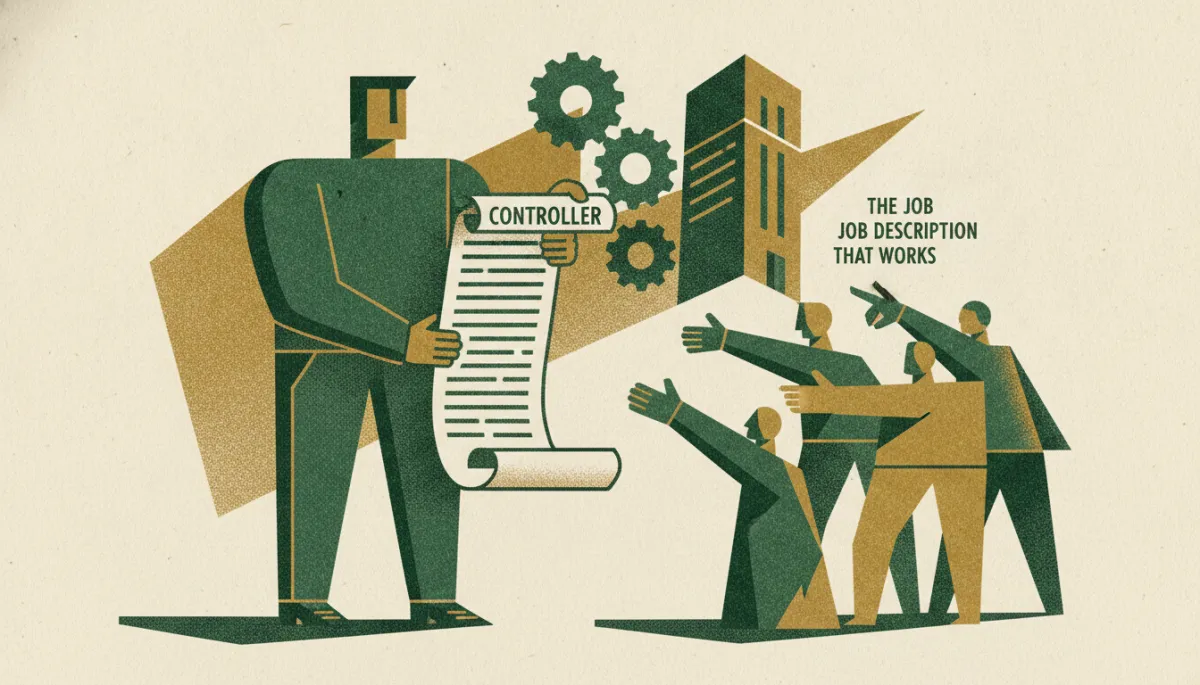
Hiring a Controller: The Job Description That Works
- Hiring a controller is a turning point in a company's Executive Financial Leadership: it is the moment finance shifts from recording the past to actively managing it.
- A controller owns the close, the monthly financial reports, budgeting, and the accuracy of the numbers, supervising bookkeeping rather than doing it.
- The role sits between a bookkeeper, who records transactions, and a CFO, who sets strategy. Confusing the three is how companies mis-hire.
- The signal to hire is usually revenue between roughly $1M and $10M plus a close and reporting load that has outgrown a bookkeeper.
- A controller salary runs well into six figures, often $130K+, which is why many growing companies get the capability through a fractional or outsourced controller first.
The controller is the most misunderstood hire in finance. Founders know they need a bookkeeper early and imagine they need a CFO eventually, but the controller in between, the person who actually owns the accuracy and rhythm of the numbers, is the hire that most directly upgrades a company's financial operations. Getting it right is a real act of Executive Financial Leadership, because the controller is who makes your financial data trustworthy enough to run the business on. Here is what the role actually owns, when to hire one, and how to write a job description that attracts the right person.

What a Controller Actually Owns
A controller owns the integrity and rhythm of your financial operations. They run the monthly close, produce the financial reports, the income statement, balance sheet, and cash flow, and ensure the numbers are accurate and the procedures are followed, as Verified Metrics describes. Where a bookkeeper records transactions, a controller takes responsibility for the whole accounting function: budgeting, the close process, and the reliability of every number that comes out of it.
This is a supervisory and management role, not a data-entry one. A controller typically leads the accounting staff or the bookkeeper, owns the forecasting and budgeting processes, and manages the financial close end to end. The shift they bring is from numbers that merely exist to numbers you can trust and act on, produced on a reliable schedule. For a founder, that is transformative: instead of wondering whether the financials are right and when they will be ready, you have someone accountable for both. That reliability is the foundation that real Executive Financial Leadership is built on, because you cannot lead with numbers you do not trust.

Controller vs Bookkeeper vs CFO
The three core finance roles are distinct, and confusing them is the most common hiring mistake founders make. A bookkeeper handles the immediate operations: recording, organizing, and maintaining transaction data for accuracy and compliance. A controller takes the broader view, analyzing that data, owning the close and reporting, and managing the accounting function. A CFO sits above both, setting financial strategy, leading capital decisions, and partnering with the founder on the direction of the business, per Ramp.
The progression is one of scope and altitude. The bookkeeper records what happened, the controller ensures it is accurate and turns it into reliable reports, and the CFO decides what to do about it. Problems arise when a company hires for the wrong level: a bookkeeper cannot deliver the management and reporting a controller provides, and a controller, however capable, is not a substitute for CFO-level strategy. Understanding these boundaries is itself a piece of Executive Financial Leadership, because it lets you hire the capability you actually need at each stage rather than overpaying for strategy you cannot yet use or underpaying for rigor you desperately need.

The Signals It Is Time to Hire One
The signal to hire a controller is usually a combination of revenue scale and operational complexity that a bookkeeper can no longer carry. Controllers typically make sense in businesses above roughly $1 million to $5 million in revenue, since smaller companies often lack both the complexity to need one and the resources to pay for one, according to Verified Metrics. Below that, a good bookkeeper plus periodic outside help is usually sufficient.
The concrete signs are operational. The monthly close is slow or unreliable. The financial reports are late, inconsistent, or not trusted. Budgeting has become a real exercise that needs ownership. The bookkeeping function has grown to the point that it needs management rather than just execution. When these appear, you have outgrown bookkeeping alone, and the gap is exactly what a controller fills. In the $1 million to $10 million range, an in-house controller often wears several hats, acting as a quasi-CFO, supervisor, and reporting lead at once, which makes the hire high-leverage but also means you should be clear about which of those hats you most need filled when you write the role.

Writing the Job Description That Works
A job description that works names the specific outcomes the controller owns, not a generic list of accounting duties. The strongest descriptions lead with responsibility: own the monthly close and deliver financials by a set day, produce accurate management reports, run the budgeting process, manage the bookkeeper, and maintain the controls that keep the numbers reliable. Concrete ownership attracts candidates who think in terms of outcomes rather than tasks, which is exactly the level you want.
Be honest about the scope, because in a smaller company the controller role is broad. If you need someone who will also do hands-on work, supervise a bookkeeper, and occasionally stretch into light CFO-style analysis, say so, since that is a different person than a pure controller at a larger company. Specify the qualifications that matter, typically a bachelor's in accounting and real experience owning a close, while not over-specifying credentials you do not need. The clearer you are about the actual job, the close you need run, the reports you need produced, the team you need managed, the better the match, and the less likely you are to hire someone over- or under-qualified for what the role truly requires.
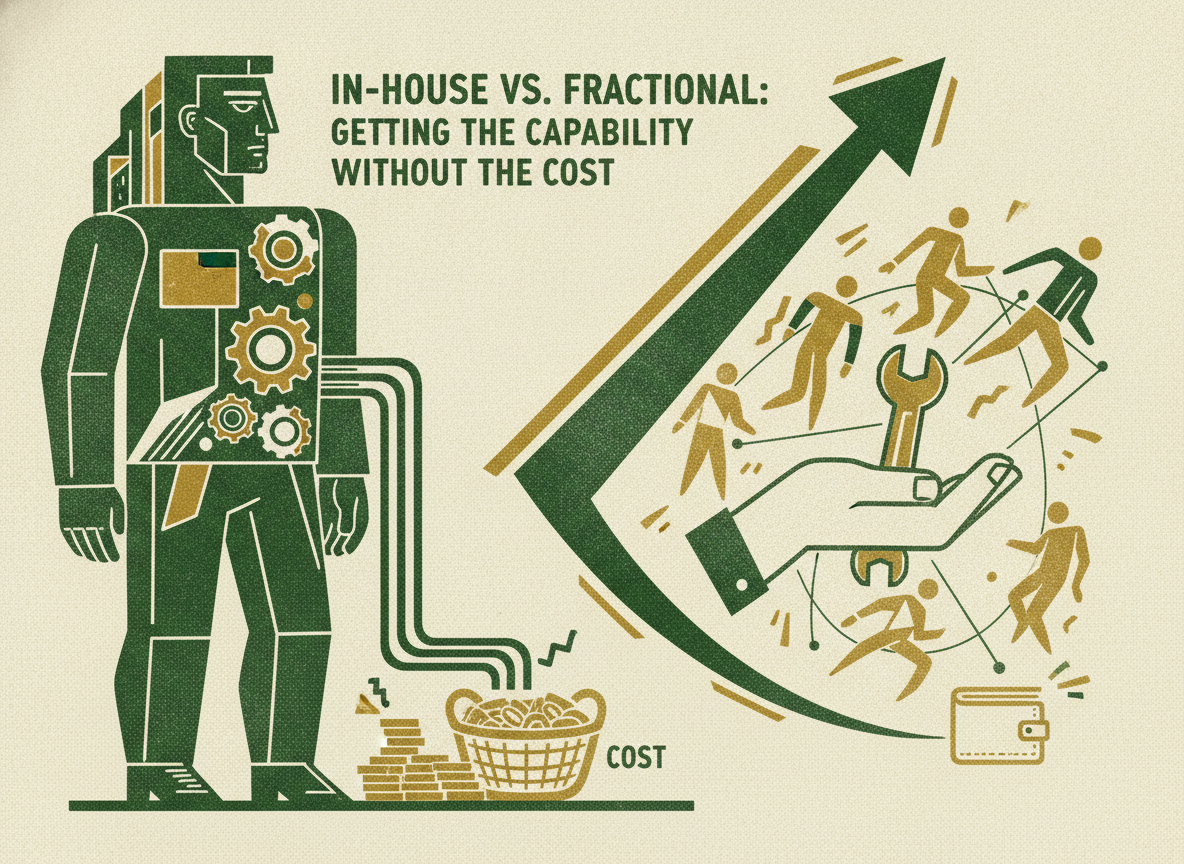
In-House vs Fractional: Getting the Capability Without the Cost
The controller's salary is the reason many growing companies get the capability before they hire it full-time. A controller commonly earns well into six figures, often $130,000 or more and ranging higher with experience and location, which is a meaningful commitment for a company in the lower end of the revenue range. For a business that needs controller-level rigor but cannot yet justify the full salary, the answer is often a fractional or outsourced controller.
The fractional route delivers the same core capability, a reliable close, trustworthy reports, budgeting discipline, on a fraction of the cost and time, scaling up as the company grows into a full-time need. It also pairs naturally with fractional CFO support: an experienced finance professional can provide both the controller-level rigor and the CFO-level strategy a growing company needs, without two full-time executive salaries. This is frequently the most efficient finance structure for a company between roughly $1 million and $20 million in revenue, getting senior Executive Financial Leadership and reliable financial operations together, sized to what the business can actually support. As the company scales, the fractional arrangement converts naturally into the full-time hires the growth eventually justifies.

Frequently Asked Questions
What Does a Controller Do?
A controller owns the integrity and rhythm of a company's financial operations: running the monthly close, producing the income statement, balance sheet, and cash flow reports, managing the budgeting process, and ensuring the numbers are accurate and procedures followed. They supervise the bookkeeping function rather than doing data entry, shifting finance from numbers that merely exist to numbers you can trust and act on.
What Is the Difference Between a Controller and a Bookkeeper?
A bookkeeper records and maintains transaction data for accuracy and compliance, handling immediate financial operations. A controller takes a broader view, analyzing that data, owning the close and reporting, managing the accounting function, and providing strategic financial information. In short, the bookkeeper records what happened and the controller ensures it is accurate and turns it into reliable reports that support decisions.
When Should You Hire a Controller?
Usually when revenue passes roughly $1 million to $5 million and the close, reporting, and budgeting load has outgrown a bookkeeper. The concrete signs are a slow or unreliable close, late or distrusted reports, real budgeting needs, and a bookkeeping function that needs management. Below that scale, a good bookkeeper plus periodic outside help is typically sufficient and a controller is hard to justify.
Should You Hire a Controller In-House or Fractional?
It depends on whether you can justify the full salary, which often runs $130,000 or more. Companies that need controller-level rigor but cannot yet support a full-time hire frequently use a fractional or outsourced controller, getting a reliable close, trustworthy reports, and budgeting discipline at a fraction of the cost. This pairs well with fractional CFO support and is often the most efficient finance structure for a $1 million to $20 million company.
References
