
Contribution Margin First: Building a 2026 Plan Around Real Unit Economics
- Building a 2026 plan on gross margin alone hides whether your growth actually makes money. Real Unit Economics start with contribution margin, the profit left after every variable cost.
- Gross margin flatters you. A product at 70% gross margin can fall to 15 to 25% contribution margin once acquisition and fulfillment are counted.
- Customer acquisition cost has climbed 40 to 60% since 2021, and ad spend now eats 20 to 35% of revenue for many consumer businesses. That gap is where profit disappears.
- The sharpest founder metric is CM3: contribution margin after acquisition cost. A positive CM3 means each order actually funds the company; a negative one means growth deepens the hole.
- Plan 2026 around positive unit-level economics first, then scale. Scaling negative unit economics just loses money faster.
The most dangerous number in a founder's plan is a healthy-looking gross margin, because it can mask a business that loses money on every new customer. Gross margin is where most companies stop looking, and it is exactly where the truth begins to hide. Real Unit Economics require going further, to contribution margin and the cost of acquiring the customer in the first place. A 2026 plan built on positive unit economics scales into profit; one built on gross margin alone can scale straight into a cash crisis. Here is how to build the plan on the number that actually tells the truth.
Why Gross Margin Lies About Profitability
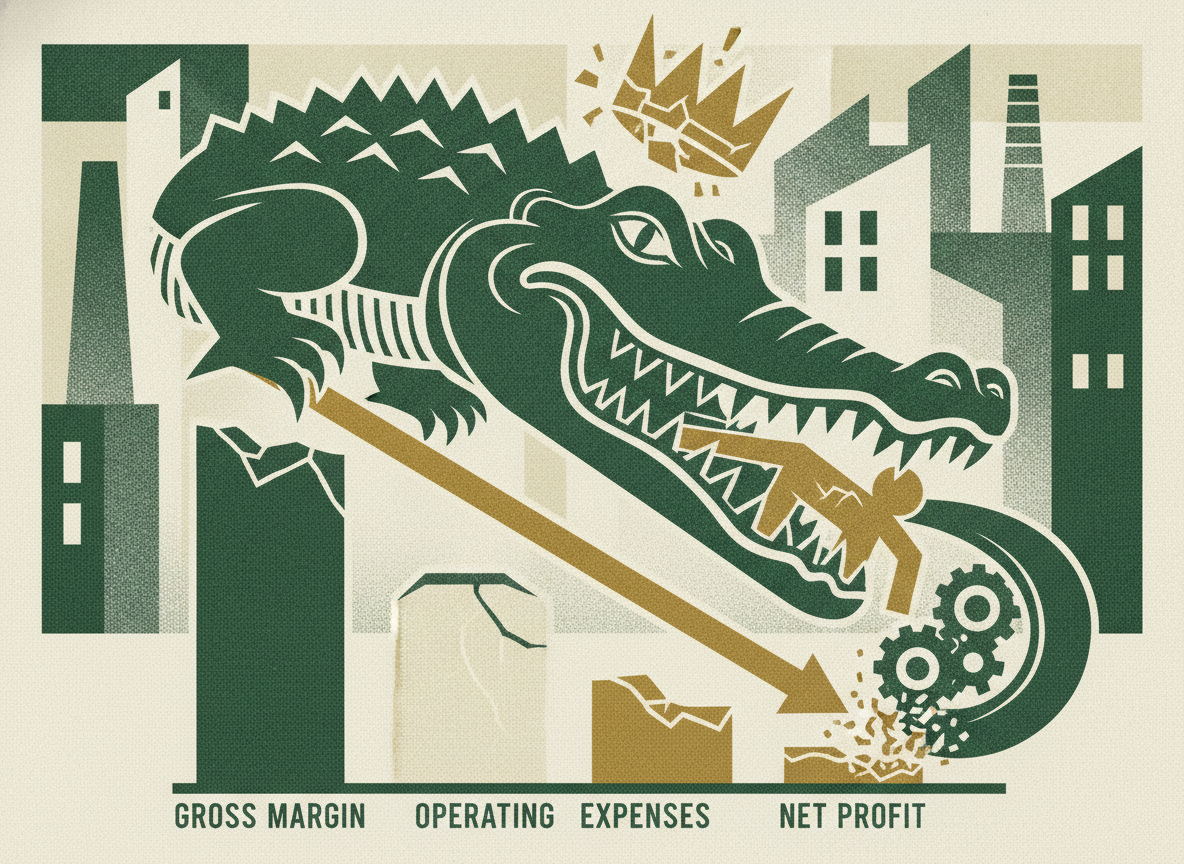
Gross margin lies because it only subtracts the direct cost of the product, leaving out the substantial variable costs of actually winning and serving the customer. It tells you the spread between price and cost of goods, which feels like profitability but is only the first layer. The costs that gross margin ignores, fulfillment, payment processing, and above all customer acquisition, are exactly the ones that have grown the fastest and bite the hardest.
The distortion is large. A product showing 70% gross margin can collapse to 15 to 25% contribution margin once acquisition and fulfillment are attributed, according to Luca. A founder reading only gross margin sees a thriving business; the real Unit Economics may be barely breaking even or losing money per order. This is not a rounding difference, it is the gap between a company that compounds and one that quietly burns cash with every sale. Planning on gross margin is planning on a number that was never designed to answer the question you are asking.
Contribution Margin: The Number That Tells the Truth
Contribution margin is what remains after you subtract every variable cost from revenue, and it is the honest measure of whether a sale makes money. Where gross margin stops at cost of goods, contribution margin keeps going: it removes fulfillment, processing, variable support, and acquisition spend, leaving the amount each sale actually contributes toward fixed costs and profit. As Phoenix Strategy Group puts it, without a positive contribution margin per unit, gaining new customers only increases losses, no matter how impressive the revenue growth looks.
That last point is the whole game. If your contribution margin per unit is negative, every new customer makes the loss bigger, and faster growth makes the problem worse, not better. This is how venture-funded companies post spectacular revenue charts and run out of money at the same time. Sound Unit Economics means the unit itself is profitable before you scale it. Contribution margin is the metric that tells you whether that is true, which is why it, not gross margin, belongs at the center of the plan.
CM3 and the Cost of Customer Acquisition
The single most revealing number for many founders is CM3, contribution margin after customer acquisition cost. CM3 takes contribution margin and subtracts the variable marketing spend it took to win the order, producing the final unit-level figure for what each order contributes once cost of goods, fulfillment, and acquisition are all paid, as Eightx defines it. A positive CM3 means the unit economics genuinely work; a negative CM3 means you are paying for the privilege of each sale.
Acquisition cost is what makes this urgent in 2026. Customer acquisition cost has risen 40 to 60% since 2021, and ad spend now consumes 20 to 35% of revenue for many consumer brands. That is the cost gross margin ignores entirely, and it has grown into the difference between profit and loss. Benchmarks vary by category, beauty brands often run CM3 around 18 to 28 percent, apparel 10 to 22 percent, food and beverage 4 to 14 percent, so the right target depends on your vertical. But the principle is universal: if you are not measuring profit after acquisition, you do not actually know your Unit Economics.
Building the 2026 Plan Around Positive Unit Economics
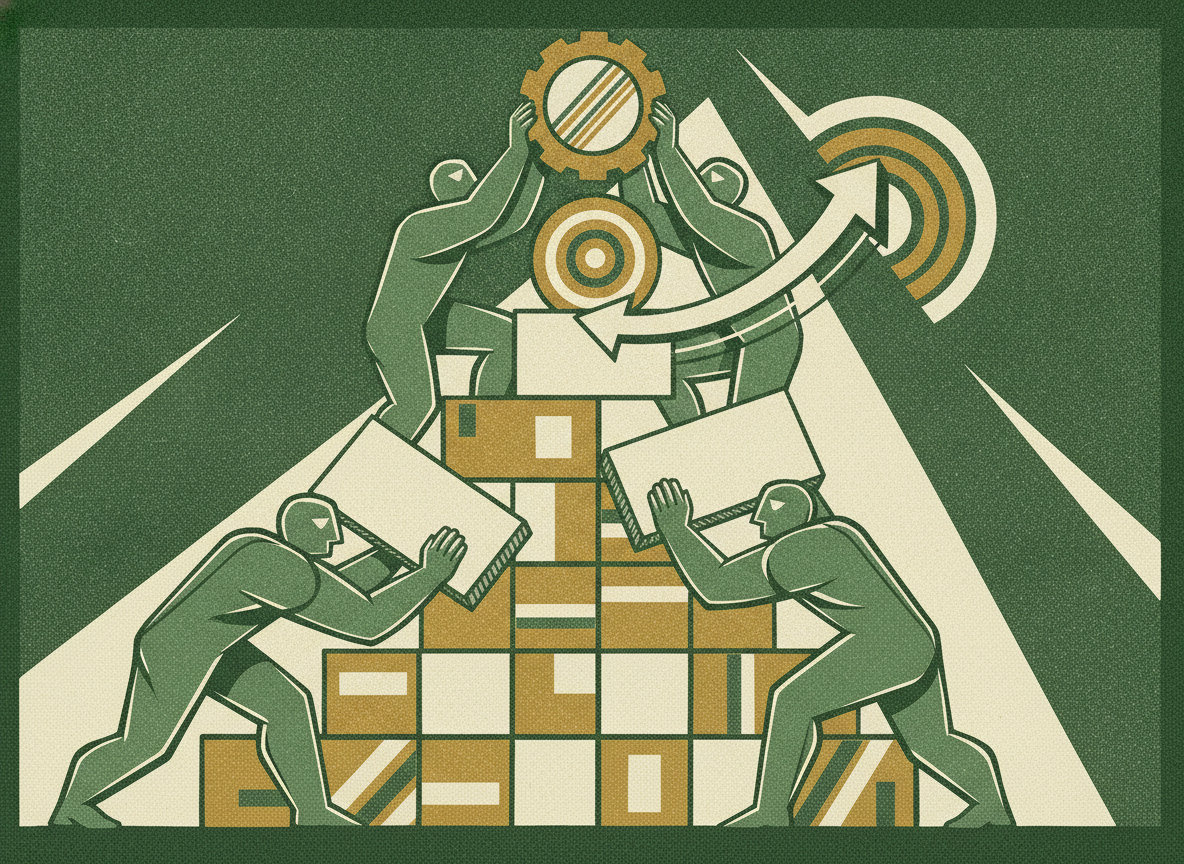
A 2026 plan should be built so that the unit is profitable first, and only then scaled. The sequence matters. Start by establishing that contribution margin, and ideally CM3, is positive at the unit level, because that is the proof that growth will add profit rather than subtract it. Then build the growth plan on top of that foundation, scaling the channels and products where the unit economics work and pulling back where they do not.
This inverts how many founders plan. The common approach sets a revenue target and assumes profitability will follow at scale, which only works if the unit economics are already sound. The brands that survived the last few years shared two traits: profitable unit economics and careful cash management, per Finaloop. A plan that leads with contribution margin forces the hard questions early, which products and channels actually pay, and prevents the most expensive mistake in growth: pouring capital into scaling a unit that loses money. Positive Unit Economics first, scale second, is the discipline the plan should enforce.
Improving Contribution Margin Without Cutting Growth
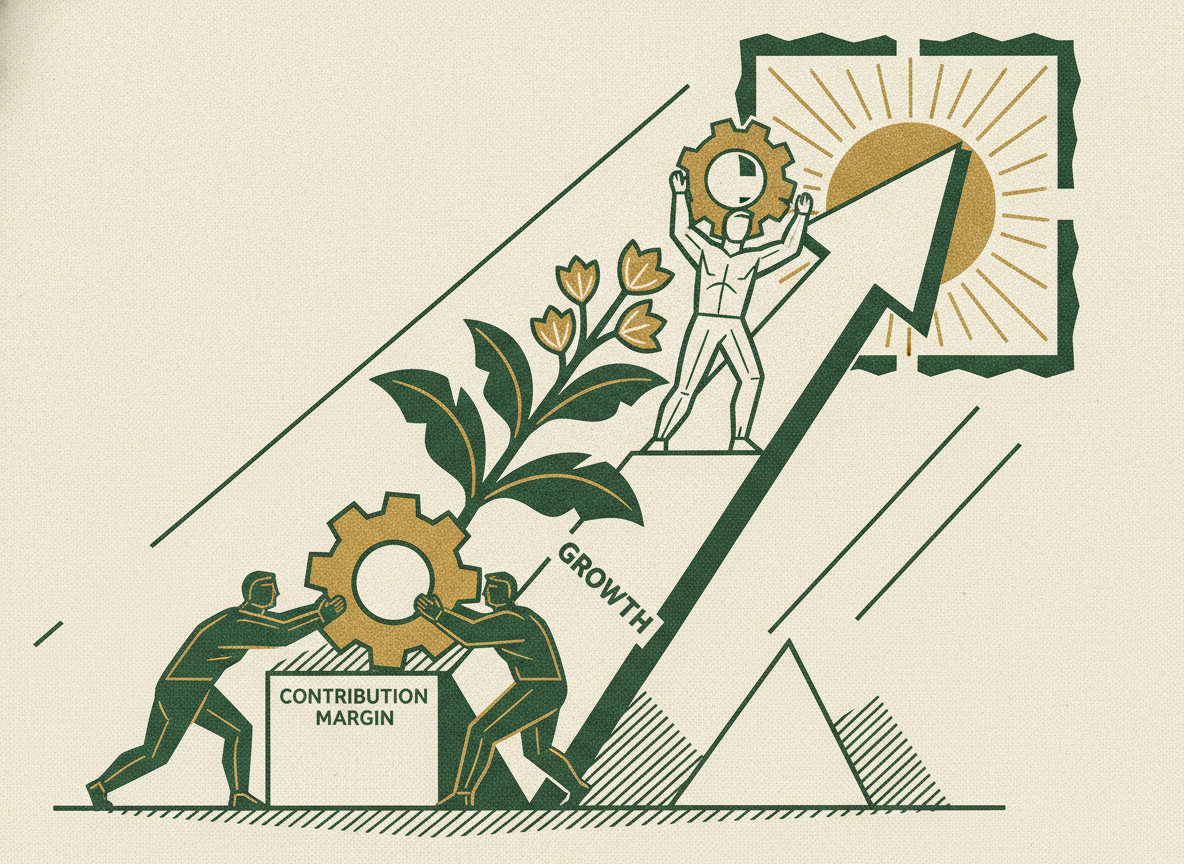
You can widen contribution margin without slamming the brakes on growth, and the levers are specific. On the revenue side, raise price where value supports it, increase average order value through bundling or upsells, and improve retention so you earn more from each acquired customer over time. On the cost side, negotiate better cost of goods at volume, reduce fulfillment and processing waste, and sharpen acquisition so you spend less to win each customer. Each lever lifts the margin without requiring you to stop growing.
The highest-leverage area is usually acquisition efficiency, because it is both the largest variable cost and the one most companies manage loosely. Shifting spend toward the channels and audiences with the lowest cost per profitable customer can move CM3 substantially without touching the product. The goal is not to grow less, it is to grow on units that pay. As Saras Analytics lays out, improving contribution margin is a set of deliberate, compounding moves rather than a single cut. Done well, you grow faster and more profitably at once, which is exactly what strong Unit Economics make possible.

Frequently Asked Questions
What Is the Difference Between Gross Margin and Contribution Margin?
Gross margin subtracts only the direct cost of goods, while contribution margin subtracts every variable cost, including fulfillment, processing, and customer acquisition. Gross margin tells you the spread between price and product cost; contribution margin tells you whether a sale actually makes money. A product at 70 percent gross margin can fall to 15 to 25 percent contribution margin once those other costs are counted.
What Is CM3?
CM3 is contribution margin after customer acquisition cost, the final unit-level figure showing what each order contributes once cost of goods, fulfillment, and acquisition spend are all paid. A positive CM3 means the unit economics work and the order funds fixed costs and profit. It is one of the most revealing metrics for a founder, because it accounts for the acquisition cost that gross margin ignores.
Why Can a Company With Good Margins Still Lose Money?
Because gross margin omits the variable costs of winning and serving the customer, especially acquisition. With customer acquisition cost up 40 to 60 percent since 2021 and ad spend often consuming 20 to 35 percent of revenue, a product with strong gross margin can have negative contribution margin per unit. When that happens, every new customer increases the loss, so faster growth makes the problem worse.
How Do You Improve Contribution Margin Without Slowing Growth?
Pull revenue and cost levers that do not require cutting growth: raise price where value supports it, lift average order value, improve retention, negotiate better cost of goods, reduce fulfillment waste, and sharpen acquisition efficiency. Acquisition efficiency is usually the highest-leverage area, since it is the largest variable cost. Shifting spend toward the most profitable channels can lift CM3 meaningfully while you keep growing.
References
