
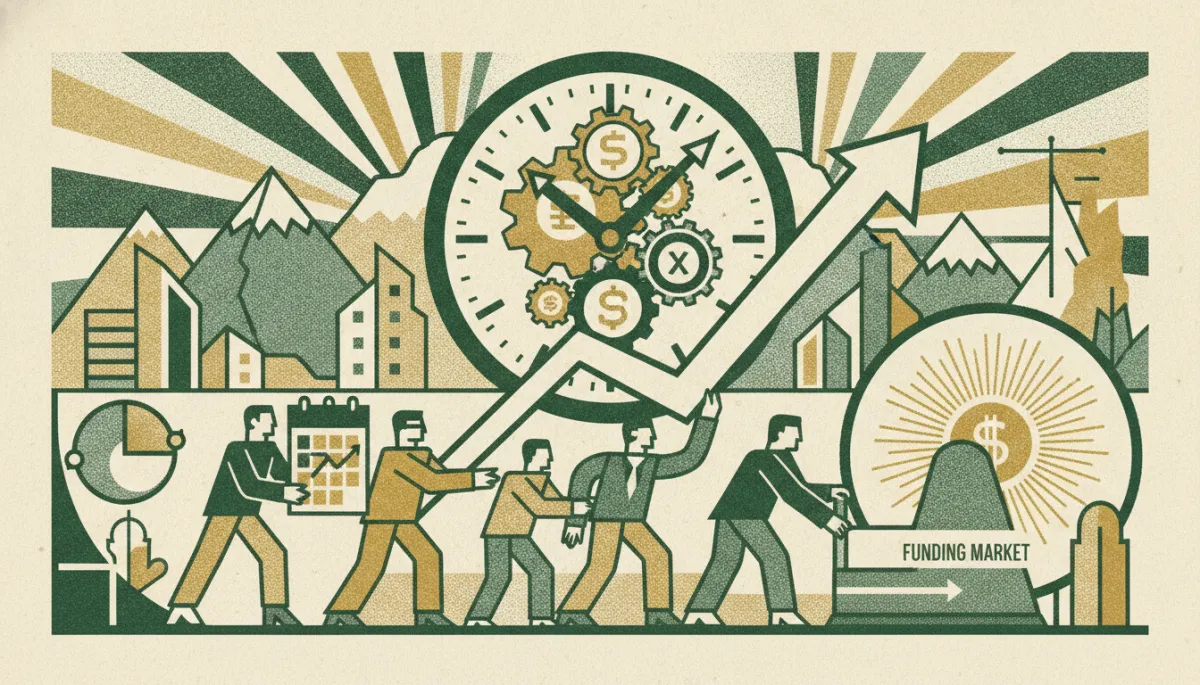
The 2026 Raise Calendar: Timing Your Round to the Funding Market
- A sound Fundraising Strategy in 2026 starts with timing, both the calendar month you open conversations and your position relative to the market.
- The market is concentrated. Global venture funding hit roughly $300 billion in Q1 2026, but AI absorbed about 80% of it, leaving a barbell where a few platforms raise enormous rounds and everyone else competes for a thinner pool.
- Calendar timing is real: January and September are strong months to start raising; December and August are dead zones when investors travel and deal velocity stalls.
- Readiness beats market timing. Investors have standardized around metric thresholds, and hitting them matters more than guessing the macro.
- Build the raise backward from your cash-out date so you open with nine to twelve months of runway, never from a position of desperation.
Founders ask me constantly whether 2026 is a good time to raise. It is the wrong question. The market does not move for any one company, and you cannot time it. What you can control is when you open the conversation and whether your numbers clear the bar investors are now using. A good Fundraising Strategy treats timing as two separate decisions: the month you start, and your readiness to start at all. Here is how I help founders get both right.

Why Timing Still Matters in a Concentrated Market
Timing matters because capital in 2026 is unusually concentrated, which changes how much competition your round faces. Global venture funding reached roughly $300 billion in Q1 2026 across about 6,000 companies, but the distribution is lopsided: AI captured around 80% of the total, roughly $242 billion, according to insights4vc. The rest of the market operates on what is left.
That concentration produces a barbell, as Stout describes it: enormous pools for a few strategic platforms while broader deal counts stay muted and most funds raise in weaker conditions. The practical effect for a founder outside the AI gold rush is that round sizes are up but the number of deals getting done is down. Investors are rationing both time and ownership to fewer companies. In that environment, when and how you show up matters more, not less.
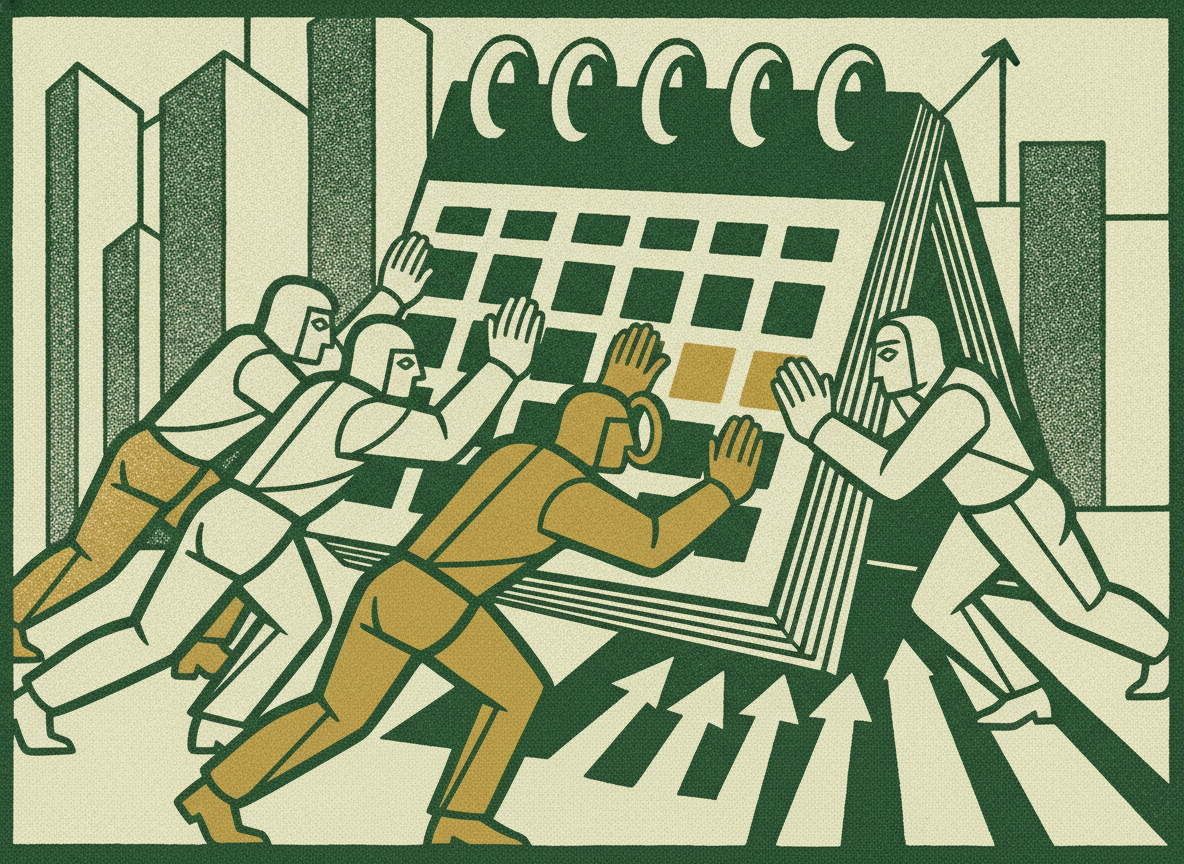
The Calendar: When Investors Actually Lean In
There is a real annual rhythm to investor attention, and a smart Fundraising Strategy works with it. January and September are the strongest months to open conversations, when funds return from breaks with fresh capital to deploy and full calendars. Starting then means your process runs while investors are engaged rather than distracted.
The flip side matters just as much: avoid December and August. As Angel Investors Network notes, these are vacation months when investors are slow to respond and deal velocity drops. A process that opens in mid-December often stalls for three weeks before it gains any momentum, burning runway you cannot get back. The goal is to have your materials ready before the strong windows so you can launch into investor attention, not into an inbox autoresponder.

Reading the 2026 Funding Environment Before You Raise
Before you open a round, read the environment honestly, because it sets the bar you will be measured against. In 2026 average round sizes have risen while the number of deals has fallen, which means investors are concentrating capital into companies that clear clear thresholds, per Pilot. Raising is less about catching a wave and more about being demonstrably in the group worth funding.
This is where a fractional CFO earns the engagement. The work is to know your numbers cold, growth rate, gross margin, burn multiple, net revenue retention, and to understand how they compare to what investors now expect at your stage. Walking into a 2026 process without that command is how good companies get passed over for reasons that have nothing to do with their potential. Read the environment, benchmark yourself against it, and only open the round when your story holds up against the standard the market is actually applying.

Are You Ready to Start? The Threshold Test
Readiness in 2026 is mostly a question of thresholds, not narrative. Investors have standardized around metric bars at each stage, and the honest test is whether your numbers clear them before you start, not whether you can talk your way past them in a meeting. If you are a year of growth away from the bar, the strongest move is often to wait and hit it rather than raise a disappointing round now.
Run the test cold. Pull your key metrics, line them against current stage benchmarks, and ask whether a skeptical investor would see a fundable company in the data alone. If the answer is yes, timing the calendar is worth optimizing. If the answer is no, no amount of market timing will fix it, and a premature raise usually ends in a flat round or a down round that costs you more than the wait would have. Readiness is the gate; the calendar is the fine-tuning.
Building Backward From Your Cash-Out Date
Plan the raise backward from the day you run out of cash, not forward from when you feel like starting. A round takes time, often three to six months from first meeting to wired funds, and the worst negotiating position is a visibly short runway. I tell founders to open the process with nine to twelve months of cash still in the bank, so they can walk away from a bad term sheet and let competition work in their favor.
Working backward makes the calendar concrete. If your cash-out date is October and a raise takes five months, you are opening in spring, well inside a strong window, with margin to spare. If your cash-out date is March, you are already late and should be raising now or cutting burn to buy time. A disciplined Fundraising Strategy ties the start date to runway math, so you raise from strength and never from the desperation that investors can smell across the table.

Frequently Asked Questions
When Is the Best Time of Year to Raise a Round?
January and September are the strongest months to open fundraising conversations, because investors return from breaks with capital to deploy and full attention. December and August are the weakest, when travel and slow deal velocity stall processes. Have your materials ready ahead of the strong windows so you launch into investor attention rather than waiting out a quiet period.
Is 2026 a Good Time to Raise Money?
It depends far less on the macro than on where you sit relative to investor thresholds. Q1 2026 saw roughly $300 billion in venture funding, but about 80 percent went to AI, leaving a concentrated market for everyone else. If your metrics clear current stage benchmarks, it is a fine time to raise; if they do not, no market timing will compensate.
How Far in Advance Should You Start Fundraising?
Open the process while you still have nine to twelve months of runway, since a round commonly takes three to six months to close. Starting early lets you negotiate from strength and walk away from weak offers. Founders who wait until runway is short lose leverage, and investors price that desperation into the terms.
What Makes a Company Ready to Raise in 2026?
Clearing the metric thresholds investors have standardized for your stage: growth rate, gross margin, burn multiple, and retention that compare well to current benchmarks. Readiness is measured in the data, not the pitch. If you are close but not there, hitting the bar before you open often produces a far better outcome than raising prematurely.
References
